

Lush lawns in shady spots come from choosing seeds made for low light and matching them to your care routine.
Scotts Turf Builder Rapid Grass Sun & Shade gives quick green-up.
X-Seed Ultra Premium offers a fine-fescue blend for deep shade and Jonathan Green Black Beauty provides endophytic, shade-tolerant mixes.
Prep soil, water gently, and stick with regular maintenance for steady results.
| Scotts Turf Builder Rapid Grass Sun & Shade Mix |
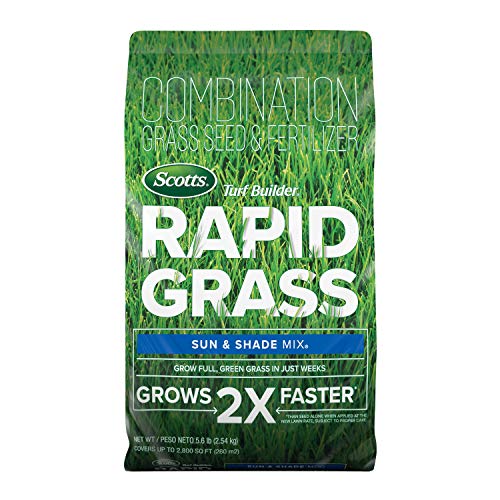
| Fast-Establishing Pick | Intended Use: New lawns and overseeding/problem areas | Shade Tolerance: Sun & shade mix (suitable for shaded areas) | Coverage (bag-specific): 5.6 lb covers ~839 sq ft (new) / ~2,800 sq ft (overseed) | VIEW LATEST PRICE | Read Our Analysis |
| X-Seed Ultra Premium Shady Lawn Grass Seed Blend |

| Best for Deep Shade | Intended Use: Lawns and shady areas (new or repair) | Shade Tolerance: Optimized for shade / heavy shade | Coverage (bag-specific): (Coverage not given in summary) — formulated for lawns/gardens (no precise sq ft listed) | VIEW LATEST PRICE | Read Our Analysis |
| Pennington The Rebels Tall Fescue Shady Grass Seed Mix 20 lb |

| Heavy-Duty Choice | Intended Use: New lawns and renovation/overseeding for shady sites | Shade Tolerance: Shady mix (requires 2–6 hours sun) | Coverage (bag-specific): 20 lb covers up to ~5,000 sq ft | VIEW LATEST PRICE | Read Our Analysis |
| Scotts Turf Builder Dense Shade Grass Seed with Fertilizer |

| Dense Shade Specialist | Intended Use: New lawn or overseed existing lawn (shade/full sun) | Shade Tolerance: Dense shade mix (grows with as little as 3 hours sunlight) | Coverage (bag-specific): 2.4 lb covers ~200 sq ft (new) / ~600 sq ft (overseed) | VIEW LATEST PRICE | Read Our Analysis |
| Jonathan Green Black Beauty Dense Shade Grass Seed |
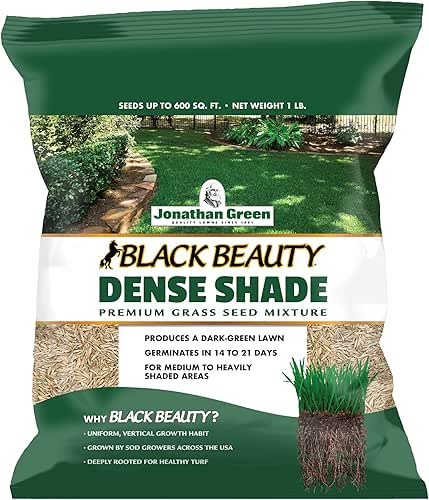
| Premium Dark-Green Pick | Intended Use: New lawns and overseeding in shady/partial-sun areas | Shade Tolerance: Dense shade tolerant mix | Coverage (bag-specific): 1 lb covers up to ~300 sq ft (new) / ~600 sq ft (overseed) | VIEW LATEST PRICE | Read Our Analysis |
More Details on Our Top Picks
Scotts Turf Builder Rapid Grass Sun & Shade Mix
Should you want a quick, reliable fix for a thin lawn that gets both sun and shade, choose Scotts Turf Builder Rapid Grass Sun & Shade Mix — it pairs grass seed with built-in fertilizer so you’ll see green growth faster without juggling products. You’ll plant in spring or fall whenever temps stay 60–80°F, then water after spreading. The 5.6 lb bag covers 839 sq ft for new lawns or 2,800 sq ft for overseeding. Use a Scotts spreader and avoid weed control until you’ve mowed four times. Expect fast germination and fuller turf whenever you follow feeding and watering guidance.
- Intended Use:New lawns and overseeding/problem areas
- Shade Tolerance:Sun & shade mix (suitable for shaded areas)
- Coverage (bag-specific):5.6 lb covers ~839 sq ft (new) / ~2,800 sq ft (overseed)
- Seed + Fertilizer / Nutrition Included:Combined grass seed + extended-feeding fertilizer
- Best Planting Seasons / Timing:Spring or Fall (air temps 60–80°F)
- Drought / Durability Characteristics:Designed for faster establishment; suitable for varied conditions (no explicit drought claim)
- Additional Feature:High germination rate
- Additional Feature:Extended feeding formula
- Additional Feature:Fast establishment claim
X-Seed Ultra Premium Shady Lawn Grass Seed Blend
Provided that you want a shady lawn that stays thick and forgiving, X-Seed Ultra Premium Shady Lawn Grass Seed Blend is built for you. You’ll find a precise mix: Maxima Creeping Red Fescue 20%, Improved Chewings Fescue 14%, Improved Perennial Ryegrass 17%, and Kentucky Bluegrass 7%. This mix fills thin spots in sun and deep shade, and it handles southern yards and hard-to-grow places. It establishes in poor soils, asks for less water and fertilizer, and works with hydroseeding or spray-seed. You’ll get drought tolerance and traffic resilience, making it a smart, low-fuss choice for pet-friendly lawns.
- Intended Use:Lawns and shady areas (new or repair)
- Shade Tolerance:Optimized for shade / heavy shade
- Coverage (bag-specific):(Coverage not given in summary) — formulated for lawns/gardens (no precise sq ft listed)
- Seed + Fertilizer / Nutrition Included:All-in-one seed and fertilizer option (supports establishment)
- Best Planting Seasons / Timing:Fall and Winter planting seasons (summary highlights fall/winter)
- Drought / Durability Characteristics:Drought-tolerant; durable for high-traffic and hard-to-grow sites
- Additional Feature:Hydroseed/spray-seed compatible
- Additional Feature:Low fertilizer requirement
- Additional Feature:Drought-tolerant blend
Pennington The Rebels Tall Fescue Shady Grass Seed Mix 20 lb
Should you want a tough, low‑maintenance lawn that thrives with just a few hours of sun, Pennington The Rebels Tall Fescue Shady Grass Seed Mix in the 20 lb bag is a smart pick for busy homeowners and shady yards. You’ll plant seed that covers up to 5,000 sq. ft. and see sprouts in 8 to 16 days. This mix makes a darker, greener, denser lawn than older tall fescues, and it grows deep roots that stand up to traffic, heat, drought, and insects. It needs only 2 to 6 hours of sunlight and asks less care in general.
- Intended Use:New lawns and renovation/overseeding for shady sites
- Shade Tolerance:Shady mix (requires 2–6 hours sun)
- Coverage (bag-specific):20 lb covers up to ~5,000 sq ft
- Seed + Fertilizer / Nutrition Included:Seed-only (no fertilizer stated in summary) — primarily seed mix (no explicit fertilizer included)
- Best Planting Seasons / Timing:(Not explicitly stated) — implied cool-season/tolerant (shady lawns) — typically spring/fall for cool-season fescue
- Drought / Durability Characteristics:Withstands heat, drought, heavy traffic, insects (tough durable turf)
- Additional Feature:Heavy-traffic tolerant
- Additional Feature:Deep, dense root system
- Additional Feature:Rapid emergence (8–16 days)
Scotts Turf Builder Dense Shade Grass Seed with Fertilizer
In case you’ve got a shady yard and want a thicker, greener lawn without guessing which products to mix, Scotts Turf Builder Dense Shade with Fertilizer is a smart pick for you. You’ll get seed mixed with starter fertilizer and soil improver so roots develop faster and turf fills in more evenly. It works with as little as three hours of sun, covers about 200 sq ft for new lawns or 600 sq ft for overseeding, and asks that you water daily until shoots reach two inches. Apply in spring or fall at 60°F to 75°F soil temps for best results.
- Intended Use:New lawn or overseed existing lawn (shade/full sun)
- Shade Tolerance:Dense shade mix (grows with as little as 3 hours sunlight)
- Coverage (bag-specific):2.4 lb covers ~200 sq ft (new) / ~600 sq ft (overseed)
- Seed + Fertilizer / Nutrition Included:Seed + fertilizer + soil improver (root-building nutrition)
- Best Planting Seasons / Timing:Spring or Fall (soil temps 60–75°F; air 65–85°F)
- Drought / Durability Characteristics:Medium drought resistance; medium–high durability
- Additional Feature:Includes soil improver
- Additional Feature:Works with as little as 3 hrs sunlight
- Additional Feature:Small-area focused coverage
Jonathan Green Black Beauty Dense Shade Grass Seed
In case you’ve got shady spots under big trees or along the north side of your house and want a low-fuss, dark-green lawn, Jonathan Green Black Beauty Dense Shade is a great choice for you. You’ll get a mix of tall fescue, Kentucky bluegrass, perennial rye, and fine fescues that work together to thrive where sunlight is limited. The endophytic varieties help reduce insect problems so you can worry less. Plant mid-August to mid-October or mid-March to mid-May and expect sprouts in 14 to 21 days. One pound covers up to 300 square feet new, 600 overseed, and lowers water and fertilizer needs.
- Intended Use:New lawns and overseeding in shady/partial-sun areas
- Shade Tolerance:Dense shade tolerant mix
- Coverage (bag-specific):1 lb covers up to ~300 sq ft (new) / ~600 sq ft (overseed)
- Seed + Fertilizer / Nutrition Included:Seed mix (nutrient-reducing needs; no explicit fertilizer included in package)
- Best Planting Seasons / Timing:Mid-August to mid-October; mid-March to mid-May (fall and spring windows)
- Drought / Durability Characteristics:Reduces water needs (more drought-efficient than some mixes)
- Additional Feature:Endophytic varieties included
- Additional Feature:Dark-green aesthetic turf
- Additional Feature:Lower water requirement
Factors to Consider When Choosing Shade Grass Seeds
When you pick shade grass seeds, start by matching the seed mix to how much light your yard actually gets and what your soil needs. Consider seed composition and watering needs together since fine blends often need gentler, more frequent moisture while tougher mixes might handle less care. Also consider soil preparation and traffic tolerance so you choose a seed that will root well and stand up to kids, pets, or quiet foot traffic.
Light Requirements
Because your lawn’s light can change a lot from morning to afternoon and from spring to winter, you should initially measure how much direct and filtered sun each area gets so you pick grass that will actually thrive. Start by noting daily minimums like full shade under 2 hours, partial shade 2 to 4 hours, and light or dappled shade 4 to 6 hours. Then choose seeds labeled for shade or dense shade because those varieties match specific light ranges. In very deep shade you’ll want fine fescues and other shade-adapted grasses that photosynthesize at lower light. Keep in mind reduced light slows germination and leaf growth, so expect longer establishment and select cultivars known for shade tolerance. Also track seasonal shifts in morning versus afternoon sun to refine your choice.
Soil Preparation
Getting your soil ready makes a huge difference for shade grass seed success, so start through testing the pH and feeling the texture to know what you’re working with. Should your pH falls outside about 6.0 to 7.0, you can lime or add sulfur to reach the sweet spot. Next, remove debris, thatch, and competing tree roots, and loosen the top 2 to 3 inches so seeds touch soil and germinate evenly. For compacted or poor soil, blend in 1 to 2 inches of quality topsoil or compost. In case you have sandy or heavy clay soil, mix roughly 10 to 30 percent organic matter to balance moisture and drainage. Finally, rake level and firm the bed gently without over compacting to keep roots free.
Seed Composition
Choose seed that matches the light and wear your yard actually gets, and you’ll save time and worry later. Pick mixes with fine fescues like creeping red, chewings, and hard fescue for low light and add shade-tolerant tall fescues for durability. Look at the blend percentages so you know which grass dominates. Higher fine fescue means better shade performance. Seek labels that say shade or dense shade and list multiple cool season species to balance germination speed and wear tolerance. In case you need quicker cover under tree canopy, include some perennial rye or improved tall fescue for faster germination while keeping plenty of shade adapted fine fescues. Also choose endophytic or improved cultivars for stronger disease and insect resistance.
Watering Needs
Often you’ll need to water more carefully in shade because soil and sunlight behave differently there, and that changes what seeds will thrive. Pick shade grasses with lower water needs, like many fine fescues and drought-tolerant tall fescues, whenever irrigation is limited or soil drains fast. At the time you seed, water lightly and often to keep the surface moist, usually daily or twice daily for two to three weeks until shoots reach an inch or two. After the lawn establishes, switch to deeper, less frequent watering, about one inch per week in one or two sessions, to encourage roots to grow down. Adjust frequency for soil type since sandy ground dries faster than loam or clay. Avoid constant saturation because it starves roots of oxygen and invites disease.
Traffic Tolerance
Whenever your yard sees a lot of feet, paws, or play, you want grass that bounces back instead of leaving bare spots and mud, so pick seeds with strong roots and recovery traits. Choose species with deep, dense root systems, like tall fescues and some fine fescues, because they resist compaction and rebound better. Mix in perennial ryegrass or improved fescues for faster germination and quick wear recovery while the lawn establishes. Look for seed labels that say traffic tolerant or wear tolerant and aim for medium to high durability for play areas or dog runs. Denser turf varieties with aggressive tillering or rhizomes close bare spots faster. Expect to mow a bit higher, aerate regularly, and feed to keep recovery strong.