
The best plant netting quietly supports and protects a garden while staying kind to wildlife. Elastic trellis nets, like 2 Pack Elastic Trellis, Scrog 4×4, VIVOSUN 4×4, and Sukh Garden, gently hold vines and heavy blooms. For wider beds, long VIVOSUN polyester sheets and deer fence netting add sturdy yet soft barriers. Noa Store bird netting and fine mesh pest covers shield fruit from birds and insects, while still letting light, air, and helpful pollinators through so you can investigate which style truly fits your space and goals.
2 Pack Elastic Trellis Netting for Grow Tents

Should you be growing in a tent or a small raised bed and you’re tired of plants flopping over, a 2 pack of elastic trellis netting can feel like a lifesaver. You get two 5×5 foot nets, so you can support several plants at once. The stretchy latex rope gently holds stalks, leaves, buds, and fruit without cutting in.
You hook the netting to your tent frame or posts, then guide tomatoes, peas, cucumbers, or flowers through the squares. As plants grow, the elastic flexes, so branches don’t snap. You can even cut the net to size for awkward corners.
Best For: Growers using tents or small raised beds who need flexible, sturdy support to keep vegetables, fruits, and flowers upright and properly spaced.
Pros:
- Stretchy latex rope and elastic design gently support stalks, leaves, buds, and fruit without cutting into plants
- Two 5×5 ft nets can fit most standard grow tents or small raised beds and can be cut to custom sizes
- Easy to install with steel hooks on tent frames, posts, or other stable structures for indoor or outdoor use
Cons:
- 5×5 ft size may be too large for very small setups and require trimming
- Elastic netting may lose tension over multiple seasons compared to rigid trellis systems
- Requires a stable frame or posts for proper installation, which may be an extra step for some users
Scrog 4×4 Heavy Duty Elastic Trellis Net
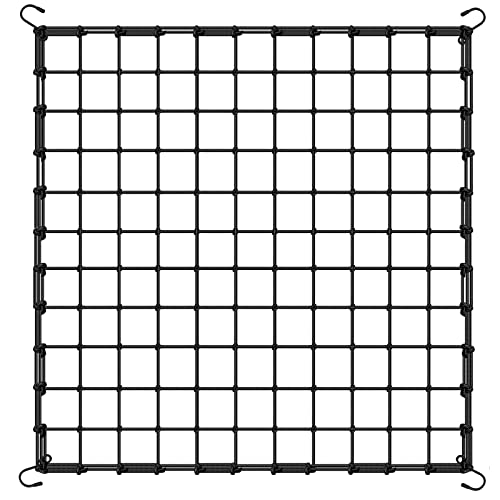
Should you be growing in a 4×4 grow tent and want stronger, heavier buds or fruits without broken stems, the Scrog 4×4 Heavy Duty Elastic Trellis Net can feel like a steady extra pair of hands in your garden. You stretch it across your tent, clip on the S hooks, and your plants suddenly have a clear path to grow out instead of just up.
Because it’s made from tough polyethylene and rubber, it holds heavy fruits and thick colas without cutting into soft stems. The flexible mesh, hooks, and ties let you adjust sections as plants stretch, indoors or outside.
Best For: Indoor or outdoor growers using a 4×4 grow tent who want to support heavy buds or fruits and train plants horizontally for higher yields without damaging stems.
Pros:
- Heavy-duty polyethylene and rubber construction supports thick colas and heavy fruit without cutting into soft stems
- Elastic, flexible mesh with hooks and ties makes it easy to adjust sections as plants grow and to fit different plant layouts
- Designed specifically for 4×4 grow tents, with included S hooks and ties for quick, height-adjustable setup
Cons:
- Sized for 4×4 tents, so it may not fit larger or irregular spaces without modification
- Elastic netting can lose tension over time and may need occasional adjustment or replacement
- Requires some planning and training technique (SCROG) to use effectively, which may be a learning curve for beginners
Noa Store Nylon Mesh Anti Bird Netting
Noa Store Nylon Mesh Anti Bird Netting is a strong choice should you be tired of watching birds, pets, or stray animals ruin the fruit and veggies you’ve worked so hard to grow. You stretch this 25×50 foot net over fruit trees, raised beds, or balcony planters, and it quietly does its job while you finally relax a bit.
Because the nylon is non sticky, it doesn’t snag leaves or branches, so you can move it without that frustrating tangle. The 2×2 inch square mesh keeps out hawks and curious pets, yet it still lets in sunlight, rain, and airflow for healthy plants.
Best For: Gardeners and homeowners who want a reusable, easy-to-handle net to protect fruit trees, vegetables, and poultry areas from birds and other animals without blocking sun or rain.
Pros:
- Large 25×50 ft coverage area (also available in 50×50 ft) suitable for trees, garden beds, and coops.
- Durable, UV-resistant nylon mesh with 2×2 inch squares that protects against birds, pets, and predators like hawks while allowing light, air, and water through.
- Non-sticky material resists snagging on leaves and branches and folds easily for seasonal reuse.
Cons:
- 2×2 inch mesh may not stop very small birds or insects from accessing plants.
- Requires proper securing or support structures, which are not mentioned as included.
- May need cutting or adjustment to fit smaller or irregularly shaped spaces.
Bird Netting Garden Pest Barrier Covers (4 Pack)

Should you be tired of watching birds and bugs ruin your hard work, the Bird Netting Garden Pest Barrier Covers (4 Pack) from LCHUANG gives you a simple way to protect your plants without stressing you out. You just slip each 3.3 x 2.7 foot cover over your blueberries, tomatoes, or potted plants, then pull the drawstring. The rope tightens snugly, so gaps stay closed and pests stay out.
Because the netting is clear, you still see your flowers and fruit. The ultra fine 0.8 x 1 mm mesh lets in air, light, and rain, so plants keep growing. The PE material is tough yet gentle on branches, and the lifetime exchange promise gives you long term peace of mind.
Best For: Home gardeners who want an easy, non-chemical way to protect fruits, vegetables, and potted plants from birds and insects while still allowing light, air, and rain through.
Pros:
- Easy-to-use drawstring design quickly secures netting around plants and containers
- Ultra-fine, transparent mesh protects against small insects and birds without blocking light or moisture
- Durable PE material plus lifetime exchange service provides long-term, low-risk protection
Cons:
- Each cover is relatively small (3.3 ft x 2.7 ft), so larger plants or beds may need multiple nets
- Drawstring style is better suited to individual plants or pots than wide garden rows
- Ultra-fine mesh may snag on sharp branches or supports if not handled carefully
VIVOSUN Trellis Netting Heavy-duty Polyester 5’x30′ 1 Pack

Should you be training climbing plants in a small space and want something that quietly does the hard work for you, the VIVOSUN Trellis Netting in heavy-duty polyester is a strong, dependable choice. You get a 5′ x 30′ sheet of braided, pliable polyester that feels soft in your hands but holds plants firmly as they grow.
You can cut the netting to the exact size you need, then wrap and tie it around posts, cages, or along a wall without it coming apart. The 6″ x 6″ squares let you reach through easily to prune cucumbers, harvest peas, or guide tomatoes and cantaloupes upward, saving precious ground space.
Best For: Gardeners with limited space who need a durable, reusable trellis solution to train and support climbing vegetables, fruits, and flowers vertically.
Pros:
- Heavy-duty braided polyester is durable, reusable, and resists unraveling when cut to size
- Large 6″ x 6″ mesh squares make it easy to prune, harvest, and guide plant growth through the net
- Flexible 5′ x 30′ sheet can be customized and tied to a variety of supports, maximizing vertical growing space
Cons:
- Single large sheet may be oversized for very small setups and requires cutting to fit
- 6″ mesh might be too large for very small or delicate seedlings needing closer support
- Requires existing posts, cages, or structures for mounting, which are not included
VIVOSUN 4×4 Ft Elastic Trellis Netting
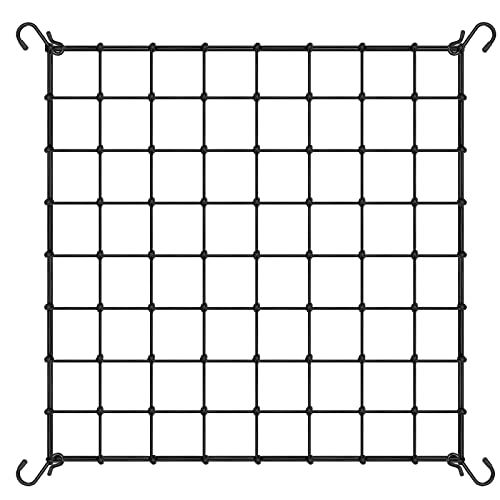
Should you be growing vining plants in a tight space and want something easy to work with, the VIVOSUN 4 x 4 ft Elastic Trellis Netting gives you strong support without making your garden feel complicated. You get a compact 4 x 4 foot grid, so it fits neatly in raised beds, grow tents, or tight corners.
The elastic thread stretches gently as plants grow, so stems don’t snap. Each 3.9 inch square lets you reach in, prune, and pick fruit without wrestling the plant. You can cut the net to size, hook it up with the rustproof S hooks, fold it, reuse it, and feel completely in control.
Best For: Home gardeners growing vining plants in small spaces—like grow tents, raised beds, or balcony gardens—who want flexible, reusable trellis support that’s easy to install and adjust.
Pros:
- Elastic 4 x 4 ft grid stretches as plants grow, reducing risk of stem breakage
- 3.9 x 3.9 inch mesh makes pruning and harvesting easy without damaging plants
- Reusable design with rustproof S hooks; can be cut to size, folded, and stored compactly
Cons:
- 4 x 4 ft size may be too small for very large gardens or long rows
- Elastic netting may not provide the rigid structure some heavy-stemmed plants need
- Requires a stable frame or poles for mounting, which are not included
Deer Fence Netting, 7×100 ft Garden Protector

Should you be tired of waking up to chewed leaves and half-eaten berries, the Feitore Deer Fence Netting, sized at 7 inches 100 feet, can feel like a real lifeline for your garden. You simply roll it out, fasten it to stakes, and suddenly your tomatoes and berries get a fighting chance. The 3/4 inch mesh keeps deer, rabbits, and birds out, yet still lets sun, rain, and bees in.
Because it’s light polypropylene, you can cut it to fit beds, shrubs, or a whole row. It won’t rust or rot, so you just reuse it season after season.
Best For: Home gardeners who need an easy, reusable way to protect fruits, vegetables, and shrubs from deer, birds, and small animals without blocking sun, rain, or pollinators.
Pros:
- Lightweight yet strong polypropylene netting resists tearing, rust, and rot for multi-season use.
- Large 7 x 100 ft roll can be cut and customized to cover beds, shrubs, trees, ponds, or entire rows.
- 3/4 inch mesh effectively keeps out deer, rabbits, and birds while allowing light, water, and bees through.
Cons:
- Stakes or posts are not included, so you must purchase or supply your own supports.
- May require careful installation and tensioning to avoid sagging or gaps animals can exploit.
- Not chew-proof for very determined animals and may need occasional repairs or replacement over time.
Sukh Garden Plant Trellis Netting, 2-Pack

For gardeners who want strong support without a lot of fuss, the Sukh Garden Plant Trellis Netting 2 pack offers a simple way to guide your plants upward and keep them healthy. Each net measures 5 feet wide and 15 feet long, so you get plenty of coverage for raised beds or rows. The durable polyester nylon holds up to heavy crops without sagging.
You’ll like the 6 by 6 inch grid. It gives vines clear spaces to climb, so tomatoes, cucumbers, beans, and eggplants stay off the ground. You can hang it vertically on posts or stretch it horizontally above plants to create a support ceiling that enhances airflow, encourages normal growth, and makes picking easier.
Best For: Home gardeners and small-scale growers looking for an easy, durable way to support climbing vegetables and improve airflow and harvesting in raised beds or row plantings.
Pros:
- Generous coverage with two 5 x 15 ft nets, suitable for multiple beds or longer rows.
- Durable polyester nylon supports heavy crops like tomatoes and cucumbers without sagging and can be reused.
- Versatile 6 x 6 inch mesh can be installed vertically or horizontally to match different plant growth habits.
Cons:
- Fixed 6 x 6 inch grid may be too large for very small or delicate plants that need tighter support.
- Requires advance planning and installation before plants get too large, which may not suit last-minute setups.
- Needs posts, frames, or other structures for mounting, which are not included.
Factors to Consider When Choosing Plant Netting
At the moment someone chooses plant netting, a few key details quietly shape how well it will protect and support their garden. Netting material durability, mesh size and shape, and UV and weather resistance all work together to decide how long the netting lasts and how safely it guards plants. Simultaneously, plant type compatibility and ease of installation help the gardener feel confident that the netting fits their crops, their space, and their own comfort level with setup.
Netting Material Durability
Durability in plant netting begins with the material itself, because that is what quietly decides how long the net will protect a garden before it starts to fail. Whenever someone chooses sturdy options like high-quality polyethylene or latex, the net usually resists wear from daily use, brushing branches, and curious animals.
For tougher conditions, heavy-duty polypropylene or braided polyester gives stronger support. These materials handle heavy vines, fruit weight, and stormy weather without tearing easily. UV resistance also matters, because sunlight slowly weakens plastic. A UV-stable net keeps its strength and shape through many seasons.
Reusable, durable netting can be taken down, stored, and used again, which saves money and effort. With solid materials, a gardener worries less and enjoys the garden more.
Mesh Size and Shape
Strong material is only half of what makes plant netting work well, because mesh size and shape quietly decide how gently and how firmly that support actually reaches each plant. Whenever someone chooses a smaller mesh, like 2 along 2 inches, the netting cradles tender stems, peas, or young cucumbers so they do not bend or snap. Larger openings, such as 6 along 6 inches, give sturdy tomatoes or squash room to stretch and thicken.
Mesh shape matters too. A square, grid-like pattern spreads weight evenly, so soft shoots are less likely to bruise. It also guides climbing plants upward in a steady path. For plants that sprawl sideways, a wider rectangular mesh can open space and keep air flowing to prevent mold.
UV and Weather Resistance
Even with the perfect mesh size, plant netting will fail soon unless it cannot handle sun, rain, and wind day after day. So it helps to look closely at how each option stands up to the weather.
UV resistance comes initially. Strong sunlight slowly breaks down weak plastic, making it brittle and easy to tear. Whenever netting is treated for UV protection, it stays flexible and safer to use for much longer.
Weather-resistant materials, like quality polyethylene or nylon, handle heavy rain, strong gusts, and temperature swings without stretching or cracking. Reusable netting is usually built tougher, so it keeps its shape over several seasons. Heavy-duty construction also resists tearing when branches move or pests push against it, giving gardeners better value over time.
Plant Type Compatibility
Many gardeners soon uncover that not every plant gets along with every type of netting. Plant type compatibility starts with support needs. Climbing plants like tomatoes and cucumbers often grow best on sturdy trellis netting, where strong frames and tight grids keep vines lifted and fruit off the soil.
Netting must also match plant size. Small greens can handle finer mesh, but larger plants need wider openings so stems can move, air can flow, and hands can reach in to harvest without breaking branches. As fruits grow heavier, elastic or heavy duty polypropylene netting offers extra strength so plants do not sag or snap.
Finally, growth habits matter. Some plants respond well to vertical support, while others spread more naturally across horizontal netting.
Ease of Installation
Ease of installation can make the difference between a fun afternoon in the garden and a frustrating project that never feels quite finished. Whenever someone is already tired or short on time, netting that includes hooks, ties, or clips can feel like a small gift. These extras help the netting attach quickly and allow simple height changes as plants grow.
It also helps whenever the netting cuts easily to size. Then it can fit raised beds, single shrubs, or long rows without awkward folding. Flexible, durable material wraps around stakes or arches without coming apart. User friendly touches like drawstring edges or pre formed hooks save even more effort. A smooth, non snagging mesh glides over leaves, so plants stay safe while the barrier goes up.
Reusability and Storage
Contemplate reusability and storage as a way to protect both the garden and the budget. Whenever someone chooses netting that lasts, they avoid buying new products every season. Strong polyester or nylon netting can handle sun, rain, and wind over several years, so it feels like a steady garden partner instead of a quick fix.
Reusability also depends on how the netting handles off-season life. Provided it folds easily, it slips into a small box or bin without tangling. Rustproof hooks and sturdy ties stay reliable, so nothing snaps when the netting is unpacked again. Netting that can be cut to size adds even more value, because one piece can serve different beds, trellises, and plant shapes over time.
Size and Coverage Area
Size and coverage area sit at the heart of choosing the right plant netting, because even the strongest material will fail unless it does not actually fit the space. A gardener initially looks at the bed or grow tent size. Common options range from small 3.3×2.7 foot sheets for single pots to large 25×50 foot rolls for long rows or orchards.
From there, the coverage area should match both plant spacing and layout. Many nets come in sizes like 4×4 or 5×30 feet and can be trimmed or folded to fit awkward corners or narrow beds. Mesh size also matters. Smaller openings suit tender seedlings and pest control, while larger meshes support climbing plants that need height and room to grow securely.
Safety for Wildlife
Although plant netting is meant to protect crops, it can quietly become a danger to birds and small animals should the wrong type be used. So, whenever someone chooses netting, wildlife safety needs to come initially, not last.
A key detail is mesh size. Openings that are too large let wings, legs, or heads slip through, which can lead to panic and injury. Smaller, wildlife safe mesh greatly lowers that risk.
Material also matters. Gentle, flexible, lightweight netting is less likely to cut or trap an animal. Whenever it is biodegradable, it will not linger for years in soil or trees.
Regular checks for rips, sagging, or loose edges keep the barrier effective while letting wild visitors move safely nearby.
Final Thoughts
Choosing plant netting can feel oddly dramatic. Gardeners are out there, waging war against birds, deer, and mystery nibblers, armed with mesh and hope. Yet somehow, the tomatoes still vanish. Netting promises a peaceful truce with wildlife, while quietly declaring, “These strawberries are mine.” In the end, the garden wins some, the pests win some, and the gardener buys another net, convinced this one is finally “deer proof,” unlike the last four.