
Want fast, reliable chickweed control that’s safe for pets and your lawn? Try these five options: Ortho GroundClear with Wand for quick contact burn down; Spectracide Weed Stop ready-to-use for spot kills; Natural Elements vinegar-salt spray for low-toxicity touch-ups; Ortho Chickweed, Clover & Oxalis concentrate for larger infestations; and Scotts Crabgrass & Grassy Weed Preventer to stop future sprouts.
Use a wand for spot treatment, follow label drying times, and pick products that match your grass type to avoid damage. Detailed how-to tips follow.
| Ortho GroundClear Weed & Grass Killer with Wand |

| Fast-Acting Control | Targeted for Chickweed: Lists chickweed among target weeds | Use Area (lawn/patios/landscape): Patios, landscapes, walkways, driveways, under trees, landscape beds (not lawns) | Liquid or Liquid-based Formulation: Liquid (1 gal) with wand applicator | VIEW LATEST PRICE | Read Our Analysis |
| Spectracide Weed Stop For Lawns Ready-to-Use 1-Gallon |
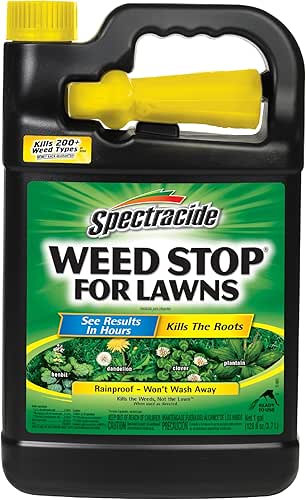
| Lawn-Safe Specialist | Targeted for Chickweed: Kills chickweed (included in 200+ weeds) | Use Area (lawn/patios/landscape): Lawns (formulated to preserve turf) | Liquid or Liquid-based Formulation: Ready-to-use liquid (1 gal) | VIEW LATEST PRICE | Read Our Analysis |
| Scotts Crabgrass & Grassy Weed Preventer for Lawns |

| Pre-Emergent Protector | Targeted for Chickweed: Prevents chickweed (listed for fall prevention) | Use Area (lawn/patios/landscape): Lawns (pre-emergent lawn treatment) | Liquid or Liquid-based Formulation: Granular bag (note: prevents weeds as a granular product) | VIEW LATEST PRICE | Read Our Analysis |
| Natural Elements Pet- and Child-Safe Weed Killer (1 Gal) |
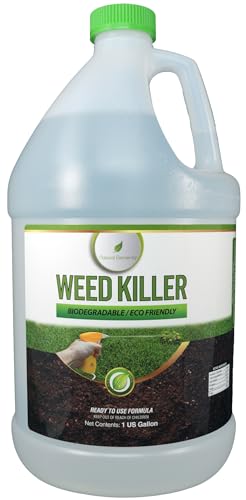
| Pet-Friendly Option | Targeted for Chickweed: Marketed as a general weed killer (includes chickweed by implication) | Use Area (lawn/patios/landscape): General outdoor use (patio/lawn & garden category) | Liquid or Liquid-based Formulation: Liquid (1 gal spray) | VIEW LATEST PRICE | Read Our Analysis |
| Ortho Chickweed Clover & Oxalis Lawn Weed Killer |
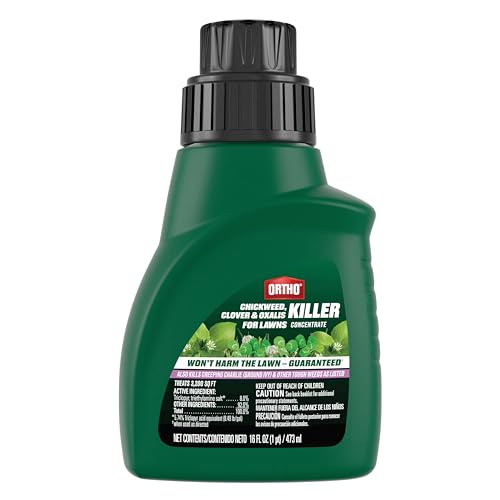
| Targeted Weed Fighter | Targeted for Chickweed: Specifically targets chickweed | Use Area (lawn/patios/landscape): Lawns (safe for listed turf types when used as directed) | Liquid or Liquid-based Formulation: Concentrate liquid (16 oz concentrate for dilution) | VIEW LATEST PRICE | Read Our Analysis |
More Details on Our Top Picks
Ortho GroundClear Weed & Grass Killer with Wand
Whenever you want a fast, targeted way to kill chickweed on patios, driveways, and around beds, Ortho GroundClear with the Comfort Wand is a smart pick for homeowners who need quick results without soaking everything in spray. You’ll like that it absorbs on contact and shows results in about 15 minutes. Use the Comfort Wand to aim small plants under trees, along walkways, and inside cracks. Apply whenever weeds are small and dry, and wait about two hours for the spray to dry and become rainproof. People and pets might reenter after it dries, so you’ll feel safer.
- Targeted for Chickweed:Lists chickweed among target weeds
- Use Area (lawn/patios/landscape):Patios, landscapes, walkways, driveways, under trees, landscape beds (not lawns)
- Liquid or Liquid-based Formulation:Liquid (1 gal) with wand applicator
- Rain/Weather Resistance or Timing Guidance:Dries in ~2 hours; rainproof once dry; avoid spraying when wet
- Coverage/Size Information:1 gallon container
- Applicator or Application Method:Includes Comfort Wand for targeted spraying
- Additional Feature:OMRI listed
- Additional Feature:Comfort Wand included
- Additional Feature:Rapid 15-minute visible results
Spectracide Weed Stop For Lawns Ready-to-Use 1-Gallon
Assuming you want a fast, no-fuss way to wipe out chickweed and dozens of other common lawn invaders, Spectracide Weed Stop For Lawns ready-to-use 1-gallon jug is a smart pick for homeowners who need results without mixing chemicals. You’ll like that it kills over 200 weeds, including dandelion, clover, and chickweed, and shows visible results within hours. It’s liquid and ready to spray, so you won’t fuss with measurements. The formula is rain-proof, so your effort won’t wash away. It’s safe on many grasses like Bermuda, fescue, and Kentucky bluegrass, helping preserve your lawn while targeting weeds.
- Targeted for Chickweed:Kills chickweed (included in 200+ weeds)
- Use Area (lawn/patios/landscape):Lawns (formulated to preserve turf)
- Liquid or Liquid-based Formulation:Ready-to-use liquid (1 gal)
- Rain/Weather Resistance or Timing Guidance:Rain-proof formula that resists wash-off
- Coverage/Size Information:1 gallon ready-to-use jug
- Applicator or Application Method:Ready-to-use jug (implies direct spray application)
- Additional Feature:Kills 200+ weeds
- Additional Feature:Ready-to-use liquid
- Additional Feature:Turf-safe for many grasses
Scotts Crabgrass & Grassy Weed Preventer for Lawns
Provided you want a simple, reliable way to stop crabgrass and a long list of grassy weeds before they ever sprout, Scotts Halts Crabgrass and Grassy Weed Preventer is a strong choice for busy homeowners. You’ll get a 10.06 lb bag that treats up to 5,000 sq. ft. Apply in early spring to a dry lawn or in fall. It prevents crabgrass, foxtail, spurge, barnyardgrass, Poa annua, henbit, corn speedwell, and fall chickweed while stopping moss except in California. Use on all grasses except Dichondra and Bentgrass. Rain, snow, or freezing temps after application won’t hurt performance.
- Targeted for Chickweed:Prevents chickweed (listed for fall prevention)
- Use Area (lawn/patios/landscape):Lawns (pre-emergent lawn treatment)
- Liquid or Liquid-based Formulation:Granular bag (note: prevents weeds as a granular product)
- Rain/Weather Resistance or Timing Guidance:Apply early spring or fall; rain/snow/freezing after application does not affect performance
- Coverage/Size Information:10.06 lb bag (treats up to 5,000 sq. ft.)
- Applicator or Application Method:Granular spreader application (broadcast/granular)
- Additional Feature:Pre-emergent action
- Additional Feature:Treats up to 5,000 sq.ft.
- Additional Feature:Fall or spring application
Natural Elements Pet- and Child-Safe Weed Killer (1 Gal)
In case you want a kid- and pet-friendly way to tackle chickweed without harsh chemicals, this Natural Elements one gallon spray is a smart pick you can trust. You’ll appreciate that it uses salt water, commercial vinegar, sodium chloride, and soap to dry and kill weeds without toxic fumes. It comes as a ready liquid spray in a full gallon, so you can cover larger patches without refilling often. You can spray directly on chickweed on patios, walkways, or bare soil spots. Because it’s labeled pet and child safe, you’ll feel more relaxed using it around family.
- Targeted for Chickweed:Marketed as a general weed killer (includes chickweed by implication)
- Use Area (lawn/patios/landscape):General outdoor use (patio/lawn & garden category)
- Liquid or Liquid-based Formulation:Liquid (1 gal spray)
- Rain/Weather Resistance or Timing Guidance:(No explicit rainproof claim) Implicitly for outdoor use; label would include use timing (general outdoor spray)
- Coverage/Size Information:1 gallon (128 fl oz)
- Applicator or Application Method:Spray form (liquid spray)
- Additional Feature:Pet- and child-safe
- Additional Feature:Natural ingredients blend
- Additional Feature:Contains commercial vinegar
Ortho Chickweed Clover & Oxalis Lawn Weed Killer
In case you want a reliable solution that zaps common broadleaf invaders without wrecking your grass, Ortho Chickweed, Clover and Oxalis Killer for Lawns Concentrate is a smart pick for homeowners who like control and convenience. You dilute this 16 oz concentrate in a tank sprayer and treat up to 3,200 sq. ft. It targets chickweed, clover, oxalis, creeping charlie, speedwell, wild violet, and more, killing weeds to the roots. Use it on buffalograss, fescues, Kentucky bluegrass, ryegrass, and zoysia. Apply once temperatures are below 90°F and follow label directions for safe, effective results.
- Targeted for Chickweed:Specifically targets chickweed
- Use Area (lawn/patios/landscape):Lawns (safe for listed turf types when used as directed)
- Liquid or Liquid-based Formulation:Concentrate liquid (16 oz concentrate for dilution)
- Rain/Weather Resistance or Timing Guidance:Apply when temperatures are below 90°F; follow label for timing (implies timing/weather guidance)
- Coverage/Size Information:16 oz concentrate (treats up to 3,200 sq. ft. when diluted)
- Applicator or Application Method:Concentrate to be mixed and applied with a tank sprayer
- Additional Feature:Concentrate formula
- Additional Feature:Kills to the roots
- Additional Feature:Covers up to 3,200 sq.ft.
Factors to Consider When Choosing Chickweed Weed Killers
You’ll want to start by identifying that the problem is really chickweed so you pick a product that targets it and won’t harm your grass. Consider the active ingredient and how it works, whether the product fits your lawn type, and when weather and timing will affect results. Also consider about the application method you’re comfortable using so treatment is safe and effective.
Target Weed Identification
Start through getting a close look at the plant so you can tell chickweed from other small weeds and pick the right control method with confidence. You’ll check for small opposite leaves and prostrate stems that root at nodes. Look for tiny white star-shaped flowers with deeply split petals. Then compare growth habit. Chickweed trails along the ground with smooth, hairless stems. That helps you tell it apart from henbit which grows upright with square, hairy stems. Next, decide which type you’re facing. Common chickweed sprouts in cool seasons and makes lots of seed. Mouse-ear has hairy leaves and might require different timing. Measure patch size and percent cover. Also observe growth stage because young plants take contact herbicides better while mature, seeding plants need repeated or physical removal.
Lawn Compatibility
In case you pick a chickweed killer for your lawn, make sure the product says it’s safe for your grass type so you don’t kill the lawn while you’re killing the weed. Read the label and match it to your turf species like fescue, Kentucky bluegrass, Bermuda, zoysia, or ryegrass. That simple step keeps your lawn healthy and eases worry. Also check whether the formula is lawn selective or a nonselective cleaner for driveways and beds since those will kill turf on contact. In case your lawn is new or mixed species, look for seeding and reseeding wait times so young grass can recover. Take note seasonal and temperature limits too. Finally, in case kids or pets use the yard, confirm reentry times and safety notes.
Active Ingredient Type
You’ve already checked that a product is safe for your grass, and now you’ll want to look closely at the active ingredient types inside the bottle. You’ll find two main classes: contact ingredients, like acids, salts, or soaps, that burn leaf tissue fast, and systemic ingredients, like certain synthetic auxins and glyphosate alternatives, that travel to roots slowly. Contact products show effects in minutes to hours, so you’ll feel relief quickly, but they need full spray coverage and repeat applications since they don’t reach roots. Systemic products take days to weeks, yet they’re better at knocking out roots and seedlings for longer control. Also check selectivity and soil persistence so you don’t harm desirable plants or future plantings.
Timing And Weather
Whenever you’re planning a chickweed treatment, timing and weather matter more than you might suppose, so aim for windows whenever plants are actively growing and conditions let the spray work. You’ll want post-emergent products whenever chickweed is green and metabolically active, often in cool, moist periods. Spray in the morning after dew dries and before evening humidity climbs so droplets stick and dry. Don’t spray before rain or irrigation since foliar herbicides need about one to two hours to become rainproof, while some soil preventers actually need moisture to activate. Avoid extreme heat above about eighty five to ninety degrees and drought stress because uptake falls and risks to desirable plants rise. For prevention, apply pre-emergents in early fall or late winter before seeds germinate.
Application Method Needed
Whenever you’re choosing how to apply a chickweed killer, consider the plant size, the area you need to treat, and how careful you must be around flowers and shrubs. In the event that plants are small and actively growing, a contact spray will quickly burn foliage, but you’ll likely see regrowth from roots unless you use a systemic option. Systemic products in granules or concentrates move into roots for deeper control, so pick those for heavy infestations. For spot treatment near ornamentals, use a wand or trigger-spray applicator so you hit only the weed you want. Ready-to-use sprays are handy for small patches, while concentrates with a tank sprayer save money on large lawns. Match the method to weather, since sprays need dry leaves and low wind, and granules need proper soil conditions.
Safety For Pets
Once you select a chickweed killer, consider initially about how safe it will be for your pets and how you’ll use it, since small choices can make a big difference for curious dogs and cats. Check the active ingredients because products with glyphosate, 2,4-D, or dicamba affect pets differently than vinegar or salt formulas, so pick lower-toxicity options in case pets roam the area. Review the label for initial-aid, pet-safety instructions, and re-entry times; many let you re-enter only after sprays dry, often one to two hours. Reflect on application method too since spot treatments or wands cut drift and limit exposure compared with broadcast sprays. Store granules and concentrates securely and follow mixing steps. Should exposure happens call your vet or poison control with the product name.