
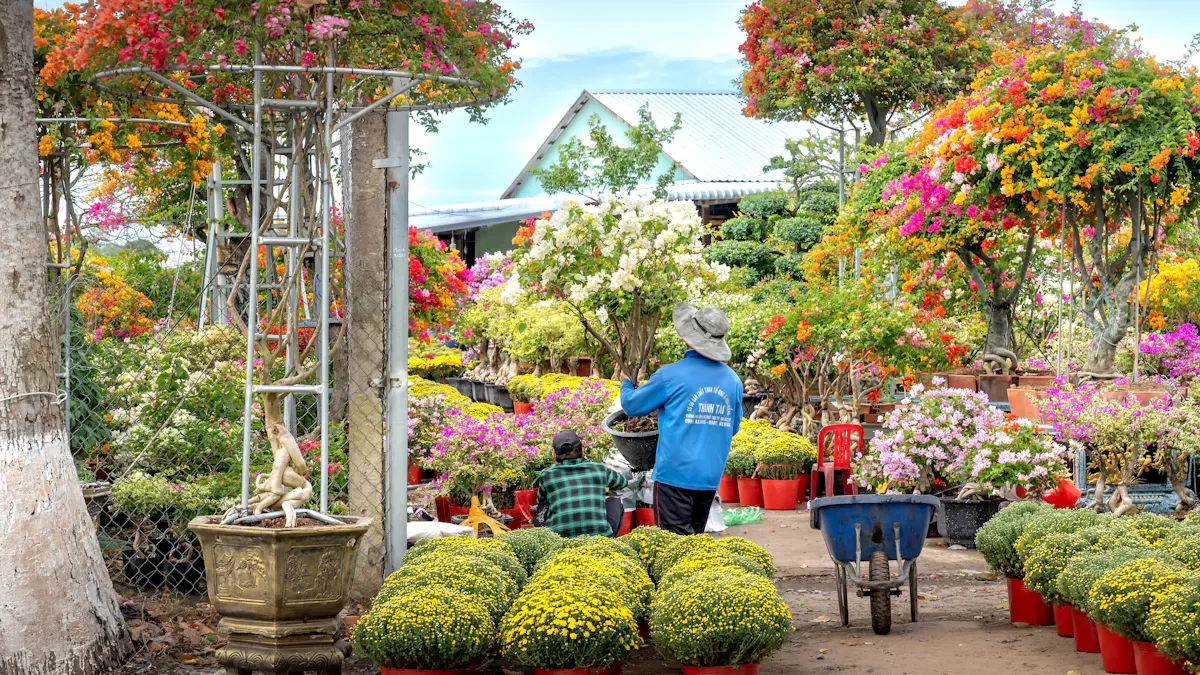
Perennial garden plants play a vital role in creating a vibrant and colorful garden. These plants return year after year, making them a smart choice for your long-term garden design. You’ll save money in the long run since perennials require less water, fertilizer, and maintenance than annuals. Imagine not having to replace plants every season! By selecting a variety of perennials, you can achieve beautiful seasonal color that keeps your garden lively throughout the year.
Key Takeaways
- Choose perennials for a vibrant garden that returns year after year, saving you time and money.
- Select a mix of full sun and shade-loving perennials to ensure color in all areas of your garden.
- Follow proper care tips like soil preparation, regular watering, and mulching to keep your perennials thriving.
- Plan your plantings by understanding bloom times to maintain color throughout the seasons.
- Experiment with combinations of different perennials to create a unique and stunning garden display.
Full Sun Perennials
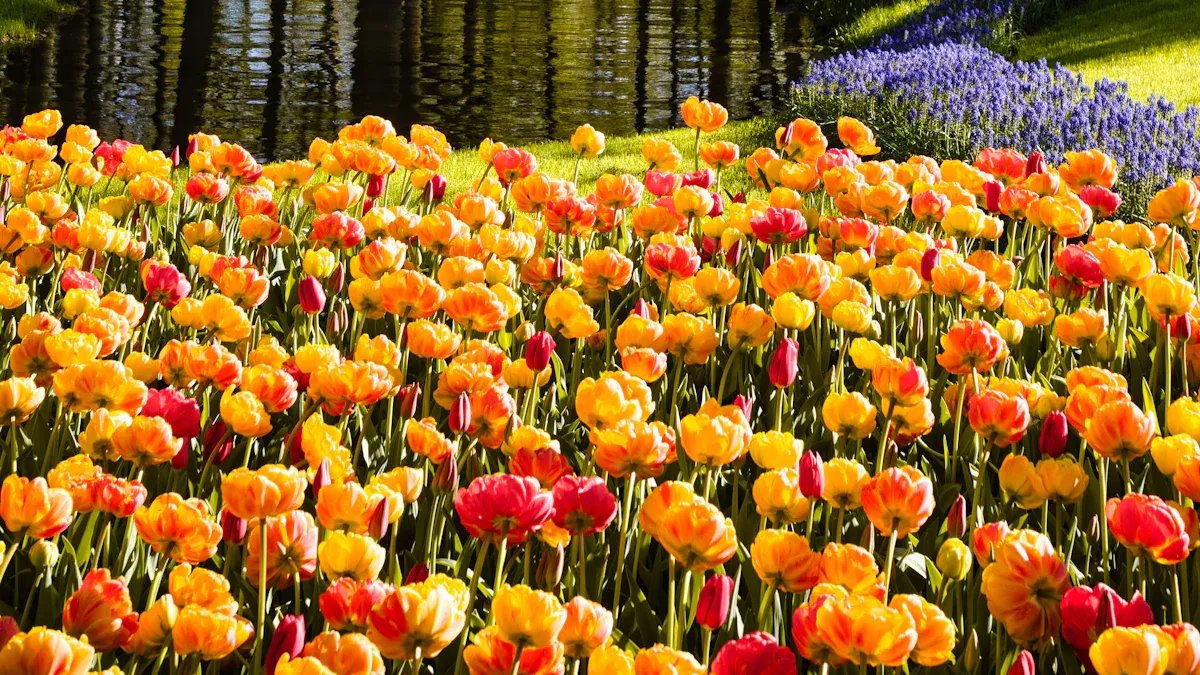
Vibrant Full Sun Choices
When you think of full sun perennials, imagine a burst of color lighting up your garden. These plants thrive in bright sunlight and offer some of the most vibrant blooms. Here are some of the best sun-loving perennials that can add a splash of color to your flower garden:
- Peonies: These lush plants produce fragrant blooms in shades of pink, white, and deep red. They’re a favorite for their beauty and scent.
- Black-eyed Susan: Known for their cheerful yellow or orange flowers with dark centers, these hardy perennials bloom all summer long.
- Daylily: With stunning blooms that come in various colors, daylilies are a must-have. Each flower lasts just a day, but the plant produces many flowers throughout the season.
- Coneflower: This perennial features daisy-like flowers in pink, purple, and white. They attract butterflies and are easy to grow.
- Coreopsis: These cheerful flowers bloom in yellow, orange, and red, making them perfect for adding brightness to your garden.
- Russian Sage: With its silvery foliage and lavender-blue flowers, this drought-tolerant plant adds a unique texture to your garden.
- Sedum: Known for its succulent leaves, sedum produces star-shaped flowers in various colors and is perfect for low-maintenance gardens.
- Virginia Bluebells: These beautiful flowers transition from pink buds to blue blooms, creating a stunning display.
Care Tips for Full Sun Perennials
To keep your full sun perennials thriving, follow these care tips:
- Soil Preparation: Start by deeply spading your garden beds to a depth of 8 to 10 inches. If you have clay soil, mix in at least 2 inches of compost to improve drainage. For sandy soils, add 2 to 3 inches of compost to help retain moisture.
- Watering: While many full sun perennials are drought-tolerant, they still need regular watering, especially during dry spells. Water deeply but infrequently to encourage deep root growth.
- Fertilization: Test your soil to determine its nutrient needs. If you can’t test, use a complete fertilizer at the recommended rates. Aim for a soil pH of 6.0 to 6.5, adjusting with lime if necessary.
- Mulching: Apply a layer of mulch around your plants to help retain moisture, suppress weeds, and regulate soil temperature.
- Pruning: Deadhead spent flowers to encourage more blooms and maintain a tidy appearance. Some perennials may benefit from cutting back in the fall or early spring.
By choosing the right full sun perennials and providing proper care, you can create a stunning garden filled with colorful flowers that bloom all summer long.
Top Shade Perennials
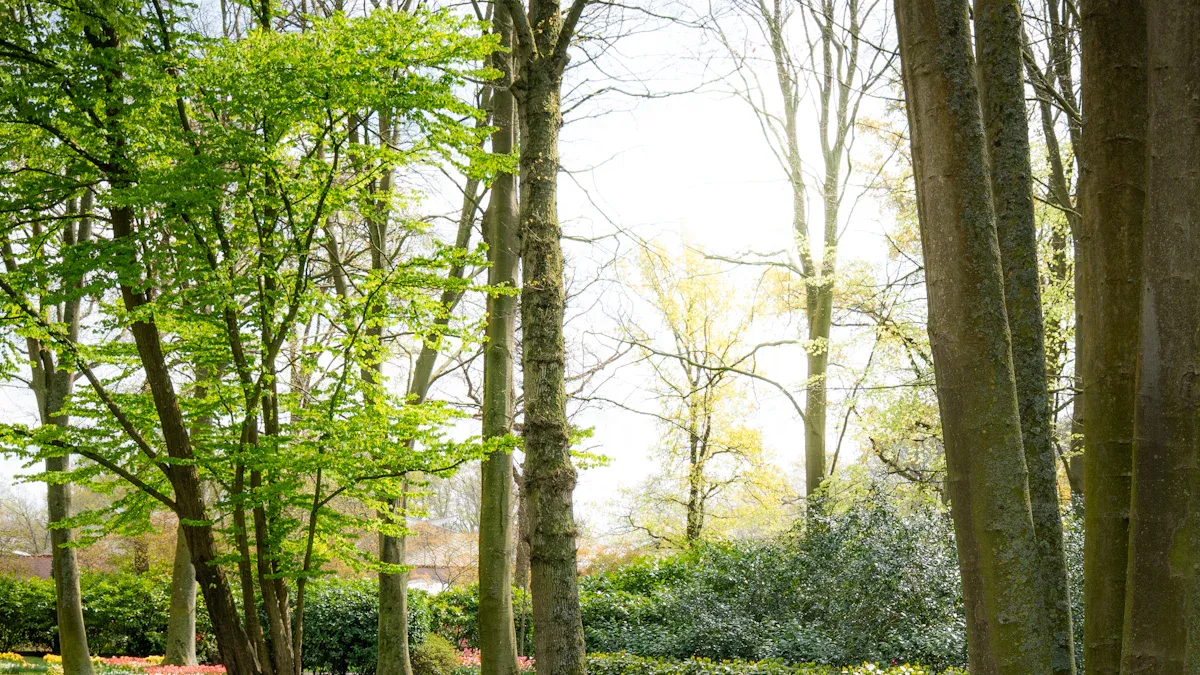
Best Shade-Loving Plants
Creating a colorful garden in shaded areas is entirely possible with the right selection of perennials. Here are some of the best shade-loving plants that can brighten up your garden:
- Coral Bells (Heuchera spp.): These plants boast stunning foliage in shades ranging from lemon yellow to deep burgundy. They add bold color and texture to your garden.
- Deadnettle (Lamium spp.): This low-maintenance groundcover features silver or variegated leaves and blooms in pink, white, or lavender. It’s perfect for filling in gaps.
- Astilbe (Astilbe spp.): Known for its showy summer plumes, Astilbe comes in pink, red, white, or violet. These flowers are excellent for brightening up shaded borders.
- Primrose (Pulmonaria spp.): This classic spring bloomer offers cheerful flowers in a rainbow of colors. It thrives in partial to full shade, making it a great choice for your garden.
Maintaining Color in the Shade
To keep your shade garden vibrant, consider these maintenance practices:
- In spring, clean up winter debris and prepare the garden for new growth.
- Remove dead leaves or branches and apply mulch to retain moisture and suppress weeds.
- Monitor for pests or disease as plants emerge.
- In summer, ensure consistent watering, especially during dry spells.
- Deadhead spent flowers to encourage more blooms.
- Remove yellowing or damaged foliage for a tidy appearance.
- In fall, clear fallen leaves to prevent smothering plants.
- Divide overgrown perennials and plant spring-flowering bulbs.
- In winter, apply mulch around plant bases to insulate roots.
Combining different shade perennials can maximize color in your garden. Pair bold-leaved plants like Rodgersia with finer-textured plants such as ferns for contrast. You might also try combinations like Rodgersia pinnata with Japanese painted fern (Athyrium niponicum) for stunning effects. Adding ornamental grasses or variegated plants, like Japanese forest grass (Hakonechloa macra) and variegated Solomon’s seal (Polygonatum odoratum), introduces variety and interest. Grouping plants by similar watering needs will help them thrive together.
With these tips and plant choices, you can create a lush, colorful garden even in the shadiest spots.
Foliage Perennials
Colorful Foliage Options
Foliage perennials can bring year-round interest to your garden. They offer vibrant colors and unique textures that enhance your landscape. Here are some fantastic perennial plants with beautiful foliage to consider:
- ‘Jack Frost’ Brunnera: This plant features striking silver leaves with blue flowers in spring.
- Purple Sage: Its deep purple leaves add a rich hue to your garden.
- ‘Redhead’ Coleus: Known for its bold red and green foliage, this plant thrives in partial shade.
- Yellow Corydalis: Bright yellow flowers and delicate foliage make this a cheerful addition.
- Silver Mound Artemisia: Its silvery leaves create a soft, airy feel in your garden.
- Japanese Forest Grass: This grass adds a graceful texture with its arching green and gold blades.
- Coral Bells ‘Caramel’: With its caramel-colored leaves, this plant provides a warm glow.
- Variegated Solomon’s Seal: The striking variegation on its leaves adds visual interest.
- Persian Shield: This plant boasts iridescent purple leaves that catch the light beautifully.
Combining Foliage and Blooms
To create a stunning garden, combine foliage perennials with flowering perennials. Here are some effective strategies:
- Pair fine-textured plants like ferns or grasses with bold, large-leaved specimens for textural contrast.
- Choose foliage colors that change subtly through the seasons for evolving visual interest.
- Use silver or gold varieties in well-lit areas to enhance luminosity.
- Incorporate dark purple or burgundy foliage to create depth and highlight bright flowers.
Layering your plants can also add dimension. Start with taller plants in the back and shorter ones in the front. This arrangement creates a visually appealing backdrop for your flowers.
By thoughtfully selecting and combining perennials, you can achieve a garden that dazzles with both color and texture throughout the year.
Seasonal Color Strategies
Year-Round Color Planning
To keep your garden bursting with color all year, you need a solid plan. Start by selecting perennials that bloom in different seasons. This way, you’ll have flowers popping up from spring through fall. Understanding the bloom times of your plants is crucial. Each perennial has its own blooming period, which can last from a couple of weeks to several months. By recognizing these patterns, you can design a garden that always has something in bloom.
Here are some tips to help you plan:
- Grow species that bloom in spring, summer, and fall.
- Use a bloom calendar to track when each plant flowers.
- Choose plants based on their bloom duration to maintain color throughout the year.
Timing Your Plantings
Timing is everything when it comes to planting perennials. You want to stagger your plantings to ensure continuous blooms. For example, spring is perfect for planting daylilies and peonies, while fall is ideal for introducing sedum and asters. This strategy allows you to enjoy a vibrant garden throughout the seasons.
Consider these timing strategies:
- Plant spring-blooming perennials early in the season.
- Introduce fall-blooming varieties as summer ends.
- Mix annuals with perennials for added interest and color.
By planning your plantings carefully, you can create a stunning display that evolves with the seasons. Remember, a well-timed garden not only looks beautiful but also thrives better.
Incorporating perennial plants into your garden design offers many advantages. Here are a few key benefits:
- Stability: Perennials return year after year, providing a consistent and beautiful landscape.
- Low Maintenance: Once established, they require less water and care compared to annuals.
- Biodiversity: They support local wildlife, including pollinators, enhancing your garden’s ecosystem.
Don’t hesitate to experiment with different combinations of plants. Try pairing daylilies with coneflowers or hostas with ferns for stunning effects. Let your creativity shine as you design a colorful garden that evolves with the seasons.
FAQ
What are perennials?
Perennials are plants that live for more than two years. They return each season, providing consistent beauty in your garden. Unlike annuals, you don’t need to replant them every year.
How do I choose the right perennials for my garden?
Consider your garden’s sunlight, soil type, and climate. Choose perennials that thrive in your specific conditions. Mixing different bloom times ensures color throughout the seasons.
When is the best time to plant perennials?
Spring and fall are ideal for planting perennials. Spring allows for strong growth, while fall planting helps establish roots before winter.
How do I care for my perennials?
Water regularly, especially during dry spells. Mulch to retain moisture and suppress weeds. Deadhead spent blooms to encourage more flowers and maintain a tidy appearance.
Can I combine perennials with annuals?
Absolutely! Mixing perennials with annuals adds variety and color. Annuals can fill gaps while perennials establish themselves, creating a dynamic and colorful garden.