The best soils and mulches of 2025 focus on organic ingredients, drainage, and moisture control. Top picks include Back to the Roots organic mixes, Burpee Premium Organic, Sol Soils Chunky Houseplant Mix, FoxFarm Ocean Forest, Rosy Soil Organic Indoor Mix, and Miracle-Gro houseplant and organic blends.
These options support strong roots, healthier foliage, and fewer watering issues for indoor and outdoor plants. Each product suits different plant types, and the distinctions between them can make a big difference.
Back to the Roots 100% Organic Potting Mix (12 Quart)

Should you be an eco-conscious gardener who wants a ready-to-use mix that works for everything from kitchen herbs to flowering containers, Back to the Roots 100% Organic Potting Mix is a smart fit. You get a premium, all-purpose blend made in the USA that’s truly peat-free and 100% organic.
Instead of mined peat, this mix uses upcycled plant matter and wood fines from across the country, shrinking your garden’s carbon footprint. Yucca extract helps the soil hold moisture without getting soggy, while dolomitic limestone keeps pH in a healthy range. Plus, you’re covered with a satisfaction guarantee and the GROWONEGIVEONE classroom donation program.
Best For: eco-conscious gardeners who want a ready-to-use, all-purpose organic potting mix for herbs, veggies, fruits, and flowers with a lower carbon footprint.
Pros:
- 100% organic, peat-free blend made in the USA from upcycled plant matter and wood fines.
- Yucca extract improves moisture retention so soil stays hydrated without becoming waterlogged.
- Backed by a satisfaction guarantee and supports classrooms through the GROWONEGIVEONE donation program.
Cons:
- 12-quart size may be too small for large gardening projects or raised beds.
- Peat-free mixes can feel and behave differently than traditional peat-based soils, requiring a slight adjustment in watering habits.
- May be priced higher than conventional, non-organic potting mixes.
Back to the Roots Organic Indoor Potting Mix (6 Quart)
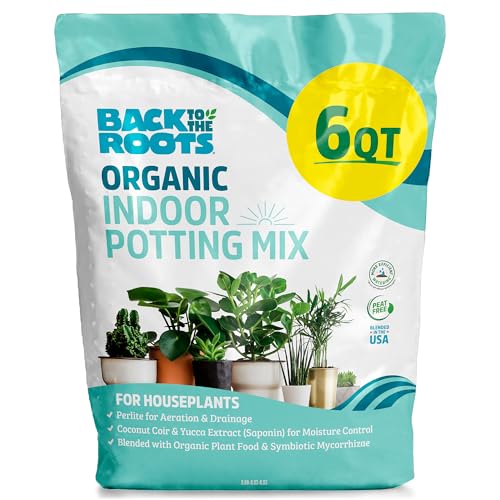
Back to the Roots Organic Indoor Potting Mix (6 Quart) stands out at the time you want a clean, eco‑friendly mix that keeps houseplants thriving without bringing pests inside. You get a 100% organic, peat‑free blend made in the USA, so it fits right into a low‑impact, indoor gardening routine.
This mix holds moisture with organic yucca extract, so your plants stay hydrated longer between waterings. Root‑boosting mycorrhizae help houseplants establish stronger roots and absorb nutrients more efficiently. Balancing dolomitic limestone keeps pH in the ideal range, while the clean ingredients are safe for pets and people and less inviting to gnats.
Best For: Eco-conscious indoor gardeners who want a clean, organic, peat-free potting mix that supports healthy houseplants without attracting pests.
Pros:
- 100% organic, peat-free blend made in the USA for a lower environmental impact
- Organic yucca extract helps retain moisture, reducing how often you need to water
- Mycorrhizae and balanced pH (dolomitic limestone) support strong roots and nutrient uptake while staying safe for pets and people
Cons:
- May be more expensive than conventional, non-organic potting mixes
- Peat-free formula can feel different from traditional mixes and may require a slight adjustment in watering habits
- Comes only in a 6-quart size, which may be too small for larger repotting projects
Burpee Premium Organic Potting Soil Mix (9 Quarts)

Burpee Premium Organic Potting Soil Mix (9 Quarts) is a smart pick should you grow vegetables, flowers, or herbs in containers and want organic ingredients with built‑in nutrition. This OMRI Listed mix arrives pre‑charged with plant food for instant feeding and includes slow‑release nutrients that support growth for up to three months, so you won’t need to fertilize right away.
The added coconut coir improves moisture retention, helping indoor and outdoor plants stay evenly hydrated between waterings. Use it in containers or raised beds, then layer tall plants in back, mounding varieties in the middle, and trailers at the edge for a polished look.
Best For: gardeners growing vegetables, flowers, or herbs in containers or raised beds who want an organic potting mix with built‑in, long‑lasting nutrition and good moisture retention.
Pros:
- OMRI Listed organic mix with both instant and slow‑release plant food that feeds for up to three months.
- Contains coconut coir to improve moisture retention and help plants stay evenly watered indoors and outdoors.
- Ready‑to‑use blend ideal for container gardening, from vegetables and herbs to flowering plants.
Cons:
- 9‑quart bag may be too small and require multiple bags for larger containers or raised beds.
- Pre‑added fertilizer reduces control for gardeners who prefer to customize nutrient types and levels.
- Not a native garden soil replacement; best performance is in containers or raised beds rather than directly in ground.
Sol Soils Chunky Houseplant Mix, Fast-Draining Indoor Plant Soil

Should you be growing thirsty tropicals or finicky aroids indoors, Sol Soils Chunky Houseplant Mix delivers the fast drainage and airy structure their roots need. This 1-gallon, peat-free blend leans on organic coconut coir, husk chips, and recycled forest products to support sustainability while keeping roots evenly moist, not soggy.
You’ll also get serious aeration from perlite, pumice, pine bark, and LECA, which help prevent root rot and salt buildup. Use it straight from the bag for Monstera, Philodendron, Anthurium, Christmas Cactus, and many succulents. Every purchase also funds tree-planting projects in deforested regions.
Best For: Indoor plant owners growing thirsty tropicals, aroids, and succulents who need a fast-draining, airy, and eco-friendly potting mix that helps prevent root rot.
Pros:
- Peat-free blend with coconut coir, husk chips, and recycled forest products supports sustainability and reduces environmental impact
- Chunky texture with perlite, pumice, pine bark, and LECA delivers excellent drainage and aeration to protect roots from rot
- Ready-to-use mix ideal for Monstera, Philodendron, Anthurium, Christmas Cactus, and many succulents, plus each purchase helps fund global tree planting
Cons:
- Fast-draining formula may require more frequent watering compared to traditional potting soil
- Chunky mix may not be ideal for very small plants or seedlings that prefer finer, more moisture-retentive media
- Comes in a 1-gallon size, which might not be sufficient for multiple large repots or big plant collections
FoxFarm Ocean Forest Potting Soil, 12 Quart

FoxFarm Ocean Forest Potting Soil, 12 Quart, stands out should you want a rich, ready-to-use mix that supports vigorous growth in containers without extra effort. You get a light, aerated texture that suits everything from seedlings and herbs to roses, shrubs, and small trees, indoors or out.
The blend of aged forest products, sphagnum peat moss, earthworm castings, bat guano, and fish emulsion holds moisture while staying breathable. It’s pH-adjusted so roots absorb nutrients efficiently. Use it straight from the bag for potting or top-dressing, then optionally pair it with FoxFarm liquid fertilizers at the time you want to push blooming and foliage even further.
Best For: Gardeners who want a rich, ready-to-use premium potting mix that supports vigorous growth in container plants indoors or outdoors without needing extra amendments.
Pros:
- Ready-to-use, pH-adjusted blend that promotes strong root development and efficient nutrient uptake
- Light, aerated texture that retains moisture while staying breathable, reducing risk of overwatering
- Versatile formula suitable for seedlings, houseplants, herbs, flowers, shrubs, and small trees in containers
Cons:
- More expensive than basic potting soils, which may not suit budget-conscious growers
- Rich nutrient content can be too “hot” for very sensitive seedlings if not monitored
- Peat-based mix may not appeal to gardeners seeking completely peat-free or ultra-sustainable options
FoxFarm Ocean Forest Potting Soil (12qt, 2 Pack)

Gardeners who want a rich, ready-to-use mix for container plants will appreciate Ocean Forest Potting Soil in the 12-quart, 2-pack size. You get a light, aerated texture that roots love, plus excellent moisture retention so containers don’t dry out too fast. FoxFarm pre-adjusts the pH, helping plants absorb nutrients efficiently.
This all-in-one blend combines aged forest products, sphagnum peat moss, earthworm castings, bat guano, and fish emulsion. You can use it straight from the bag for roses, shrubs, seedlings, trees, houseplants, or outdoor containers, or as a nutrient-rich top-dress. With a 4.6/5 rating from 18,000+ reviews, it’s a proven performer.
Best For: Gardeners who want a rich, ready-to-use potting mix for container plants, houseplants, and small outdoor plantings without needing to blend in extra amendments.
Pros:
- All-in-one blend with composted forest products, peat, and natural fertilizers like earthworm castings, bat guano, and fish emulsion
- Light, aerated texture with strong moisture retention to keep container roots hydrated but not waterlogged
- pH-adjusted out of the bag for better nutrient uptake and strong, vigorous plant growth
Cons:
- More expensive than many basic potting soils, especially for large projects
- Peat-based mix may not appeal to gardeners seeking completely peat-free or ultra-sustainable options
- Nutrient-rich formula can be a bit “hot” for very delicate seedlings if not monitored carefully
Miracle-Gro Potting Mix for Container Plants (16 qt, 2-Pack)

Should you rely on containers for flowers, vegetables, or shrubs and want strong growth without constant fertilizing, Miracle-Gro Potting Mix for Container Plants (16 qt, 2-pack) is customized for you. This mix feeds for up to six months, helping your plants grow up to twice as big and deliver more blooms and richer color than unfed plants.
You’ll find it easy to use: fill your pot about one-third full, position the root ball, then backfill and press lightly. Each 16-quart bag fills roughly one 12-inch container. It suits annuals, perennials, vegetables, herbs, and shrubs in any container setup.
Best For: Gardeners who grow flowers, veggies, or shrubs in containers and want vigorous growth and color without frequent fertilizing.
Pros:
- Feeds plants for up to 6 months, reducing the need for additional fertilizer.
- Helps plants grow up to twice as big with more blooms and richer color than unfed plants.
- Versatile formula suited for annuals, perennials, vegetables, herbs, and shrubs in most container setups.
Cons:
- Each 16 qt bag only fills about one 12-inch container, so multiple bags may be needed for larger projects.
- Designed specifically for containers, not ideal for in-ground garden beds.
- Performance can vary depending on plant type, container size, and environmental conditions.
Rosy Soil Organic Indoor Potting Soil Mix (8qt)

Should you desire a peat-free, eco-conscious mix that still delivers lush indoor growth, Rosy Soil Organic Indoor Potting Soil Mix (8qt) is a smart pick. You get enough soil for about 4–6 houseplants, all supported by a Thriving Growth Formula that turns your pots into thriving soil. Biochar and pine bark fines improve moisture retention and root aeration, while beneficial fungi and microbes enhance overall vitality.
To use it, choose a well-draining pot, fill with soil, loosen your plant’s roots, transplant, then water thoroughly until excess drains. The resealable, plastic-neutral bag keeps this USA-made mix fresh.
Best For: Indoor plant owners who want a peat-free, organic, and microbe-rich potting mix that supports healthy, vigorous houseplant growth while being eco-conscious.
Pros:
- Peat-free, organic formula with biochar and pine bark fines for improved moisture retention and root aeration
- Enriched with beneficial fungi and microbes to promote strong roots and lush foliage
- Resealable, plastic-neutral bag and USA-made, supporting sustainability and freshness
Cons:
- 8qt size may be too small for large collections or frequent repotting
- Designed specifically for indoor/container use, not ideal for outdoor beds or in-ground planting
- May cost more than basic, non-organic potting soils due to premium, sustainable ingredients
Miracle-Gro Houseplant Potting Mix, 4 qt

Should you want an easy, low-mess option for thriving indoor plants, Miracle-Gro Houseplant Potting Mix, 4 qt, is a smart pick. This fertilized blend combines essential elements with perlite, sphagnum, and peat moss to support healthy roots while staying less prone to fungus gnats than many generic mixes.
You’ll find it especially handy for common houseplants like pothos, spider plants, monstera, philodendron, and English ivy. One 4‑quart bag neatly fills an 8‑inch pot, making repotting simple. For continued growth, start feeding with Miracle-Gro Plant Food about 30 days after planting. It’s Mulch & Soil Council certified for quality.
Best For: Indoor plant owners who want a convenient, low-mess potting mix that supports healthy growth and helps reduce fungus gnat problems.
Pros:
- Fertilized blend with perlite, sphagnum, and peat moss to support strong root development
- Less prone to fungus gnats than many generic houseplant potting mixes
- One 4-qt bag conveniently fills a standard 8-inch pot for easy repotting
Cons:
- Contains peat moss, which some gardeners avoid for environmental reasons
- Pre-mixed fertilizer may not suit those who prefer fully controlling feeding schedules
- Requires additional plant food after about 30 days for continued optimal growth
Miracle-Gro Organic Indoor Potting Mix, 16 qt
Should you grow houseplants or start seeds indoors and want an easy, organic option, Miracle-Gro Organic Indoor Potting Mix, 16 qt, is a strong fit. It’s OMRI Listed, so you’re using a mix that meets organic standards while still simplifying watering.
You get a blend of responsibly sourced sphagnum peat moss, coir, and quick-start natural fertilizer that supports steady initial growth. Use it for herbs, foliage plants, or seed starting trays. For seeds, just fill, sow per packet, and water. For transplants, partially fill, set the loosened root ball, backfill, firm lightly, and water. One bag fills most 12-inch pots.
Best For: Indoor gardeners who want an organic, easy-to-use potting mix for houseplants, herbs, and seed starting that also helps protect against watering mistakes.
Pros:
- OMRI Listed organic mix made with responsibly sourced sphagnum peat moss and coir
- Protects against over- and under-watering, ideal for indoor container plants
- Versatile: suitable for houseplants, herbs, and seed starting in trays or pots
Cons:
- One 16 qt bag only fills about one 12-inch container, so multiple bags may be needed for larger setups
- Contains quick-start natural fertilizer, which may not suit gardeners who prefer fully fertilizer-free starting mixes
- Primarily designed for indoor use, so it may not be the best choice for outdoor beds or large containers
Factors to Consider When Choosing Soils & Mulches
Upon selecting soils and mulches, gardeners must initially match the product to the specific requirements of the plant type, including root depth and growth habit. They also need to evaluate drainage, aeration, nutrient levels, and moisture retention to support healthy root function. Finally, ensuring the soil or mulch maintains a pH compatible with the plant’s preferences is essential for proper nutrient uptake and long-term vigor.
Plant Type Requirements
How a gardener selects soil and mulch depends heavily on the specific plant type and its natural habitat. Each category—tropical plants, succulents, herbs, vegetables, and indoor houseplants—responds differently to moisture, nutrients, and pH.
Tropical plants generally perform best in chunky, airy mixes that stay lightly moist yet never waterlogged. Succulents demand even leaner, faster-drying blends to minimize root rot. Culinary herbs and vegetables need nutrient-rich potting mixes that hold moderate moisture while supporting vigorous root systems.
Indoor houseplants benefit from sterile, pest-resistant media containing ingredients such as perlite and sphagnum moss. Across all groups, soil pH remains fundamental: acid-loving species, neutral-preferring crops, and alkaline-tolerant plants each require substrates customized to their specific pH range for efficient nutrient uptake.
Drainage and Aeration
Drainage and aeration form the backbone of a healthy root environment, directly influencing plant survival and vigor. Whenever excess water cannot escape, soils become waterlogged, displacing air and creating ideal conditions for root rot. Well-draining mixes prevent this by allowing surplus moisture to move away from roots.
Equally significant, aeration guarantees roots receive sufficient oxygen to power essential metabolic processes and sustain new growth. Soil blends integrating perlite, pumice, or coconut coir create pore spaces that improve both drainage and airflow, establishing a stable structure for root development. Fast-draining mixes are especially beneficial for tropical plants and succulents, which demand high aeration and minimal saturation. Together, effective drainage and aeration support strong root systems and efficient nutrient uptake.
Nutrient Content Levels
Beyond structure and airflow, the nutrient content of a soil or mulch directly determines how well plants can sustain vigorous growth. High‑quality potting soils provide balanced macronutrients—nitrogen, phosphorus, and potassium—alongside key micronutrients such as magnesium and calcium to support foliage, root, and flower development.
Organic potting mixes typically enhance nutrient availability with compost, worm castings, and beneficial mycorrhizae, which expand root systems and improve overall health. Nutrient release timing also matters: slow‑release fertilizers supply a steady feed for weeks or months, while fast‑acting formulas deliver an immediate enhancement.
pH balance strongly influences nutrient uptake. Most plants prefer a pH of 6.0–7.0, often maintained with dolomitic limestone. Materials like coconut coir further aid nutrient retention within the mix.
Moisture Retention Needs
Upon selecting soils and mulches, moisture retention must be matched to a plant’s water needs so roots receive steady hydration without suffocating in excess water. Moisture management underpins plant vigor through preventing both drought stress and prolonged saturation that leads to root rot.
Soils rich in organic components, such as coconut coir and pine bark, hold water effectively while still allowing air to reach roots. Additives like yucca extract improve this balance through enhancing the medium’s capacity to retain moisture and limit surface evaporation. Potting mixes that include perlite or vermiculite further refine structure, promoting adequate drainage alongside steady water availability.
Gardeners must align these properties with species preferences, from moisture-loving plants to those adapted to drier conditions.
Ph Balance Compatibility
A key factor in selecting soils and mulches is pH balance, which directly governs how available nutrients are to plant roots. Most garden plants perform best between pH 6.0 and 7.0, where nitrogen, phosphorus, and most micronutrients remain accessible. Outside this range, key elements can lock up; for instance, iron availability drops sharply in alkaline soils above about 7.5, often leading to chlorosis.
Regular pH testing allows gardeners to match soils and mulches to plant needs and correct imbalances before growth is affected. Lime is commonly used to raise pH, while sulfur lowers it over time. Many modern potting mixes are pre-formulated to specific pH ranges, providing targeted compatibility for acid-loving species or plants preferring neutral conditions.
Organic vs. Synthetic
While soil pH sets the chemical stage for plant health, the choice between organic and synthetic soils and mulches determines how that stage functions over time. Organic mixes, built from plant matter, compost, and mineral components, tend to cultivate a thriving soil ecosystem. They support beneficial microorganisms, which gradually release nutrients, stabilize soil structure, and improve moisture retention for stronger root growth.
Synthetic products, in contrast, often lean on concentrated chemical fertilizers and additives. These can deliver rapid, targeted nutrition but might disrupt microbial communities and create nutrient imbalances with repeated use. Over time, this can leave soils more compacted, less absorbent, and more dependent on continual inputs, whereas organic formulations promote a self-improving, biologically active rooting environment.
Environmental Sustainability
Because every bag of soil or mulch carries an environmental footprint, sustainable choices focus on how ingredients are sourced, produced, and packaged. Environmentally conscious gardeners increasingly favor organic, peat‑free blends, since peat extraction releases stored carbon and destroys fragile bog habitats.
Sustainability also extends to ingredients derived from upcycled plant matter and other renewable resources, which help divert organic waste and support a circular gardening economy. Potting mixes featuring coconut coir, composted materials, and other natural components can build long‑term soil health, reducing dependence on synthetic fertilizers. Packaging matters as well: products using biodegradable or minimal materials limit plastic waste. Finally, choosing brands that fund reforestation and ecological projects allows routine gardening purchases to contribute directly to global restoration efforts.
Pest and Disease Risk
Selecting soils and mulches with pest and disease risk in mind helps prevent problems before they reach plant roots. Organic potting mixes limit exposure to synthetic chemicals that can stress plants and indirectly attract pests or opportunistic diseases. Soil containing diverse beneficial microorganisms supports a competitive microbiome, suppressing many common pathogens and nurturing resilient root systems.
Good physical structure is equally essential. Adding perlite or coconut coir improves drainage and aeration, reducing the waterlogged conditions that favor fungal outbreaks. Routine inspection of soil for gnats, larvae, or other pests allows prompt intervention before populations expand. Pest-resistant amendments, such as diatomaceous earth, offer an additional defensive layer, mechanically deterring insects while remaining compatible with comprehensive soil health and plant vigor.
Final Thoughts
Selecting the right soil or mulch can alter plant health, from deeper roots to more consistent blooms. For instance, a home gardener struggling with yellowing pothos saw a dramatic turnaround after switching from dense garden soil to a fast-draining, chunky indoor mix—within weeks, new growth appeared and root rot issues vanished. Whether opting for organic blends, specialized houseplant mixes, or moisture-retaining mulches, matching the product to the plant’s needs reliably delivers healthier, happier plants.