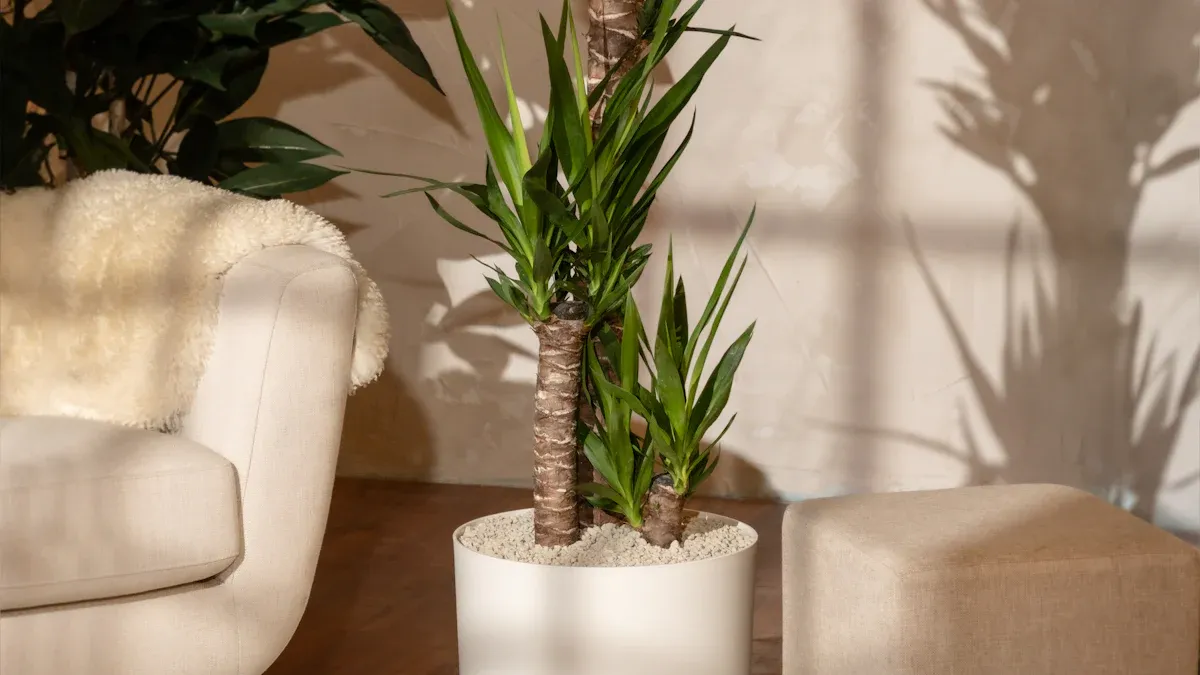
The yucca plant stands out with its striking appearance. It shows incredible resilience. You can find a yucca in many settings. This plant offers low-maintenance care when you give it the right conditions. Yucca varieties range greatly in size. Some, like the Banana Yucca, grow to a compact 2-3 feet. Others, like the Joshua Tree, can reach 15-30 feet over many decades. Understanding proper yucca plant care helps your yucca thrive. You learn its specific needs, including ideal sunlight. Unlocking the secrets to your yucca’s well-being is rewarding.
Essential Yucca Plant Care

Providing proper yucca plant care ensures your plant thrives. This section covers all fundamental aspects of maintaining healthy yucca plants, whether you grow them indoors or outdoors. Understanding these needs helps you cultivate a beautiful and hardy specimen.
Yucca Sunlight Needs
Sunlight is crucial for your yucca’s health. The amount of sunlight your yucca needs depends on whether it lives indoors or outdoors.
For outdoor yucca plants, you should aim for at least 6 hours of direct sunlight daily. Many yucca species thrive in full sun. For example, Yucca ‘Bright Star’ requires 6-8 hours of direct sunlight each day for optimal growing. Insufficient sunlight leads to leggy growth and fewer flowers. This negatively impacts the plant’s overall health.
Outdoor yucca plants in very hot climates may benefit from light afternoon shade. This prevents leaf scorch.
Indoor yucca plants need bright, indirect light. They can tolerate some direct sun, especially morning sun. Place your indoor yucca near a south-facing window for best results. Yucca elephantipes, for instance, performs well with strong light. It needs at least 400 foot-candles (FC) of light. Ideally, it prefers around 800 FC.
You should place it less than one foot from a window to ensure it gets enough light. If your yucca does not get enough sunlight, it may grow spindly. It will also produce fewer flowers. Some yucca species prefer bright, filtered light. This helps prevent leaf spots.
Yucca Watering Guide
Yucca plants are drought tolerant. This means they do not need frequent watering. It is better to underwater your yucca than to overwater it. You should water your yucca when the top two inches of soil feel dry. Allow the soil to dry out completely between waterings. This prevents root rot.
You can identify watering issues by observing your plant.
Symptom | Overwatering | Underwatering |
|---|---|---|
Leaf Appearance | Yellowing, soft leaves | Crispy, brown leaf tips |
Stem Condition | Mushy stems | N/A |
Soil Condition | Foul smell from soil | Top inch of soil feels dry |
Overall Plant Effect | Drooping leaves, potential root rot | Drooping leaves, potential permanent damage |
Key Indicator | Soft, yellow leaves, root rot | Dry, crispy leaf tips |
If you see yellow, soft leaves, you are likely overwatering. Crispy, brown leaf tips indicate underwatering. Adjust your watering schedule based on these signs. Proper watering is key to successful yucca plant care.
Ideal Yucca Soil
Yucca plants need well-draining soil. This prevents water from sitting around the roots. A sandy, loamy mix works best. You can use a cactus or succulent potting mix for container-grown yucca. For outdoor planting, ensure your garden soil drains well. You can amend heavy clay soils with sand or perlite to improve drainage.
The ideal soil pH for yucca plants ranges from 6.0 to 7.5. For optimal growing, maintaining a soil pH between 6.0 and 7.0 is crucial. This range helps the plant absorb nutrients effectively. This helps your yucca thrive.
Yucca Temperature and Humidity
Yucca plants are hardy and tolerate a range of temperatures. Most species prefer temperatures between 60°F and 90°F (15°C to 32°C). Many yucca species are hardy in USDA hardiness zones 5-10. This means they can withstand cold temperatures in these zones. Always check the specific hardiness zones for your yucca species. This ensures it can survive your local climate.
Yucca plants prefer low humidity. Ideally, humidity levels should be between 30% and 50%. They can tolerate brief periods of higher humidity, up to 60%. Prolonged exposure to excessive humidity can lead to root rot and fungal issues. Good air circulation is important. It prevents stagnant air and maintains optimal humidity levels. This is especially true for indoor growing.
Fertilizing Your Yucca
Yucca plants do not need much fertilizer. They are not heavy feeders. You can fertilize your yucca once a year in spring or early summer. Use a balanced NPK liquid fertilizer. A 20-20-20 ratio is recommended. This ratio provides nitrogen for foliage, phosphorus for root support, and potassium for drought resilience.
This balanced nutrition supports healthy foliage, strong roots, and structural resilience. It works well for both potted and in-ground yucca. Avoid fertilizing in fall or winter. The plant is not actively growing during these seasons.
Pruning Yucca Plants
Pruning helps maintain your yucca’s shape and removes dead or damaged leaves. You can prune your yucca in late winter or early spring. Use sharp, clean pruning shears. Cut off any yellow, brown, or damaged leaves at their base. If your yucca grows too tall, you can cut the main stem. This encourages new growth from the base. You can also propagate new yucca plants from these stem cuttings. This is a great way to propagate yucca and expand your gardening collection.
Yucca Pests and Diseases
Yucca plants are generally resistant to pests and diseases. However, some issues can arise.
Common pests include:
Sap-sucking insects: Scale, aphids, mealybugs, and yucca plant bugs. These pests leave blackened spots on leaves from feeding. They also excrete sticky honeydew. This attracts sooty mold fungi, which coats the foliage in a black film.
Spider Mites: These tiny creatures thrive in dry conditions. They create fine webbing and cause leaf discoloration. This weakens the plant.
Mealybugs: These appear as white, cottony masses on leaves and stems. Their feeding causes stunted growth and yellowing leaves.
Aphids: Small, green or black insects that suck sap. They distort new growth and leave sticky honeydew.
For diseases, leaf spot is a common issue. You can manage it with organic treatments:
Remove heavily infected leaves. This prevents spore spread.
Reduce overhead watering. This minimizes spore splashing.
Clear fallen leaf debris. Destroy them instead of composting. The fungus can persist on them.
Ensure proper watering and feeding. Healthy plants are less susceptible to severe infections.
Avoid using fungicides. They can harm biodiversity and soil health. Good indoor and outdoor yucca plant care helps prevent most pest and disease problems.
14 Amazing Yucca Types

You can find many different yucca varieties. Each one offers unique characteristics. This section describes 14 distinct yucca species. You will learn about their specific features and care considerations.
Yucca elephantipes (Spineless Yucca)
Yucca elephantipes is also known as “spineless yucca” or “elephant yucca.” This evergreen species can grow into a large shrub or small tree. It has a very noticeable swollen base. This base tapers into a slender, branched trunk. Both the trunk and branches produce large, compact clusters of dark green leaves. The leaves are pliable. They lack the sharp spines typical of most yucca. This yucca plant can reach heights of 9 meters or more. It is often smaller in cultivation.
The trunk becomes rough and thick with age. It develops a swollen base. It often branches a few decimetres off the ground when mature. The leaves arrange in a spiral columnar rosette. They are linear-lanceolate and strap-like. These leaves are soft, glossy green, and succulent. They measure 60-120 cm long and about 5-7.5 cm wide.
They are either flat or slightly pleated. Margins are smooth or rough with obscure teeth. A soft green tip measures 5-10 mm long. Some leaves may have a slightly roughened dorsal ridge. The ‘Variegata’ selection has leaves with creamy yellow margins. This yucca is hardy in USDA zones 9-11.
Yucca gloriosa (Spanish Dagger)
Yucca gloriosa is a striking yucca. It is also known as Spanish Dagger. This yucca species forms a thick, woody trunk over time. It can grow up to 10 feet tall. Its stiff, sword-like leaves have sharp points. They are dark green or blue-green. This yucca produces tall flower stalks in summer. These stalks bear creamy white, bell-shaped flowers. You can grow this yucca in USDA zones 7-10. It is a hardy plant. It thrives in full sun and well-draining soil.
Yucca rostrata (Beaked Yucca)
Yucca rostrata is a beautiful yucca. It features a single, slender trunk. This trunk is topped with a symmetrical rosette of thin, blue-green leaves. The leaves are stiff and needle-like. They create a spherical shape. This yucca is slow-growing. It can reach 10 feet in height. Its flower stalks can extend to 15 feet. The spread of this yucca is typically 5 feet. Yucca rostrata typically requires an available planting space of 6 to 12 feet. It is hardy in USDA zones 5-10. This yucca prefers full sun and excellent drainage.
Yucca filamentosa (Adam’s Needle)
Yucca filamentosa is a popular yucca species. It forms a basal rosette of sword-shaped, blue-green leaves. These leaves have curly, white threads along their edges. This yucca produces tall stalks with bell-shaped, white, lantern-like flowers. These flowers have an extended bloom period. A key unique characteristic is its obligate symbiotic relationship with the yucca moth (Tegeticula sp.). This moth is its sole pollinator.
The moth collects pollen. It lays eggs near the flower’s ovary. Then it covers the eggs with pollen. This ensures both pollination for the yucca and a host plant for the moth larvae. Neither species can survive without the other.
This yucca features yellowish-white flowers. They bloom in clusters on panicles. These panicles are typically 3 to 6 feet tall. They extend above the foliage from May to July. These flowers also attract bees and butterflies. The plant develops tall flower spikes from late spring to early summer.
Its flowers are creamy-white and pendulous. They create a striking visual display. This yucca is very hardy. You can grow it in USDA zones 4-10. It tolerates a wide range of conditions.
Yucca brevifolia (Joshua Tree)
Yucca brevifolia is famously known as the Joshua Tree. This iconic yucca species is native to the Mojave Desert. It has a unique, branched growth habit. Its stiff, dagger-like leaves are green. This yucca requires a specific climate. It needs well-timed precipitation, hot summers, and cold winters. It can withstand temperatures from -13 °F to 120 °F. You typically find it at elevations between 2,000 and 6,000 feet. A cold period is essential for flowering and reproduction. Freezing temperatures damage branch ends. This leads to branching and flowering. Years with higher rainfall are often optimal for flowering. This yucca is hardy in USDA zones 6-10. It needs well-draining soil and full sun.
Yucca aloifolia (Aloe Yucca)
Yucca aloifolia is known as the “sharpest” yucca. This indicates its bold and dramatic appearance. Its sharp, dagger-like leaves contribute to this. The leaves are evergreen, simple, linear, and stiff. They resemble daggers. They measure 12 to 18 inches long. Their color is dark green. The margin is serrate (rough).
This distinguishes them from Yucca gloriosa (Spanish dagger), which has smooth margins. Unlike Yucca gloriosa, the outer halves of Yucca aloifolia leaves do not bend toward the ground.
This yucca can reach 10 to 15 feet in height. Its spread is 3 to 5 feet. The plant habit is upright. Its density is moderate. The growth rate is slow. It has a coarse texture. The trunk and branches are typically multi-trunked or clumping stems. You can train them to a short, single trunk. This yucca is hardy in USDA zones 7-11. It thrives in full sun and sandy, well-draining soil.
Yucca flaccida (Weak-leaf Yucca)
Yucca flaccida is similar to Yucca filamentosa. However, it has distinct differences. This yucca features sword-shaped leaves. These leaves tend to bend or flop over from the center. Yucca filamentosa possesses leaves that are distinctly more upright.
Feature | Yucca flaccida | Yucca filamentosa |
|---|---|---|
Leaves | Thinner, narrower | Thick, rigid |
Flowers | Smaller, narrower (4–5 cm long) | Larger (5–7 cm long) |
This yucca is hardy in USDA zones 5-10. It prefers full sun to partial shade. It needs well-draining soil.
Yucca glauca (Soapweed Yucca)
Yucca glauca is also known as Soapweed Yucca. This yucca species is native to the Great Plains. It forms a rosette of stiff, narrow, blue-green leaves. It produces a tall flower stalk with creamy white flowers. The fruits can be consumed raw or cooked. They are suitable for drying for later use. The flowers are delicious. You can eat them raw or cooked. Flower stalks can be prepared and consumed similarly to asparagus stalks.
Beyond its edible components, the leaves and roots of Soapweed Yucca have been traditionally utilized for various medicinal and practical purposes. Roots contain saponins. You should not ingest them. The crushed roots of Soapweed Yucca are traditionally used to produce a lather. This serves as an effective soap or shampoo.
This is due to the high concentration of saponins found in the roots. Dried leaves can be woven into items such as baskets, mats, and sandals. Strong and coarse fibers can be extracted from the leaves to create cordage. This yucca is very hardy. You can grow it in USDA zones 4-9. It tolerates cold temperatures.
Yucca whipplei (Our Lord’s Candle)
Yucca whipplei is a stunning yucca. It is known as Our Lord’s Candle. This yucca forms a dense, spherical rosette of stiff, needle-sharp leaves. After 5 to 6 years, the plant develops a flower spike. This spike can grow 10 to 15 feet tall in a few weeks. It is adorned with hundreds of white to pale purple bell-shaped flowers. It maintains an exclusive co-evolutionary relationship with the California Yucca Moth (Tegeticula maculata). This moth is its sole pollinator. The moth lays eggs in the ovary while pollinating. Larvae feed on some seeds.
Following pollination, the plant dies. This process is known as monocarpic reproduction. The dried stalk may remain standing for years. The plant typically flowers after 5 or more years, usually in April–May, and then dies. However, some subspecies produce offshoots. This allows clones to continue growing and reproducing even after the parent plant’s death. This yucca is monocarpic. It flowers once after approximately seven years. It expends all its energy on flower and seed production before dying. It produces a striking flower stalk that can reach heights of 3-9 feet. This leads to its common name. This yucca is hardy in USDA zones 8-10.
Yucca schidigera (Mojave Yucca)
Yucca schidigera is native to the Mojave Desert. It is also known as Mojave Yucca. This yucca species forms a stout trunk. It has stiff, sword-like leaves. Extracts from this yucca have various applications. They alleviate inflammation. They improve joint health. They treat skin conditions. They are used in nutritional supplements for anti-inflammatory and antioxidant properties.
Industrially, saponins from this yucca are used for foaming properties in cleaning and personal hygiene. Tough fibers are woven into ropes, mats, and textiles. Pet food additives reduce ammonia in waste. This improves air quality. Natural saponins are used for foaming and emulsifying abilities in eco-friendly cleaning products. In horticulture, it is employed as a soil conditioner.
It enhances nutrient availability and plant growing. It is cooked in stews or fried as a delicacy. In agriculture, it acts as a surfactant. It enhances wetting and spreading of liquids. This improves efficacy of pesticides and foliar fertilizers. It has anti-fungal properties.
It combats certain fungal diseases in plants. It helps plants cope with environmental stresses like drought or extreme temperatures. It enhances soil structure and water retention. This benefits plant growing. As a livestock feed additive, it reduces ammonia content in animal waste. This potentially improves air quality in confined spaces.
In the poultry industry, it enhances growth and productivity in broiler production. It improves feed conversion rate, protein efficiency ratio, and energy efficiency ratio. It increases eviscerated weight and breast meat yield in broilers. It reduces ammonia accumulation in animal holding facilities and fecal odor. It enhances metabolic efficiency and improves egg weights. Saponin, a key component, binds ammonia. This reduces free ammonia levels. This yucca is hardy in USDA zones 6-10.
Yucca baccata (Banana Yucca)
Yucca baccata is known as Banana Yucca. This yucca species gets its name from its large, banana-shaped fruits. It forms a low-growing rosette of stiff, blue-green leaves. The leaves have sharp tips. This yucca is a hardy plant. It is native to the southwestern United States.
You can eat various parts of Yucca baccata. Seeds can be ground into flour. You can roast them for snacks, pan-fry them, or boil them. Fruits can be eaten raw or cooked in soups and stews. You can make them into jellies, bake them, or dry them. Leaf bases are best when young and tender. You can boil, steam, sauté them, or incorporate them into soups, stews, or stir-fries. Flowers can be eaten raw, dried and crushed, added to jellies, drinks, or candies.
You can also boil, fry, sauté, or bake them. Petals are sweetest. Other parts may be bitter. Emerging tender stalks and stems are best harvested before blooming. This avoids fibrousness. When cooked, you can chop and prepare them like asparagus. You can also bake them for a sweet potato-like sensation. Older stems may contain saponins. They require boiling or roasting to break down toxins. This yucca is hardy in USDA zones 5-9.
Yucca constricta (Buckley’s Yucca)
Yucca constricta is also known as Buckley’s Yucca. This yucca species forms a stemless or short-stemmed rosette. It has narrow, flexible leaves. The leaves are typically green with white margins. This yucca is drought tolerant. It needs occasional water. It prefers average, lean, well-drained, gritty soil. It needs sun to mostly sun exposure.
Its native habitat includes grassland and woodland. You can find it in ecoregions like the Edwards Plateau, Gulf Coast Prairies and Marshes, and Southern Texas Plains. Specific habitats include Balcones Canyonlands, Edwards Plateau Woodland, Llano Uplift, Semiarid Edwards Plateau, Coastal Sand Plain, Lower Rio Grande Alluvial Floodplain, Lower Rio Grande Valley, Southern Subhumid Gulf Coastal Prairies, Northern Nueces Alluvial Plains, Rio Grande Floodplain and Terraces, and Semiarid Edwards Bajada, Texas-Tamaulipan Thornscrub. This yucca is hardy in USDA zones 7-10.
Yucca elata (Soaptree Yucca)
Yucca elata is known as Soaptree Yucca. This yucca species is characterized by its tall, slender trunk. It can reach 9-12 feet high. Occasionally, it grows up to 30 feet. Its growth form varies. It can be a single, erect, trunk-like stem. It can also be several stems in clumps of 1.6 to 8.2 feet in diameter. It is rhizomatous.
A ‘vertical rhizome’ commonly grows 3-5 feet deep and 3-6 inches in diameter. The leaves are slender and sharply pointed. They grow 2 to 3 feet in length. They grow in a tuft at the top of the trunk. They grow in variably loose to densely crowded clumps. This yucca produces a tall flower stalk with creamy white flowers. This yucca is hardy in USDA zones 6-10.
Yucca pallida (Pale-leaf Yucca)
Yucca pallida is also known as Pale-leaf Yucca. This yucca species is characterized by its light-colored leaves. These leaves exhibit variations from a pale blue-gray to sage-green. It forms a stemless rosette of broad, flat leaves. It produces a tall flower stalk with creamy white flowers. This yucca is a smaller species. It is well-suited for rock gardens or containers. It is hardy in USDA zones 7-10. It prefers full sun and well-draining soil.
Common Yucca Problems
Even the most hardy yucca plant can face issues. Understanding these common problems helps you keep your yucca healthy. You can quickly identify causes and apply solutions, no matter your growing zones. This section addresses frequently encountered issues with your yucca.
Yellowing Leaves
You might notice your yucca’s leaves turning yellow. Several factors cause this. Improper light is one reason. Insufficient light slows growing. It also causes leaves to yellow. Many yucca species prefer indirect to bright light. Overwatering is another common cause. Yucca does not need much water. You should water only when the soil is 75-100% dry. Always discard excess water. This prevents root rot. Pests also cause yellowing.
Sap-sucking insects like spider mites, scale, and mealybugs drain moisture. This happens especially if your yucca is already stressed. Nutrient deficiency can also lead to yellowing leaves. This is uncommon for outdoor yucca species. Potted yucca in nutrient-poor soil might need occasional feeding. However, too much fertilizer also causes yellowing.
Root rot, often from warm, oversaturated soil, prevents water and nutrient transport. This makes your yucca’s leaves yellow. Even hardy yucca species in various zones can show yellowing if care is not right. Understanding the specific needs of yucca in your zones helps prevent issues.
Brown Tips
Brown tips on your yucca’s leaves usually signal one main problem. Incredibly dry soil is the primary reason. Yucca species prefer to dry out between waterings.
However, leaving the soil dry for too long harms the roots. The roots die back. This causes leaves to become limp and droop. They fold up. Ultimately, the tips turn brown. You must ensure your yucca species gets enough water, but not too much. This balance is key for all yucca, regardless of their hardiness in different zones. Proper care is essential across all zones.
Drooping Leaves
When your yucca’s leaves droop, it often indicates stress. Overwatering can cause drooping. The roots cannot breathe. This makes the leaves soft and weak. Underwatering also leads to drooping. The plant lacks moisture. Its leaves become limp. Pests, such as aphids and spider mites, also cause drooping. They drain the plant’s moisture. This is common in indoor, crowded, or humid conditions. Ensure your yucca has good air circulation.
Check the soil moisture regularly. This helps prevent drooping. Even hardy yucca species in their ideal zones need consistent care to avoid this problem. A hardy yucca still needs proper conditions. Knowing your specific zones helps you tailor care. Every yucca species needs consistent care.
You now understand that yucca plants are rewarding. They are easy to care for with the right knowledge. Remember key care aspects for your yucca: proper sunlight, careful watering, and well-draining soil. Choose the right yucca species for your environment. Many yucca species thrive in different zones. Apply these tips. You will enjoy the unique beauty and resilience of your yucca plants. A thriving yucca is a stunning, low-maintenance addition to any space. Cultivate your yucca masterpiece. Every yucca can flourish with your care.