
You love a sweet, juicy watermelon, right? Imagine biting into one you grew yourself! There’s nothing quite like harvesting your own perfect watermelon. To get the sweetest fruit, choosing the right watermelon varieties makes all the difference. This guide will show you the best watermelon varieties for your home garden. We also share tips for growing these amazing varieties so you can enjoy delicious, sweet watermelon all summer long.
Key Takeaways
Choose the right watermelon type for your garden. Consider sweetness, size, seeds, and how long it takes to grow.
Some top sweet types are Sugar Baby, Crimson Sweet, and Cal Sweet Bush. Cal Sweet Bush is good for small spaces.
Watermelons need good soil, lots of sun, and consistent watering. Reduce watering before harvest for sweeter fruit.
Look for a yellow spot and a dry tendril to know when a watermelon is ripe. A ripe watermelon sounds hollow when tapped.
Key Considerations for Choosing Watermelon Varieties
You want to grow the best watermelon for your home garden. Think about a few things before you pick your seeds.
Sweetness Levels (Brix)
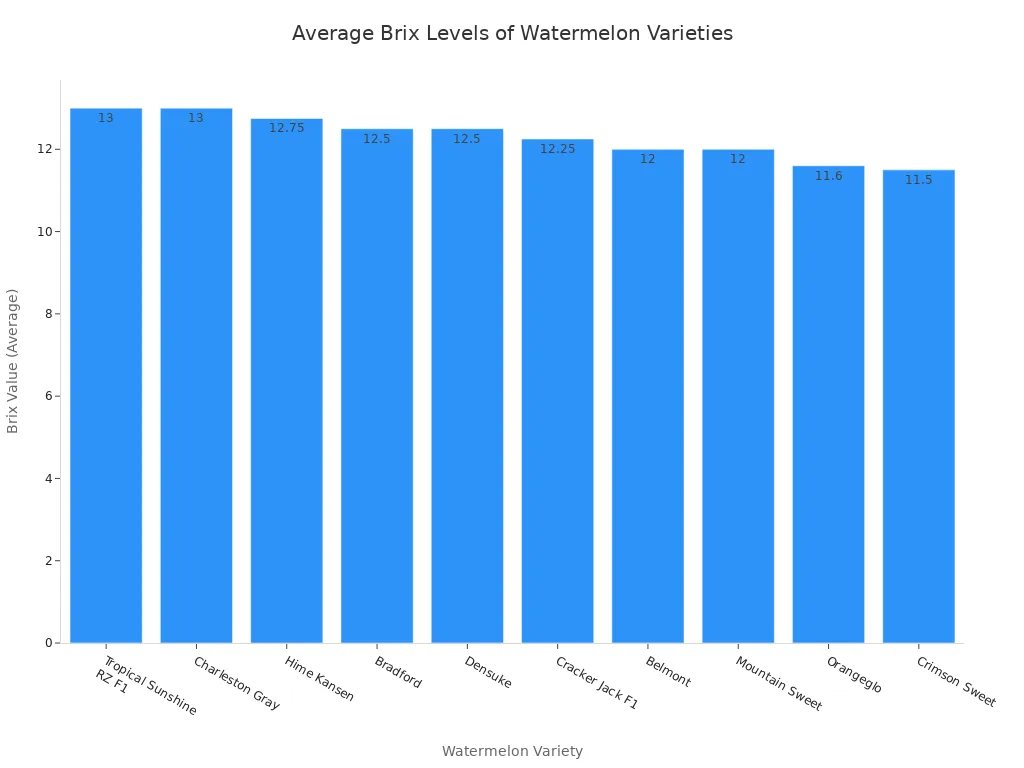
How sweet do you like your fruit? Brix measures the natural sugars in a watermelon. A higher Brix number means more sweetness. A value of 11 or more usually means a very sweet watermelon. For example, Charleston Gray can have a Brix of 13. Crimson Sweet often measures between 11 and 12.
Rank | Watermelon Variety | Brix Value (Average) |
|---|---|---|
1 | Tropical Sunshine RZ F1 | 13 |
1 | Charleston Gray | 13 |
3 | Hime Kansen | 12.75 |
4 | Bradford | 12.5 |
4 | Densuke | 12.5 |
6 | Cracker Jack F1 | 12.25 |
7 | Belmont | 12 |
7 | Mountain Sweet | 12 |
9 | Orangeglo | 11.6 |
10 | Crimson Sweet | 11.5 |
Watermelon Size Options
Consider your garden space and how you will use your harvest. Watermelon comes in many sizes.
Icebox watermelons are small. They fit easily in your fridge. Sugar Baby weighs 8-10 pounds.
Picnic watermelons are larger. They feed many people. Crimson Sweet can grow up to 25 pounds.
You can find sizes from tiny handheld types to giant ones over 50 pounds.
Category | Weight Range (kg) | Diameter (cm) |
|---|---|---|
Small (Mini/Icebox) | 2.5 – 4.5 | ~20-25 (or 8 inches) |
Medium | 6 – 12 | N/A |
Large (Picnic) | 9 – 119 | 28-30 |
Seeded vs. Seedless
Do you prefer seeds or no seeds? Seeded watermelon types are traditional. They often have a rich flavor. Seedless types are convenient. They are great for snacking. Both offer a sweet treat.
Maturity Time
How long does a watermelon take to grow? This is its maturity time. Some types ripen faster. If you live in a cooler area, choose a faster-maturing type. This ensures you get a harvest before cold weather.
Disease Resistance
Protect your plants from common problems. Some watermelon varieties resist diseases. This helps you grow a healthy crop. Common diseases include anthracnose and Fusarium wilt.
Anthracnose
Fusarium wilt
Downy mildew
Gummy stem blight
Root-knot nematode
Virus diseases
Many commercial watermelon types resist anthracnose. Several also resist Fusarium wilt. Choosing resistant varieties is a good way to control diseases. It saves you effort.
Top Sweet Watermelon Varieties for Home Gardens
You’re ready to pick your perfect watermelon! Here are some of the best watermelon varieties you can grow at home. Each one offers something special, from size to flavor to unique appearance.
Sugar Baby
You want a classic, personal-sized watermelon? Sugar Baby is a fantastic choice. This icebox type is perfect for smaller families or when you want a whole watermelon just for yourself. It’s known for its deep red, sweet flesh and easy-to-manage size.
Brix Level: 10.2, making it one of the sweetest varieties.
Average Weight: Around 8-10 pounds.
Rind Type: Medium green with dark veins or dark green with slight dark veins.
Flesh Texture: Crisp, mottled with few black seeds.
You can expect a good yield from these plants. Plant them in full sun and give them plenty of space to sprawl. They mature relatively quickly, so you won’t wait long for your sweet treat.
Crimson Sweet
Crimson Sweet is a popular choice for a reason. This watermelon offers a classic, juicy flavor and a good size for sharing. It’s a reliable performer in many gardens, giving you a generous harvest of sweet fruit.
Variety | Average Weight (kg) | Flesh Color | Rind Type | Brix Level | Maturity Days |
|---|---|---|---|---|---|
Akbar-F1 (Crimson Sweet type) | 17-20 | Crimson red | Light green with distinctive green broad stripes | 12-13 | 85-90 |
This watermelon type typically weighs between 17-20 kg (about 37-44 pounds) and boasts a high Brix level of 12-13, ensuring a truly sweet experience. It takes about 85-90 days to mature. Make sure you give these large watermelon plants plenty of room to grow. Consistent watering helps develop that amazing flavor.
Tendersweet
If you’re looking for a watermelon with a unique golden-orange flesh, Tendersweet is an excellent option. This variety lives up to its name, offering incredibly tender and sweet flesh. Its vibrant color makes it a standout in any fruit salad. You’ll love its refreshing flavor on a hot day. Give these plants rich soil and consistent moisture for the best results.
Cal Sweet Bush
Do you have a smaller garden or want to grow watermelon in containers? Cal Sweet Bush is one of the best watermelon varieties for you! Its compact vines mean you don’t need a huge space to grow delicious fruit.
Characteristic | Detail |
|---|---|
Average Weight | 10-12 pounds |
Maturity Days | 90 days |
Vine Type | Compact, bushy vines (14-18″ long) |
Fruit Yield (per plant) | 2-3 fruits |
Fruit Protection | Enough foliage cover |
This watermelon produces 2-3 fruits per plant, each weighing 10-12 pounds. The bushy vines are only 14-18 inches long, making them perfect for smaller areas. You’ll get a good yield of sweet fruit in about 90 days. The foliage also protects the developing fruit from sunscald.
Charleston Grey
Charleston Grey is a classic, oblong watermelon known for its light green rind and firm, sweet red flesh. It’s a very reliable producer and handles heat well, making it a great choice for warmer climates. This watermelon can grow quite large, often reaching 20-30 pounds. Give it plenty of sun and space, and you’ll be rewarded with a bountiful harvest.
Moon and Stars
Moon and Stars is a truly unique and beautiful watermelon. Its dark green rind is speckled with bright yellow ‘stars’ and often features a larger yellow ‘moon’ spot. This heirloom watermelon is not just pretty; it’s also incredibly sweet.
Characteristic | Description |
|---|---|
Average Weight | 10-15 pounds (can grow up to 40 pounds) |
Flesh Color | Commonly red, yellow, or orange |
Rind Type | Dark green skin speckled with yellow spots, thick rind good for pickling |
Maturity Days | 95-100 days |
You can find this watermelon with red, yellow, or orange flesh, and it typically weighs 10-15 pounds, though some can reach up to 40 pounds! It takes about 95-100 days to mature. The thick rind is also great for making watermelon rind pickles. Ensure consistent watering, especially as the fruit develops, to maximize its sweetness.
Hearts of Gold
Hearts of Gold is another fantastic choice if you love yellow-fleshed watermelon. This variety offers a rich, golden-yellow flesh that is incredibly sweet and juicy. It’s a medium-sized watermelon, usually weighing around 10-15 pounds, making it manageable for most home gardens. Its unique color and delightful flavor make it a favorite for many gardeners. Plant it in well-drained soil and give it full sun for the best results.
Cream of Saskatchewan
For something truly different, try Cream of Saskatchewan. This heirloom watermelon produces creamy-white to pale yellow flesh that is surprisingly sweet and refreshing. It’s a smaller watermelon, perfect for individual servings.
Characteristic | Description |
|---|---|
Average Weight | 6–11 pounds |
Flesh Color | Creamy-white |
Rind Type | Pale green with dark green stripes |
Maturity Days | 85 days |
This watermelon typically weighs 6-11 pounds and matures in about 85 days. Its pale green rind with dark green stripes makes it easy to identify. You’ll get a good yield from these plants, and their unique color will be a conversation starter.
Hale’s Best
Hale’s Best is a classic open-pollinated watermelon known for its early maturity and excellent flavor. While not as common as some other watermelon varieties, it’s a reliable choice for home gardeners who want a dependable, sweet harvest. This watermelon usually weighs around 10-15 pounds and has a light green rind with darker stripes. It’s a great all-around performer, giving you delicious fruit relatively quickly. Provide consistent moisture and plenty of sunlight for the best sweetness.
Tips for Growing Sweet Watermelon at Home
You want to grow the best, most delicious watermelon. Here are some tips to help you get a great yield of sweet fruit.
Soil Preparation
Good soil is key for a sweet watermelon. Your soil pH should be between 6.0 and 7.0. This range helps your plants take up nutrients. Watermelons are “heavy feeders.” They need lots of nitrogen, phosphorus, and potassium (N-P-K). You can add organic matter like compost or aged manure. This makes your soil better and holds moisture. Before planting, you can also add a complete fertilizer like 10-10-10. Use about 1 to 2 pounds per 100 square feet.
Sunlight Needs
Watermelons love the sun! They need full sun to grow big and healthy. This means about 8 to 10 hours of direct sunlight every day. More sun helps your watermelon plants produce a better yield and sweeter fruit.
Watering Practices
Watering correctly makes a big difference in your watermelon’s sweetness. Water your plants consistently, especially when flowers appear and fruits start to form. Give them about 1-2 gallons of water per plant every 2-3 days. Water at the base of the plant. Avoid getting the leaves wet. As your watermelons get close to ripening, reduce watering. Stop watering completely about a week before you plan to harvest. This helps concentrate the sugars, making your watermelon extra sweet.
Fertilization
Your watermelon plants need food to grow strong. Use a balanced fertilizer like 10-10-10 or 12-4-8. Apply fertilizer before the plants start blooming. This helps them produce many flowers. Nitrogen helps with early growth. Phosphorus is good for roots and fruit set. Potassium makes your fruit better and helps fight diseases.
Harvesting for Sweetness
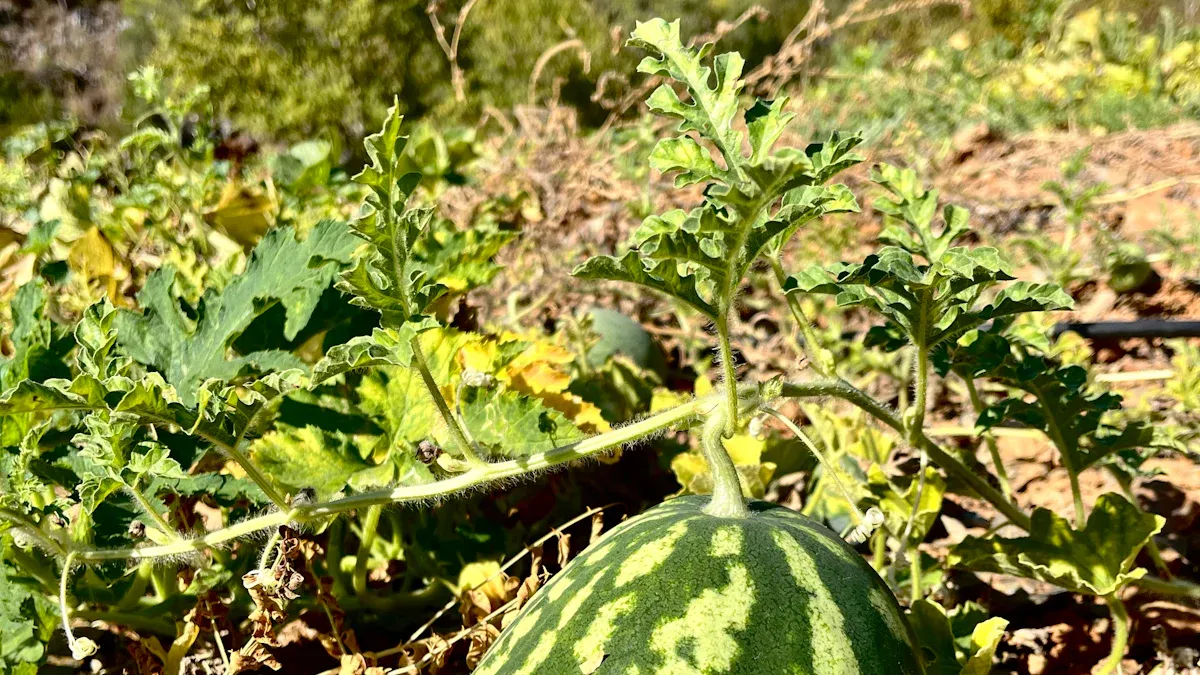
Knowing when to pick your watermelon is important for sweetness. Look for a yellow spot on the bottom where it rests on the ground. This “field spot” should be creamy yellow, not white. The rind should look dull, not shiny. The curly tendril closest to the fruit will turn brown and dry out. When you tap a ripe watermelon, it should sound hollow. It should also feel heavy for its size.
Pest and Disease Control
Keep an eye out for pests like spider mites, cutworms, and aphids. These can hurt your watermelon plants and reduce your yield. You can use natural methods like companion planting. Marigolds can keep aphids away. Neem oil is also good against many pests. Healthy plants are less likely to get sick. Make sure your plants get enough water, nutrients, and sun.
You’ll find immense joy and reward growing your own sweet watermelon. Choosing the best watermelon varieties and following good growing practices ensures a truly delicious harvest. Pick a watermelon variety that perfectly suits your garden and climate. Don’t wait; start your sweet watermelon growing journey today!
FAQ
How do I know my watermelon is sweet?
You can tell by a few signs. Look for a creamy yellow spot where it rests on the ground. The curly tendril nearest the fruit should be dry. It will also sound hollow when you tap it. 🍉
Can I grow watermelon in a small garden?
Absolutely! Choose “icebox” or “bush” varieties. Sugar Baby and Cal Sweet Bush are excellent choices. Their compact vines fit well in smaller spaces or containers. 🌱
What’s the easiest watermelon to grow for beginners?
Sugar Baby and Crimson Sweet are great for beginners. They are reliable producers. These varieties also adapt well to various growing conditions. You will enjoy a good harvest.
Why isn’t my watermelon sweet?
Your watermelon might need more direct sunlight. Consistent watering is also crucial during growth. Try reducing water about a week before harvest. This helps concentrate the sugars for a sweeter taste. ☀️