
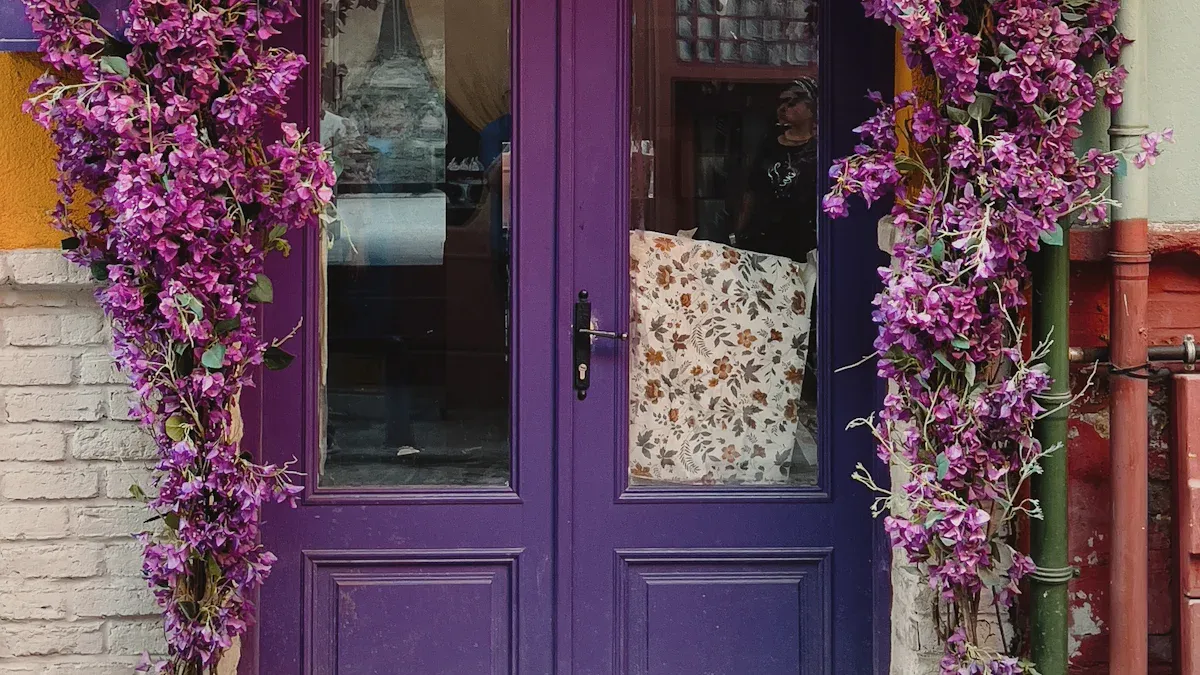
Imagine a garden space transformed by the rich, regal hue of purple. This color brings calm and stimulates creativity. Purple flowers offer a sense of peace and wisdom. You can add drama and romance to your outdoor areas with beautiful flowering vines. These stunning vines provide vertical interest, vibrant color, and often delightful fragrance. This post explores 10 stunning vines that can brighten your garden. You will find many options for different climates and growing conditions. You can train these climbing plants to climb walls or cascade gracefully.
Key Takeaways
- Purple flowering vines add beauty to your garden. They bring color and attract helpful insects like butterflies.
- You can use purple vines in many ways. They grow up walls or fences, saving space in your garden.
- Different purple vines need different care. Some need lots of sun, others like shade, and some need strong support to climb.
- Consider your climate and how much time you have. This helps you pick the best purple vine for your garden.
Why Purple Flowering Vines?
Garden Impact
Purple flowering vines offer significant benefits to your outdoor space. They add a stunning splash of color. These plants create a dynamic, multi-season floral display. Their striking flowers, often with intricate structures, bring beauty and visual interest to your garden. You will notice their vigorous growth and lush foliage. This provides a lovely green backdrop for other plants. Beyond aesthetics, purple flowering vines enhance garden biodiversity. For example, Passionflower vines attract pollinators. These include butterflies, beneficial insects, and hummingbirds. They offer nectar, berries, and foliage. These vines also provide habitat for wildlife. They even serve as a host plant for the Gulf Fritillary butterfly.
Design Versatility
You can use purple vines in many creative ways. Their climbing nature allows them to thrive in limited spaces. This makes them an excellent choice for urban gardening. You can easily train these climbing plants to grow on trellises, fences, or walls. This saves valuable ground space. It also creates a lush, green backdrop that enhances your outdoor area. These vines maximize vertical space in your garden. They add layers of texture and color. Their blooms elevate your outdoor space. They fit seamlessly into various designs. You can use them in lush tropical gardens or charming cottage styles. The versatility of these purple vines helps you achieve your desired garden look.
Wisteria
Vine Profile
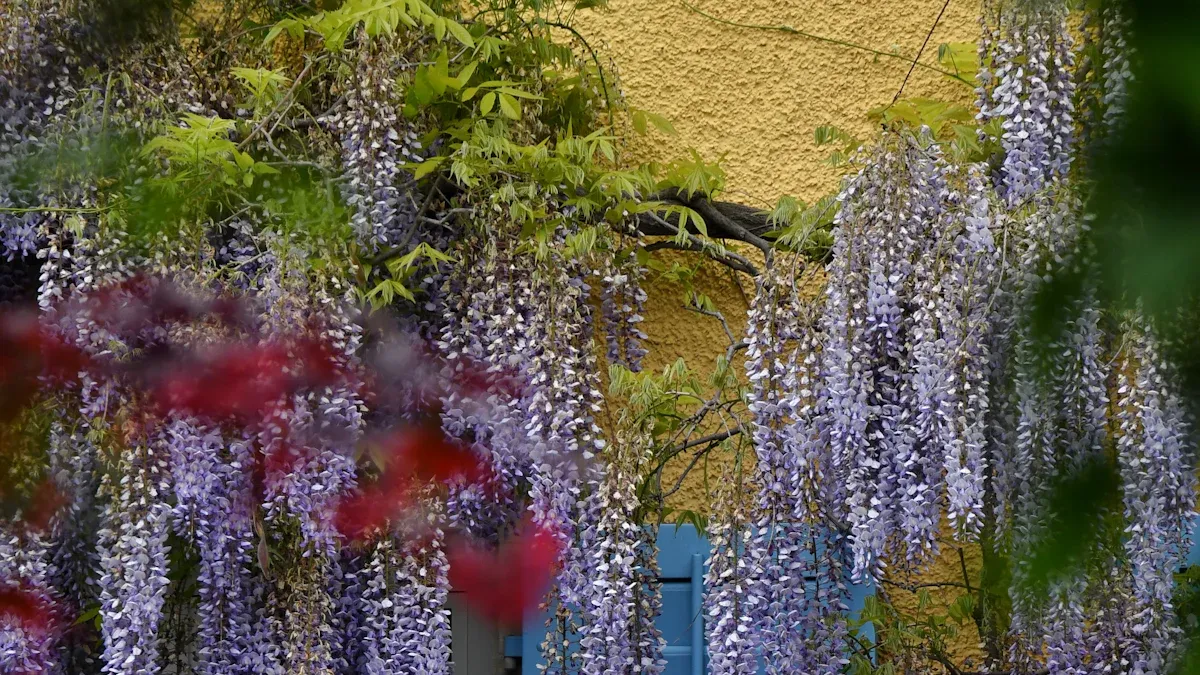
Wisteria is a truly classic choice for your garden. You will find two main types. These are Japanese Wisteria (Wisteria floribunda) and Chinese Wisteria (Wisteria sinensis). People often call Japanese Wisteria by names like fuji or Noda-fuji. These beautiful vines are known for their strong growth.
Bloom and Growth
Wisteria offers a spectacular display. You will see long, drooping clusters of fragrant purple flowers. These clusters can reach up to 18 inches long. The plant is a deciduous woody vine. It grows very quickly. Wisteria twines its way up structures. It can live for 100 years or more. Its vigorous branches can climb high. They can even reach treetops. This plant produces showy flowers. They often appear before the leaves fully emerge.
Growing Needs
Wisteria thrives in the right conditions. You should plant it where it gets full sun. It can tolerate some afternoon shade in hotter areas. Wisteria prefers well-drained soil. The soil should be slightly acidic to neutral. This vine grows well in USDA zones 5 to 9. American Wisteria can handle temperatures as low as -20°F.
Care Essentials
Wisteria needs regular care to look its best. You must prune it at least twice a year. Prune once in mid-summer after the flowers fade. Prune again in late winter or early spring before new leaves appear. This helps manage its size. It also encourages more blooms. Wisteria needs a strong support structure. Its heavy trunks can damage weaker supports over time.
Flowering Season
You can enjoy Wisteria’s beautiful blooms in spring. Chinese varieties often bloom before their leaves appear. Japanese and American varieties bloom a little later. They flower after the leaves emerge. In the Northwest, you will typically see blooms in April or May. American Wisteria often blooms in June or July. It can sometimes rebloom in the fall.
Clematis
Vine Profile
Clematis is a popular choice for many gardeners. You will find many types of these beautiful vines. They are known as the “Queen of the Climbers.” Here are some common names for Clematis:
| Botanical Name | Common Name |
|---|---|
| Clematis alpina | The Pine Virgin’s Bower |
| Clematis armandii | Armand Clematis |
| Clematis viticella | The Purple Virgins Bower |
| Clematis terniflora | The Sweet Autumn Clematis |
Bloom and Growth
Clematis offers a wide range of bloom styles. You can find flat, tubular, or bell-shaped flowers. Some have star-shaped or ruffled petals. Others feature velvety petals. The blooms can be small, about one inch wide, or large, up to ten inches across. Many varieties display stunning purple flowers. These plants are mostly woody, deciduous vines. Some are evergreen or herbaceous. They have twining stems. You can find compact patio varieties or sprawling garden climbers. Some grow only 3 feet tall. Others can reach 20 feet.
Growing Needs
Clematis plants prefer full to partial sun. They need at least six hours of direct sunlight each day. Many gardeners say Clematis likes its “feet in the shade but face in the sun.” This means the foliage should be in the sun, but the roots should stay cool. You can shade the roots with another plant, mulch, or a flat stone. Clematis thrives in well-drained, loamy-rich garden soil. A slightly acidic to neutral pH is best. Most Clematis are hardy from USDA zones 4 to 9. They can handle very cold temperatures.
Care Essentials
Proper care helps your Clematis thrive. You need to understand its pruning group.
- Group 1: These Clematis bloom in spring on old wood. You prune them after they flower.
- Group 2: These bloom in late spring or early summer. They flower on both new and old wood. You prune them lightly in early spring.
- Group 3: These bloom in late summer or fall on new wood. You can cut them back to about 12 inches in early spring. Clematis has deep roots. Water them slowly and deeply. Water weekly during the first growing season. This helps establish strong roots.
Flowering Season
Clematis blooms across different seasons. Spring-blooming types flower in early to mid-spring. They use the previous year’s growth. Summer-blooming varieties flower from late spring to late summer. They bloom on new growth. Late-blooming Clematis flower from mid-summer to fall. These also bloom on new growth. Some patio varieties offer long bloom times. You can enjoy their blooms from June to September.
Passion Flower
Vine Profile
Passion Flower is a captivating choice for your garden. You might know it by several common names. These include Apricot Vine, Maypop, Passionflower, or Passion Vine. Its botanical name is Passiflora.
Bloom and Growth
Passion Flower offers truly unique blooms. Its floral arrangement includes standard sepals and petals. It also has a special third floral whorl called the corona. This corona looks like purple and white striped threads. These threads emerge in a crimped pattern. Above the corona, you see the androgynophore. This is a shared male and female reproductive structure. It holds five stamens and the pistil. Passion fruit flowers are typically 2½–3 inches wide. They are slightly fragrant and face outward. These are perennial vines. They thrive for 5-7 years with proper care. They are known for their vining nature. They climb by seeking support from nearby structures.
Growing Needs
Passion Flower thrives in full sun. It can also grow in part shade or even full bright shade. However, you will see fewer blooms in shadier spots. It prefers well-draining soil. This plant appreciates water during establishment. After a few years, it becomes surprisingly drought-tolerant. It then needs infrequent deep summer irrigation. Most varieties can tolerate surprisingly cold winters. They might lose leaves or die back to the ground. They will return in spring.
Care Essentials
You can help your Passion Flower thrive with proper care. Yearly pruning in winter and spring helps recovery and flowering. Thinning new growth keeps the plant tidy. It rarely needs fertilizer. It responds well to a topdressing of compost in early spring. Over-fertilization can lead to poor yield.
Flowering Season
You will see Passion Flower blooms appear in summer. This is when the plant showcases its vibrant colors.
Bougainvillea
Vine Profile
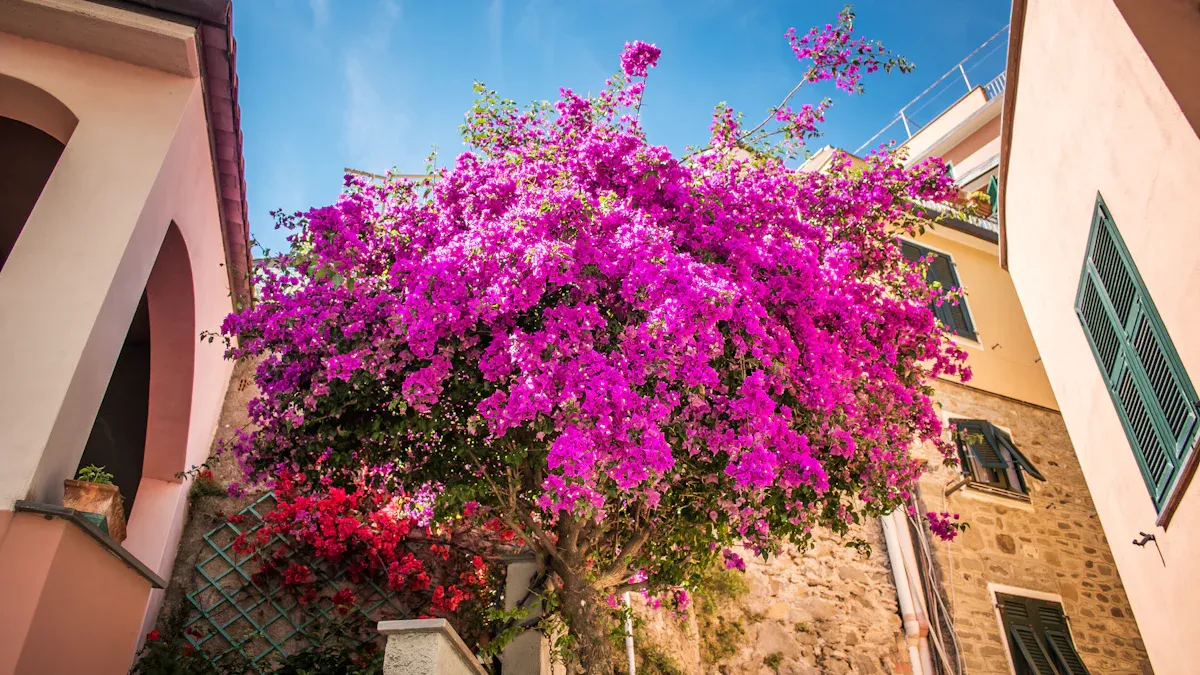
Bougainvillea is a stunning tropical vine. You might know it by its botanical name, Bougainvillea spectabilis or Bougainvillea glabra. This plant is famous for its vibrant, paper-like blooms. It is a woody vine. It has sharp thorns along its stems.
Bloom and Growth
Bougainvillea produces a spectacular display of color. What you see as the “flowers” are actually colorful leaf-like structures called bracts. These bracts surround tiny, inconspicuous white or yellow true flowers. The bracts come in many shades, including brilliant magenta, fuchsia, and other vibrant hues. This vine grows vigorously. It can climb high. It can also spread wide. You can train it to cover walls, fences, or arbors.
Growing Needs
Bougainvillea thrives in specific conditions. It needs full sun. You should give it at least 6 hours of sunlight daily. This helps it produce many flowers and maintain its bright appearance. Warm temperatures are also important. If it does not get enough sun, you will see less color. Bougainvillea needs well-draining soil. This is true whether you plant it in the ground or in a pot. You can improve existing soil by adding loam and organic matter. For potted plants, use a good organic potting soil mixed with compost. Always ensure your pots have drainage holes. This prevents root rot.
Care Essentials
You can keep your Bougainvillea healthy with proper care. Prune it regularly to control its size and shape. Pruning also encourages more blooms. Wear gloves when you prune. Its thorns are sharp. Provide a strong support structure for it to climb. Water it deeply but infrequently once it is established. This plant prefers drier conditions.
Flowering Season
Bougainvillea blooms for a long time. You will see its vibrant colors from spring through fall in warm climates. In tropical regions, it can bloom almost year-round.
Morning Glory
Vine Profile
Morning Glory is a beloved annual vine. You know it for its beautiful, trumpet-shaped flowers. The common name for these flowering plants is Morning Glory. Many different botanical names exist for these plants. They belong to several genera.
- Argyreia
- Calystegia
- Convolvulus
- Ipomoea (This is the largest group)
- Merremia
Some specific species you might encounter include Ipomoea tricolor and Ipomoea purpurea.
Bloom and Growth
Morning Glory vines produce abundant blooms. These flowers typically open in the morning. They close before nightfall. Each individual flower lasts only one day. However, healthy plants continuously produce new flowers. This gives you a fresh display daily. Morning Glory (Ipomoea purpurea) is a fast-growing vine. It can reach up to 10 feet tall. It can also spread 6 feet wide in a single season. This rapid growth helps it cover structures quickly.
Growing Needs
Morning Glory thrives in full sun. It needs at least six hours of direct sunlight each day. This plant prefers well-drained soil. It can tolerate a variety of soil types. You can grow Morning Glory as an annual in colder climates. It acts as a perennial in warmer regions.
| USDA Hardiness Zones | Morning Glory Peak Season | Perennial or Annual? |
|---|---|---|
| Zones 2a-8b | Summer to Fall | Annual |
| Zones 9a-11b | Summer to Fall | Perennial |
Care Essentials
Morning Glory is easy to care for. You should water it regularly, especially during dry periods. Provide a trellis or fence for it to climb. This vine needs support to grow upward. You can deadhead spent flowers. This encourages more blooms. Be aware that some varieties can self-seed aggressively. This means they might pop up in unexpected places next year.
Flowering Season
Morning Glory flowers bloom from mid-summer through early fall. You will see a continuous show of color during these months. The daily opening and closing of the flowers create a dynamic display. This makes them a charming addition to your garden.
Hyacinth Bean Vine
Vine Profile
The Hyacinth Bean Vine offers a beautiful addition to your outdoor space. You might know it by several common names. These include:
- Hyacinth Bean
- Indian Bean
- Lablab
- Egyptian Bean
Its botanical name is Lablab purpureus. People previously knew it as Dolichos lablab and Dolichos purpureus.
Bloom and Growth
This vine provides striking visual interest. You will notice its vibrant features.
| Characteristic | Description |
|---|---|
| Plant Type | Tender Perennial |
| Height | 12-15 feet |
| Stems | Striking purple |
| Flowers | Lilac-rose, pea-like |
| Pods | Shiny magenta, 2-3 inches long |
| Days to Maturity | 110-120 days |
| Site | Full sun |
| Spacing | 12 inches |
| Pinching | Not necessary |
| Toxicity | Non-toxic to kids and pets |
| Deer Resistance | Deer resistant |
Its stems are a striking purple color. You will see lilac-rose, pea-like flowers. These flowers develop into shiny magenta pods. These pods are 2-3 inches long. This plant grows as a tender perennial. It reaches heights of 12-15 feet.
Growing Needs
Hyacinth Bean Vine thrives in full sun. It needs at least six hours of direct sunlight daily. This plant prefers well-drained soil. It tolerates various soil types. You can grow it as an annual in cooler climates. It acts as a perennial in warmer regions.
Care Essentials
This vine is easy to care for. You should water it regularly, especially during dry spells. Provide a trellis or fence for it to climb. This vine needs support to grow upward. You do not need to pinch it. It is also deer resistant.
Flowering Season
You will see the beautiful flowers of the Hyacinth Bean Vine from mid-summer through fall. Its vibrant purple pods also add color during this time.
Lavender Trumpet Vine
Vine Profile
Lavender Trumpet Vine adds a touch of elegance to your garden. You will find it known by several names. Its botanical name helps you identify it correctly. These beautiful vines offer a unique display.
| Common Name | Botanical Name |
|---|---|
| Lavender Trumpet Vine | Clytostoma callistegioides |
| Violet Trumpet Vine | Clytostoma callistegioides |
| Painted Trumpet | Clytostoma callistegioides |
| Argentine Trumpet Vine | Clytostoma callistegioides |
Bloom and Growth
This vine produces stunning trumpet-shaped blooms. They feature a beautiful lavender color. You will notice white overtones, lemon yellow throats, and deep purple veins. These blooms appear from mid-spring to early fall. Its foliage is green. New leaves emerge coppery-bronze in spring. The glossy oval leaves stay green all winter. This is an evergreen woody vine. It grows quickly. It can reach about 20 feet tall and 4 feet wide. It has a dense, multi-stemmed habit. It twines and trails. You will see showy light green pods from late summer to late fall. This vine can live for about 30 years. It attracts hummingbirds. This vine is also cold hardy.
Growing Needs
Lavender Trumpet Vine thrives in full sun. It needs at least six hours of direct sunlight daily. It prefers well-drained soil. You should plant it in a spot with good drainage. This vine is hardy in USDA zones 9-11. It tolerates some light frost.
Care Essentials
You can keep your Lavender Trumpet Vine healthy with regular care. Prune it after it finishes blooming. This helps control its size. It also encourages more purple flowers next season. Provide a strong support structure. This vine needs something to climb. Water it regularly, especially during dry periods. Once established, it becomes more drought-tolerant.
Flowering Season
You will enjoy the beautiful blooms of Lavender Trumpet Vine for a long time. It flowers from mid-spring through early fall. This gives you months of vibrant purple color.
Purple Bell Vine
Vine Profile
The Purple Bell Vine offers a unique charm to your outdoor space. You might know it simply as purple bell. Its botanical name is Rhodochiton atrosanguineus. This plant is a frost-tender, perennial climbing vine. Its thin, twining vines readily climb structures.
Bloom and Growth
This vine produces captivating blooms. You will see bell-shaped magenta calyces. These surround long, tubular, deep purple petal tubes. The flowers resemble fuchsia in their form. The plant has bright green, heart-shaped leaves. These leaves are often edged with maroon. They are hairy and measure about two to three inches long. This is a vigorous grower. It quickly reaches its mature form. It flowers shortly after planting. You can expect it to grow up to 10 to 12 feet tall in a single season. In warm summers and ideal conditions, it can reach three meters. After pollination, the petals drop. The sepals then turn green and later red. They remain on the plant for several weeks.
Growing Needs
The Purple Bell Vine thrives in full sun. It needs at least six hours of direct sunlight daily. This plant prefers well-drained soil. It also requires moderate to significant moisture. You can grow it as an annual in cooler climates. It acts as a perennial in warmer regions.
Care Essentials
You will find this vine low-maintenance and easy to grow. Water it regularly, especially during dry periods. Provide a trellis or other support for its twining vines. This helps it climb upward. You can prune it to manage its size and shape.
Flowering Season
You will see the beautiful flowers of the Purple Bell Vine for a long time. Blooms begin in late spring. They last through summer and well into fall. The plant continues to bloom until the first frost. Typically, it starts blooming in June.
Climbing Hydrangea
Vine Profile
Climbing Hydrangea offers a unique texture and beauty to your outdoor space. You will find it known by several botanical names. These names help you identify the specific type of this beautiful climbing plant.
| Common Name | Botanical Name |
|---|---|
| Climbing Hydrangea | Hydrangea petiolaris |
| Climbing Hydrangea | Hydrangea anomala |
| Climbing Hydrangea | Hydrangea anomala subsp. petiolaris |
Bloom and Growth
This vine takes its time to establish. It can take three to five years to get going. Once established, it grows vigorously. It can reach impressive heights, often 30 to 50 feet. This plant attaches to surfaces using aerial rootlets. It does not use tendrils or require extra support. It can cling to trees, siding, bricks, or fences. Its rounded leaves emerge bright green and glossy in spring. In summer, you will see prominent lace cap flowers. These are typically white. The foliage turns a brilliant yellow in autumn. In winter, its exfoliating bark and spent flowerheads add texture to your garden.
Growing Needs
Climbing Hydrangea thrives in part to full shade. In cooler zones, it can handle more sun. Ensure the soil remains moist and well-draining in sunnier spots. It prefers moist, rich soil. This plant is hardy in USDA Zone 4. It thrives in cooler, rainy climates, like the Northeast and Northwest.
Care Essentials
This vine is low-maintenance. It does not have significant pest or disease issues. You should provide consistent moisture, especially during dry periods. Pruning is generally minimal. You can prune it to control its size or shape.
Flowering Season
You will enjoy the white lace cap flowers of Climbing Hydrangea in summer. This plant offers attractive deep green foliage throughout the growing season. It provides visual interest even when not in bloom.
Sweet Pea
Vine Profile
Sweet Pea is a charming annual vine. You know it for its delicate, fragrant blooms. Its botanical name is Lathyrus odoratus. You might also encounter Lathyrus latifolius, which people call Everlasting Pea, Perennial Pea, or Perennial Sweet Pea.
| Common Name | Botanical Name |
|---|---|
| Sweet Pea | Lathyrus odoratus |
| Everlasting Pea | Lathyrus latifolius |
| Perennial Pea | Lathyrus latifolius |
| Perennial Sweet Pea | Lathyrus latifolius |
Bloom and Growth
Sweet Pea vines produce abundant, beautiful flowers.
- Height: Vine-type sweet peas typically grow 6 to 10 feet tall. Bush varieties are shorter, ranging from 8 inches to 3 feet.
- Growth Habit: Most sweet peas are fast-growing climbers. Compact bush varieties are also available. These do not require trellising.
- Bloom Time: They generally bloom from spring to early summer. In cooler climates, flowering can extend into the fall.
- Flower Colors: Sweet peas come in many colors. These include pink, red, maroon, purple, lavender, salmon, and white. Yellow is the primary exception. Some cultivars feature bicolored, streaked, or picotee-edged blooms.
- Flower Arrangement: Flowers grow in clusters on sturdy stems. Each stem typically holds three to six or more individual flowers.
- Fragrance: Sweet peas are highly admired for their strong, beguiling fragrance. People often describe it as reminiscent of honey and orange blossoms.
- Temperature Sensitivity: Flowering stops and plants die back with higher summer temperatures. This happens unless you grow a heat-tolerant cultivar. They thrive in cooler temperatures.
You can choose from different types:
- Spencer: These have large, frilly flowers and long stems. They offer a broad spectrum of colors and patterns. These are “summer flowering” types. They need at least 12 hours of daylight to bloom. They may struggle in very warm climates.
- Grandiflora: People value these for their intense fragrance. They have plain or slightly wavy petals. Modern hybrids combine strong scent with larger flowers and longer stems.
- Early Multiflora (Winter Flowering): These varieties can bloom with as little as 10 hours of daylight. This makes them suitable for warmer Southern climates. They can flower before intense summer heat.
- Dwarf and Semi-Dwarf: These are bush-type sweet peas. They have a compact growth habit. Dwarf varieties reach 8-10 inches. Semi-dwarf types grow 2-3 feet tall.
Growing Needs
Sweet Pea thrives in full sun. It needs at least six hours of direct sunlight daily. This plant prefers well-drained soil. It also likes consistent moisture. You should plant it in a spot with good air circulation.
Care Essentials
You can keep your Sweet Pea healthy with proper care. Provide a trellis or other support for climbing varieties. Water it regularly, especially during dry periods. Deadhead spent flowers. This encourages more blooms. You can also fertilize it lightly with a balanced fertilizer.
Flowering Season
You will enjoy the beautiful blooms of Sweet Pea from spring to early summer. In cooler climates, they can continue to flower into the fall.
Choosing the Right Purple Vine for Your Garden
Climate Considerations
You must consider your local climate when selecting a vine for its beautiful purple flowers. The USDA Plant Hardiness Zone Map helps you determine local frost dates. This is vital. Frost can severely damage young plants. Purple Passionflower grows best in USDA Zones 6-10. For gardeners outside these zones, container gardening is a good option. You can move and protect plants during harsh weather. Implementing strategies to protect plants during colder months is essential for their survival. Purple Passion Fruit Vine thrives in USDA Zones 9-11. These zones offer the warm temperatures it requires for optimal growth. Local weather patterns, like rainfall and temperature fluctuations, are crucial. You should monitor them closely for planting success. Wisteria thrives in humid subtropical climates. These have hot summers and mild winters. It needs at least 6 hours of direct sunlight daily for prolific blooming. A southeastern exposure is ideal. This maximizes sun, especially in cooler months.
Space and Support
You need to think about the space available in your garden. Consider the mature size of the vine. Some vines grow very large. They need strong support structures. Wisteria, for example, needs robust support. Its heavy trunks can cause damage over time. Clematis and Morning Glory need trellises or fences. They use their twining stems to climb. Ensure your chosen vine has enough room to spread. Provide the right support from the start. This helps the plant grow healthy and strong.
Maintenance Level
Consider how much time you want to spend on plant care. Some vines need more attention than others. Wisteria requires regular pruning. You must prune it twice a year. This manages its size and encourages more blooms. Clematis pruning depends on its specific group. Morning Glory is low-maintenance. It needs regular watering and support. Lavender Trumpet Vine also needs pruning after blooming. Choose a vine that fits your lifestyle. This ensures your garden remains beautiful and thriving.
Purple-flowered vines truly transform your garden, adding drama and romance. You can select a vine that perfectly suits your specific conditions and aesthetic preferences. These beautiful purple vines offer diverse options for stunning vertical color and life in any outdoor space. They bring vibrant purple hues to your landscape. We encourage you to explore these amazing plants.
Share your experiences or favorite purple flowers with us!
FAQ
What is the easiest purple vine to grow for beginners?
Morning Glory is a great choice for new gardeners. 🌱 It grows quickly and needs little care. You just provide water and a structure for it to climb. It gives you beautiful blooms all summer long.
What kind of support do climbing vines need?
Climbing vines need a sturdy structure. You can use a trellis, fence, or arbor. Wisteria needs very strong support because its trunks become heavy. Smaller vines like Sweet Pea can use lighter trellises.
What does “feet in the shade, face in the sun” mean for Clematis?
This phrase means Clematis roots prefer cool, shaded soil. Its leaves and flowers need full sun. You can plant a small shrub or use mulch to shade the roots. This keeps the plant healthy. ☀️
What are the colorful parts of a Bougainvillea flower?
The bright, colorful parts of a Bougainvillea are not true flowers. They are special leaves called bracts. These bracts surround the plant’s tiny, white or yellow true flowers. They create the stunning display you see. 🌸