

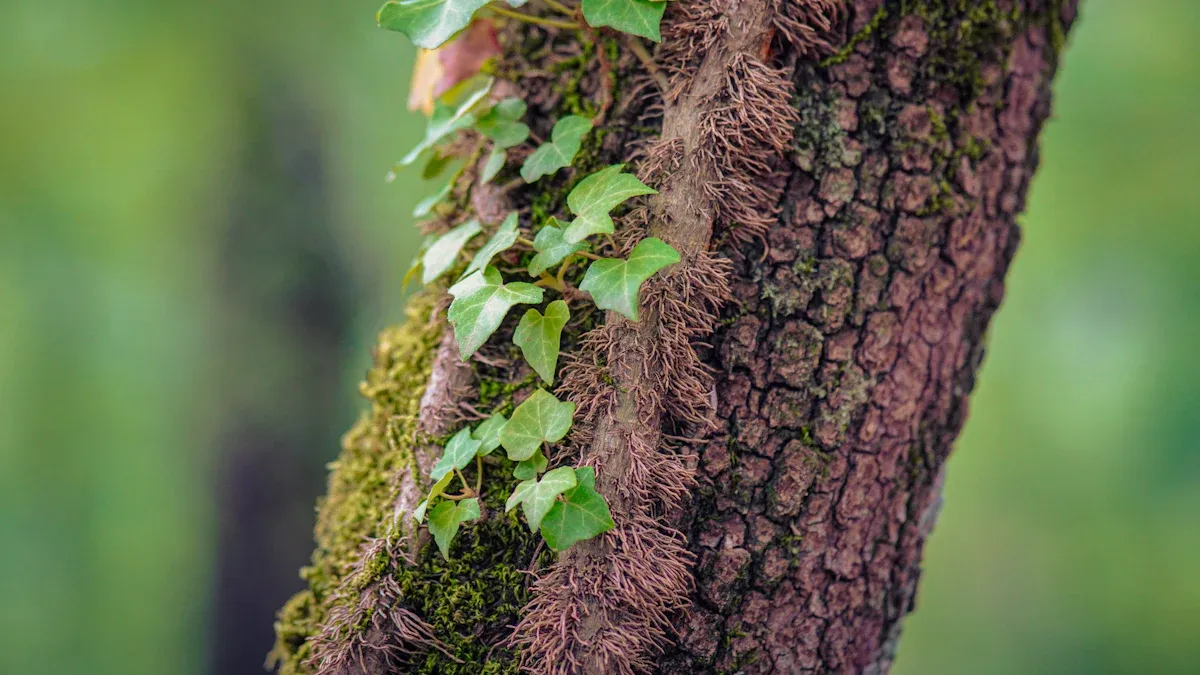
Vines grow on trees, creating captivating beauty. These climbing plants offer many ecological benefits. For example, they provide:
Shading the soil and protecting it from erosion.
Vigorous roots holding soil and moisture, stimulating soil microbiology.
Sealing off the forest interior from drying winds and excessive light, acting like a protective barrier. Understanding different climbing plants is key for your outdoor garden. You must responsibly manage these climbing plants to ensure your trees stay healthy. This climbers guide explores various vine varieties. It covers their climbing mechanisms and best practices for growing them harmoniously. You will learn about edible climbing plants and how they support your garden space. This climbers guide helps you grow beautiful plants.
Key Takeaways
Vines climb trees in different ways. Some wrap around, some use sticky pads, and others use special tendrils to hold on.
Choose the right vine for your tree. Some vines, like English Ivy, can hurt trees by blocking sunlight or causing damage.
You can grow edible vines like passionfruit or chayote. These plants give you food and save space in your garden.
Always take care of your vines and trees. Prune vines regularly and guide them so they do not harm the tree.
Understanding Vine Climbing Mechanisms
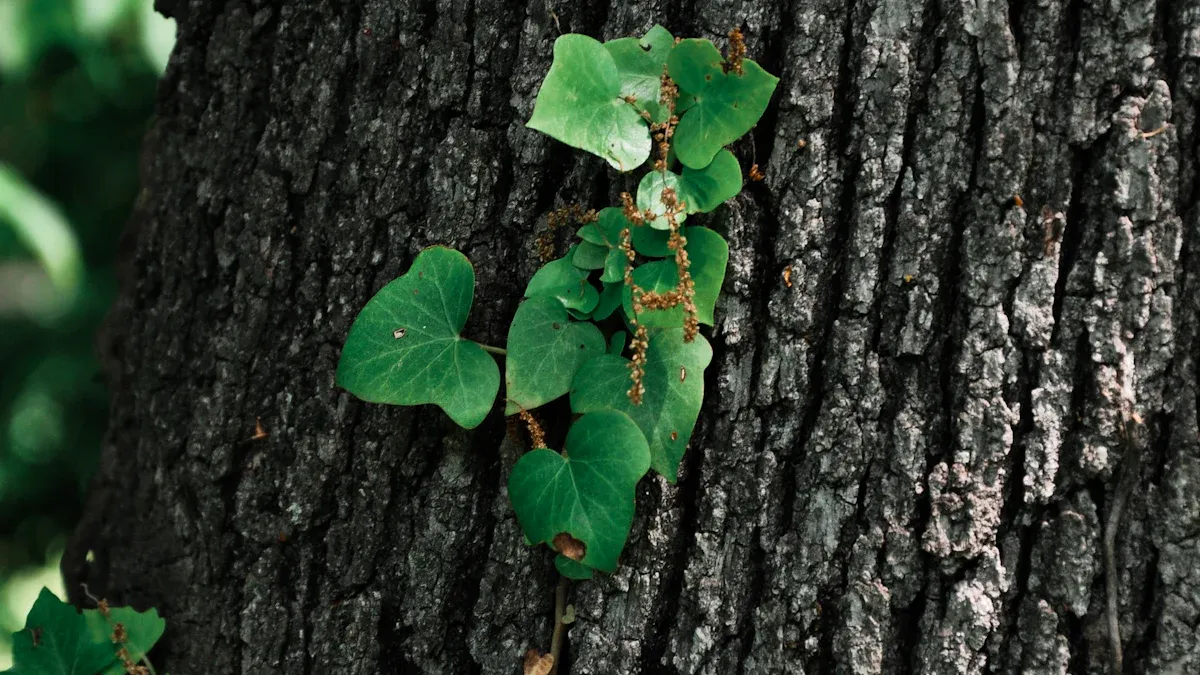
You see many different climbing plants in nature. These plants use various clever ways to climb and reach sunlight. Understanding these methods helps you choose the right vines for your garden. Each type of vine interacts with trees and other structures differently to gain support.
Twining Vines
Twining vines are master wrappers. They climb by wrapping their main stems around a support, like a tree trunk or a pole. This process happens because of something called thigmotropism. This means the vine’s stem can feel and react to touch. When the stem touches a suitable support, it starts to twine around it. Studies show that as these climbing plants grow, their stems tighten around the support, holding themselves firmly in place. These plants also show extreme circumnutation, a circular growth movement. They keep moving in circles until they find something to coil around. This coiling helps them grow upwards.
Tendril Climbers
Tendril climbers use special, thin structures called tendrils. These tendrils are like tiny, sensitive fingers. They are very sensitive to touch. When a tendril touches a support, it coils around it. Some tendrils even develop sticky pads. These pads help the climbing plants attach to wider surfaces or flat walls. This attachment system is very strong. It helps the tendrils withstand movement and stay attached. Tendrils can also choose their support. They tend to coil around smaller, ideal diameters. This saves energy. They can even form a clip-shape to grasp thick, non-cylindrical structures. These plants use their tendrils to find and secure their support.
Adhesive Climbers
Adhesive climbers are like natural glue experts. They attach directly to surfaces using special structures. Some vines have adhesive pads on their tendrils. Other climbing plants use small, sticky roots that grow directly from their stems. These roots cling to tree bark. For example, plants like Adelobotrys adscendens use these adhesive roots to climb tree trunks. The sticky substances they use are often natural glues. Mucilage, a sticky plant substance, acts as a natural adhesive. Resin, like the gooey stuff from pine trees, was one of the first glues people used. These climbers use these natural glues to grow up trees.
Scramblers and Leaners
Scramblers and leaners are less specialized climbers. They do not have tendrils or sticky pads. Instead, these plants grow by leaning on other plants or structures. They often have thorns, prickles, or rough stems. These features help them hook onto branches or other vegetation. They use these hooks to pull themselves up. They rely on the existing structure of trees or shrubs for their support. These climbing plants simply grow through and over other plants, using them as a ladder.
Popular Ornamental Climbing Vines
You can choose from many beautiful climbing plants to enhance your garden. These popular ornamental vines offer stunning displays. They also add unique textures to your landscape.
Wisteria
Wisteria is famous for its beautiful cascading flowers. These climbing plants create a dramatic effect. You should know that Asian Wisteria species, like Wisteria sinensis and Wisteria floribunda, grow very aggressively. They can take over host trees. American Wisteria (Wisteria frutescens) is much less aggressive. It needs less pruning. Wisteria generally shows rapid growth. These vines typically reach 10-30 feet tall. They spread about 10-20 feet wide. Consider the specific species when you choose Wisteria for growing on trees.
Climbing Hydrangea
Climbing Hydrangea offers beauty in shadier spots. It uses adhesive structures to climb. This makes it a good choice for tree trunks. It prefers moist, well-drained soil. The soil pH should be slightly acidic to neutral (5.5 to 7.0). You can add compost or organic matter to improve the soil. Mulch around the base helps retain moisture. Dappled shade is best for these climbing plants. They can grow in full sun to partial shade. In hotter areas, give them afternoon shade.
Trumpet Vine
Trumpet Vine is a vigorous climber. It uses aerial roots to attach to surfaces. Its bright, trumpet-shaped flowers attract hummingbirds. You should be aware of some common issues. Powdery mildew can appear as white spots on leaves. It is usually not serious. Planthoppers and scale insects might infest the vines. Whiteflies can also become a problem. They lay eggs under leaves. Leaf spots, caused by fungi, can also occur. These issues are usually minor.
Clematis Species
Clematis is known as the “Queen of Climbers.” It offers a wide range of flower shapes and colors. You can find many different Clematis species. Some have large, showy blooms. Others have smaller, delicate flowers. These vines use tendrils to climb. They need a good support structure. You can train them to grow up trees.
Honeysuckle Varieties
Honeysuckle varieties are fast-growing and fragrant. Their sweet-smelling flowers attract pollinators. Many types of honeysuckle are available. Some are native to your area. These climbing plants provide quick cover and beautiful blooms. They can quickly grow up a tree.
Native Vines for Tree Coexistence
You can choose native vines for your garden. These climbing plants offer many ecological benefits. They support local wildlife. You help your ecosystem when you select native options.
Virginia Creeper
You can choose Virginia Creeper. This native vine offers many ecological benefits. It is a valuable climbing plant. It has adhesive discs. These help it climb trees. Its leaves grow beautiful red in the fall. Virginia Creeper provides food for many animals. It attracts hummingbirds and other pollinators. Songbirds also enjoy its berries. Over 35 species of birds eat its bluish-black berries in winter. These include thrushes, woodpeckers, and warblers. Mice, skunks, and deer eat its leaves and stems. This climbing plant also supports insect life. It is a host plant for the Virginia Creeper Sphinx Moth. It helps control soil erosion. Birds use its bark for nesting material. Its flowers give nectar to bees. This plant offers fruit, caterpillars, and nesting material. These benefits help local wildlife.
Trumpet Honeysuckle
Trumpet Honeysuckle is another great native option. This climbing plant attracts hummingbirds. Its bright flowers bring these tiny birds to your garden. You can enjoy watching them feed. It is a good alternative to non-native honeysuckle species.
Wild Grape
Wild Grape is a strong tendril climber. This climbing plant offers great wildlife value. Its tendrils help it find support on trees. You can find many wild grape species. The fruits are small and tart. They have good nutritional value.
Nutrient | Description |
|---|---|
Resveratrol | Increases longevity |
Antioxidants | Richest in seeds and skin |
Phytonutrients | Antioxidant properties |
Vitamins | B1, B6, C |
Minerals | Manganese, Potassium |
You can use wild grapes in different ways.
Juice Making: Make juice from the tart grapes.
Direct Consumption: Eat the small grapes directly.
Dried Seeds: Add dried seeds to bread or pancakes.
Natural Sweetener: Drink the juice without added sugar.
This edible climbing plant provides food for many animals. It also offers shelter. You can enjoy growing these native climbing plants.
Edible Climbing Vines and Fruits
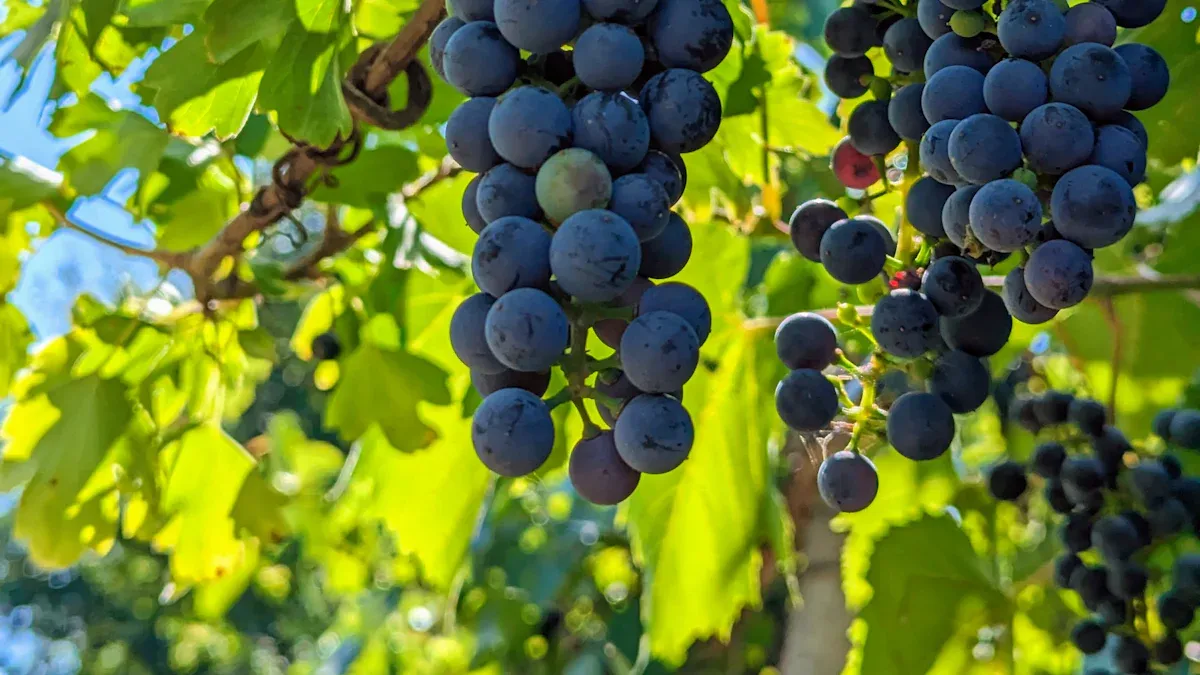
You can make your garden more productive by adding edible climbing vines. These plants offer a unique way of growing food vertically. They help you maximise growing space, especially in smaller areas like urban gardens. Many of these climbing plants also provide beautiful foliage or flowers.
Perennial Edible Climbers
You can choose perennial edible climbing vines to enjoy harvests year after year. Passionfruit is a popular choice. It produces delicious fruits that grow on vines. You need to plant Passionfruit in the right conditions.
Climate Zones: Passiflora incarnata (Maypop passionfruit) thrives in USDA Cold Hardiness Zones 5-10. It needs at least 150 frost-free days. You can grow it in temperate climates, even as far north as New York or Cleveland, Ohio.
Soil Conditions: Plant Passionfruit in the warmest, south-facing spot in your garden. Protect its roots with a layer of mulch in cold areas. This helps the roots survive winter freezes. The roots and shoot buds need to be deep in the soil where it does not completely freeze. Passionfruit can spread widely through its roots, up to 30 feet away. You might need rhizome barriers or containers to control its growth.
Chayote, also known as Choko, is another excellent perennial edible climber. It is a great addition to an edible garden. This plant produces edible fruits. You can expect good yields from Chayote.
Yield/Harvest Aspect | Detail |
|---|---|
Recommended planting | 1 vine per household of 4 people |
Frost-free warm days to reach harvest | 120-150 days |
Chayote plants produce more as they mature.
Yield Aspect | Quantity/Duration |
|---|---|
First-year vine yield | 30 fruits |
Second-year vine yield | 80 fruits |
Days to flower after planting | 110-120 days |
Days from flowering to harvest | ~30 days |
Frost-free days needed for fruit production | 150 days |
You can also grow Sweet Potato as an edible climbing plant. Its vines produce edible tubers underground. You can train these vines to climb a trellis or even a sturdy tree for support.
Vines for Edible Fruits
Many vines offer delicious edible fruits. Passionfruit and Chayote are prime examples of fruits that grow on vines. These plants use trees or other structures for support. This vertical growth saves space and makes harvesting easier. You can also find annual climbing vines that produce edible fruits, like certain cucumber or squash species. These plants provide both beauty and food for your garden.
Vines to Approach with Caution
You must be careful when choosing vines for your garden. Some vines pose serious risks to trees. They can also harm the environment. You need to understand these dangers. This helps you avoid problems.
English Ivy
English Ivy looks beautiful. However, it is an aggressive invader. It threatens all levels of vegetation in forests and open areas. This vine climbs up tree trunks. It spreads out and covers branches and twigs. This blocks sunlight from reaching the host tree’s leaves. It stops the tree from making food. This process can cause the tree to decline. The tree can die over several years.
English ivy growing thickly on the forest floor can push out native plants. It climbs trees as high as 300 feet. It can damage or kill weakened trees. This makes trees more likely to fall during wind or ice storms. When trees fall, they create open spaces in the canopy. Other invasive species can then move into these spaces.
These vines attach to trees. They loosen bark. They trap moisture against the trunk. This causes damage, decay, and death. English ivy spreads quickly through horizontal stems called stolons. Birds also spread its seeds. This allows it to completely take over an area. It crowds out other native plants. It can choke and kill shrubs or trees. Its ability to climb lets it escape original planting areas. It continues spreading. English ivy is also toxic. It causes allergic reactions in wildlife. Its deep-purple berries are toxic if eaten. This can make wildlife find new homes. English ivy also carries bacterial leaf scorch (Xylella fastidiosa). This is a harmful plant disease. It affects many native and ornamental trees. These include elms, oaks, and maples.
Kudzu
Kudzu is another vine you must approach with caution. It is a highly invasive climbing plant. It can quickly cover and smother other plants and trees. Eradicating kudzu is challenging. You need an Integrated Pest Management (IPM) approach. This combines mechanical, chemical, and biological methods. Goats or beneficial insects can help. This multi-year plan can reduce or remove kudzu.
For small patches, you can use mechanical control. This includes hand pulling or digging out root crowns. You can also mow persistently from May to October. Then, apply herbicide to new sprouts. You can also put herbicide directly on cut root crowns. For larger areas, goats can graze the kudzu. They can control it. If goats are not an option, control the edges first. Use mowing, hand-pulling, or herbicides to stop it from spreading. Then, work towards the center. Applying herbicide to the entire area each year can also be very effective.
A USDA study showed that combined management programs control kudzu faster. Eradication with herbicides usually takes about 10 years. However, effective programs can reduce kudzu significantly in one or two years. Applying four different herbicides, alone or together, and a bioherbicide over two years showed high suppression. After one year, kudzu was highly suppressed. After two years, 99 to 100 percent of the kudzu was killed. An organic treatment also worked well. It included bioherbicide, mowing, and planting native vegetation. This killed 91 percent of kudzu after one year. It killed 95 percent after two years. It also established native plants.
Method | Application Details | Success Rate / Effectiveness |
|---|---|---|
Grazing | Close grazing for 3-4 years, removing 80%+ vegetative growth, especially July-September. | Can totally eliminate kudzu. |
Herbicides (General) | Systemic chemicals for best success; controlled burn after wilting to stimulate alternative vegetation. | Best results in late summer when flowers appear and nutrients transport to roots. |
Tordon 101 Mixture (2,4-D + picloram) | Foliar spray, 1 gal/acre for young, 2 gal/acre for old patches. Applied late June/July. | Most cost-effective; successful eradication. |
Tordon K (picloram liquid) | Foliar spray, 0.5 gal/acre for young, 1 gal/acre for old patches. Applied late June/July. | Most cost-effective; successful eradication. |
Roundup/Rodeo (glyphosate) | Foliar-applied. | Safest for residential/sensitive areas, but less effective; requires many years of persistent treatment. |
Poison Ivy
Poison Ivy is a well-known plant to avoid. Contact with this plant causes an itchy rash. The main allergen is urushiol. This is found in the plant’s oily sap. Urushiol molecules have a special structure. This structure makes them immune sensitizers. The allergenicity depends on how unsaturated its alkyl chain is.
Urushiol is fat-soluble. It goes into the outer layer of your skin. It then binds to special cells called Langerhans cells. These cells are in the epidermis. The affected cells move to lymph nodes. There, T cells become active. These active T cells return to the skin. They start an urushiol-activated rash. The toxic effect is indirect. Your immune system causes it. Oxidized urushiols change the shape of proteins on skin cells. These changed proteins interfere with your immune system. Your body sees these cells as foreign. This triggers an immune response. This response targets urushiol derivatives bound within skin proteins. It treats the cells as foreign bodies. You should learn to identify this plant. Avoid touching it.
Best Practices for Growing Vines on Trees
You can successfully grow climbing plants on trees. You need to follow best practices. This ensures the health of both your climbing plants and the host tree. This section of the climbers guide provides practical advice. It covers selection, planting, and ongoing care. You will learn how to protect your host tree.
Choosing the Right Host Tree
You must select a strong host tree. Consider the tree’s age and health. Avoid young or weak trees. They cannot handle the extra weight and competition. Match the vine’s growth habit to the tree’s strength. Think about the tree’s bark texture for adhesive climbing plants. Ensure the tree can handle the additional weight. It also needs to manage competition for resources. Consider the tree’s canopy density. Then, match it with the vine’s light needs. A healthy, mature tree provides the best support.
Planting and Initial Training
Plant your vine a good distance from the tree’s base. This avoids root competition. Provide an initial support structure. A small trellis or stake helps the vine reach the tree. Gently guide young shoots towards the tree. Use soft ties to attach the vine. Do not tie it too tightly. Ensure the vine has a clear path to climb. For tendril climbers, give them thin structures to grasp. For twining vines, offer a sturdy pole or branch. You can use a vertical trellis to guide the climbing plants. This helps them grow upwards. This initial care sets your climbing plants up for success.
Ongoing Maintenance and Pruning
Regular care is vital for both the vine and the tree. You must prune your climbing plants. This keeps them healthy. Remove dead, damaged, or diseased stems. Cut back overly tangled or errant stems. Direct and limit growth. This ensures light and air reach the plant’s interior.
For honeysuckles (Lonicera), prune in late winter or early spring. They flower in summer and fall on the current year’s growth.
Prune jasmines (Jasminum) and Wisteria right after they flower. They bloom early in the season on shoots produced the previous year.
If your vine produces fruit, wait until spring to prune. This avoids losing the fruit crop.
For kiwi and silver vine (Actinidia species), do maintenance pruning after flowering. For heavy pruning, do it in late winter to early spring when dormant.
You can prune Dutchman’s Pipe (Aristolochia macrophylla) anytime for tangles and errant shoots. For renewal, cut the oldest stems to six inches in late winter to early spring when dormant.
Crossvine (Bignonia capreolata) needs minimal pruning. Prune in late winter to early spring to remove weak, overgrown, or errant shoots. Head back shoots to encourage new growth.
Prune bougainvilleas (Bougainvillea species) after flowering ends. Remove dead, tangled, errant wood, and suckers. Head back long stems to encourage new flower buds.
Head back trumpet creeper (Campsis radicans) stems in late winter to early spring. This controls growth and encourages branching. Remove suckers and root-prune to discourage runners. Cut stems to ten inches for renewal.
Prune American bittersweet (Celastrus scandens) in late winter to early spring. Remove suckers, tangled/weak stems, and fruited stems. Head back last year’s growth. Pinch shoot tips in summer for branching.
Prune Carolina moonseed (Cocculus carolinus) as needed in early spring.
Creeping fig (Ficus pumila) needs little pruning. Remove older stems in late winter or early spring to promote immature foliage. Pinch stem ends for branching.
Prune Carolina jessamine (Gelsemium sempervirens) after flowering ends. Head back lateral shoots, remove dead stems, and prune to shape.
For ornamental hops (Humulus lupulus), cut them to the ground in late winter to early spring. Root-prune to control runners.
Consider specific pruning for edible climbing plants like grapes and blueberries.
Vine Type | Pruning Method (Timing) | Details |
|---|---|---|
Grapes (Spur Method – one wire) | First winter | Cut vines back to three buds. |
Second winter | Cut main stem above top wire. Leave one lateral branch per side. Cut smaller branches on laterals to one bud per spur. | |
Third winter | Same as second, but leave two buds per spur. | |
Fourth winter onwards | Leave two buds on the strongest cane on each spur. | |
Grapes (Cane Method – multiple wires) | Second winter | Cut through a bud above top wire. Leave one lateral shoot per wire (both sides). Leave two buds on each shoot. |
Third winter | Leave two new shoots on original lateral. Leave 10 buds on each new shoot. Leave two buds on four short spurs on original lateral. | |
Fourth winter onwards | Original lateral should have four new shoots with 10 buds each. It should also have two buds on four spurs at the junction of original lateral and newer canes. | |
Blueberries | Minimal pruning (anytime) | Remove dead or excessively bushy growth. Canes over three years old may be removed. Prune if berry size significantly decreases. |
The best time for pruning in upstate South Carolina is late December through early February. The weather is moderate. You can see the branches better. This careful care ensures your climbing plants thrive.
Preventing Damage to Host Trees
You must protect your host trees. Watch for signs of damage. Look for off-color leaves. They might have dead margins or scorched edges. Notice early leaf drop. The tree loses leaves earlier in the season than usual. Check for stunted growth. The tree crown looks thin. Leaves are smaller. Observe twig and branch dieback. The tree looks sparse and unhealthy.
A lack of a visible root flare is a bad sign. The tree looks like it rises out of the ground like a telephone pole. The tree might lean. This means the trunk is weak from constriction by girdling roots. Compression of the trunk can happen. Girdling roots put pressure on it. This can cause breakage at or above the root flare.
Some climbing plants attach to trees with special ‘hairs’. These can pull at the bark. This damages the tree’s defense systems. Heavier climbing plants can wrap around limbs. This causes structural damage. It exposes the tree to disease and pest infestations. Over time, heavy or tight climbing plants restrict the tree’s growth. This compromises its natural strengths. Dense vine foliage blocks sunlight. This disrupts the tree’s photosynthesis process. It deprives the tree of nutrients.
Vines around the tree trunk can form a thick cover. This, combined with fallen leaves and rain, traps moisture and decay. This creates a perfect breeding ground for fungus and bacterial diseases at the base of the tree. This can cause irreparable damage to the trunk or large boughs. It can ultimately lead to the tree’s death. Such thick vine cover can also hide the structural damage it causes. This makes the tree a hidden hazard.
Regularly inspect your trees. Remove any climbing plants that show signs of causing harm. You can use a vertical trellis or other support structures. This directs the climbing plants away from the main trunk. This helps create shade and protection without harming the tree. Ensure your outdoor garden remains healthy. This careful care provides benefits for both your plants and trees.
You balance beauty with responsibility when you grow climbing plants on trees. Informed selection of climbing plants, understanding their habits, and consistent management are key. You ensure a harmonious landscape. These practices help your garden thrive. Well-managed vine-tree combinations enhance beauty and biodiversity. They create a vibrant space. You can grow edible climbing plants and other climbing plants successfully. These climbers add life to your outdoor areas. Choose your climbing plants wisely.
FAQ
How do I choose the right climbing plants for my tree?
You should match the vine’s growth habit to your tree’s strength. Consider the tree’s age and health. Ensure the climbing plants you choose do not overwhelm the host. Look for suitable species.
Can all climbing plants grow on trees safely?
No, not all climbing plants are safe for trees. Some, like English Ivy, can harm trees. You must select climbing plants carefully. Always research a vine’s growth habits. This protects your trees.
What are some popular edible climbing plants for home gardens?
You can grow several edible climbing plants. Passionfruit and Chayote are good choices. Sweet potato vines also produce edible tubers. These edible options maximize your garden space.
How do I ensure my climbing plants do not harm the host tree?
You must prune climbing plants regularly. Guide these climbing plants away from the main trunk. Use a trellis for support. This prevents dense foliage from blocking sunlight. It also stops moisture buildup. These practices keep your plants healthy.
What are the benefits of growing edible climbing plants?
Growing edible climbing plants offers many benefits. You get fresh food. These climbing plants also add beauty to your garden. They use vertical areas efficiently. This makes them great plants for smaller spots. These edible plants enhance your landscape.