

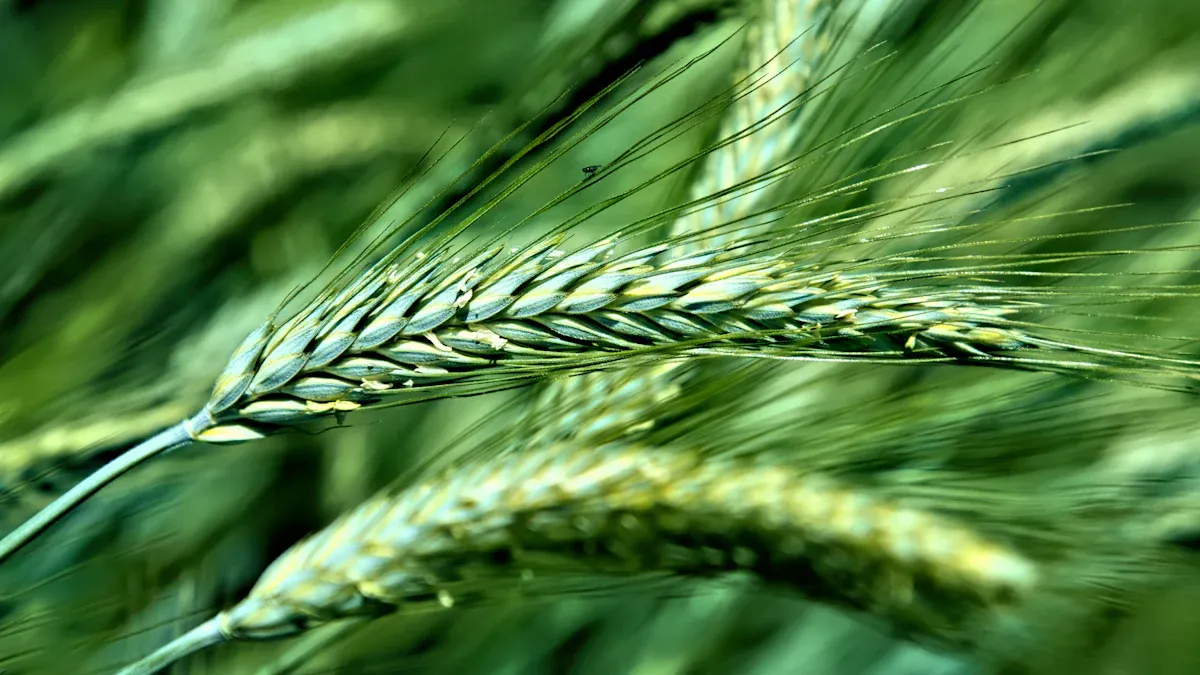
Soil health plays a crucial role in agriculture. In fact, 34% of agricultural land globally suffers from poor soil health, affecting food production and ecosystem balance. You can improve your soil’s condition by using triticale as a cover crop. Cover crops like triticale enhance soil structure, boost nutrient content, and promote overall soil health. This hardy crop not only reduces erosion but also helps in managing soil organic matter, which is essential for sustainable farming practices.
Key Takeaways
Triticale improves soil health by enhancing soil structure and increasing nutrient retention, making it a valuable cover crop for sustainable farming.
This hybrid crop produces high biomass, which helps suppress weeds and reduces soil erosion, leading to healthier agricultural practices.
Triticale’s deep root system enhances aeration and water infiltration, benefiting subsequent crops and improving overall soil quality.
Farmers can graze livestock on triticale due to its high protein content, providing an excellent feed supplement while improving soil health.
Proper planting and termination techniques are essential for maximizing the benefits of triticale, ensuring effective management and optimal growth.
Triticale Overview

Triticale is a hybrid crop developed from wheat and rye. Its origin dates back to the late 19th century. In 1873, Alexander Wilson made the first attempt to cross wheat and rye, but the plants were sterile. By 1888, Wilhelm Rimpau produced a partially fertile hybrid, marking a significant step in triticale’s development. The discovery of colchicine in 1937 allowed for systematic chromosome doubling, making triticale viable for cultivation.
Characteristics of Triticale
Triticale has several unique characteristics that make it an excellent choice for cover cropping:
Genetic Composition: Triticale contains A, B, and R genomes, which contribute to its resilience.
Aluminum Resistance: It shows incomplete resistance from rye but more complete resistance from wheat.
Hybrid Origin: Triticale is a hybrid, unlike pure species like wheat and rye.
Mitochondrial Inheritance: It inherits maternally from wheat, which influences its growth patterns.
Common Types: Most triticale varieties are hexaploid, which enhances their adaptability.
Aspect | Triticale | Wheat | Rye |
|---|---|---|---|
Genetic Composition | A, B, and R genomes | A and B genomes | R genome |
Aluminum Resistance Expression | Incomplete from rye, more complete from wheat | Strong expression | Strong expression |
Hybrid Origin | Developed from wheat and rye | Pure species | Pure species |
Mitochondrial Inheritance | Maternal from wheat | Maternal from Aegilops tauschii | Maternal from rye |
Common Types | Mostly hexaploid | Hexaploid and tetraploid | Diploid and tetraploid |
Benefits of Triticale
Using triticale as a cover crop offers numerous benefits:
Soil Health: Triticale improves soil structure and reduces nutrient leaching. Studies in Wisconsin show that triticale outperforms rye in forage yield and crude protein yields.
Biomass Production: Triticale produces higher biomass compared to other cover crops, which helps in suppressing weeds.
Winter Hardiness: It exhibits good winter hardiness, making it suitable for various climates.
Animal Performance: Triticale can enhance livestock performance. Research indicates that it provides 19% more steer body weight gain compared to wheat and 57% more than rye.
Incorporating triticale into your agricultural practices can lead to healthier soils and improved crop yields.
Ideal Conditions for Triticale as a Cover Crop
Climate Requirements
Triticale thrives in a variety of climates, but it prefers moderate temperatures. Ideal growing conditions include:
Temperature: Triticale grows best when temperatures range from 60°F to 75°F. Extreme heat or cold can hinder its development.
Precipitation: Adequate moisture is crucial. Triticale needs about 20 to 30 inches of rainfall during its growing season.
Temperature variations can significantly affect triticale’s growth cycle. For example, in the 2016-2017 season, warmer and drier conditions led to different growth outcomes compared to climatic norms. The following table summarizes how temperature and precipitation variations influenced triticale growth:
Season | Temperature Variation | Precipitation Variation | Growth Outcome |
|---|---|---|---|
2016-2017 | Warmer and drier | Low in May and June | Different growth outcomes compared to climatic normals |
2017-2018 | Warmer and drier | Very dry in May, June, July | Influenced yield and digestibility of forage |
2018-2019 | Higher than normals | Wet in March and June, dry in July | Variations in growth cycle observed |
Soil Preferences
Triticale prefers well-drained soils with good fertility. The following factors are essential for optimal growth:
Soil pH: The ideal pH range for triticale is between 5.5 and 7.5. Maintaining a pH of at least 5.5 ensures proper nutrient availability.
Soil Texture: Triticale grows best in loamy soils. Compacted soils can hinder root development. Research shows that higher soil densities can decrease root length and number.
The table below highlights the optimal pH range for triticale:
pH Range | Description |
|---|---|
5.5-7.5 | Optimal pH range for triticale growth |
Enhancing Soil Health with Triticale
Triticale plays a vital role in enhancing soil health through its unique characteristics. You can significantly improve soil structure and nutrient levels by incorporating this cover crop into your farming practices.
Soil Structure Improvement
Triticale’s root system contributes to better soil structure. The roots penetrate the soil, creating channels that improve aeration and water infiltration. This process helps reduce soil compaction, allowing for better root growth in subsequent crops. Research shows that when triticale roots occupy more than 0.5% of pore volume, they can increase total pore volume, enhancing soil porosity.
Evidence Description | Findings |
|---|---|
Roots micro-engineer soil structure | Increased total pore volume when roots occupy more than 0.5% of pore volume |
Densely rooted plots stabilize soil porosity | Higher soil porosity observed in plots with more roots due to stabilization of loose structure |
Plant roots reinforce soil porosity | Roots enhance soil porosity after mechanical loosening, compared to bare soil over winter |
Moreover, triticale contributes to soil organic matter (SOM) levels. Research indicates that triticale cover cropping can enhance soil organic carbon (SOC) levels by adding plant-derived carbon to particulate organic matter (POM). This increase in organic matter improves soil aggregation and water retention capacity, which are crucial for crop growth and yield.
Study | Findings |
|---|---|
Kumhálová et al. (2011) | Higher SOM content in certain soil classes improves soil aggregation and water retention capacity, impacting crop growth and yield. |
Tariq et al. (2018) | SOM content affects soil aggregation, leading to variations in water retention capacity and overall soil structure. |
Nutrient Management
Triticale also plays a significant role in nutrient management. It can take up additional nitrogen without increasing leaching losses. This ability enhances nitrogen availability in the soil while minimizing environmental impacts. The application of nitrogen fertilizers has been linked to increased forage protein concentrations, indicating that triticale effectively utilizes nitrogen inputs to improve soil fertility and crop quality.
“Triticale can take up additional nitrogen without increasing leaching losses, which suggests it enhances nitrogen availability in the soil while minimizing environmental impacts.”
Additionally, triticale helps reduce soil-borne pathogens. Studies show that using triticale as a cover crop leads to lower disease severity and pathogen recovery compared to bare soil treatments. This reduction in pathogens contributes to healthier soil and better crop performance.
Treatment Type | Disease Severity | Pathogen Recovery | Total Plant Weight | Height Increase |
|---|---|---|---|---|
Triticale Cover Crop | Lower | Significantly Lower | No significant difference | No significant difference |
Crimson Clover Cover Crop | Similar | No significant difference | No significant difference | No significant difference |
Bare Soil Treatment | Higher | Higher | N/A | N/A |
Practical Management of Triticale
Planting Techniques
When planting triticale, you should consider the method and timing to ensure optimal growth. Here are some effective planting techniques:
Seeding Rate: Adjust your seeding rate based on the planting method. For drilled planting, use about 25 lbs/acre for triticale. If broadcasting, increase the rate to 30 lbs/acre. This ensures adequate coverage and competition against weeds.
Planting Method | Crop Type | Seeding Rate (lbs/acre) |
|---|---|---|
Drilled | Wheat, Triticale, Rye | 25 |
Broadcast | Wheat, Triticale, Rye | 30 |
Optimal Planting Depth: The depth at which you plant triticale affects its germination. For well-moisturized, lighter soils, aim for a depth of 1 to 1.5 inches. In drier conditions or heavier soils, plant at a depth of 2 inches. This helps ensure successful establishment.
Soil Condition | Optimal Planting Depth |
|---|---|
Well-moisturized, lighter soils | 1 to 1.5 inches |
Drier conditions or heavier soils | 2 inches |
Termination Methods
Proper termination of triticale is crucial for maximizing its benefits. Here are some effective methods:
Roller-Crimping: This method effectively manages weeds by turning the cover crop into mulch. You should crimp grass cover crops after flowering and legumes after pod production.
Tillage: Tillage breaks down and incorporates biomass. However, it may require multiple passes due to extensive root systems. Be cautious, as it can reduce the benefits of cover crops.
Mowing: While mowing is less effective, it can still help manage growth. You may need to mow multiple times to prevent regrowth, which can leave uneven mulch.
Herbicides: Using herbicides provides flexibility in timing. Glyphosate works well for grasses, while tank mixtures can be effective for legumes. Always consider rotational restrictions when using chemicals.
Method | Description | Timing Considerations |
|---|---|---|
Roller-crimping | Effective for weed management, turns cover crop into mulch. | Grass cover crops should be crimped after flowering; legumes after pod production. |
Tillage | Breaks down and incorporates biomass, effective but may require multiple passes. | May reduce benefits of cover crops; extensive root systems may need more passes. |
Mowing | Less effective, may require multiple mowings for regrowth. | Can leave uneven mulch, reducing weed suppression. |
Herbicides | Flexible timing, effective for most cover crops. | Glyphosate for grasses; tank mixtures for legumes; consider rotational restrictions. |
By implementing these planting and termination techniques, you can effectively manage triticale as a cover crop. This will enhance soil health, suppress weeds, and improve overall crop performance.
Incorporating triticale as a cover crop can significantly enhance your soil health. This resilient crop improves nutrient retention, suppresses weeds, and reduces erosion. You can benefit from its high protein content for livestock grazing. However, be aware of challenges like lodging and disease susceptibility.
Benefit | Description |
|---|---|
Nutrient Scavenging | Triticale has a deep root system that retains nutrients, making them available for subsequent crops. |
Grazing Potential | High protein content and biomass production make triticale an excellent feed supplement for livestock. |
Erosion Control and Weed Suppression | Provides dense cover that reduces soil erosion and suppresses weeds, decreasing herbicide needs. |
Consider implementing triticale in your sustainable farming practices for healthier soils and improved crop yields.
FAQ
What is triticale used for in agriculture?
Triticale serves as a cover crop to improve soil health. It enhances soil structure, increases nutrient retention, and suppresses weeds. Farmers also use it for livestock feed due to its high protein content.
How does triticale improve soil health?
Triticale improves soil health by enhancing soil structure and increasing organic matter. Its deep roots create channels for better aeration and water infiltration, which benefits subsequent crops.
When should I plant triticale?
You should plant triticale in early fall or late summer. This timing allows it to establish before winter, ensuring robust growth in the spring.
Can I graze livestock on triticale?
Yes, you can graze livestock on triticale. Its high biomass and protein content make it an excellent forage option for cattle and other livestock.
What are the challenges of using triticale?
Some challenges include lodging and disease susceptibility. You should monitor for pests and diseases to maintain healthy triticale crops and maximize their benefits.