

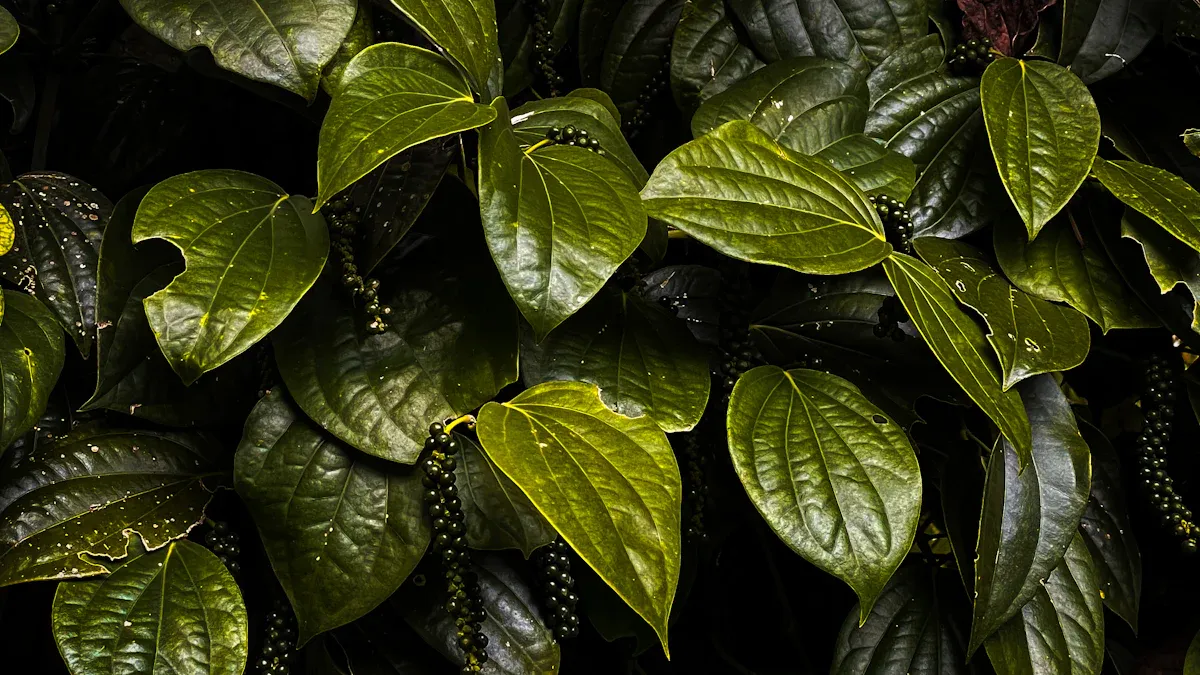
The betel plant holds a special place in many cultures around the world. You will find that approximately 600 million people use the areca nut, making it the fourth most commonly used psychoactive substance. This plant plays a vital role in ceremonies, such as weddings, symbolizing respect and auspicious beginnings. Understanding the roots and stems of the betel plant is crucial. These parts contribute significantly to the plant’s growth and utility. What specific features do these roots and stems possess? How do they function to support the plant?
Key Takeaways
The roots of the betel plant anchor it securely in the soil and absorb essential water and nutrients, crucial for its survival.
Unique compounds in the roots, like aristololactam A-II, help the plant manage stress and adapt to challenging conditions.
The stems provide structural support, allowing the plant to grow upward and reach sunlight, which is vital for photosynthesis.
Betel leaves contain bioactive compounds that offer therapeutic benefits, including anticancer and antibacterial properties.
Understanding the anatomy of the betel plant enhances appreciation for its role in traditional medicine and its potential health benefits.
Roots and Stems of Betelvine
Roots Anatomy
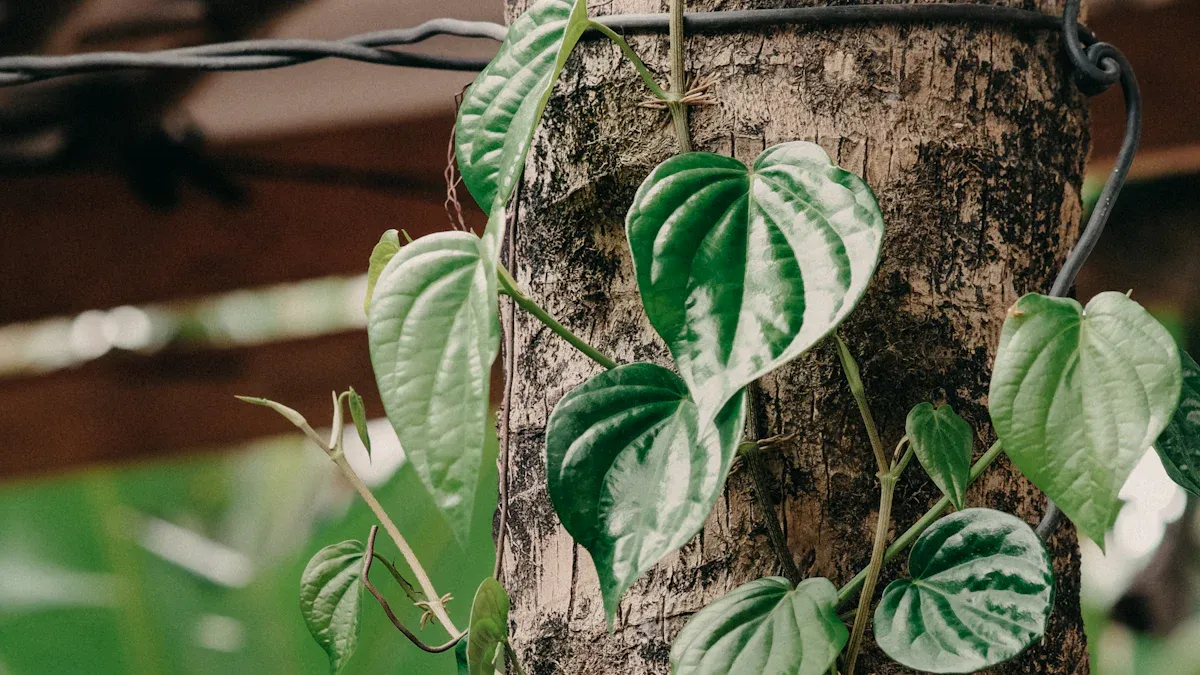
The roots of the betel plant play a crucial role in its overall health and growth. They anchor the plant securely in the soil, allowing it to withstand environmental challenges. The roots also absorb water and nutrients, which are essential for the plant’s survival.
You will find that the roots of the betel plant are not just ordinary. They contain unique compounds like aristololactam A-II and 4-allyl resorcinol. These compounds may help the plant manage stress, making it more resilient in challenging conditions.
Here’s a quick overview of how the roots contribute to the betel plant’s adaptation:
Component Type | Description |
|---|---|
Roots | Novel compounds such as aristololactam A-II and 4-allyl resorcinol, which may help in stress management. |
Stems Anatomy
The stems of the betel plant are equally important. They provide structural support and allow the plant to grow upward, reaching for sunlight. The stems contain various tissues that serve different functions.
For instance, the parenchyma tissue is responsible for metabolic functions, including photosynthesis. Collenchyma provides support, especially to the stem and leaves, while sclerenchyma offers additional strength with its thickened walls. The xylem and phloem tissues transport water, minerals, and nutrients throughout the plant.
Here’s a breakdown of the main tissue types found in the stems of the betel plant:
Tissue Type | Function |
|---|---|
Parenchyma | Responsible for metabolic functions, such as photosynthesis, and helps in repair and storage of starch. |
Collenchyma | Provides structural support, mainly to the stem and leaves, with unevenly thickened walls. |
Sclerenchyma | Provides support with dead cells at maturity; includes fibers and sclereids with thickened walls. |
Xylem | Transports water and minerals from roots to other parts of the plant. |
Phloem | Transports sugars and nutrients produced by photosynthesis throughout the plant. |
Additionally, the stems of the betel plant develop adventitious roots from their nodes. These roots act as holdfasts, allowing the plant to anchor itself to various supports as it climbs. This climbing ability is essential for the betel plant, as it often grows in dense forests where it competes for sunlight.
Environmental factors such as temperature, humidity, and rainfall significantly impact the health of the betel plant. These factors can influence the development of roots and stems by affecting the overall growth and health of the plant. For example, diseases like anthracnose and bacterial leaf spot can damage the roots and stems, affecting their development.
Understanding the anatomy of the roots and stems of the betel plant helps you appreciate how these structures contribute to its growth and utility.
Functions of Roots and Stems
Nutrient Absorption and Transport
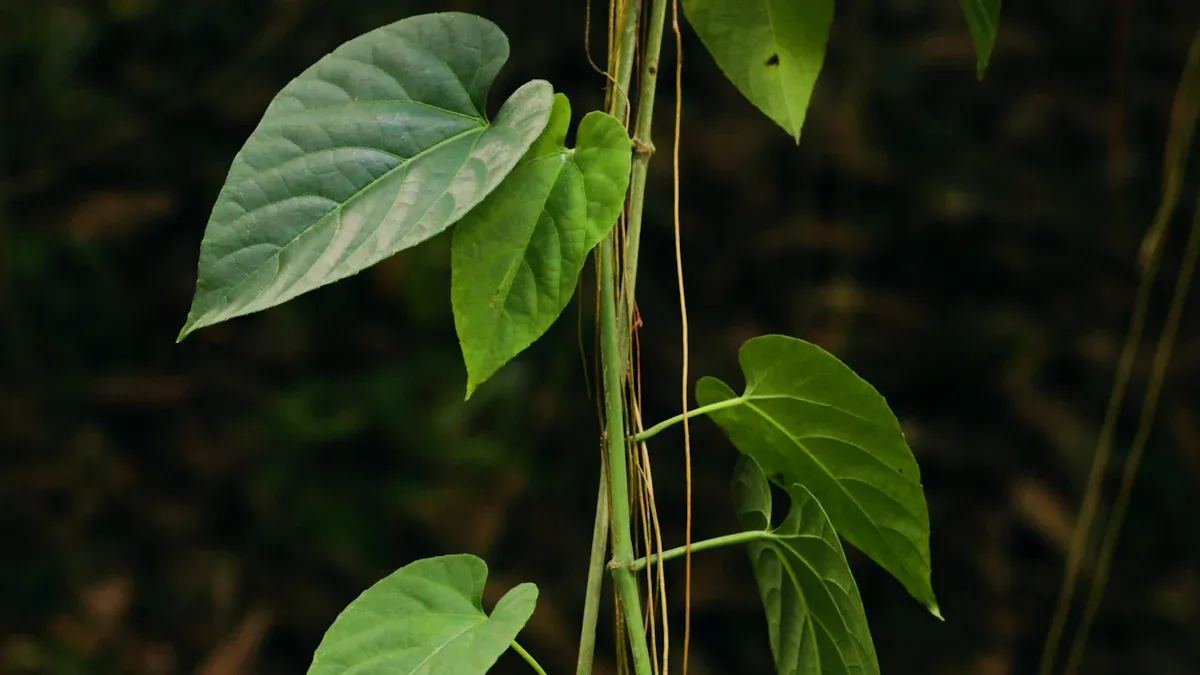
The roots of the betel plant play a vital role in nutrient absorption. They stabilize soil aggregates and prevent soil erosion. This stabilization allows for better nutrient assimilation, especially in loamy soils, which are ideal for the growth of betelvine. The adventitious roots that arise from the nodes also help hold the soil together, enhancing nutrient uptake efficiency.
You can think of the roots as the plant’s lifeline. They absorb water and essential minerals from the soil. This process is crucial for the plant’s health. Without strong roots, the betel plant would struggle to survive.
Here’s a quick overview of the main functions of the roots and stems:
Function Type | Description |
|---|---|
Roots | Anchors the plant to the soil, absorbs water and minerals, and stores products of photosynthesis. |
Stems | Supports the plant structure and transports nutrients and water between roots and leaves, while also facilitating photosynthesis through leaves. |
Support and Stability
The stems of the betel plant provide essential support and stability. They allow the plant to grow upward, reaching for sunlight. This upward growth is crucial for photosynthesis, which is how the plant makes its food.
The stems contain various tissues that serve different functions. For example, the collenchyma tissue provides flexible support, while sclerenchyma offers additional strength. This combination allows the plant to withstand wind and rain, ensuring it remains upright and healthy.
Therapeutic and Antioxidant Properties
The betel plant offers numerous therapeutic benefits due to its unique compounds. You will find that the roots and stems contain significant bioactive compounds. For instance, hydroxychavicol stands out as the most important compound. It exhibits various pharmacological properties, including anticancer and antibacterial effects. Other compounds in the betel plant contribute to its traditional medicinal uses, helping with ailments like rheumatism and wound healing.
Here’s a quick overview of some key therapeutic compounds found in the betel plant:
Compound | Properties |
|---|---|
Hydroxychavicol | Exhibits anticancer and antibacterial effects. |
Other compounds | Aid in treating rheumatism and promote wound healing. |
Betel leaves also possess remarkable antioxidant properties. Research shows that these leaves contain bioactive compounds such as polyphenols, alkaloids, and tannins. These compounds help combat oxidative stress and may prevent skin issues like melanogenesis. The antioxidant activity of betel leaves is significant for developing effective cosmetic agents and dietary supplements.
You can benefit from consuming betel leaves in various ways. Here are some potential health benefits associated with their use:
Betel leaves may protect against cancer.
They may act as antioxidants.
They may prevent the growth of fungi.
They may protect against allergic reactions.
They may aid in wound healing.
They may help relieve constipation.
In summary, the roots and stems of the betel plant play vital roles in its growth and utility. The roots anchor the plant and absorb essential nutrients, while the stems provide support and transport these nutrients throughout the plant. You should appreciate how these structures contribute to the plant’s overall health.
The betel plant has numerous uses in traditional medicine. Its leaves exhibit therapeutic activities, including anti-inflammatory and gastroprotective effects. Ongoing research highlights the potential for developing commercial products that enhance its medicinal and nutritional value. Understanding the complexity of plant anatomy enriches your knowledge and appreciation of nature.
FAQ
What is the significance of the betel plant in traditional cultures?
The betel plant, or piper betle, holds cultural importance in many regions. People use it in ceremonies and rituals, symbolizing respect and auspicious beginnings. Its leaves often accompany the areca nut, enhancing social interactions.
How do the roots of the betelvine contribute to its growth?
The root system of the betelvine anchors the plant and absorbs water and nutrients. It stabilizes soil, preventing erosion and enhancing nutrient uptake, which is vital for the plant’s health and growth.
What are the therapeutic benefits of piper betle?
Piper betle contains bioactive compounds with therapeutic potential. These compounds exhibit anticancer, antibacterial, and antifungal activity. Traditional medicinal systems utilize them for treating various ailments, including infections and inflammation.
How does the stem structure support the betel plant?
The stems of the betel plant provide structural support, allowing it to grow upward for sunlight. They contain various tissues that transport nutrients and water, ensuring the plant remains healthy and stable.
What are the antimicrobial properties of betel leaves?
Betel leaves possess significant antimicrobial activity due to their essential oil and bioactive compounds. These properties help combat bacteria and fungi, making them valuable in traditional medicine for treating infections.