
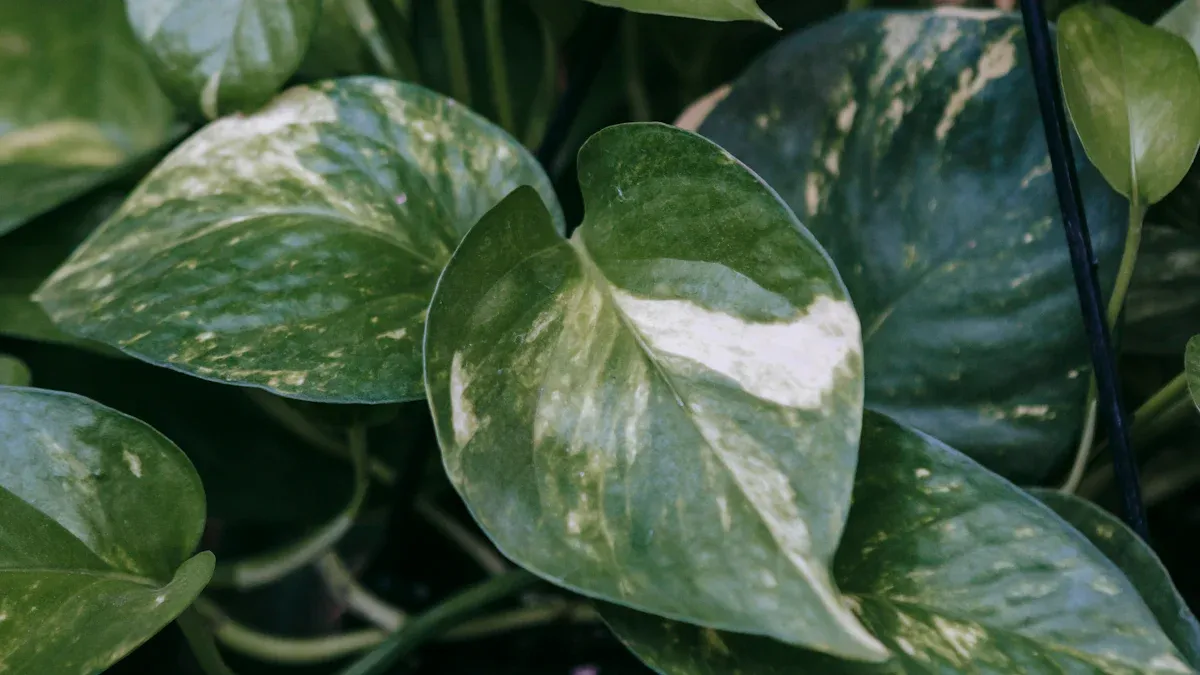
The pothos plant stands out as a beloved houseplant. It is a top choice for many, with approximately 85% of U.S. households owning at least one houseplant. Among these, pothos is often cited as the most popular.
I find this plant super adaptable and low-maintenance, perfect for both new and experienced plant parents. Its trailing foliage offers versatile display options in any home, and it also purifies the air. I will introduce you to 7 stunning pothos varieties, provide essential growing tips, and detail specific care requirements. This will help you cultivate thriving pothos plants for years.
The Appeal of Pothos Plants
Easy Care for All Plant Parents
I find the pothos plant truly remarkable for its resilience. This houseplant is incredibly adaptable, making it a perfect choice for anyone, regardless of their plant care experience. You can place a pothos in various indoor environments. It tolerates different light conditions, from bright indirect light to lower light spots.
I have seen pothos thrive even when I forget to water it exactly on schedule. It handles various soil types well, too. This plant is a fast growing plant, yet its care demands are minimal. It truly is a low-light indoor plant that forgives many mistakes.
Air Purification Benefits
Beyond its beauty, the pothos offers significant health advantages. I appreciate that this houseplant actively works to clean the air in my home. Pothos plants are known for their ability to filter out common indoor air pollutants. They effectively remove several volatile organic compounds (VOCs) from the air. These include:
Formaldehyde
Chloroform
Benzene
Having a pothos plant in your living space contributes to a healthier indoor environment.
Versatile Display Options
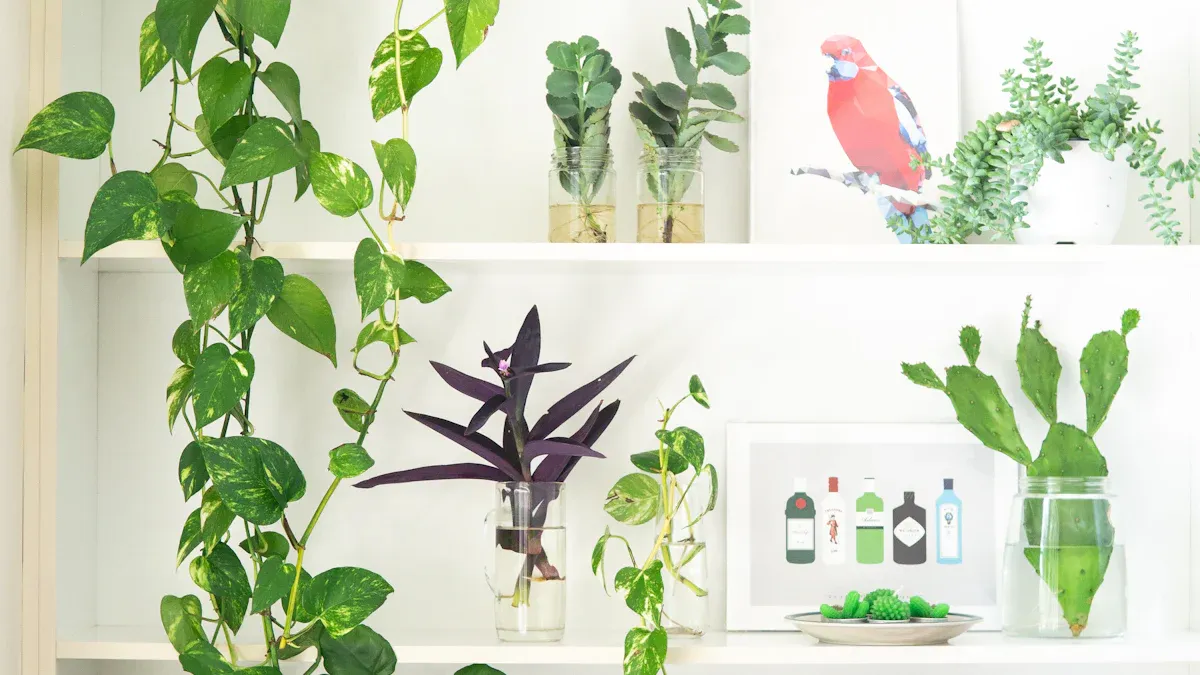
The trailing nature of pothos makes it incredibly versatile for decorating. I love how its long vines can transform a room. You can let your pothos cascade from a hanging basket or a high shelf. This creates a beautiful green waterfall effect. Alternatively, you can train the vines to climb a moss pole or trellis. This adds a vertical element to your indoor plant collection. The flexibility in display options means a pothos fits into almost any home aesthetic.
7 Stunning Pothos Varieties
I find the diversity within pothos varieties truly amazing. Each pothos plant brings its own unique charm. Some offer vibrant colors, while others boast intricate patterns. I will guide you through seven stunning types.
Golden Pothos: Classic Charm
I will start with the classic Golden Pothos. This is one of the most recognized pothos varieties. Its heart-shaped leaves feature splashes of yellow or gold against a vibrant green. I have seen this plant grow quite quickly.
Under optimal conditions, it exhibits a fast growth rate. Pothos are moderate to fast growers indoors, especially in warmer months. This makes it a popular choice for many. Its abundant green foliage contributes to its status as a fast growing plant.
Marble Queen Pothos: Variegated Beauty
Next, I will talk about the Marble Queen Pothos. This variety offers a stunning display of creamy white and green variegation. The patterns remind me of marble. To keep these beautiful patterns vibrant, I know this plant needs bright, indirect light. Low light conditions can cause the leaf color and patterns to appear less bright. This indicates a fading of variegation. Optimal light conditions for the plant are between 10,000 to 20,000 lux daily. This helps maintain the distinct patterns of variegated varieties.
Neon Pothos: A Bright Statement
The Neon Pothos is truly a bright statement. Its leaves glow with a vibrant, almost electric, lime-green color. I find this variety particularly striking. Neon Pothos is a fast-growing, aggressive vining species. It can reach significant lengths. As a houseplant, it thrives when given structures to climb.
Moss poles are a good option. It can also trail from hanging baskets. I have seen it grow to 6-8 feet or more in a home environment within two years. This rapid growing nature means it requires regular maintenance and pruning.
Jade Pothos: Deep Green Simplicity
For deep green simplicity, I choose the Jade variety. This plant features solid, dark green leaves. It has no variegation. Its deep green color means it has high chlorophyll content. This allows it to photosynthesize efficiently. It can tolerate very low light conditions better than variegated types. I find its simplicity elegant. This plant tends to grow faster because of its abundant green foliage.
Characteristic | Jade Pothos |
|---|---|
Leaf Color/Pattern | Solid, deep, dark green; no variegation |
Light Tolerance | Tolerates very low light; better at photosynthesizing due to more chlorophyll |
Chlorophyll Content | High chlorophyll content |
Distinguishing Feature | Known for deep-green leaves |
N’Joy Pothos: Crisp White Edges
The N’Joy Pothos offers crisp white edges. Its small, heart-shaped leaves have distinct patches of green, white, and cream. I love the clean look of this variety.
To prevent variegation loss, I know it needs bright, indirect light. Low light conditions cause the plant to produce more chlorophyll. This diminishes the distinctive cream and white variegation. The leaves turn greener. East or west-facing windows are ideal for this plant. I make sure to shield it from direct sunlight. This ensures the variegated leaves remain vibrant.
Pearls and Jade Pothos: Silvery-Green Accents
Pearls and Jade Pothos features silvery-green accents. Its attractive, shiny, heart-shaped leaves emerge light green with white edges. This variety displays white, gray, and green coloration in irregular patches. These blotches and streaks vary in size. I notice its leaves are smaller than standard golden pothos. They also have a slightly ruffled texture. This plant is an herbaceous evergreen houseplant. It has a spreading, ground-hugging habit of growth. It works well in hanging pots.
Manjula Pothos: Unique Wavy Leaves
Finally, I present the Manjula Pothos. This variety has unique wavy leaves. Its broad, heart-shaped leaves feature shades of green, cream, and white. The edges often curl slightly, giving them a distinct wavy appearance. I find this plant truly captivating. For optimal health and to maintain its variegated tones, Manjula Pothos thrives in bright, indirect light. Too much intense light can cause leaf tips to become crispy. The lighter cream parts can scorch.
This plant also requires high humidity. Levels should not dip below 50%. I recommend using a humidifier in dry climates. This provides the necessary moisture-rich air.
Pothos Care Essentials
I know pothos plants tolerate many conditions. However, optimal care involves specific practices. I want my pothos to thrive, so I follow these guidelines.
Pothos Light Needs
I always make sure my pothos gets the right amount of light. Pothos plants prefer bright, indirect light. Direct sunlight can burn their leaves. Variegated varieties, like Marble Queen or Manjula, need brighter indirect light to keep their patterns vibrant. Too little light makes their colors fade. I find that even green varieties, like Jade Pothos, grow best with good light.
I use this table to guide my light choices:
Plant Type | Minimum Indirect Light (FC) | Good Indirect Light (FC) |
|---|---|---|
Pothos (Epipremnum aureum, Scindapsus pictus) | 100 | 200 |
This helps me ensure my pothos plant gets enough light without getting too much.
Watering Your Pothos
Watering is crucial for good pothos care. I always allow the soil to dry out completely between waterings. This prevents many issues. I check the soil with my finger. If it feels dry an inch or two down, then it is time to water.
I have learned to recognize signs of improper watering:
Overwatering signs:
Curled leaves (downwards, to reduce surface area and slow transpiration).
Yellow or brown leaves (discoloration in spots or throughout).
Mold on the soil (looks like white powder, indicates a moist environment).
Soft, limp leaves.
Losing leaves.
Wilting leaves, indicating overwatered soil and possible root rot.
Consistently wet soil (Pothos prefer moist, not soaking wet, soil).
Root rot (brown, wet, mushy, and stinky roots, often with foul-smelling soil).
Excessively moist soil (I use the finger method; if my fingers come out moist, I delay watering).
Heavier pot due to saturated soil, possibly with water leaking from the bottom.
Squishy lower vines and stems, indicating potential root rot.
Foul odor from stagnant water and possible root rot.
Presence of fungus gnats.
Underwatering signs:
Limp and droopy plant even after watering.
Yellow leaves, starting at the edges and potentially engulfing the entire leaf.
Brown spots on leaves.
I make sure to water thoroughly until water drains from the bottom of the pot. Then, I empty any excess water from the saucer.
Soil and Potting for Pothos
I know the right soil mix is important for my pothos. Pothos plants flourish in slightly acidic soil. The ideal pH range is 6.1 to 6.8. They can tolerate conditions from neutral to slightly acidic levels. I use a well-draining potting mix. This helps prevent root rot.
I often add amendments to improve drainage and aeration. These include:
Pumice: This additive improves drainage and aeration. It makes the soil lighter.
Perlite: I use perlite to enhance drainage and aeration. Its smaller particles are good for many mixes.
Coco Chips: These contribute to better drainage and aeration.
I choose a pot with drainage holes. This is essential for good pothos care.
Temperature and Humidity
I keep my indoor pothos in a comfortable environment. Pothos plants thrive in temperatures consistently above 50°F. The ideal range for health and growing is between 65°F and 75°F. I avoid placing them near cold drafts or heat vents.
Pothos also appreciate humidity. Ideal humidity levels are typically between 40% and 60%. Low humidity can lead to smaller leaves or brown edges. I use several methods to increase humidity:
I group multiple plants together. They release moisture through transpiration, creating a mini-humid environment.
I use a humidifier. This releases water vapor into the air. It is especially useful in drier conditions, like winter.
I place a tray filled with water and pebbles near the plant. The evaporating water increases humidity. The pebbles prevent the plant from sitting in standing water.
I sometimes mist my pothos. This gives a temporary humidity boost. I am careful to avoid pests or fungus from wet leaves in low airflow.
I can also move my pothos to naturally humid rooms like bathrooms or kitchens, if they have good lighting.
Fertilizing Your Pothos
I fertilize my pothos during the growing season, which is spring and summer. I use a balanced liquid fertilizer. A 10-10-10 NPK ratio is recommended for pothos. Some people also recommend a 3-1-2 NPK ratio. I dilute the fertilizer to half strength. I apply it every 2-4 weeks. I stop fertilizing in fall and winter when the plant’s growth slows down. This is an important part of pothos growing tips.
Pruning for Fuller Growth
I prune my pothos regularly. This encourages bushier growth. It also prevents stems from becoming leggy and sparse. When I trim my pothos, I always cut near the leaf nodes. New growth emerges from these points. Regular cutting at these points helps promote a fuller, bushier plant. I use clean pruning shears.
I always cut just below a leaf node. This promotes new growth from that point and avoids bare stems. I can use the stem cuttings for propagation. This is a great way to propagate new plants. I can root these cuttings in water or soil.
Pothos Troubleshooting
Even with the best care, my pothos can sometimes show signs of distress. I have learned to identify these issues and address them quickly.
Yellow Leaves: Common Causes
I often see yellow leaves on my pothos, and I know several things can cause this. Sometimes, older leaves naturally yellow and die off as part of the plant’s aging process. If the yellow leaves are crispy, I know the plant may be underwatered. A pothos can also become root-bound if it outgrows its pot, leading to yellowing leaves.
I also watch for signs of root rot, which causes many yellow leaves and mushy stems and roots. This happens from waterlogged soil. Bacterial leaf spot shows as yellow halos around soft, watery spots on leaves. Pests like mealybugs (white fuzzy spots) or spider mites (tiny spiders with white webbing) can also cause yellowing.
Yellow leaves that are also wilting or have brown spots often indicate overwatering. The roots lack oxygen in this situation. Inconsistent watering, cycling between too dry and oversaturated soil, can stress the plant and cause yellowing. A lack of light can also cause yellowing as the plant’s growth slows and chlorophyll fades. Too much direct sunlight can burn leaves, leading to uneven yellow patches or crispy brown edges.
I also consider nutrient deficiencies. A lack of essential nutrients like nitrogen, magnesium, iron, or potassium can cause leaves to yellow. Nitrogen deficiency often causes uniform yellowing in older leaves. Magnesium deficiency shows yellowing between veins. Iron deficiency affects younger leaves, and potassium shortage can cause yellowing along leaf edges. Overwatering leads to root rot, causing yellowing leaves. The roots may appear black and mushy, and leaves can be soft or drooping.
Brown Tips: Hydration Issues
I know brown tips on my pothos leaves mean the roots cannot absorb enough water. This can happen from either over-watering or under-watering. Excessive fertilizer or root damage can also cause it. If the soil is dry and leaves are crispy at the edges, the plant needs more water.
Tap water containing chlorine, fluoride, or other chemicals can cause browning on leaf edges. Low humidity, especially near air vents or heaters, can lead to brown and crispy leaf edges. Both too much or too little fertilizer can cause brown tips. Brown tips with yellow edges may indicate fertilizer burn. When roots become crowded, they struggle to absorb water and nutrients, resulting in brown leaves.
Leggy Growth: Light Solutions
I notice leggy growth when my pothos stems are long and sparse, with leaves only at the ends. This happens when the plant grows longer stems without developing leaves, or only very small ones. It is stretching to find more light over extended periods. Poor lighting is a common cause.
To fix this, I provide bright, indirect light. I position my pothos where it receives ample natural light but is shielded from direct sunlight to prevent scorching. Variegated varieties need more light to maintain their color.
If natural light is insufficient, I use artificial light, like fluorescent lights or specialized LED plant lights. These provide the full spectrum needed for photosynthesis. I place LED lights 12 to 24 inches away from the top of the plant. I aim for 12 to 16 hours of light per day, ensuring periods of darkness for respiration. This helps with the plant’s growing.
Pest Identification and Treatment
I check my pothos regularly for pests. If I find them, I use organic treatments. Neem oil is effective against mealybugs, spider mites, aphids, and whiteflies. It acts as a repellent, deterrent, and growth disruptor. It also has antifungal properties. Insecticidal soap controls soft-bodied pests like aphids, mealybugs, and spider mites by disrupting their cell membranes. Homemade remedies like vinegar solutions and garlic sprays also deter pests.
I find the pothos plant a truly rewarding and easy-to-care-for houseplant. It adds natural beauty to any indoor space. Its adaptability and air-purifying qualities make it a great choice. The many pothos varieties offer diverse options. I encourage you to choose your favorite pothos and apply these care tips. You will enjoy a thriving, long-lasting houseplant collection.