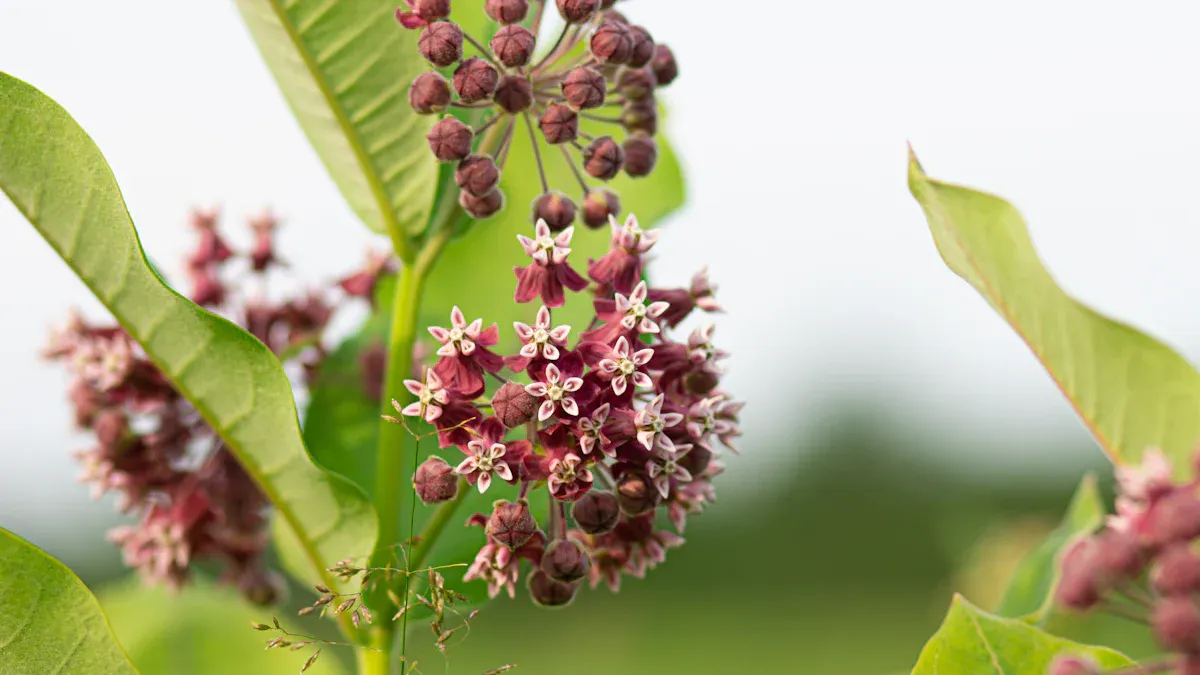
Monarchs face serious decline. The Western monarch population dropped 96% from 2023-2024. Eastern monarchs saw an 80% decline over decades.
Monarch butterfly larvae exclusively eat milkweed plants. This makes the milkweed plant vital for their survival. You can support these crucial insects and other pollinators. Not all milkweeds are the same. Understanding different types of milkweed is key for successful growing milkweed. This guide helps you create thriving pollinator gardens.
Why Plant Milkweed in Your Garden
Monarch Butterfly Host Plant
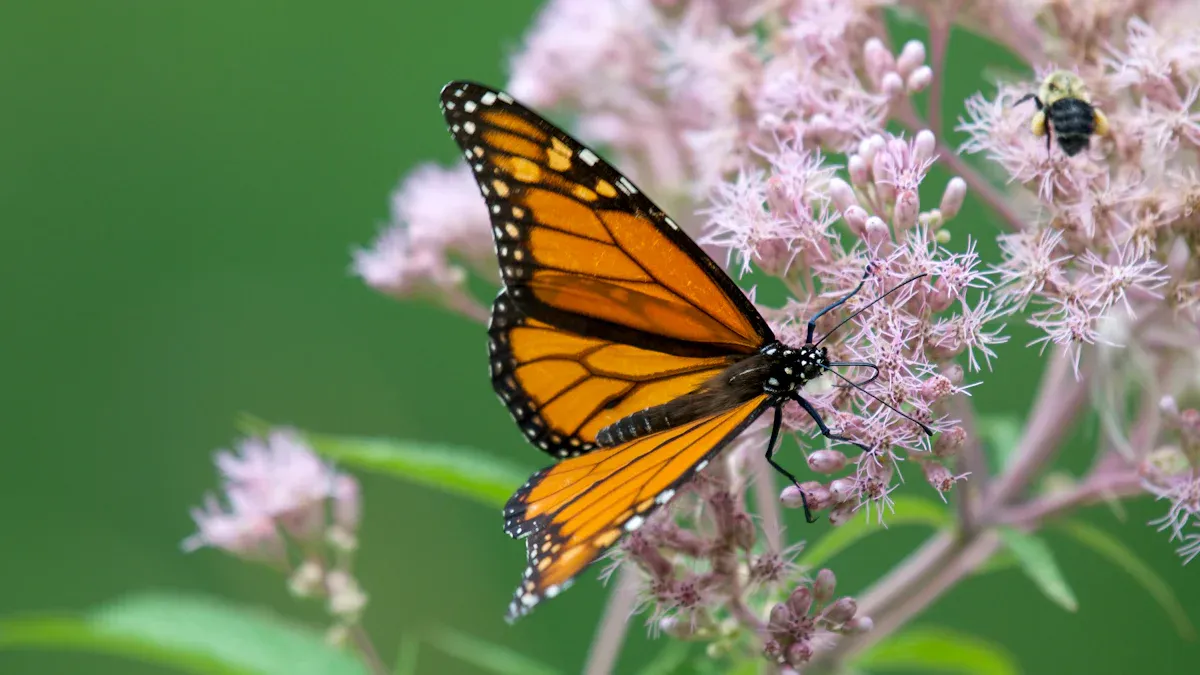
Planting milkweed directly supports monarch butterflies. The milkweed plant is the only larval food for monarchs. Monarch caterpillars eat milkweed leaves to grow. These plants contain special compounds called cardenolides. These are cardiac glycosides found in the milky white sap. Monarchs accumulate these compounds.
This makes them unpalatable to predators. These toxins disrupt muscle and kidney function in other animals. They also affect the nervous system. You provide a vital nursery for these iconic insects when you plant milkweed.
Pollinator Attraction and Biodiversity
Milkweed does more than just feed monarchs. It is an important food source for many other insects. You will see a variety of visitors in your garden. Regional studies show over two dozen insect species use milkweeds. These include bees, wasps, and other butterfly species. Planting milkweed helps in sustaining pollinators. This boosts biodiversity in your yard.
You create a vibrant ecosystem. This makes your pollinator gardens a hub of activity. You contribute to attracting butterflies and other beneficial insects.
Ecological Benefits for Local Ecosystems
Milkweed plants offer significant ecological benefits. They improve soil health and prevent erosion. Milkweed has deep tap roots. These roots extend over three feet. They access water and nutrients. The plant shares these with surrounding plants as it decomposes. Decomposing milkweed stalks add organic matter to the soil. This improves soil health. It also reduces erosion rates. Milkweed is unpalatable to livestock.
This reduces soil compaction in areas where it grows. Healthier soil leads to better water penetration. This helps rangelands withstand drought. You provide an important food source and habitat. This contributes to overall ecosystem services. You help create healthier landscapes. You also support attracting butterflies and other wildlife.
General Care for Milkweed Plants
Sunlight and Soil Needs
You want your milkweed plants to thrive. Provide them with plenty of sunlight. Most milkweed varieties prefer full sun. This means they need at least six to eight hours of direct sunlight every day. Some types can tolerate a little shade, but extensive sunlight generally helps them grow strong.
The right soil is also important. Milkweed plants generally prefer well-drained soil. This prevents water from sitting around the roots. Most milkweed can tolerate a wide range of soil types. They grow well in slightly acidic to slightly alkaline soils, with a pH range of about 6.0-7.5. Common milkweed, for example, tolerates a pH from 4–10. It does best in slightly alkaline soils. This plant thrives even in infertile or rocky conditions. However, swamp milkweed is an exception; it prefers consistently moist soil. When you plant seedlings, space them about one to two feet apart. This gives them room to grow.
Watering and Propagation
Once established, milkweed plants are quite drought-tolerant. You do not need to water them frequently. They can handle dry periods well. However, during extended dry spells, especially when they are young, you should water them occasionally.
You can grow new milkweed plants in a few ways. Many people start with seeds. Collecting seeds from mature plants is a great option. When starting milkweed seeds, remember that many native species need a cold period. This process is called cold stratification. It helps the seeds break dormancy and encourages germination. You can place the seeds in a moist paper towel inside a plastic bag in your refrigerator for several weeks. After stratification, plant the seeds directly into your garden or in pots. You will see successful germination. Another easy way to get plants is by using plugs. These are small, established plants. Planting milkweed plugs gives you a head start. You simply dig a hole, place the plug, and water it in. You can also collect seeds from existing plants to expand your garden. Ensure you have enough seeds for future planting.
Pest and Disease Management
You might encounter some pests on your milkweed plants. Aphids are a common sight. These small, orange insects often gather on stems and new growth. You can manage minor infestations by hand. Gently brush the aphids off with gloved hands. You can also spray affected plants with a few drops of dish soap mixed with water. Be careful if monarch eggs or caterpillars are present. Prune severely infested branches to stop the spread.
You can also use natural methods. A spray solution made from 4-5 drops of clove, peppermint, rosemary, or thyme essential oils mixed with one cup of water can kill aphids. Apply this every 2-3 days in the morning or evening. Introducing beneficial insects like ladybugs, hover flies, or lacewings is another effective organic control method. These insects eat aphids and generally do not harm monarch larvae.
A direct spray of Castile soap and water also works. Remember to rinse the plant afterward to protect monarch larvae. Maintaining plant health through proper watering and light also helps. Good airflow reduces aphid populations. Allowing some aphids to remain can attract natural predators, leading to biological control.
Milkweed plants can also face diseases. Black mold is a fungal disease that affects common milkweed. While specific treatments vary, maintaining good air circulation and avoiding overwatering can help prevent fungal issues. You want to keep your milkweed plant healthy for the monarchs.
10 Essential Milkweed Types for Growing
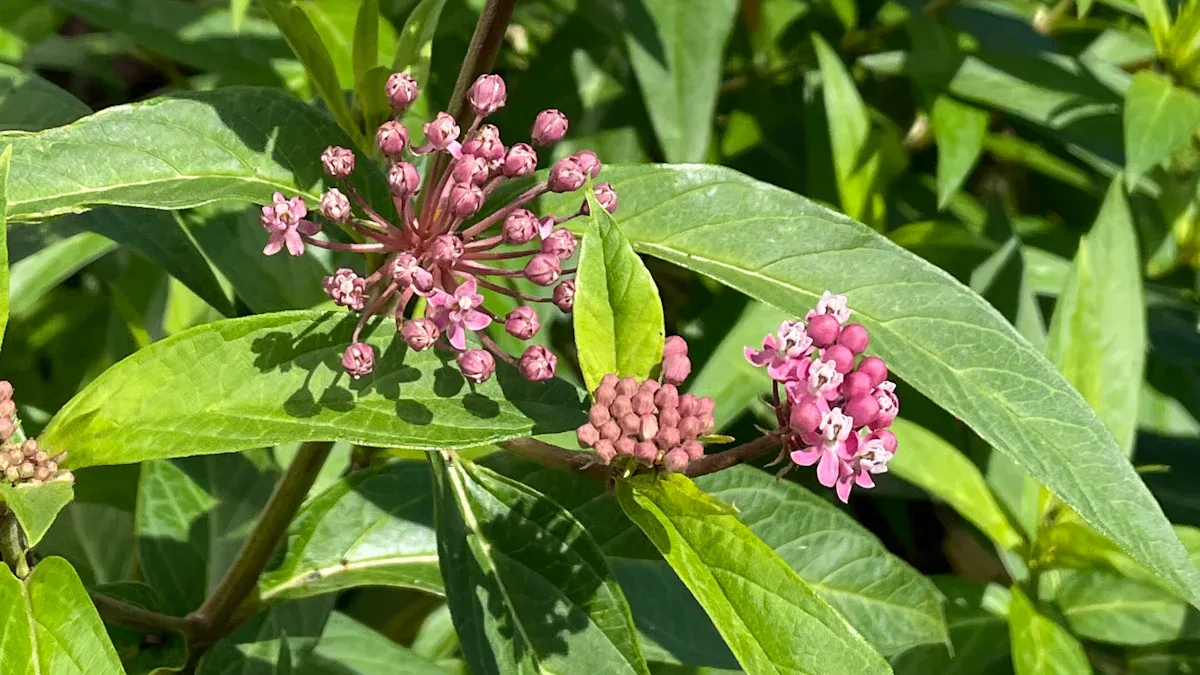
You have many choices when you select milkweed for your garden. Each type offers unique features. You can find a perfect match for your specific climate and garden style. Here are 10 essential types of milkweed you should consider.
Common Milkweed (Asclepias syriaca)
Common milkweed is a robust and familiar species. You recognize it by its sturdy stems and large, oval leaves. Its flowers are typically pinkish-purple. They grow in dense, rounded clusters. These flowers have a sweet fragrance. You find common milkweed natively in all New England states.
It also grows in many other states across North America. This includes Arkansas, Colorado, Delaware, Illinois, Indiana, Iowa, Kansas, Kentucky, Maine, Maryland, Massachusetts, Michigan, Minnesota, Missouri, Nebraska, New Hampshire, New Jersey, New York, North Carolina, North Dakota, Ohio, Oklahoma, Pennsylvania, Rhode Island, South Dakota, Tennessee, Vermont, Virginia, West Virginia, and Wisconsin.
This common milkweed plant adapts to many soil types. This includes clay, rocky, or sandy soils. It thrives in well-drained conditions. Its moisture needs range from dry to medium. Common milkweed prefers mesic to moist soils. It spreads aggressively through rhizomes. This makes it ideal for naturalized areas or larger gardens. You can collect its seeds easily for future planting.
Butterfly Weed (Asclepias tuberosa)
Butterfly weed stands out with its vibrant, non-milky sap. Its flowers are usually orange, but you might also see yellow or red varieties. It typically blooms from late spring through summer, specifically in June and July. This butterfly milkweed attracts many pollinators, including various butterfly species. You can grow butterfly milkweed in USDA Zones 3 to 9.
This plant prefers full sun and well-drained soil. It is very drought-tolerant once established. You can plant it in pollinator gardens, borders, or rock gardens. Its bright color adds a cheerful touch to your landscape. You can also gather its seeds to expand your garden.
Swamp Milkweed (Asclepias incarnata)
Swamp milkweed is a beautiful plant. It produces clusters of magenta or pink flowers. It thrives in moist to wet conditions. This makes it perfect for rain gardens or pond edges. It grows well in full sun.
This milkweed type is a strong host for monarch caterpillars. It adds a splash of color to wetter areas of your garden. You can easily collect its seeds to grow more plants.
Whorled Milkweed (Asclepias verticillata)
Whorled milkweed has a delicate appearance. It features fine, needle-like leaves arranged in whorls around the stem. Its small white flowers bloom in clusters. This plant reaches a mature height of 1 foot to 2 feet 6 inches.
It is very tough and drought-tolerant. It prefers dry to medium soil and full sun. You can use it in dry prairies, rock gardens, or other challenging spots. You can also collect its seeds for propagation.
Green Antelopehorn Milkweed (Asclepias viridis)
Green Antelopehorn milkweed is a unique species. It has greenish-white flowers. These flowers have a distinctive shape. This herbaceous perennial wildflower has long starchy tap roots. These roots allow it to grow in the same spot for decades. It does not spread through underground runners. Its roots also help it survive drought. You find it happiest in full sun, but it tolerates part shade. It blooms best with plenty of sun.
The plant’s shape is unique. Mature plants have multiple stems that ascend into a V or vase shape from a central point. They can grow over two feet tall. Its leaves are usually blunt ovals in eastern Texas, but they can be narrow and pointed. They are randomly arranged, mostly alternate, and sometimes opposite. The leaves are somewhat shiny, smooth, and flexible. New leaves have short, soft hairs.
The flowers are born in large umbels with about 10 flowers in each. The corollas have five erect petals that can be white or green with a yellowish or purplish tinge. The stamens are purple. These flowers lack the horned structure common to many milkweed species. The plant’s stems and leaves exude a milky sap when broken. It is an important nectar source for bees and wasps. It is also a larval host plant for Monarch, Queen, and Soldier butterflies. The plant contains a milky latex toxic to most animals.
However, Monarch, Queen, and Soldier caterpillars are adapted to feed on it. You find this milkweed from Nebraska to Texas, east to Ohio and West Virginia, Kentucky, Tennessee, and south from South Carolina to Florida. You can collect its seeds for future planting.
Showy Milkweed (Asclepias speciosa)
Showy milkweed lives up to its name. It produces large, pinkish-purple flower clusters. Its leaves are fuzzy. Showy milkweed spreads vigorously by rhizomes. This means it can potentially overwhelm smaller plants in a small, formal garden. However, it spreads less aggressively than common milkweed. This makes it potentially better suited for some garden settings.
You can manage its spread by pruning it back as it begins to spread. You can also plant it in an area where spreading is desired. Or, you can contain it in a raised bed or large container. It prefers full sun and well-drained soil. You can use it in larger gardens or naturalized areas. You can also gather its seeds.
Tropical Milkweed (Asclepias curassavica)
Tropical milkweed features bright red, orange, and yellow flowers. It is not native to most of North America. Tropical milkweed’s extended bloom season signals to adult monarchs that it is time to lay eggs and continue reproducing. This happens instead of migrating south. Monarchs feeding on this milkweed plant late in the season tend to remain reproductively active. This delays or eliminates their natural migration. This reduces overall population numbers.
The plant acts as an “ecological trap.” Its long blooming season attracts monarchs but ultimately harms them. It disrupts their natural life cycle. In regions where tropical milkweed is perennial, it perpetuates the deadly protozoan parasite Ophryocystis elektroscirrha. Monarchs show a feeding preference for tropical milkweed.
This further exposes them to this pathogen. In perennial zones (Zone 9 and further south), tropical milkweed has escaped cultivation. It has invaded natural areas like forest edges, roadsides, and field margins. It displaces native plant species. You should treat it as an annual in most US zones. You must cut it back in warmer zones to prevent these issues.
Purple Milkweed (Asclepias purpurascens)
Purple milkweed is a striking plant. Its flowers are a deep, clear pinkish-purple. They often have a nice fragrance. The flowers can range from blue to purple, or pink to red. They can also be pale purple to deep purple, sometimes with greenish or rosy tints. The central reproductive column and the bases of the deflexed petals are paler than the rest of the flower. These flowers possess a pleasant fragrance.
It prefers full sun to part shade and well-drained soil. You can plant it in pollinator gardens or native plant landscapes. You can also collect its seeds.
White Milkweed (Asclepias variegata)
White milkweed offers a unique look. Its flowers are white. They often have pink to red or purplish rings. The petals are thin, delicate, and elliptic or oblanceolate in shape with acute tips. There are five petals. They may be fused into a cup or tube. The flowers are waxy and white. They frequently feature reddish, pinkish, or purplish rings around the middle. They are 7-9 millimeters long. They are borne in loose to dense hemispherical clusters at the top of the plant.
Its leaves are opposite, with two leaves per node. They are oblong or ovate, with an entire edge. The tip can be acute or obtuse. The base can be cuneate or rounded. The blade length is typically 80–120 mm. The upper side can be uniformly colored or have spots, mottles, or stripes. The underside may or may not be hairy, while the upper side has few to no hairs. You will find 4-6 pairs of opposite leaves. They are more or less elliptical. They are 8-12 centimeters long by 2.5-7.5 centimeters wide. The underside is lighter in color than the upper side. The underside may have hairs. It prefers part shade to full sun and well-drained soil. You can use it in woodland edges or shade gardens. You can also gather its seeds.
Desert Milkweed (Asclepias subulata)
Desert milkweed has a distinctive, leafless appearance. It features rush-like stems and small white or yellow flowers. Once established, it withstands drought conditions. It thrives with occasional to low water. It prefers to be dry during the summer months. It grows well in gritty, rocky, and well-drained soil. It is adapted to heat, drought, aridity, and all-day sun. It requires deep watering only every 3-4 weeks after establishment. These natural drought adaptations mean the plant does not need more water in warm weather.
This is an excellent choice for growing milkweed in xeriscaping, desert gardens, or rock gardens. It is one of the best types of milkweed for arid environments.
Choosing Native Milkweed for Your Region
Native vs. Non-Native Considerations
You must choose milkweed varieties native to your area. Over 100 species of milkweed naturally occur across North and Central America. This makes selecting the right type for growing milkweed important. Native plants offer greater support for local biodiversity. They specifically help native insect herbivores. These insects are a critical food source for birds. Birds feed their young insects. Native plants also support many pollen-specialist native bees.
Non-native milkweeds can cause problems. Tropical milkweed (Asclepias curassavica) may increase the OE parasite in monarch populations. This parasite reduces monarch survival, size, and lifespan. It also affects mating success and flight ability. Non-native plants can harm pollinators. Native plants and their pollinators have coevolved. Some pollinators are specialists. They depend on specific native plant species for food.
When non-native plants displace native ones, pollinator relationships suffer. This leads to less biodiversity. Invasive common milkweed can simplify insect flower-visiting networks. Its flowers attract long-tongued flower visitors. This can disrupt local species. Therefore, planting milkweed native to your region is crucial.
Hardiness Zones and Climate Suitability
You need to select milkweed varieties that suit your specific growing zone. This ensures they thrive and best support local ecosystems. Your USDA Hardiness Zone guides you. For example, if you live in USDA Hardiness Zone 7, you have several excellent choices. You can plant Common Milkweed (Asclepias syriaca).
Swamp Milkweed (Asclepias incarnata) also works well. Butterfly Weed (Asclepias tuberosa) is another good option. Green Antelopehorn (Asclepias viridis) and Whorled Milkweed (Asclepias verticillata) are suitable. You can also consider White Milkweed (Asclepias variegata) and Aquatic Milkweed (Asclepias perennis). Purple Milkweed (Asclepias purpurascens) is another great choice for Zone 7. Choosing the right species for your climate helps your garden flourish. It also provides reliable resources for local wildlife.
You now understand the profound impact of the milkweed plant. It helps monarch butterfly populations and improves your garden’s health. You can choose the right types of milkweed for your specific environment. This action directly supports the struggling monarch butterfly. You contribute to vital conservation efforts through your gardening.