

Jackfruit gains global interest. It serves as a versatile fruit and meat alternative. The global jackfruit market reached billions in 2024 and continues to grow. Understanding its diverse jackfruit varieties is crucial. This helps with successful cultivation and culinary applications. This guide provides a detailed overview of popular jackfruit types. It also covers their specific growing needs, updated for contemporary practices in 2025. This journey into the world of jackfruit offers insights for both novice growers and seasoned enthusiasts. It supports effective growing jackfruit practices.
Key Takeaways
Jackfruit varieties differ in size, texture, and taste. Some are sweet for eating fresh, and others are savory for cooking.
Jackfruit trees need a warm, humid climate. They grow best in well-drained soil with plenty of sunlight.
Proper care helps jackfruit trees grow well. This includes regular watering, feeding, and trimming the branches.
Evar jackfruit is the sweetest type. It has a very high sugar content.
Sustainable farming methods help jackfruit grow better. These methods protect the environment and improve the fruit.
Understanding Jackfruit Varieties

Key Variety Characteristics
Understanding the distinct features of different jackfruit varieties is essential for successful cultivation and culinary use. Jackfruit varieties show differences in several key areas. Fruit size is a primary differentiator. For example, ‘Barka’ is a smaller fruit type. ‘Kapa’ is a larger fruit type. The bulb or pulp also varies. Varieties are classified as ‘soft’ or ‘hard’ based on their pulp characteristics. Physical properties like weight, length, and diameter also differ. Soft varieties generally have smaller weights, lengths, and diameters compared to hard varieties. Sphericity, or how round the fruit is, changes with maturity. Hard varieties are often more spherical when young. Soft varieties start more cylindrical and become oblong. Other important characteristics include skin texture, flesh color, sweetness, and aroma. These traits help distinguish one jackfruit from another.
Sweet vs. Savory Jackfruit
Jackfruit varieties fall into two main categories based on their primary use: sweet and savory. Sweet jackfruit types are often called dessert types. People typically eat them fresh when ripe. They have a strong, sweet flavor and a soft, juicy texture. These are popular for snacks or desserts. Savory jackfruit types are often called vegetable types. People usually cook them when unripe. They have a neutral flavor and a firm, fibrous texture. This makes them an excellent meat alternative in many dishes. The choice between sweet and savory jackfruit depends on the intended culinary application.
Selecting Jackfruit Varieties
Choosing the right jackfruit varieties requires careful consideration of several factors. Climate suitability is crucial. Jackfruit trees thrive in warm, humid climates. The optimal temperature range for growth and fruit development is between 25°C and 35°C (77°F and 95°F). Young saplings need protection from frost.
They also require full sun exposure, at least six hours daily. This helps with photosynthesis and strong bud formation. Soil conditions are also important. Jackfruit trees prefer well-draining soil rich in organic material. A soil pH level between 6 and 7.5 is ideal. This prevents nutrient deficiencies. Integrating compost improves aeration and water retention. This also ensures roots access essential nutrients. Well-draining soil prevents issues like latex flow from waterlogged conditions. The available space for the tree and its intended use (fresh eating, cooking, or processing) also guide selection.
Variety | Ideal Climate |
|---|---|
Black Gold | Tropical |
Honey Gold | Tropical/Subtropical |
Artocarpus heterophyllus | Tropical |
Popular Jackfruit Varieties
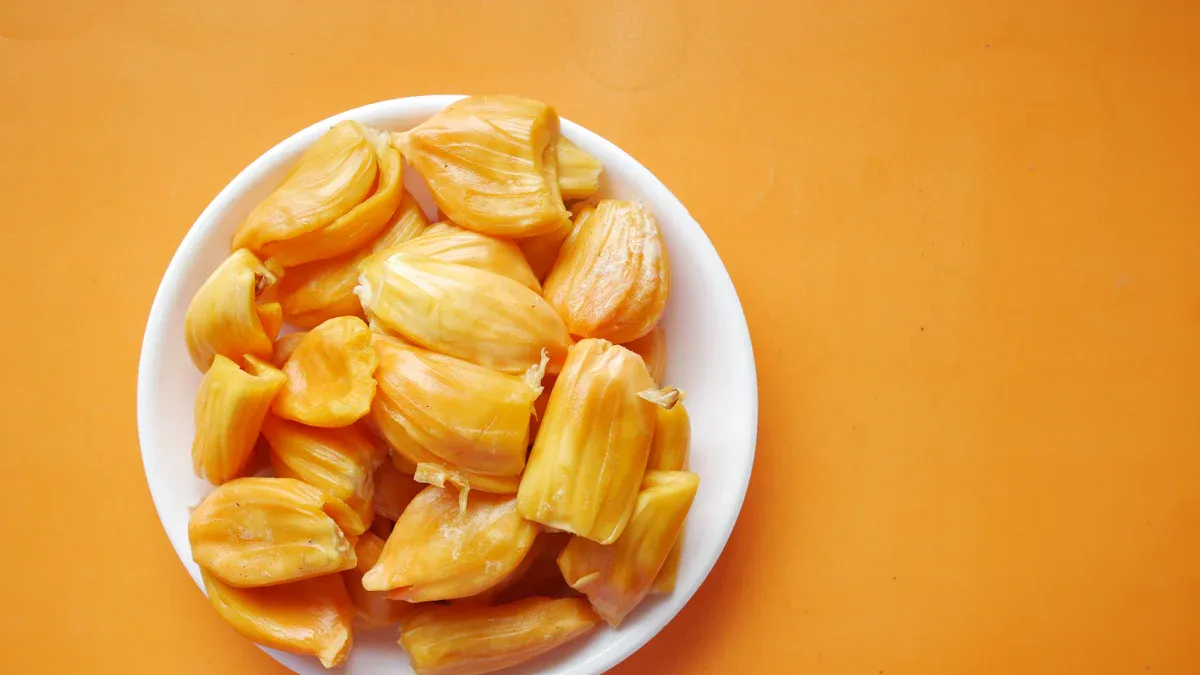
Jackfruit varieties offer a wide range of flavors, textures, and sizes. Growers select specific types for fresh eating, cooking, or processing. Each variety has unique characteristics and growing needs.
Cheena (Black Gold) Jackfruit
Cheena jackfruit is also known as Black Gold. It features deep orange flesh. The flesh is soft and somewhat fibrous. It has an excellent flavor and an intense, earthy aroma. Black Gold jackfruit also has deep orange flesh. Its texture ranges from medium-firm to melting and soft. It offers a good, sweet, and aromatic taste.
Cultivar | Color | Texture | Quality |
|---|---|---|---|
Black Gold | Deep orange | Medium-firm to melting, soft | Good, sweet, aromatic |
Cheena | Deep orange | Soft, melting, somewhat fibrous | Excellent, very aromatic |
Cheena jackfruit requires full sun for optimal growth. It thrives in well-drained, sandy or loamy soils. These soils should have a higher pH. Consistent watering is important, but growers must avoid waterlogging. This variety generally shows good resistance to common pests and diseases.
Muttom Varikka Jackfruit
Muttom Varikka jackfruit, also called Pathamuttam Varikka, is famous for its intense sweetness. It has a mildly fruity aroma. Its flakes balance juiciness and firmness. The flesh is firm, sweet, and golden-yellow. This jackfruit offers a unique flavor. Growers appreciate its super sweet taste. Muttom Varikka jackfruit generally requires a warm, humid climate. It needs well-drained soil and consistent moisture.
Gulabi (Pink Jack) Jackfruit
Gulabi jackfruit, or Pink Jack, stands out with its distinctive flesh color. The flesh ranges from yellowish-red to dark red. Some similar varieties, like ‘Zima Pink’, have yellow, sweet, banana-flavored aromatic flesh. This flesh is also very thick. Gulabi jackfruit typically grows well in tropical conditions. It needs ample sunlight and well-drained soil.
Thenga Varikka Jackfruit
Thenga Varikka jackfruit is another popular type. Jackfruit trees, including Thenga Varikka, need a balanced feeding approach. Young trees require 200-300g of nitrogen, 100-150g of phosphorus, and 200-300g of potassium annually. Mature trees need 400-500g of nitrogen, 200-250g of phosphorus, and 400-500g of potassium per year. Micronutrients are also vital. Zinc deficiency causes small, narrow, yellowing leaves and stunted growth. Growers recommend annual applications of 25-50g of zinc sulfate. Copper deficiency leads to shoot die-back and poor fruit development. This requires 15-25g of copper sulfate annually. Other important micronutrients include iron, manganese, and boron. Growers can supply these through commercial mixtures.
Jackfruit trees are susceptible to several diseases:
Pink disease
Stem rot
Fruit rot
Budrot
Growers prune affected plants and protect cut ends with Bordeaux paste to manage these diseases.
Evar Jackfruit
Evar jackfruit, also known as EVIARC Sweet Jackfruit or Abuyog Sweet Jackfruit, holds the title of the world’s sweetest jackfruit. It boasts a Brix level between 25.1 and 26. This indicates a very high natural sugar content. The arils are bright golden-yellow. They are thick, juicy, firm with a gentle crunch, and free from unpleasant stickiness. The arils also possess a deep honeyed aroma.
Evar jackfruit thrives best in humid lowland tropics. It prefers a mean annual temperature between 24-28°C. The mean maximum temperature should be 32-35°C, and the mean minimum temperature should be 16-20°C. This jackfruit needs hot and humid areas. Average monthly temperatures should range from 25-30°C (77-86°F). Temperatures must not drop below freezing. The ideal climate also includes a well-distributed rainy season, indicating a need for consistent humidity.
Other Notable Jackfruit Types
Beyond these specific jackfruit varieties, several others deserve mention. J-30 and J-33 are known for their high yield and good flavor.
Golden Nugget jackfruit is a dwarf variety. Growers can easily maintain it at 6-8 feet. It grows fast and has a dense canopy. This makes it suitable for container gardening and small spaces. It produces prolifically, yielding 130-175 pounds of fruit per year. The mature fruit is small and round, weighing 7-13 pounds. It starts green with sharp, fleshy spines. It ripens to golden-yellow skin with smoothed spines. The flesh is deep orange, aromatic, sweet, smooth, and fiber-free. It has a soft to medium-firm, butter-like consistency. This variety has low latex. It thrives in full sunlight and well-drained soil. Regular watering and pruning help maintain its compact size.
General Jackfruit Growing Requirements
Climate and Temperature
Jackfruit cultivation thrives in specific environmental conditions. A warm, humid climate is essential for healthy growth. Jackfruit plants prefer tropical areas without a prominent dry season. These conditions are particularly suitable in lowland coastal areas below 1,000 meters. Such regions typically receive more than 1,500 mm of annual rainfall. The optimum temperature for jackfruit growth is approximately 30–40°C. Jackfruit plants can tolerate temperatures up to 45°C. These warm temperatures support robust development and fruit production for growing jackfruit.
Soil Type and pH
The right soil provides a strong foundation for jackfruit trees. Jackfruit thrives in soil with a pH ranging from 6 to 7.5. This slightly acidic to neutral range is ideal. The ideal soil texture is rich, deep, and somewhat porous. This ensures good drainage. Well-drained, sandy or loamy soils are preferred. These soil types prevent waterlogging, which can harm the roots. A rich, deep soil of medium or open texture allows roots to spread effectively.
Watering and Humidity
Consistent moisture is vital for jackfruit trees, but waterlogging must be avoided. Establishing a consistent watering schedule helps prevent plant disease. It also ensures deep root development. Growers should water frequently enough to keep the soil moist. They must not make it soggy. Adjust watering frequency based on the season and rainfall. Drip or trickle irrigation delivers water directly to the root zone. This method minimizes waste and evaporation. It also fosters deep root systems.
To check soil moisture, growers can stick a finger 1-2 inches into the soil. Water if it feels dry. Hold off if it feels moist. Watering needs vary by climate. Hot, dry climates require more frequent watering, perhaps every 2-3 days. Cooler, humid climates need less frequent watering, possibly once a week or less. Soil type also affects watering. Sandy soils need more frequent watering, about every 3-4 days. Clay soils need less, around once every 7-10 days. Loamy soils typically need water once a week.
Young jackfruit plants need more frequent watering. They have smaller root systems. Water them every 2-3 days for the first few months. Mature trees can go 7-10 days without water. Increase watering frequency during flowering and fruiting stages. For example, change from once a week to twice a week. Water deeply and slowly to encourage deep root growth. A soaker hose or drip irrigation system works well for this.
For container-grown jackfruit, water when the top 1-2 inches of soil feels dry. Water 2-3 times per week in warmer months. Reduce frequency in cooler months. Use a watering can or gentle spray nozzle. Water evenly around the base. Avoid wetting the leaves to prevent fungal diseases. Ensure containers have good drainage. This prevents water accumulation and root rot. Regularly check soil moisture. It should be moist but not soggy. This prevents overwatering. It should also not be dry and cracked. This prevents underwatering. Yellow or brown falling leaves and constantly soggy soil indicate overwatering. Allow the soil to dry and ensure drainage to fix this. Wilting, dry or brittle leaves, and cracked soil indicate underwatering. Thorough watering and increased frequency will fix this. For larger containers, drip irrigation with a timer provides consistent moisture without overwatering.
Sunlight Exposure
Jackfruit trees require ample sunlight for optimal growth and fruit production. Full sunlight is crucial. At least 8 hours daily is optimal. Periods of partial shade do not negatively impact the sweetness of the fruit. Jackfruit trees need full sun for a minimum of 6-8 hours per day to thrive. This also helps them produce fruit. Increased sunlight generally leads to better growth and fruit production.
Fertilization Needs
Jackfruit trees require a balanced fertilizer. This fertilizer should be rich in nitrogen, phosphorus, and potassium. Phosphorus is particularly vital for strong root development and fruit production. Growers apply a balanced fertilizer at the beginning of the rainy season. This promotes growth. They apply a second round of fertilizer just before the dry season. This prepares the jackfruit tree for fruiting. Adjust the amount and type of fertilizer based on the tree’s age and overall health.
Pruning and Training
Annual pruning is crucial for jackfruit trees. It helps maintain a manageable size. It also enhances fruit production. This practice helps achieve consistent and heavy yields. Growers should ideally perform pruning after the main harvest. They can also prune towards the end of the growing season.
Variety | Pruning Frequency | Maintained Height | Maintained Spread | Fruit Production (lbs/year) |
|---|---|---|---|---|
Sweet Fairchild | Annual | 12 feet | N/A | 200+ |
Black Gold | Annual | 6-8 feet | 6-8 feet | 120-200 |
Dang Rasimi | Annual | 10-12 feet | 10-12 feet | 165-275 |
Golden Nugget | N/A | 6-8 feet | 6-8 feet | 130-175 |
J-31 | N/A | 6-8 feet | 6-8 feet | 90-130 |
Pest and Disease Management
Effective jackfruit tree care includes managing pests and diseases. Organic control methods offer sustainable solutions for jackfruit pests and diseases.
Cultural Control Measures:
Proper Site Selection: Choose locations with well-drained soil, ample sunlight, and suitable temperature and humidity.
Maintain Optimal Soil Health: Regularly test and amend soil with nutrients and organic matter.
Implement Proper Pruning Techniques: Remove dead, damaged, or diseased branches. This improves air circulation and reduces infestation risks.
Practice Crop Rotation: Rotate jackfruit with non-host crops. This disrupts pest and disease life cycles.
Enhance Biodiversity: Plant diverse companion plants. This encourages beneficial insects and microorganisms.
Mechanical and Physical Control:
Trapping and Monitoring: Use pheromone traps for pests like the jackfruit fruit fly.
Handpicking and Removal: Manually remove visible pests such as the jackfruit stem borer.
Barrier Protection: Use netting or mesh. This prevents insects from accessing developing fruit.
Sanitation Practices: Regularly dispose of fallen fruits, leaves, and plant debris.
Biological Control:
Introduce Beneficial Insects: Release predators like ladybugs or lacewings.
Utilize Microbial Biopesticides: Apply biopesticides such as Bacillus thuringiensis (Bt).
Encourage Avian Predators: Provide nesting sites for birds. This helps control insect populations.
Advanced Jackfruit Cultivation Tips
Optimizing Variety Yields
Growers can significantly increase jackfruit yields through targeted management practices. Selecting the right variety for the local climate is a primary step. Proper nutrition, tailored to the specific growth stage of the jackfruit tree, also boosts fruit production. Regular pruning helps direct the tree’s energy towards fruit development rather than excessive vegetative growth. This ensures each jackfruit receives adequate resources. Effective pest and disease management further protects the crop, preventing losses and maintaining tree health. These combined efforts lead to higher quality and quantity of jackfruit.
Sustainable Growing Practices
Sustainable practices are crucial for long-term jackfruit cultivation. Farmers implement organic fertilization methods, using compost and natural soil amendments. This improves soil health and reduces reliance on synthetic chemicals. Water conservation techniques, such as drip irrigation, minimize water waste. Integrated pest management (IPM) strategies prioritize biological controls and natural deterrents over chemical pesticides. These methods protect the environment and ensure the safety of the jackfruit crop. Sustainable growing also includes practices like intercropping, which enhances biodiversity and soil fertility around the jackfruit trees.
Adapting to Climate Change
Climate change presents new challenges for growing jackfruit. Growers adopt innovative approaches to build resilience. They use strategies like adjusting planting density to create a better microclimate. Trellising techniques, such as V-trellis or Pergola systems, offer better wind resistance. Precision drip or subsurface irrigation methods conserve water efficiently. Reflective films and shade cloth protect jackfruit from heat stress and sunburn. Biochar and microorganism inoculation improve soil health.
Cultivation Aspect | Innovative Approach | Climate Resilience Impact | Yield Improvement Estimate |
|---|---|---|---|
Planting Density | 50-100 trees/hectare | High – Improved microclimate | 30-50% increase |
Trellising Technique | V-trellis or Pergola systems | Medium – Better wind resistance | 20-30% increase |
Irrigation Method | Precision drip or subsurface | High – Water conservation | 15-25% increase |
Sunburn Protection | Reflective films and shade cloth | High – Heat stress reduction | 10-20% increase |
Soil Treatment | Biochar and microorganism inoculation | Medium – Improved soil health | 15-25% increase |
These strategies lead to significant yield improvements. These efforts enhance drought tolerance through efficient water use. They also improve heat resistance via protective measures. Wind resilience comes from innovative trellising. Soil health improvement ensures long-term sustainability. Advanced technologies, like satellite-based crop health monitoring and AI-driven advisory systems, assist farm management. Remote sensing helps analyze soil moisture. Blockchain-based traceability improves supply chain management. Experts from various fields, including agricultural scientists, climate researchers, and soil scientists, contribute to these advancements in jackfruit propagation and cultivation.
This guide showed the many jackfruit varieties. It also explained their specific growing needs. Successful jackfruit cultivation in 2025 needs informed choices. Growers must pick the right variety and give tailored care. Readers can use this knowledge. They can grow thriving jackfruit trees. This helps sustainable food practices. It also lets them enjoy this unique fruit. Jackfruit has a bright future in global food systems.
FAQ
What distinguishes sweet jackfruit from savory jackfruit?
Sweet jackfruit, or dessert types, people eat fresh when ripe. They have a strong, sweet flavor and soft texture. Savory jackfruit, or vegetable types, people cook unripe. They offer a neutral flavor and firm, fibrous texture. This makes them suitable as a meat alternative.
What are the ideal climate conditions for growing jackfruit?
Jackfruit thrives in warm, humid climates. Optimal temperatures range from 25°C to 35°C (77°F to 95°F). They need more than 1,500 mm of annual rainfall. Young plants require protection from frost. Full sun exposure, at least six hours daily, is also crucial.
What soil type do jackfruit trees prefer?
Jackfruit trees prefer well-drained, sandy or loamy soils. These soils should be rich and deep. An ideal pH level ranges from 6 to 7.5. Good drainage prevents waterlogging. This ensures healthy root development. Adding organic material improves soil aeration and water retention.
What is the significance of pruning for jackfruit trees?
Pruning is crucial for jackfruit trees. It helps maintain a manageable size. It also enhances fruit production. Growers perform pruning after the main harvest. This practice ensures consistent and heavy yields. It directs the tree’s energy towards fruit development.
What is the sweetest jackfruit variety?
Evar jackfruit, also known as EVIARC Sweet Jackfruit, holds the title of the world’s sweetest jackfruit. It boasts a Brix level between 25.1 and 26. Its arils are bright golden-yellow. They are thick, juicy, and firm with a gentle crunch.