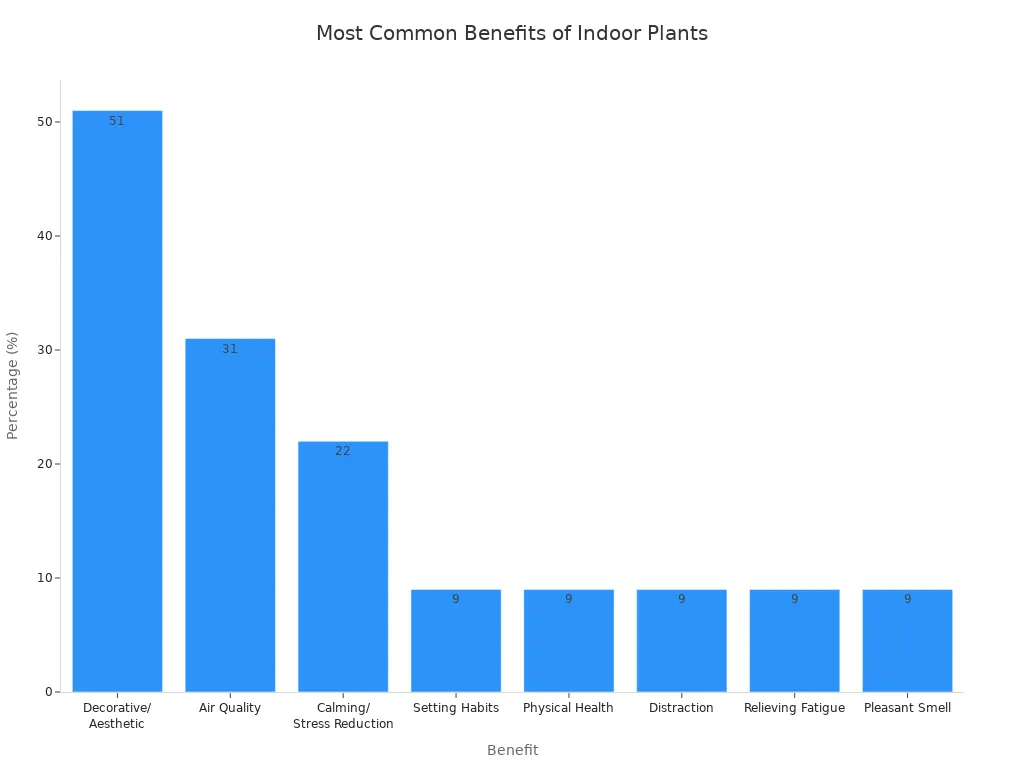
I find great joy in having thriving plants. They add beauty and calm to any space. Many people agree; 51% value them for decorative appeal.
Yet, even dedicated enthusiasts face challenges with their plants. Overwatering and underwatering are common issues for houseplant owners. This indoor plant care guide offers expert tips. I provide solutions for common houseplant care problems. These care tips will transform your routine. You will gain actionable knowledge for all your indoor plants.
Understanding Basic Houseplant Needs
I know successful indoor plant care starts with understanding fundamental requirements. These initial tips lay the groundwork for healthy plants. I focus on what your plants truly need to thrive.
Tip 1: Assess Light Needs for Thriving Plants
I always consider light the most crucial factor for plants. Providing enough light directly impacts plant health. Different plants need different light levels. I find it helpful to know specific requirements.
Plant Species | Minimum for Maintenance (FC / µmol) | Good Growth (FC / µmol) | Commercial Growth (FC / µmol) |
|---|---|---|---|
African Violet | 200 FC (40 µmol) | 400 FC (80 µmol) | 1000-1200 FC (200-240 µmol) |
Alocasia | 200 FC (40 µmol) | 400 FC (80 µmol) | 2000-5000 FC (400-1000 µmol) |
Anthurium | 100 FC (20 µmol) | 400 FC (80 µmol) | 1500-2000 FC (300-400 µmol) |
Begonia | 200 FC (40 µmol) | 400 FC (80 µmol) | 2000-2500 FC (400-500 µmol) |
Calathea | 200 FC (40 µmol) | 400 FC (80 µmol) | 1000-1200 FC (200-240 µmol) |
Hoya | 100 FC (20 µmol) | 400 FC (80 µmol) | 1500-2500 FC (300-500 µmol) |
Ficus | 400 FC (80 µmol) | 800 FC (160 µmol) | 2000-6000 FC (400-1200 µmol) |
Syngonium | 100 FC (20 µmol) | 200 FC (40 µmol) | 1500-3000 FC (300-600 µmol) |
Monstera | 100 FC (20 µmol) | 400 FC (80 µmol) | 1000-2500 FC (240-500 µmol) |
Peace Lily | 50 FC (10 µmol) | 200 FC (40 µmol) | 1500-2500 FC (300-500 µmol) |
Peperomia | 100 FC (20 µmol) | 200 FC (40 µmol) | 1500-3000 FC (300-600 µmol) |
Phalaenopsis | 200 FC (40 µmol) | 400 FC (80 µmol) | 1000-1500 FC (200-3000 µmol) |
Philodendron (vining) | 100 FC (20 µmol) | 200 FC (40 µmol) | 1500-3000 FC (300-600 µmol) |
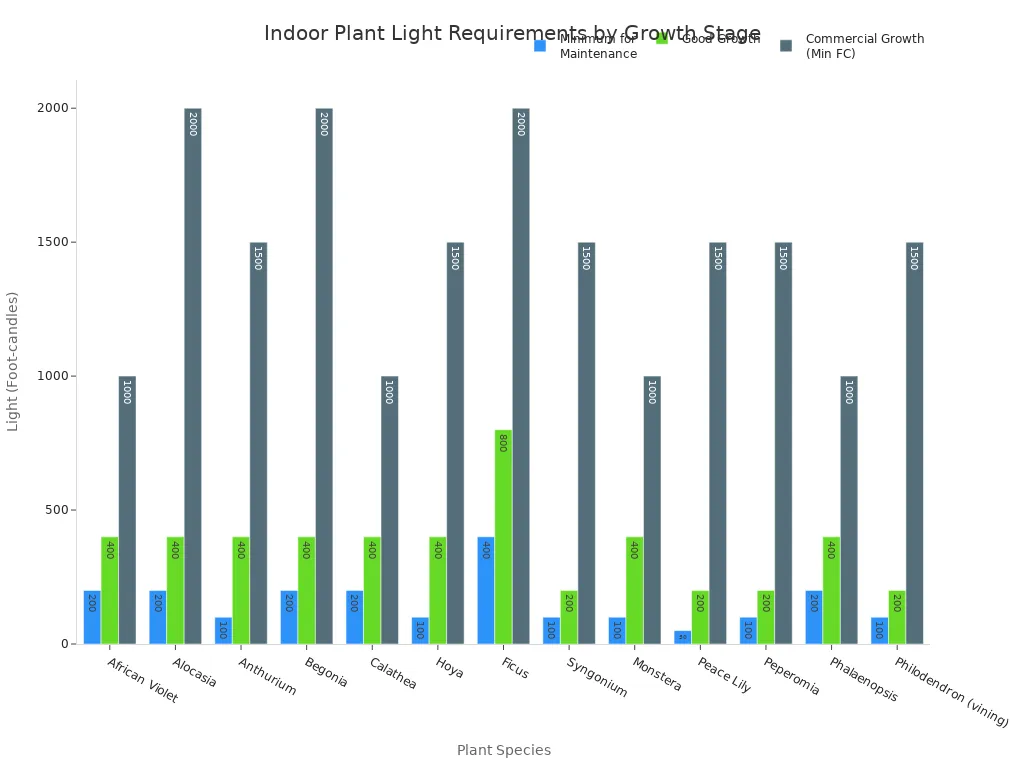
I categorize light needs into “Minimum for Maintenance,” “Good Growth,” and “Commercial Growth.” Foot Candles (FC) and micromoles (µmol) measure these levels. A low “Minimum for Maintenance” means a plant tolerates low light. A low “Commercial Growth” level means the plant does not like very bright light. I aim for at least “Good Growth” in my home. Commercial levels often need controlled environments. These are average light requirements. Individual varieties may differ.
Tip 2: Master Watering Techniques
Proper watering is essential. I see many people struggle with overwatering or underwatering. Knowing the signs helps me adjust my watering schedule.
Signs of Overwatered Houseplants:
Soft, limp leaves with yellow and/or brown tips and edges
A small yellow “halo” between green and brown parts of leaves
Brown spots on the leaves
Mushy stems, especially at the base
No new growth
Mushy, black, brown, or grey roots
Wet soil with a rotting smell
Fungus or mold on the soil
Presence of fungus gnats
Signs of Underwatered Houseplants:
Drooping leaves that recover after watering
Browning or curling leaves (typically without yellowing)
Leaves that feel paper-thin and crispy
Wrinkly leaves on succulent plants
Slow growth with smaller leaves
Dried out and desiccated roots
Hard, dry soil
A gap between the soil and the pots walls
I always check the soil moisture before I water. I stick my finger about an inch into the soil. If it feels dry, I water thoroughly. I let excess water drain from the pots.
Tip 3: Select the Right Potting Mix
The right potting mix provides support and nutrients. It also allows water and air to move freely. I always choose a mix free of pests and diseases.
An ideal potting mix for indoor plants should:
Be dense enough to support the plant.
Possess good nutrient-holding capacity.
Allow water and air to pass through readily while retaining adequate moisture.
Be free of insects, diseases, and weed seeds.
I often make my own mixes. For foliage plants, I use two parts peat, one part perlite, and one part coarse sand. Coconut coir works as a peat moss alternative. I rinse it well to avoid soil salinity.
Common ingredients in potting soil include:
Peat moss: For moisture retention.
Pine bark: To improve soil air space.
Perlite: To decrease soil density and enhance water drainage.
Biochar: To improve water and nutrient retention.
Vermiculite: To decrease density and improve nutrient and moisture retention.
Coco coir (coconut husks): To improve water retention and soil structure.
Compost: To add organic matter and optimize drainage.
Limestone: To neutralize soil acidity and regulate pH.
Sandy soil: To improve soil drainage.
I use specific mixes for different plants. Succulents need excellent drainage. Orchids grow well in orchid bark. African Violets prefer a slightly acidic mix. I add pumice or perlite to regular potting soil if it feels too heavy for my plants in their pots.
Creating the Ideal Environment
I know that creating the right environment is crucial for healthy plants. Beyond basic needs, specific environmental factors significantly impact plant well-being. I focus on these elements to ensure my plants thrive.
Tip 4: Maintain Optimal Humidity
Humidity is very important for many indoor plants. Most tropical plants prefer higher humidity. I find it helpful to know the specific needs of my plants.
Plant Name | Ideal Humidity Level |
|---|---|
Cactus | 40-60% |
Philodendron | 40-60% |
Calathea Plant | 60% |
Aloe Vera | 40-50% |
Ocean Spider | 40-80% |
Lipstick (Aeschynanthus spp.) | 60% |
Alocasia odora | 60-80% |
Many tropical houseplants, like ferns and Calatheas, need high humidity (80%+). They get brown leaf edges if the air is too dry. Most houseplants do well with average humidity (40-60%). Cacti and succulents, such as Aloe Vera and Snake Plants, prefer low humidity (20%). I use a humidifier or pebble trays to increase humidity for my tropical plants.
Tip 5: Ensure Proper Air Circulation
Good air circulation prevents many plant problems. Stagnant air can lead to fungal diseases and pest infestations. I make sure air moves around my plants. I avoid placing plants too close together. This allows air to flow freely. A small fan can also help, especially in humid environments. This simple care tip keeps leaves dry and healthy.
Tip 6: Control Temperature Fluctuations
Temperature is another key factor for my plants. Most indoor plants prefer stable temperatures. I aim for a consistent range.
Most indoor plants thrive between 65ºF and 75ºF (18ºC to 24ºC) during the day. Nighttime temperatures should be about 10 degrees cooler. This temperature drop helps with tissue development. Tropical plants generally do well between 58°F and 86°F. I keep daytime temperatures between 70°F and 80°F. Nighttime temperatures stay between 65°F and 70°F. I make sure temperatures never fall below 50°F. I avoid placing plants near drafty windows or heating vents. These can cause sudden temperature changes.
Below in this chart, I’m showing the percentage of indoor plant owners reporting various benefits, with Decorative/Aesthetic being the highest at 51%. I hope you will like this type of chart & support this blog.
Nourishment and Maintenance Tips
I know that feeding and maintaining plants properly ensures their sustained growth. These care tips help keep your plants vibrant and strong.
Tip 7: Fertilize for Growth
I understand that plants need nutrients to grow. Fertilizing provides these essential elements. Different plants have different needs.
Plant Type | Fertilizer Recommendation |
|---|---|
Foliage plants (e.g., snake, spider plants) | High nitrogen content to encourage lush, green foliage. |
Flowering plants (e.g., African violets, peace lily) | High phosphorus content to promote blooming. |
Cacti and succulents | Balanced, low-nitrogen fertilizer; require little fertilizer. |
Most indoor plants (general recommendation) | Balanced fertilizer (10-10-10) is a safe choice if unsure. |
Key nutrients include:
Nitrogen (N): Promotes lush, green foliage.
Phosphorus (P): Promotes blooming and root growth.
Potassium (K): Enhances general resilience and plant health.
I use different types of fertilizers. Liquid fertilizers are easy to apply. Slow-release fertilizers release nutrients over time. Organic fertilizers are eco-friendly. Synthetic fertilizers are effective but need careful application.
Tip 8: Prune for Health and Shape
I prune my plants for several reasons. Pruning helps train the plant. It maintains plant health. It improves the quality of flowers, fruit, foliage, or stems. I also prune to restrict growth.
I follow a simple process for pruning:
I remove all dead, broken, diseased, or problem limbs. I cut them at their origin or back to a strong lateral branch.
I make training cuts to develop a desired shape. This fills open areas or keeps the plant within bounds.
I perform corrective prunings. This eliminates weak or narrow crotches. I also remove less desirable central leaders where double leaders occur.
I avoid excessive pruning at transplanting. This reduces leaf area and plant energy.
Tip 9: Repot When Necessary
I know when my plants need repotting. Several signs tell me it is time.
Roots grow out of drainage holes.
Roots circle the soil surface. This means the plant is root-bound.
The plant’s roots and soil form a block in the pot’s shape when removed.
More roots than soil are visible in the pot.
The plant’s growth significantly stops.
The pot appears too small for the plant.
The soil dries out very quickly. This happens due to many roots.
The plant becomes top-heavy and falls over.
The plant produces small leaves and shows little new growth.
A salty crust is visible on the soil surface.
Repotting gives the plant fresh soil and more space. This promotes continued growth.
Tip 10: Clean Leaves Regularly
I clean my plants’ leaves regularly. This is an important part of indoor plant care. Dust accumulation blocks sunlight. It reduces photosynthesis. Photosynthesis is how plants feed themselves. Plants breathe through stomata on their leaves. Products like leaf shine can clog these pores. This leads to suffocation.
Clean plants breathe better. Cleaning improves the plant’s appearance. It allows for early detection of pests, damage, or other issues. It also helps remove sticky residue and eggs left by pests. Optimal photosynthesis leads to healthy plants. They are less susceptible to diseases and pests. Regular cleaning contributes to overall plant health. It reduces future maintenance.
Common Houseplant Mistakes to Avoid
I know that avoiding common houseplant mistakes is crucial for plant health. These tips help prevent problems before they become severe. I focus on proactive measures and quick responses to keep my plants thriving.
Tip 11: Inspect for Pests Routinely
I always inspect my plants for pests. Early detection prevents widespread infestations. Initial signs often include a loss of the plant’s normal healthy appearance. Heavily infested plants may lose leaves. I look for specific indicators.
Tiny white or brown ovals moving on leaves (a magnifying glass helps)
Blotchy brown or silvery discoloration on the plant
Tiny black specks of thrip excrement
Wrinkled or curled leaves
Sticky residue on leaves or stems
Masses of tiny grey, black, or translucent green bugs, especially on leaf undersides
Small black or dark brown flying insects circling the plant
Insects flying out of the soil when watering
I treat common pests with effective methods.
Pest | Organic/Chemical Treatments |
|---|---|
Aphids | Insecticidal soaps, neem oil, horticultural oils |
Spider Mites | Insecticidal soaps, neem oil, horticultural oils, increasing humidity |
Mealybugs | Insecticidal soaps, neem oil, alcohol-soaked cotton swabs |
Scale Insects | Horticultural oils, insecticidal soaps, manual removal |
Thrips | Insecticidal soaps, neem oil, pyrethrins, blue sticky traps |
Whiteflies | Insecticidal soaps, neem oil, pyrethrins, horticultural oils |
Fungus Gnats | Bacillus thuringiensis israelensis (Bt) for larvae, sticky traps for adults |
These treatments help me manage common pests effectively.
Tip 12: Address Plant Ailments Promptly
I address plant ailments quickly. Many problems stem from nutrient deficiencies or environmental stress. I recognize the symptoms.
Nutrient | General Symptoms |
|---|---|
General | Yellowing leaves, slow growth, wonky leaves, brown spots/crispy edges, stunted growth/weak stems, fewer flowers or fruit |
Nitrogen (N) | Old leaves yellowing first |
Magnesium (Mg) | Old leaves yellowing first, veins stay green while areas between them turn yellow |
Iron (Fe) | Young leaves yellowing first |
Phosphorus (P) | Purple tint to leaves, fewer flowers or fruit |
Calcium (Ca) | Curling, brittle, weirdly shaped new growth |
Potassium (K) | Brown spots/crispy edges |
Other signs of distress include wilting, yellowing, and bud drop. Wilting often indicates improper watering. Yellowing can signal general illness. Bud drop suggests a need for fertilizer. I correct these mistakes quickly.
Tip 13: Isolate New Plants
I always isolate new plants. This prevents the spread of pests and diseases to my existing collection. I keep new plants separate for about three weeks. During this time, I inspect them daily. I check leaves and stems, especially the undersides. I use a magnifying glass to find hidden pests or eggs. I also clean new or reused pots thoroughly.
I use a diluted soap or bleach solution. I always use new soil for plants. This prevents introducing overwintering pest eggs. I learned this lesson after finding millipedes in a new plant’s soil. Repotting with fresh soil and a hydrogen peroxide treatment solved the issue. This simple care step avoids many future mistakes.
Advanced Indoor Plant Care
I know that truly mastering indoor plant care involves more than just following basic rules. It requires careful observation and a willingness to adapt. This section covers more nuanced aspects of plant care, encouraging observation and careful experimentation.
Tip 14: Learn Plant Signals
I always pay close attention to my plants. They communicate their needs through visual cues. I look for changes in their leaves and growth patterns. For example, yellowing leaves, brown leaves, or wilting leaves often signal distress. Pale yellow cucumbers on a plant indicate too much water. The presence of liverworts suggests waterlogged, compacted, or poor-draining soil. I interpret these signals to understand what my plants need. This constant observation helps me provide better care.
Tip 15: Experiment with Care
I believe in careful experimentation. Once I understand my plants’ signals, I adjust my care routine. I observe how my plants respond to these changes. For instance, if my seedlings are stretching, I move the lights closer. If they become pale, I raise the lights further away. Observing dry plants always leads me to water them. I make small changes and monitor the results. This approach helps me fine-tune my indoor plant care. These care tips allow me to create the best environment for my plants.
I know consistent, informed indoor plant care transforms your space. It brings vibrant life into your home. Applying these 15 tips leads to thriving houseplants. I encourage you to observe your plants closely and adapt their care as needed. This journey of nurturing indoor greenery is truly rewarding.