
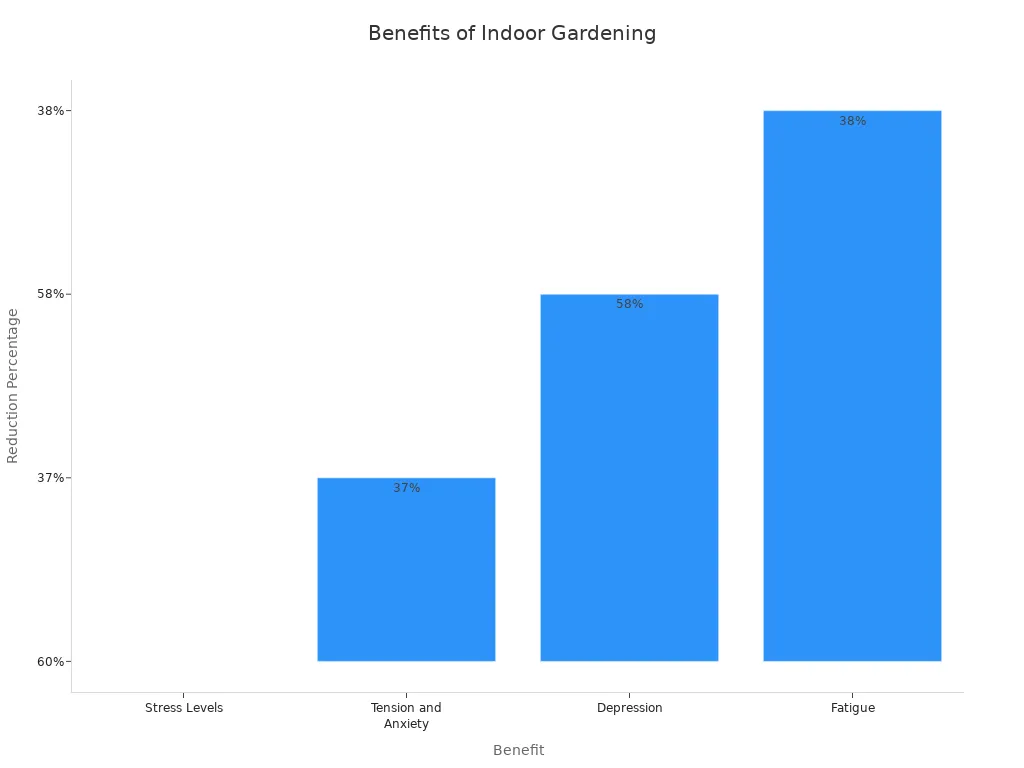
Indoor gardening is good for you. It helps lower stress. It also makes the air cleaner. For example, gardening can cut stress by 60%. It can also cut tension by 37%.
NASA studied clean air. They found many indoor plants. These plants remove up to 87% of bad air. More than 37.6 million U.S. homes have indoor plants. Anyone can grow plants indoors. It does not matter how much space you have. This guide talks about indoor gardening essentials. It covers light, soil, tools, plant care, and techniques. My goal is to help you grow healthy indoor plants. You will learn to use these things. This is for your indoor space.
Indoor Lighting Basics
Light is very important for plants. It helps them grow. This is true for plants inside or outside. You need to know about photosynthesis. You also need to know how much light plants need. This helps them grow well. Light is the most important thing. It helps indoor plants grow healthy. Plants make their own food. They use photosynthesis for this. This process needs light. The leaves must get enough light. Light for indoor plants has three parts. These are how strong it is, how long it shines, and its type. Each part changes how a plant grows.
Getting the Most Natural Light
I always try to give my plants lots of natural light.
Window Direction and Strength
Window direction changes plant light. North windows give soft light. It is not too strong. They get a little sun in the morning or late day. South windows give lots of bright light. They get direct sun for a long time. East windows give medium to bright light. They get soft morning sun. West windows are like east windows. They also get warm afternoon light.
Window Direction | Light Details | Good Plants |
|---|---|---|
North-facing | Soft, steady, not too strong light; short direct sun in early morning/late afternoon. | Snake plant, ZZ plant, Pothos (plants that like low light). |
South-facing | Lots of bright light; direct sun for a long time in the afternoon. | Succulents, Cacti, Ficus plants, Monstera deliciosa (plants that love sun). |
East-facing | Medium to bright light; soft morning sun with full sun early. | Snake plants, Pothos (low-light); Monstera deliciosa, Fiddle leaf fig (brighter spots). |
West-facing | Like east-facing but with more afternoon warmth and light. | Spider plants, Peace lilies, Philodendrons, Rubber plants, Hoyas, African violets. |
Direct Versus Indirect Light
Direct light means sun hits the plant. Indirect light is filtered. It is not direct. Many indoor plants like bright, indirect light.
Plant Needs from Natural Light
I clean my windows often. This lets in more sunlight. I turn my plant pots. This helps them grow evenly. All sides get light. I put plants further from big windows. I put them closer to small windows. This helps with light. I check for things blocking light. These can be buildings or trees. I keep plants 2-3 feet from windows. This is true if things block light. Plants needing less light can be further away. They should still see outside. I use a light meter. It measures light levels. Most plants like 100-200+ foot candles. Low-light plants can live with 50-75 foot candles.
Adding Artificial Light
Sometimes, natural light is not enough. I use fake lights. They help my indoor plants.
Grow Light Kinds
I know there are different grow lights.
Light Type | Sub-types | What They Do & Where to Use |
|---|---|---|
Fluorescent Lights | Compact Fluorescent Lights (CFLs) | Save energy, full light range, not hot, good for small indoor gardens, can be near plants. |
T5 Fluorescent Lights | Tube shape, strong steady light, good for plant growth, stays cool, less risk of heat damage. | |
High-Intensity Discharge (HID) Lights | Metal Halide (MH) | Strong, bright light, blue-white light, best for plant growth, makes plants full and compact. |
High-Pressure Sodium (HPS) | Strong, bright light, warm red-orange light, best for flowering, makes more and bigger flowers. | |
Light Emitting Diode (LED) Lights | N/A | Save energy, last long, not much heat, can make certain light colors, can change colors for growth stages, very flexible. |
Light Spectrum
The light spectrum is the colors in light. Full-spectrum light is like sunlight. It has blue, red, and green light. It is good for all plants. Especially those needing lots of light. Blue light helps plants grow. It makes strong roots and stems. Red light is key for flowers and fruits. Green light helps control growth. UV light is needed for succulents and cacti. Far-red light helps some plants wake up.
Strength and Time
Light intensity changes how fast photosynthesis happens. Not enough light makes plants weak. Too much light makes leaves pale. Light duration is how long plants get light. Most plants need dark time. They should not have light for more than 16 hours a day.
Where to Put Them
I put grow lights at the right spot. They are not too close or too far. This gives plants enough light. It also stops them from burning.
Plant Light Needs
I sort my plants by light needs. This helps me give them the best light.
Sorting Plants by Light
I put plants into high, medium, and low light groups.
Light Need | What It Means | Example Plants |
|---|---|---|
High Light | Needs direct or indirect sun most of the day (6+ hours). | Fiddle Leaf Fig, most palm trees, Orchid, Croton, Jade, Norfolk Island Pine, Boston Fern |
Medium Light | Likes indirect sunlight. Some can take direct sun. Indirect light can be filtered. It can be in a shady part of a bright room. Or direct only at certain times. | Pothos, most Dracaena, Majesty Palm |
Low Light | Does not need much light. Good for rooms with few windows. Or with blinds often closed. | Peace Lily, Janet Craig Dracaena, Ferns, Ivy, ZZ Plant |
Plant Examples by Light Needs
For example, a Fiddle Leaf Fig needs lots of light. A Pothos needs medium light. A Peace Lily does well with low light. Knowing these needs is important. It helps with successful indoor gardening.
Soil and Growing Mediums
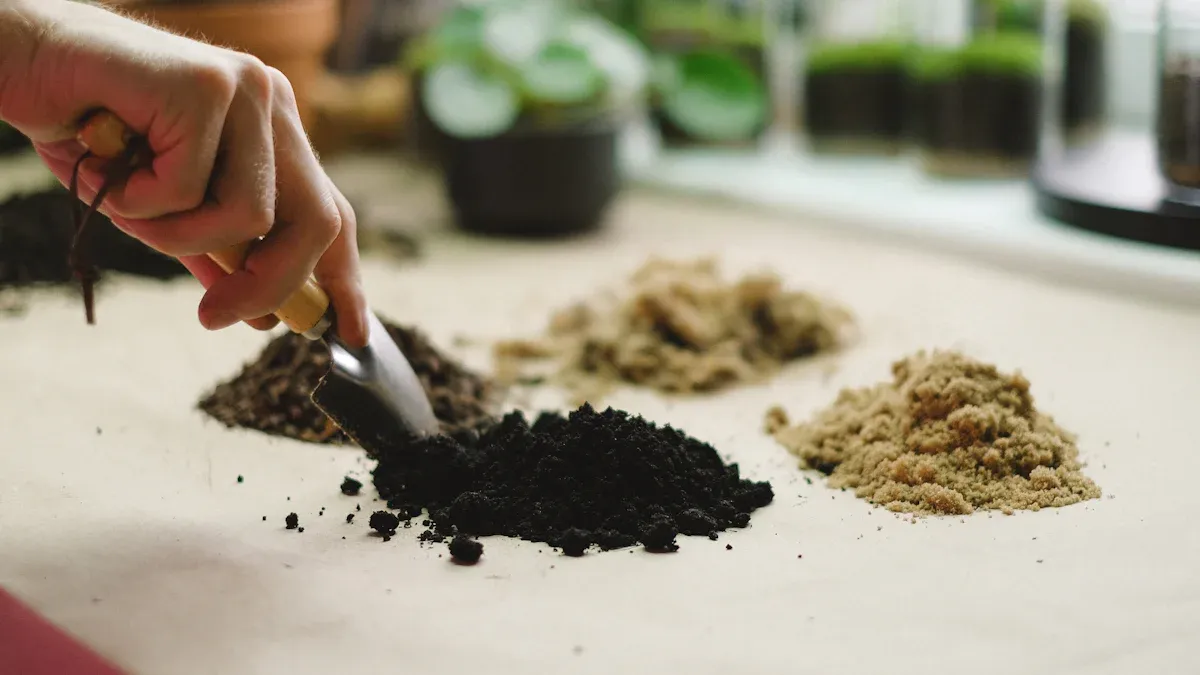
I know that the right soil or growing medium is very important for healthy plants. It is one of the key indoor gardening essentials. The medium gives plants a place to grow. It also gives them food and water.
Potting Mix Versus Garden Soil
Choosing between potting mix and garden soil is a big decision for indoor gardening. I always pick potting mix for my indoor plants.
Potting Mix Benefits
Potting mix is special. It helps plants grow well indoors. It drains water easily. This stops roots from getting too wet. Wet roots can rot. This is often called ‘wet feet’. The mix also lets air get to the roots. Oxygen is very important for plants. Good potting mix gives plants strong support. It also gives roots space to grow. The growing medium is vital for indoor plant success. It gives nutrients. It holds the plants‘ roots. It also manages water. This keeps the root system healthy.
Here are some key things potting mix does:
Nutrient Supply: Organic matter in potting mix gives important nutrients.
Aeration: Things like sand or perlite help air move in the soil.
Drainage: Sand helps water drain. This stops water from sitting too long.
Support: The mix holds the plants up.
Moisture Retention: Organic matter helps the soil hold water for plants.
Garden Soil Risks
I never use garden soil for my indoor plants. Garden soil is too heavy. It can get packed down in a pot. This stops air and water from moving. It can also have bugs, diseases, or weed seeds. These things can harm my indoor plants.
Essential Soil Components
I like to understand what goes into good soil. This helps me choose the best for my plants.
Key Ingredients
Most good potting mixes are “soilless.” They do not have dirt from outside. They often contain peat moss. They also have perlite or vermiculite. Coconut coir is another good choice. It is like peat moss but more earth-friendly. These mixes are clean and light. They are easy to use. High-quality mixes often have slow-release fertilizers. These feed the plants for months.
A good soil mix should:
Be dense enough to support the plant.
Hold nutrients well.
Let water and air pass through. It should still hold enough moisture.
Be free of bugs, diseases, and weed seeds.
Some mixes also have bark chips. These help with air and drainage. Bark also slowly releases moisture. Other natural things like earthworm castings or kelp meal add nutrients.
Custom Mixes
Sometimes, I make my own soil mixes. For example, succulents need very fast-draining soil. I might add more perlite or sand to their mix. Ferns like soil that stays a bit moist. I might add more compost to their mix. Compost is great for adding nutrients and holding moisture.
Alternative Growing Mediums
Not all plants grow in soil. I also use other ways for my gardening.
Hydroponics
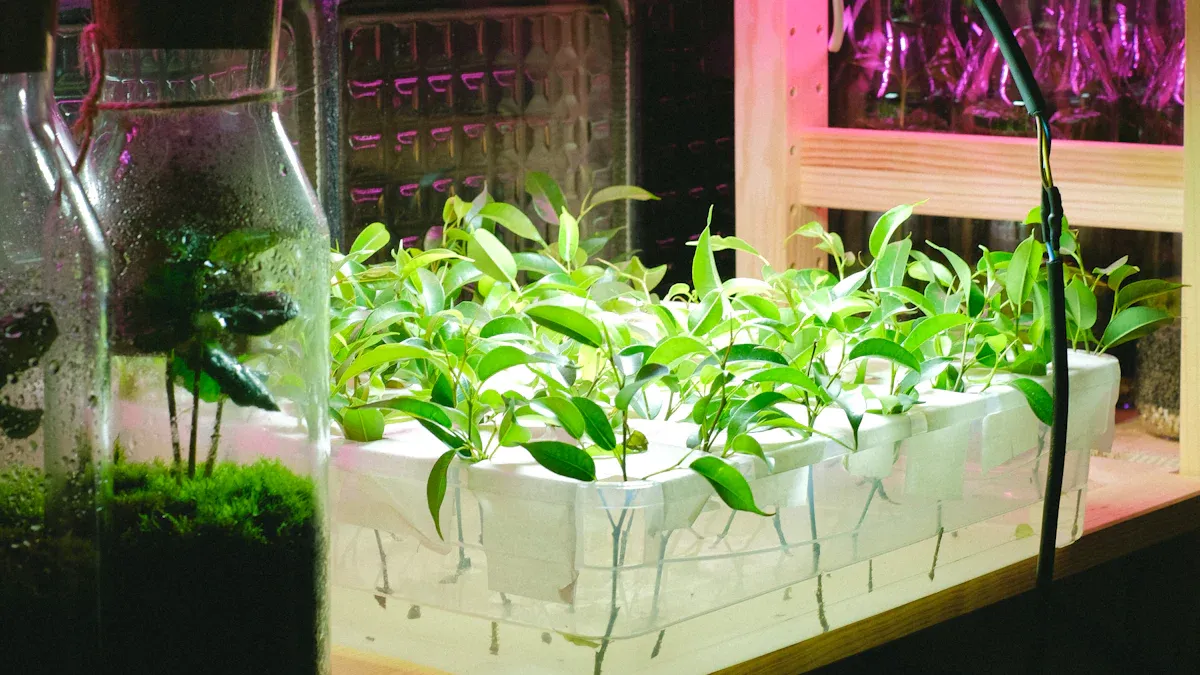
Hydroponics is a way to grow plants without soil. Plants grow in water. The water has all the nutrients they need. I can control how much water and food the plants get. This method often uses inert mediums. These include expanded clay pellets, vermiculite, or coco coir.
LECA and Rockwool
LECA stands for Lightweight Expanded Clay Aggregate. These are small clay balls. I use them in hydroponics. LECA is very good for plants. It drains water fast. This stops root rot. It also gives roots lots of air. LECA does not change the water’s pH. This helps me control nutrients. It is also light and reusable. I can clean it and use it again. Many indoor plants like LECA. These include orchids, succulents, and tropical plants like Pothos. Rockwool is another medium. It is made from melted rock. It holds water well and gives good air to roots.
Aerogardens
Aerogardens are small indoor gardening systems. They use water and special pods. They often have built-in lights. I can grow herbs and vegetables in them easily. They are a simple way to do hydroponic gardening.
Essential Indoor Gardening Tools
I know that having the right tools makes indoor gardening much easier and more successful. These indoor gardening essentials help me care for my plants properly. They are truly must-have tools for any indoor gardener.
Basic Hand Tools
I use several basic hand tools for routine plant care. These tools help me keep my plants healthy.
Pruning Tools
I always have pruning shears or scissors ready. I use them to trim leaves and stems. This helps maintain plant health and shape.
Watering Tools
A small watering can with a long, narrow spout is one of my favorite tools. It lets me water precisely at the plant’s base. This avoids getting water on the leaves. I also use a spray bottle or plant mister. It helps maintain humidity for my tropical plants. I mist their leaves to increase moisture around them.
Soil Tools
For working with soil, I use a small trowel. It helps me when I am potting plants. I also find a small rake or cultivator useful for aerating the topsoil. When I repot, I wear gardening gloves. Knit gloves with a nitrile grip keep my hands clean.
Moisture Meters
A soil moisture meter is a simple but effective tool. It tells me how much water is in the soil. This helps me avoid overwatering or underwatering my plants.
Specialized Equipment
Sometimes, I need more than basic tools. Specialized equipment can greatly enhance my indoor gardening efforts.
Grow Lights and Timers
When natural light is not enough, I use LED grow lights. They provide the necessary light spectrum for my plants. I also use grow light timers. They automate the light cycles. This ensures my plants get the right amount of light each day.
Environmental Monitors
I use environmental monitors to keep track of my indoor growing conditions. A VPD thermometer, for example, measures plant leaf VPD (Vapor Pressure Deficit). This helps me optimize the grow environment. It measures air and leaf VPD, temperature, and humidity. I can also use a grow room controller. It monitors temperature, humidity, and CO2 levels. It can even adjust equipment automatically.
pH Kits
A pH testing kit helps me check the soil’s acidity or alkalinity. This is important because plants absorb nutrients best at certain pH levels.
Propagation Stations
I use propagation stations when I want to grow new plants from cuttings. These stations provide a stable environment for roots to develop.
Heat Mats
For starting seeds, heat mats are essential supplies. They provide warmth to the soil. This helps seeds germinate faster and more reliably.
Potting Essentials
Choosing the right pots is crucial for healthy plants.
Drainage Pots
I always make sure my pots have drainage holes. This is critical for most plants. It prevents root rot from too much water. If a decorative pot lacks holes, I use it as an outer pot for a well-draining inner pot.
Pot Materials
Pots come in different materials. Plastic pots are lightweight and hold moisture longer. Ceramic pots are heavier and allow for better air circulation. However, they dry out faster. I choose based on my plants’ needs and my watering habits.
Saucers and Trays
I place saucers or drip trays under my pots. They catch excess water. This protects my surfaces from water damage.
Self-Watering Pots
Self-watering pots are great for busy gardeners. They have a reservoir that provides consistent moisture to the plants. This helps maintain steady watering for my indoor plants.
Indoor Plant Care and Maintenance
I know that steady care is key. It helps indoor plants grow well. These care steps help me. I learn what my plants need. This keeps them healthy. Good care makes my plants strong.
Watering Practices
Watering is very important. It is a big part of indoor plant care. I always watch how much water my plants need.
Plant Water Needs
Each plant needs different amounts of water. I find this on the plant tag. Many things change water needs. These include plant size and pot size. Soil type and light also matter. Bigger plants need more water. Smaller pots dry fast. Some soil holds more water. Bright light makes plants thirsty. I do not water too much. I make sure water does not sit in saucers. This stops roots from rotting. I pour out extra water after a day. I learn my plant’s water schedule. I lift the pot to check its weight. I water when it feels light. Water quality is important. Tap water has fluoride and chlorine. These can burn leaf tips. I let tap water sit for days. Sometimes, I use filtered water.
Over/Underwatering Signs
I do not water on a set schedule. I check the plant and its soil. I use the ‘touch test’ for small pots. I push my finger into the soil. I go to my middle knuckle. If it feels wet, I wait. If it feels dry, I water. I water until water comes out the bottom. Then, I remove extra water.
Here are signs I look for:
Overwatering: Leaves get soft and droopy. Tips and edges turn yellow or brown. I might see brown spots. Stems can feel squishy. This is true at the bottom. The soil might smell bad. Small flies can appear.
Underwatering: Leaves hang down. They usually get better after watering. Leaves turn brown or curl. They feel thin and dry. Succulent leaves may wrinkle. The soil feels hard and dry. It can pull away from the pot.
Bottom Watering
I often water from the bottom. I put the pot in a tray of water. The plant’s soil soaks up water. It takes only what it needs. This helps roots grow down deep.
Fertilization Basics
My plants need food to grow. Fertilizing gives them this food.
Fertilizer Types
I use different kinds of fertilizer.
Liquid fertilizers: I mix these with water. I put them on the soil.
Slow-release fertilizers: These are small pellets or spikes. They give food slowly. This happens over weeks or months.
Organic fertilizer: This comes from nature. It makes the soil healthier.
NPK Ratios
Fertilizer labels show NPK numbers. N is for Nitrogen. P is for Phosphorus. K is for Potassium. These are key foods. Nitrogen helps leaves grow. Phosphorus helps with flowers and roots. Potassium helps the whole plant. Most indoor plants like balanced NPK. An example is 10-10-10. Flowering plants might like more phosphorus.
Application Frequency
I feed my plants when they are growing. This is usually spring to fall. I do not feed them in winter. Plants rest then. For liquid fertilizer, I feed monthly. Sometimes, I use less fertilizer more often. I always read the label. I put fertilizer on wet soil. This stops root damage.
Nutrient Deficiency Signs
I look for signs of missing food. Yellow leaves can mean low nitrogen. Slow growth or few flowers can mean low phosphorus. Weak stems can mean low potassium.
Environment Control
Controlling the air around plants is important.
Humidity Importance
Many indoor plants need high humidity. This is true for tropical ones. They put moisture into the air. This makes the air around them wetter.
Humidity Methods
I use ways to make the air wetter.
Grouping plants: I put plants close together. They make a moist area.
Pebble trays: I put pots on trays. These trays have pebbles and water. The water goes into the air. This makes it wetter.
Humidifiers: I use a room humidifier. This helps my plants and me.
Terrariums: For very sensitive plants, I grow them in glass. This keeps the air moist.
Air Circulation
Good air movement is important. It gives oxygen and CO2 to plants. It also stops diseases. These are caused by mold and germs. Air movement helps plants control their heat.
Temperature and Ventilation
I keep my indoor plants at steady temperatures. I avoid cold air. I avoid heat vents and fireplaces. These can stress plants. Good air flow means fresh air.
Pest and Disease Management
I know how to handle pests and diseases. This is a key part of plant care. It keeps my plants healthy. Good care stops many problems.
Common Indoor Pests
I often see common indoor pests. They can hurt my plants.
Aphids are tiny bugs. They are pear-shaped. They suck juice from plants. Leaves then curl and turn yellow.
Spider mites are very small. They are red or brown. They make thin webs. They leave small marks on leaves.
Fungus gnats are small flies. Their babies eat roots. They also eat dead stuff in the soil.
Mealybugs look like white cotton. I find them on stems and leaf joints. They cause much harm.
Scale insects are small. They are brown and shell-like. They stick to stems and leaves. They suck out plant juice.
Whiteflies are tiny white bugs. They fly up in clouds. This happens when I touch the plants.
Organic Pest Control
I use natural ways to control pests. These are safe for my plants and home.
Method | Mechanism | Target Pests |
|---|---|---|
Potassium fatty acids (insecticidal soap) | Smothers insects. Works when it touches them. No lasting effect. | Scales, aphids, thrips, spider mites, whiteflies |
Plant oil extracts (canola, clove, sesame, cottonseed, garlic) | Smothers insects. Works when it touches them. | Scales, thrips, aphids, whiteflies, spider mites |
Neem oil | Stops insects from growing. Lasts a short to medium time. | Whiteflies, thrips, aphids |
Bacillus thuringiensis (Bt) | Bacteria attack gnat babies. This happens when put on soil. | Fungus gnat larvae |
I also use other ways to fight pests. I wipe leaves with a wet paper towel. I spray small plants in the sink. I pick off bigger pests by hand. I use tweezers for mealybugs. New soil helps with soil pests. I cut off bad leaves or stems. If a plant is too sick, I throw it out. This stops pests from spreading. I always check new plants. I keep them separate for two weeks. I keep leaves clean. I do not water too much. I make sure air moves well. This is part of good plant care.
Disease Identification
I know healthy plants fight off pests better. I watch my plants closely. If leaves are green and pest-free, my plant is likely healthy. I can often save sick plants. This is if I find the problem early. Knowing what to look for helps with plant care.
Disease | Identification | Treatment |
|---|---|---|
Root Rot | Yellow leaves, wilting. Stems are soft. Soil smells bad. | Use fresh, draining soil. Cut off bad roots. Water better. |
Powdery Mildew | White, powdery spots. They are on leaves and stems. | Get more air moving. Lower the humidity. Use spray for fungus. |
Leaf Spot | Brown or black spots on leaves. Sometimes with yellow rings. | Remove bad leaves. Get more air moving. Do not water from above. |
Blight | Leaves and stems quickly turn brown. Then they die. | Remove bad parts. Use fungus killer. Clean things better. |
I make sure my plants get what they need. This means good soil. No cold air. Not too many plants close together. I balance heat, wetness, light, water, and drainage. Each plant needs special care. I learn what my plant needs to grow well. This full care is key for good indoor gardening.
Indoor Gardening Techniques for Every Space
I find that indoor gardening offers many ways to grow plants, no matter how much space I have. These techniques help me make the most of my growing area.
Small Space Solutions
Limited space does not stop me from having a thriving indoor garden. I use clever solutions to grow more plants.
Vertical Gardening
Vertical gardening is a great way to use wall space. I grow plants upwards instead of outwards. This saves floor space. I have used repurposed containers like tin cans or mason jars attached to a pallet. I also use fabric pockets from old jeans. These hang vertically and hold various plants. This method makes fresh herbs and vegetables easy to reach. It also makes my kitchen look nice. I can grow herbs like basil and mint. Leafy greens like lettuce also do well. For vertical setups, I choose light growing mediums. Coconut coir and perlite work well.
Hanging Planters
Hanging planters are another excellent solution for small space. I use macramé hangers or recycled jars. I suspend them from rods or hooks. This adds greenery at different heights. It frees up counter and shelf space. I often grow trailing plants like Pothos or Spider plants in them. They look beautiful as they cascade down.
Compact Plant Selection
Choosing the right plants is key for small space. I look for varieties that stay small. Herbs like chives and thyme are perfect. I also grow microgreens such as radish and mustard. Dwarf varieties of cherry tomatoes can also fit. These plants do not need much space to grow well.
Layout and Design
How I arrange my plants makes a big difference. It affects both their health and my home’s look.
Plant Grouping
I group plants with similar needs together. This helps me manage their care. For example, I put my humidity-loving plants close. They create a small, moist microclimate for each other. This also makes a fuller, greener display.
Focal Points
I like to create a focal point with my plants. I use one standout plant to draw the eye. This adds depth and interest to my design. A large Monstera or a striking Fiddle Leaf Fig can be a great focal point. It elevates the whole room.
Decor Integration
I think of my indoor plants as living art. I place them strategically. Some hang from the ceiling. Others sit on bookshelves. Large plants can even divide a room. I also use an earthy color palette in my decor. Shades of green and brown create a soothing, natural feel. I add nature-themed artwork to complete the look.
Plant Stands
Plant stands help me display plants at different levels. They also save space. Tiered stands let me fit several plants in a small footprint. They add visual interest to my indoor garden.
Plant Propagation
I love making new plants from my existing ones. It is a rewarding part of gardening.
Cuttings and Division
I often propagate plants from cuttings. I take a healthy shoot, about 3 to 5 inches long. I cut it just below a leaf node. I remove the bottom leaves. Then, I put the cutting into moist potting soil. Some plants can root in water. I change the water every few days. For division, I separate a mature plant into smaller sections. Each section needs roots and stems.
Seed Starting
Starting plants from seeds is exciting. I use seed-starting trays with good potting mix. I plant the seeds at the right depth. I keep the seeds consistently moist. I also give them adequate, indirect light. A warm environment helps seeds germinate. Once the seeds sprout and grow true leaves, I transplant them. This means moving them to bigger pots.
Propagation Best Practices
I always use sterilized tools and clean containers. This prevents disease. I choose healthy plant material. I make sure it is free of pests. A high-quality potting mix helps seeds and cuttings grow. It holds moisture but also drains well. Rooting hormone powder can help cuttings develop roots faster. I keep new plants in bright, indirect light. I also maintain consistent moisture.
Pruning and Training
I find that pruning and training are important for my indoor plants. These techniques help my plants grow better. They also keep my plants looking good.
Pruning Benefits
I prune my plants to help them in many ways. Pruning helps my plants grow stronger. It makes them produce more. It also keeps them healthy for a long time. When I prune, I remove old or weak parts. This helps air move better around the plants. Good airflow stops diseases. Pruning also makes my plants bushier. It helps them keep a nice shape. I can control their size better. This is important for indoor plants, especially in small space.
Pruning Techniques
I use different pruning methods depending on what my plants need. I always use clean tools. This stops diseases from spreading.
Technique | Description | Tools Needed | Steps |
|---|---|---|---|
Topping | I cut off the top of the main stem. This makes the plant grow more side branches. It leads to bushier plants and more yield. | Sterilized pruning shears, sterilizing solution (e.g., rubbing alcohol), clean towel or rag | 1. I find the top of the main stem. 2. I cut off the stem above the second or third set of leaves. 3. I throw away the cut part. |
Pinching | I remove the tip of a stem or branch with my fingers. This also makes the plant grow bushier. I do this often when the plant is young. | Fingers | I gently pinch off the top of the stem above the second or third set of leaves. I am careful not to hurt other leaves. |
Thinning | I remove extra growth. This includes dead or yellow leaves. I also take off big fan leaves. This helps air move better. It lets more light reach the plant. The plant then sends energy to other parts. | Sterilized scissors | I carefully cut off the growth I do not want. |
I prune my plants when they are actively growing. I am careful not to cut too much. Plants need enough leaves to make food.
Plant Training
I also train my plants. This helps them grow in certain ways. Training helps manage plant size. It helps plants get more light. It also makes the plant structure better. This can greatly increase how much the plants produce. It makes my indoor grow system work better. Training creates an even top layer of leaves. This helps all parts of the plant get light. It stops overcrowding, especially in a small space.
I use a few training methods:
Low-Stress Training (LST): I gently bend and tie down plant stems. This makes them grow sideways. More light reaches the plant. It helps the top layer of leaves grow evenly. I use a soft wire or string to secure the stem.
Screen of Green (SCROG): I use a screen above my plants. I guide the branches through the screen. This makes an even top layer of leaves. It helps all parts get light. This method is good for flowering plants.
Sea of Green (SOG): I grow many small plants close together. This makes them flower faster. It uses my space well. It also increases how much I can grow. I make sure each of these plants gets enough light.
I always use clean tools. I prune when the plants are growing. I do not over-prune. My plants need leaves to make energy. I also start many plants from seeds, and these techniques help me guide their growth from the very beginning.
I know indoor gardening is easy. It is also fun. You now know the main things. I talked about light. I talked about soil. Also tools and care. And ways to grow plants. These help plants grow well. Start your garden now. Try different plants. Enjoy nature. Growing plants inside is joyful. It has many good things. This journey is for you.