
Aeration plays a crucial role in the composting process. It directly influences how quickly organic matter breaks down. Studies show that better aeration enhances the degradation of organic materials and promotes the growth of beneficial bacteria. Without proper aeration, composting can lead to anaerobic conditions. This results in methane production, a harmful greenhouse gas. Many believe that composting without aeration can still yield usable compost, but this misconception can hinder effective composting. Therefore, understanding the importance of aeration is vital for creating high-quality compost.
Key Takeaways
Aeration is crucial for composting. It speeds up the breakdown of organic matter and promotes beneficial microbes.
Regularly turning your compost pile introduces oxygen. This helps maintain aerobic conditions and prevents unpleasant odors.
Adding bulking agents like wood chips or straw improves compost structure. They create air pockets that enhance airflow and microbial activity.
Using a compost aerator can significantly boost aeration. It ensures consistent airflow, leading to faster decomposition and better compost quality.
Incorporating worms into your compost system enhances aeration. Their movement creates tunnels, allowing oxygen to penetrate deeper into the pile.
Importance of Aeration
How Aeration Affects Composting
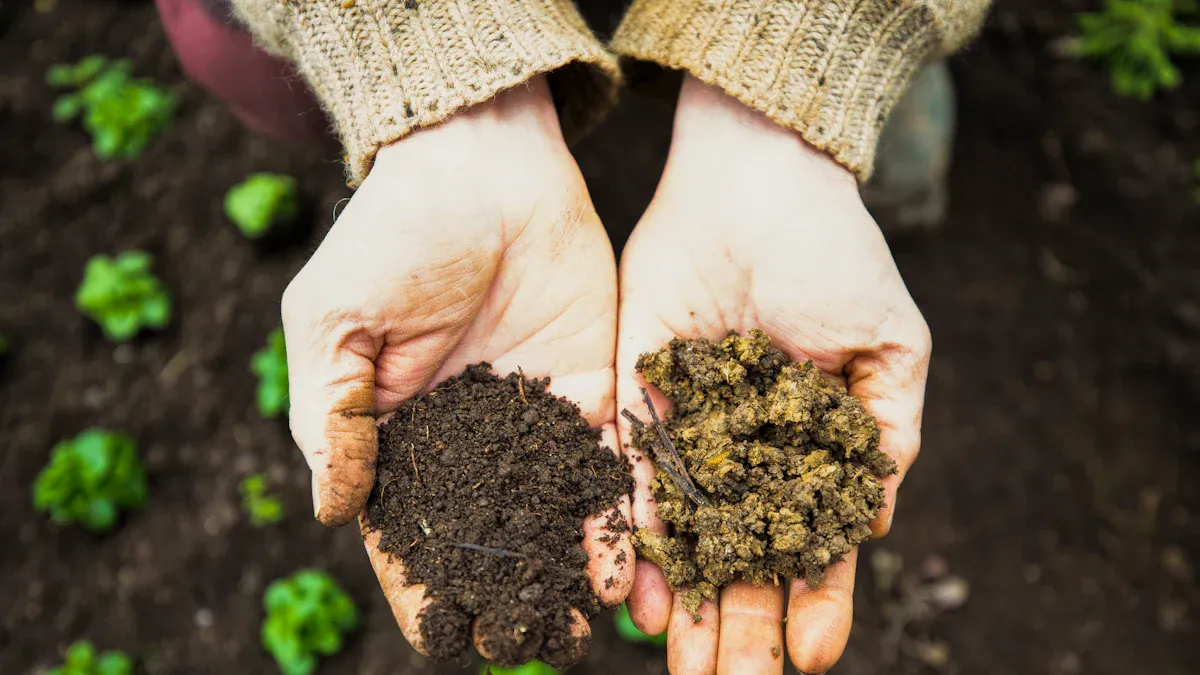
Aeration is vital for successful hot composting. It directly influences the decomposition of organic materials. When you provide a regular supply of oxygen, you create an environment where beneficial microbes thrive. These microbes break down organic matter efficiently, speeding up decomposition.
Studies show that the oxygen levels in your compost pile significantly affect microbial activity. For instance, when oxygen levels are around 20.9%, microbial activity increases, leading to higher temperatures in the compost pile. In contrast, lower oxygen levels can cause temperatures to drop, slowing down the composting process.
Here’s a summary of key findings regarding how oxygen levels impact microbial activity:
Key Findings | Details |
|---|---|
Microbial Activity and Temperature | Microbial activity determines temperature changes in compost, with sufficient oxygen leading to higher temperatures (70 °C at 20.9% O2 vs. 60 °C at 3.16% O2). |
Impact of Oxygen on Microorganisms | Oxygen concentration influences the species present and their activity, affecting compost stability and maturity. |
Pathogen Inactivation | Higher temperatures (45–60 °C) in aerobic conditions help inactivate pathogens, which is reduced with insufficient oxygen. |
Nitrogen Conversion | High oxygen supply increases NH4+–N content and stabilizes compost, while low oxygen leads to instability. |
By maintaining proper airflow, you ensure that your compost pile remains aerobic. This prevents the development of unpleasant odors and reduces the production of greenhouse gases like methane.
Benefits of Proper Aeration
Proper aeration offers numerous benefits for your compost quality. Here are some key advantages:
Enhanced Microbial Activity: Adequate oxygen supply promotes the growth of beneficial microbes. These microbes are essential for breaking down organic matter and improving nutrient content in the compost.
Faster Decomposition: Regular aeration speeds up decomposition. This means you can turn kitchen scraps and yard waste into rich compost more quickly.
Odor Control: Aeration reduces odors by preventing anaerobic conditions. When you maintain high oxygen levels, you limit the production of volatile sulfur compounds that cause unpleasant smells.
Pathogen Reduction: Higher temperatures achieved through proper aeration help inactivate pathogens. This results in safer compost that you can use in your garden.
Improved Nutrient Content: Well-aerated compost piles utilize nitrogen efficiently. This leads to a nutrient-rich end product that benefits your plants.
Methods to Aerate Your Compost
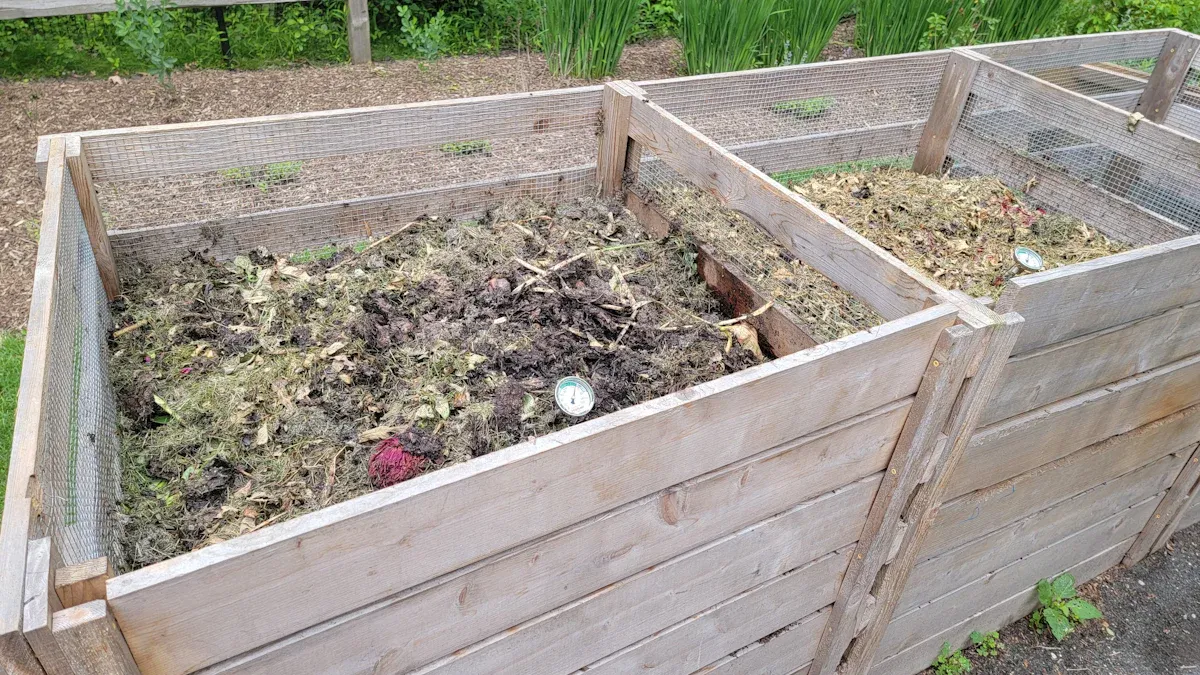
Aerating your compost is essential for creating a healthy composting environment. Here are some effective methods to ensure your compost pile gets the oxygen it needs.
Turning the Compost Pile
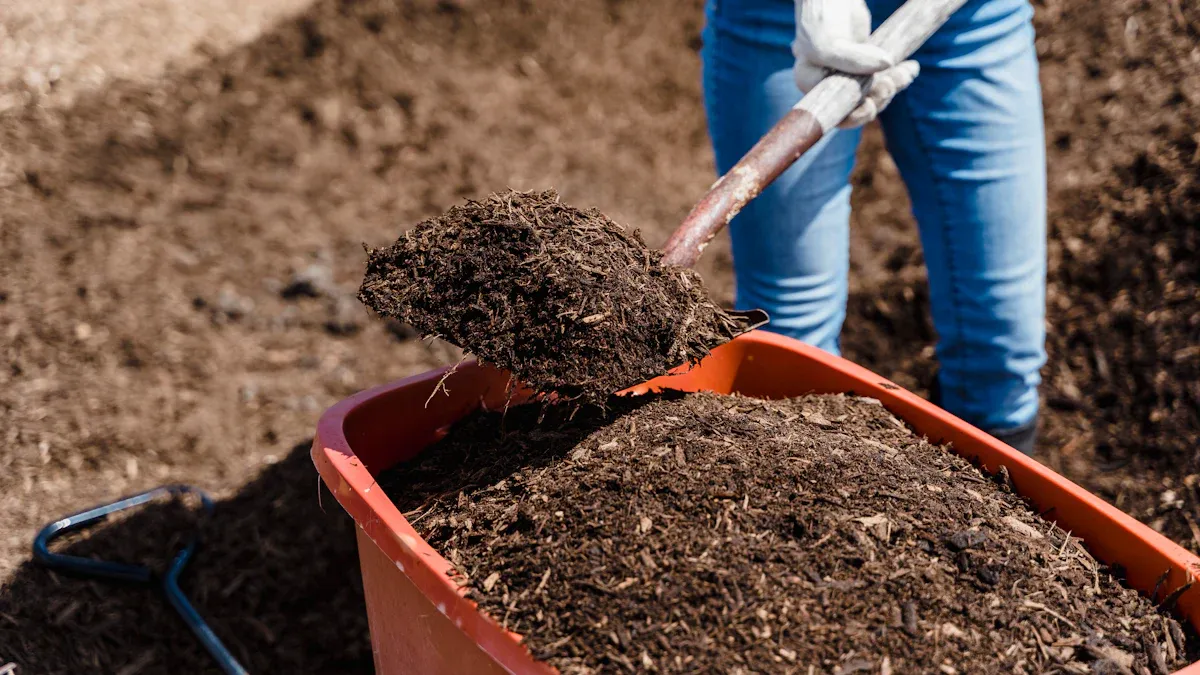
Turning your compost pile is one of the simplest ways to aerate it. This method involves using a pitchfork or shovel to mix the materials. Regularly turning the pile introduces oxygen and helps break down materials faster.
For speed: Turn weekly or every few days to produce compost faster.
For quality and quantity: Turn occasionally to preserve nutrients and increase total volume.
For ease: Turn once or twice, or replace turning with other aeration methods.
A 2023 study indicated that a lack of oxygen at the beginning of composting can hinder the entire process. Anaerobic conditions can prevent the growth of aerobic bacteria, which are essential for effective composting. Therefore, turning your compost pile regularly is crucial for maintaining optimal aeration.
Adding Bulking Agents
Bulking agents are materials that improve the structure of your compost pile. They create air pockets, allowing oxygen to circulate more freely. Here are some effective bulking agents you can use:
Bulking Agent Type | Characteristics | Effectiveness |
|---|---|---|
Wood chips | Provides structure and aeration | High |
Leaves | Lightweight and decomposes quickly | Moderate |
Chopped straw | Absorbs moisture and adds carbon | High |
Chopped weeds | Adds nitrogen and improves texture | Moderate |
Using bulking agents helps maintain the carbon-to-nitrogen ratio, which is vital for microbial activity. They also absorb excess moisture, preventing the compost from becoming too wet. This balance enhances the overall aeration and efficiency of the composting process.
Using a Compost Aerator
A compost aerator is a tool designed to introduce air into your compost pile. It can be a manual tool or a powered device. Here are some advantages of using a compost aerator:
Advantages | Disadvantages |
|---|---|
Effortlessly turns and mixes compost piles | Assembly required |
Durable and rust-resistant | May be unwieldy for smaller bins |
Suitable for various compost bin sizes | Some users report minor issues with the rotating head |
Using a compost aerator can significantly improve the efficiency of your composting process. It provides consistent airflow, which is crucial for maintaining aerobic conditions. Proper aeration enhances decomposition rates and prevents anaerobic conditions that can lead to poor compost quality.
Incorporating Worms
Worms play a vital role in enhancing aeration within your compost. They create tunnels as they move through the material, which improves airflow and makes the compost fluffier. This increased porosity allows oxygen to penetrate deeper into the pile.
Worms breathe through their skin, requiring moist conditions for oxygen diffusion. This highlights the need for proper ventilation in worm bins.
Their activity also helps break down organic matter, enriching the compost with nutrients.
By incorporating worms into your composting system, you not only enhance aeration but also boost the overall quality of your compost.
Aeration is essential for effective composting. It enhances microbial activity, speeds up decomposition, and improves compost quality. By ensuring proper airflow, you can prevent unpleasant odors and reduce harmful emissions. Implementing techniques like turning your compost pile, adding bulking agents, or using a compost aerator can significantly boost your composting process.
Consider these key points from research:
Proper aeration improves oxygen utilization.
It promotes higher temperatures for better material degradation.
Effective aeration can reduce nitrogen emissions by over 30%.
By adopting these practices, you can create nutrient-rich compost that benefits your garden and the environment.
FAQ
What is aeration in composting?
Aeration in composting refers to the process of introducing air into the compost pile. This oxygen supply supports beneficial microbes that break down organic matter efficiently.
How often should I aerate my compost?
You should aerate your compost pile every few days to once a week. Regular aeration helps maintain aerobic conditions and speeds up decomposition.
Can I compost without aeration?
While you can compost without aeration, it may lead to anaerobic conditions. This can produce unpleasant odors and slow down the decomposition process, resulting in lower-quality compost.
What are some signs of poor aeration in compost?
Signs of poor aeration include foul odors, slimy textures, and a lack of heat in the compost pile. These indicate anaerobic conditions that hinder effective composting.
Do worms help with aeration in compost?
Yes, worms improve aeration by creating tunnels as they move through the compost. Their activity enhances airflow and helps break down organic materials, enriching the compost.