

Growing pampas grass in a pot allows you to enjoy its versatility and low maintenance benefits. This stunning plant enhances patios and balconies with its decorative qualities. Plus, once established, potted pampas grass requires minimal watering and adapts well to various soil types. By following the right steps, you can successfully grow pampas grass in containers and enjoy its beauty in your outdoor space.
Key Takeaways
Select a pot that holds at least 10 gallons of soil with good drainage to support healthy root growth.
Use a well-draining soil mix of garden soil, sand, and compost to promote robust growth and prevent root problems.
Water regularly until established, then adjust based on soil moisture; ensure your pampas grass gets 6-8 hours of sunlight daily for optimal growth.
Pot Selection
Choosing the right pot is crucial for the success of your potted pampas grass. The size and material of the pot can significantly impact the plant’s growth and overall health.
Size and Material
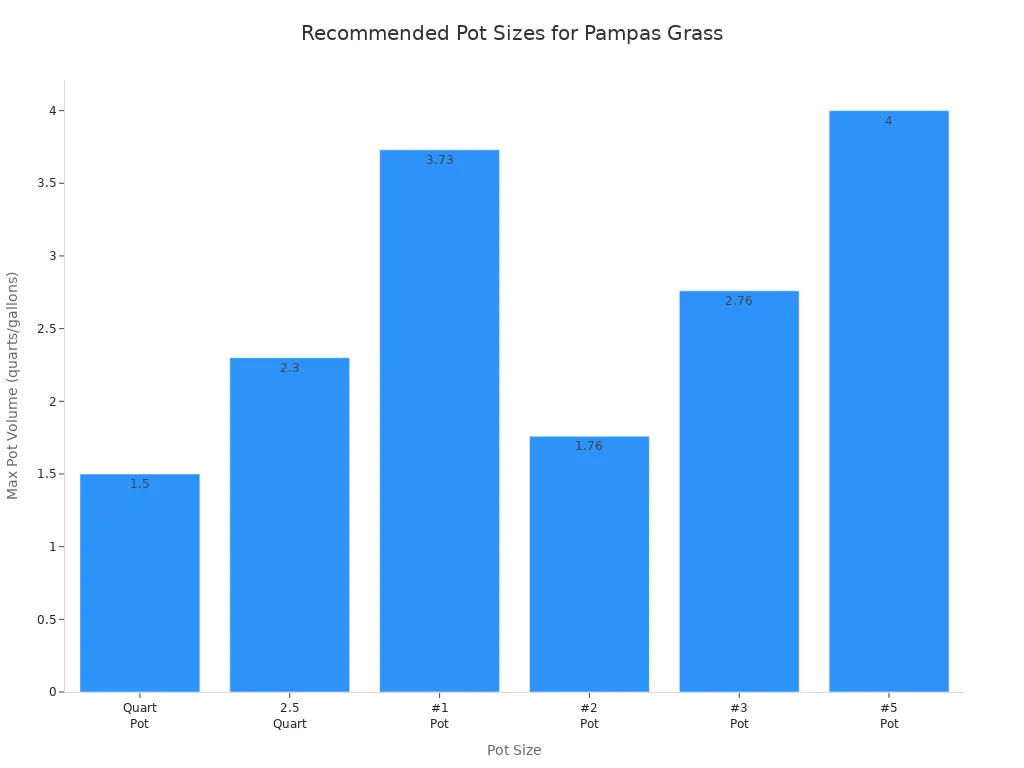
When selecting a pot, aim for one that holds at least 10 gallons of soil. A pot with a diameter of around 24 inches is ideal. This size allows the roots to spread out and grow properly. Here’s a quick reference for pot sizes based on the age and size of your pampas grass:
Pot Size | Plant Age | Plant Size | Pot Dimensions (H x W) | Volume |
|---|---|---|---|---|
Quart Pot | ~ 6 months – 1 year | ~ 4″-8″ | ~ 4.75″H x 4.5″W | 1.50 quarts |
2.5 Quart | ~ 1 – 2 years old | ~ 8″-12″ | ~ 6.5″H x 6.5″W | 2.20-2.30 quarts |
#1 Pot | ~ 1 – 2 years old | ~ 10″-14″ | ~ 7″H x 7.75″W | 2.26-3.73 quarts |
#2 Pot | ~ 1.5 – 3 years old | ~ 12″-18″ | ~ 9.5″H x 9.5″W | 1.19-1.76 gallons |
#3 Pot | ~ 2 – 4 years old | ~ 12″-30″ | ~ 9.5″H x 11″W | 2.32-2.76 gallons |
#5 Pot | ~ 3-4 years old | ~ 20″ – 60″ | ~ 11″H x 10.5″W | 3.5 – 4 gallons |
For materials, you have several options. Consider using:
Glazed ceramic
Plastic
Resin
Terra cotta
These materials not only look great but also provide durability and insulation for the roots.
Drainage Considerations
Proper drainage is essential for the health of your potted pampas grass. Make sure your pot has large drainage holes. This feature helps prevent waterlogging, which can harm the plant’s health and growth rate. Without adequate drainage, the roots may rot, leading to stunted growth or even death.
By selecting the right pot size and ensuring proper drainage, you set the stage for thriving potted pampas grass.
Soil Choice
Choosing the right soil is just as important as selecting the right pot for your pampas grass. The soil you use can significantly affect how well your plant grows. Let’s dive into the ideal soil composition and the importance of pH levels.
Soil Composition
For healthy pampas grass, you want a well-draining soil mix. A combination of garden soil, sand, and compost works wonders. Here’s why this mix is beneficial:
Nutrient Availability: Compost enriches the soil with essential nutrients, promoting robust growth.
Drainage: Sand improves drainage, which is crucial since containers have limited depth. A well-drained potting mixture prevents root problems caused by excess moisture.
Aeration: This mix allows air to circulate around the roots, reducing the risk of root stress and diseases.
When you create a soil mix that balances these elements, you set your pampas grass up for success. Remember, poor drainage can lead to root stress and make your plant more susceptible to diseases, which can impact its overall health.
pH Levels
Now, let’s talk about pH levels. Pampas grass thrives in a pH range of 6.0 to 7.5, which means it prefers mildly acidic to mildly alkaline conditions. Why is this important? The pH level influences nutrient availability in the soil. If the pH is too low or too high, your plant may struggle to absorb the nutrients it needs, affecting its growth and appearance.
To ensure your soil is within this ideal range, consider testing it with a simple pH kit. If you find that your soil is too acidic, you can add lime to raise the pH. Conversely, if it’s too alkaline, adding sulfur can help lower it. Keeping an eye on these levels will help you maintain a healthy environment for your pampas grass.
By focusing on the right soil composition and monitoring pH levels, you’ll create a thriving home for your pampas grass in a pot.
Planting Pampas Grass
Timing and Technique
When you’re ready to plant your pampas grass, timing is key. The best time to plant is in the spring after the last frost. This timing gives your plant a full growing season to establish itself. Start by preparing your pot with the right soil mix, as discussed earlier.
For planting technique, gently remove the pampas grass from its nursery pot. Be careful not to damage the roots. Place the plant in the center of your container. You want to ensure that the top of the root ball sits at the same level as it was in the original pot. This step is crucial because planting too deep can suffocate the roots, while planting too high can expose them to air, leading to stress.
Spacing and Depth
If you’re growing multiple pampas grass plants in containers, give them enough space to thrive. Aim for at least 3 feet between each plant. This spacing allows for proper air circulation and room for growth.
As for depth, make sure to fill the pot with soil around the root ball, but don’t bury it. The roots should be just below the surface. This depth helps the plant absorb nutrients and water effectively.
By following these steps, you’ll set your potted pampas grass up for success. With the right timing and technique, you’ll soon enjoy the beauty of pampas grass in your outdoor space.
Watering and Sunlight Needs
Watering Frequency
Watering your potted pampas grass correctly is vital for its health. Here’s how to manage it:
Regular Watering: Water your pampas grass regularly until it establishes itself. After that, you can reduce the frequency.
Seasonal Adjustments: In the fall, keep watering regularly since pots dry out quickly. Young plants need more frequent watering because their roots are still tender.
Container Care: Remember, container plants require more water than those in the ground.
To check if your plant needs water, try these methods:
Check the Weight: Lift the pot. If it feels light, it’s time to water.
Use Your Finger: Stick your finger into the soil. If the top inch is dry, give it a drink.
Feel and Appearance: Squeeze a handful of soil. If it holds together without dripping, moisture levels are just right.
Sunlight Exposure
Pampas grass loves the sun! For optimal growth, place your potted pampas grass where it will receive at least 6-8 hours of direct sunlight daily. This exposure helps the plant thrive and produce those stunning plumes you admire.
Remember, full sun is essential for your pampas grass to flourish. Without enough light, it may not reach its full potential.
By keeping an eye on watering and ensuring ample sunlight, you’ll create a thriving environment for your potted pampas grass.
Pampas Grass Care
Taking care of your pampas grass is essential for its health and beauty. With just a few simple steps, you can ensure your plant thrives and produces those stunning plumes you love. Let’s dive into some key aspects of pampas grass care, including fertilization tips and pruning practices.
Fertilization Tips
Fertilizing your pampas grass helps it grow strong and healthy. Here are some tips to keep in mind:
Frequency: Fertilize your pampas grass four times a year. A balanced fertilizer, like an 8-8-8 mix, works well.
First Year Boost: In the first year, give your plant a strong start by fertilizing in spring, summer, and fall with an all-purpose, slow-release fertilizer.
Growth Benefits: Regular fertilization contributes to the overall vigor of your pampas grass. It enhances both the growth rate and plume quality, making your plant look its best.
By following these fertilization tips, you’ll provide your pampas grass with the nutrients it needs to flourish.
Pruning and Grooming
Pruning and grooming your pampas grass is crucial for maintaining its health and appearance. Here’s how to do it effectively:
Timing: Prune your pampas grass in spring, right after the last frost. This timing helps promote new growth.
Cutting Technique: Use sharp secateurs to cut old leaves or shoots above new shoots that are about 10 to 15 cm long. This method encourages fresh growth.
Protect Yourself: Always wear protective clothing when pruning. Here’s a quick checklist:
Wear long sleeves and long pants.
Use cut-resistant gardening gloves.
Wear safety glasses to protect your eyes.
Before you start pruning, rake around the base to remove any rotting vegetation and debris. This step helps reduce moisture and disease, giving your plant a clean start for the spring. After pruning, don’t forget to fertilize with a slow-release fertilizer to support new growth.
A hard pruning to the ground in late winter also helps keep the plant under control. Cut your pampas grass to about 12 inches or lower before new foliage appears. This practice encourages healthy growth for the next season.
By following these pruning and grooming tips, you’ll keep your pampas grass looking vibrant and healthy throughout the year.
Troubleshooting Issues
When growing pampas grass in a pot, you might encounter a few challenges. Let’s look at common pests and diseases, as well as environmental stressors that can affect your plant’s health.
Pests and Diseases
Pests can be a real nuisance for your pampas grass. Here are some common ones to watch out for:
Aphids: These small, soft-bodied insects cluster on new growth. They can cause curling leaves and may transmit viruses.
Whiteflies: Tiny, moth-like insects often found on the undersides of leaves. They lead to yellowing leaves and sooty mold due to honeydew secretion.
Weevils: Small beetles with elongated snouts that chew on roots and leaves, causing significant stress to your plant.
Fungus Gnats: These small, dark flies hover around the soil. Their larvae can damage roots, leading to poor plant health.
Diseases can also impact your pampas grass. Look for these signs:
Fungal leaf spots and anthracnose are common issues. You might notice a fungal appearance on the plumes, preventing them from opening.
Rusts often become visible late in the growing season. Overfertilization can trigger root rots, which can occur at any time.
Environmental Stressors
Environmental factors can stress your potted pampas grass. Here are some common stressors and how to mitigate them:
Temperature Extremes: Cold snaps can damage your plant, while excessive heat may lead to wilting. Protect your grass during extreme weather.
Watering Practices: Overwatering or underwatering can cause yellowing leaves or dry, crispy foliage. Always check the soil moisture before watering.
Sunlight Needs: Pampas grass requires at least six hours of direct sunlight daily. If it doesn’t get enough light, you may see leggy growth or sparse foliage.
By keeping an eye on these pests, diseases, and environmental stressors, you can help your pampas grass thrive in its pot.
Growing pampas grass in a pot can be a rewarding experience. Here are some key steps to remember:
Choose a suitable container with good drainage.
Place your plant in full sun for the best blooms.
Use sandy or loamy soil with compost for better growth.
Prune in late winter or early spring to encourage healthy growth.
Remember, gardening takes patience. As the saying goes, “The first year a garden sleeps, the second year it creeps, and the third year it leaps.” Enjoy the process, and with consistent care, you’ll see beautiful results!
FAQ
How often should I water my potted pampas grass?
Water your pampas grass regularly until it establishes. After that, check the soil moisture and adjust watering as needed.
Can I grow pampas grass indoors?
Pampas grass prefers full sunlight, making it challenging to grow indoors. It’s best suited for outdoor spaces with plenty of light.
When should I prune my pampas grass?
Prune your pampas grass in spring, right after the last frost. This encourages fresh growth and keeps the plant healthy.