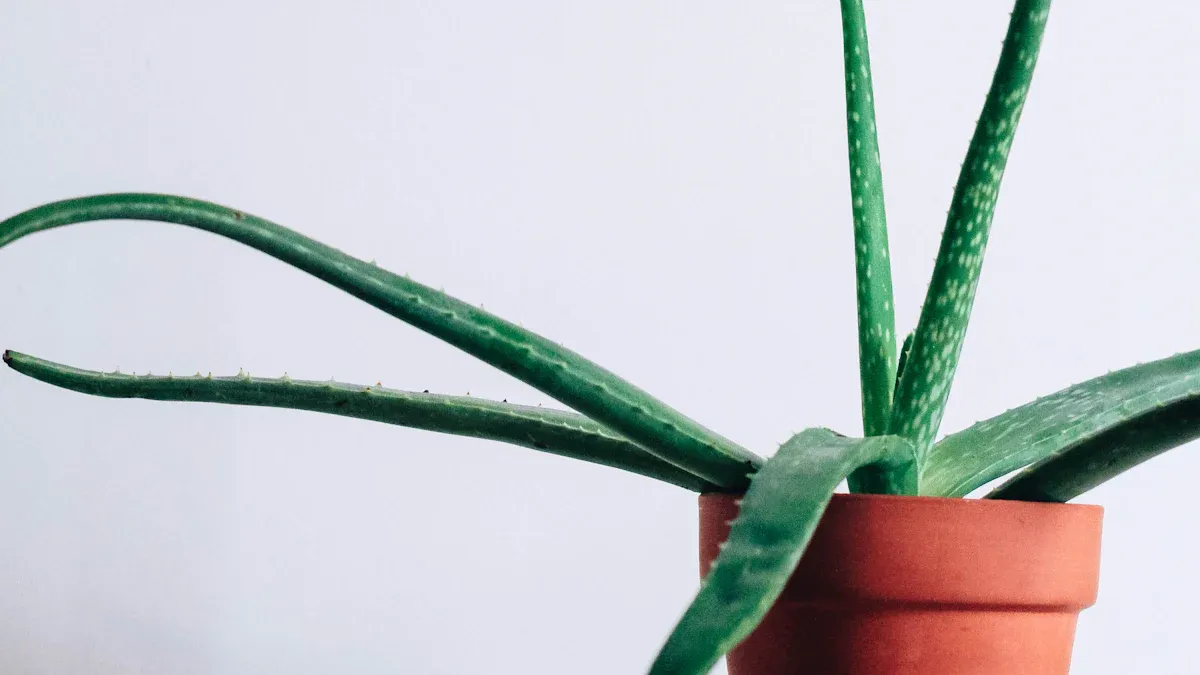
The aloe vera plant is a popular houseplant. You probably want to keep your plant healthy and thriving. Many people desire this plant for its uses. It helps soothe skin, treat minor burns, and offers cool relief for sunburns. Caring for an aloe vera plant is straightforward when you have the right knowledge. This guide gives you practical tips. Your plant will flourish with these instructions.
Key Takeaways
Use a pot with good drainage and special soil for succulents.
Give your aloe plant 8 to 10 hours of bright light each day.
Water your plant only when the top inch of soil is dry.
Keep your aloe in warm temperatures, between 55° and 80°F.
You can easily grow new aloe plants from small baby plants called pups.
Starting Your Aloe Vera Plant
Choosing the Right Pot
You need to pick the correct pot for your aloe. Good drainage is very important. Porous materials like ceramic or terracotta are excellent choices. They let extra moisture escape. This helps stop root rot. Plastic pots can also work if they have good drainage holes. Always make sure your pot has a hole at the bottom. For size, a true aloe vera plant will eventually need a larger pot. This is because it produces small baby plants called pups. A 12-inch pot is the smallest recommended size for a mature plant. If you buy a small aloe, it might be in a 4-inch pot. You can move it to an 8-inch pot when it grows bigger.
Selecting Soil for Aloe
Your aloe needs soil that drains well. This prevents water from sitting around the roots. You can use a special succulent or cactus mix. You can also make your own mix. Add materials like coarse sand, perlite, or pumice to regular potting soil. These additions help water drain faster. The soil’s pH level is also important. Aloe plants grow best in soil with a pH between 6.0 and 7.5. A pH of 6 is often ideal. They can handle slightly acidic or slightly alkaline soil.
Planting and Repotting
When you first plant your aloe, place it in the chosen pot with well-draining soil. Do not bury the leaves. You will know when to repot your plant. The soil might become hard and lose nutrients. The plant may grow slower. You might see offshoots reaching the pot’s edge. If your plant becomes too heavy for its pot, it is time to repot. You should also repot if the original soil is dusty or if you want to separate pups. Repotting gives your aloe vera plant fresh soil and more room to grow.
Caring for Aloe Vera
Aloe Light Needs
Aloe plants need plenty of light. Give your plant 8 to 10 hours of full or partial sunlight each day. If you keep your aloe indoors, gradually move it into brighter spots. This helps it get used to more sun. For new plants, start them in bright but indirect light. If you move your aloe outdoors, full sun is fine during summer. Make sure temperatures are above 70°F (21°C).
To be more precise about light, you can measure it.
Plant | PPFD Range (µmol/m²/s) |
|---|---|
Aloe | 80 – 160 |
For indoor settings, good indirect light levels for succulents like aloe are around 800 foot-candles (FC). This equals 160 µmol. Your aloe can tolerate lower light, down to about 200 FC.
Watering Aloe Vera
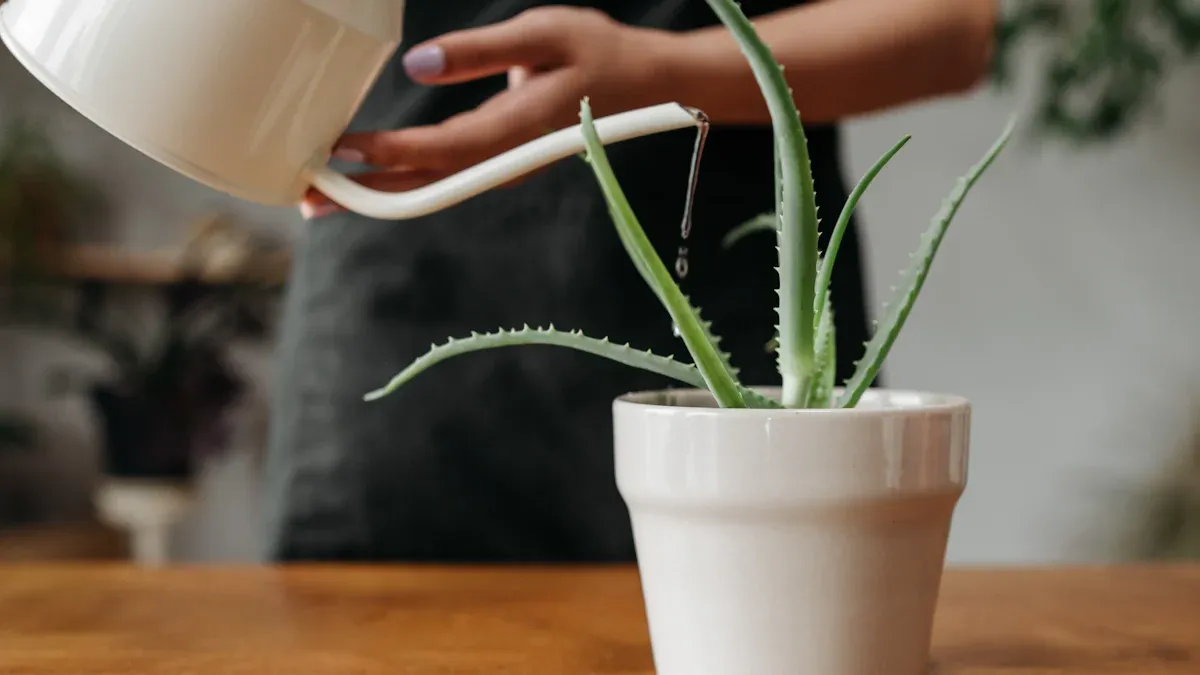
Watering your aloe correctly is crucial. You should water it when the top inch of soil feels dry. Stick your finger into the soil to check. When you water, do it thoroughly. Let water drain out of the pot’s bottom. Never let your plant sit in standing water. This can cause root rot.
Your watering schedule will change with the seasons.
Spring and Summer: Water your plant weekly. Always check the soil first to make sure it is dry. If temperatures are very high, you might need to water a little more often. If it is very humid, you might water less often.
Fall and Winter: Water your plant every two weeks. The soil should be completely dry before you water again. During these colder months, your plant needs less water. This prevents root rot. If your plant is indoors with heating, the soil might dry faster.
A good general rule is to check your aloe weekly. You might water it every three weeks. Reduce this frequency during winter. Always do the ‘finger test’ to ensure the soil is dry. Then, water it well.
Aloe Temperature
Aloe plants love warm or hot temperatures. They grow best when temperatures are between 55° and 80°F (13° to 27°C). Most homes have these temperatures. You can move your plant outdoors between May and September. However, bring it inside if nighttime temperatures drop too much.
Cold temperatures can harm your aloe. If the temperature goes below 50°F (10°C), your plant will focus on just surviving. It will not grow much. Its leaves can turn dark or mushy. You might see brown or black spots, especially on new leaves. The gel inside the leaves can freeze. This causes permanent damage. Temperatures below 40°F (4°C) stress the plant. Your aloe can only survive temperatures as low as 35°F (1.6°C) for a short time.
Fertilizing Your Aloe
Fertilizing your aloe helps it grow strong. A splash of succulent fertilizer in the spring is beneficial. This is part of how to care for aloe vera properly.
Choose the right type of fertilizer. Look for one with a balanced NPK ratio. This means the numbers for Nitrogen (N), Phosphorus (P), and Potassium (K) are similar. For example, 10-10-10 or 5-10-5 works well. Nitrogen helps leaves grow. Phosphorus helps roots and flowers. Too much nitrogen can make your plant leggy.
You can also use homemade options. Compost tea is good. Make it by soaking finished compost in water. Kitchen scraps like coffee grounds (for nitrogen), banana peels (for potassium), and eggshells (for calcium) can enrich your compost tea. You can even use a diluted mix of aloe vera gel and water as a spray for the leaves. Commercial options include liquid fertilizers for cacti and succulents. Fish emulsion or seaweed extract are good choices. Always dilute them to half strength. Slow-release pellets or granular fertilizers for succulents also work.
How often should you fertilize? Less is often more with aloe.
If you use granular fertilizers, apply them twice during the growing season. Do this in early spring and early summer. Use half the recommended amount.
For fertilizer spikes, apply them monthly or every two months. Break the spike in half to reduce its strength. This prevents over-fertilization.
During the growing season, you might fertilize about once a week.
During the dormant period, reduce this to once every 2 to 3 weeks.
You can also use a balanced, water-soluble fertilizer diluted to half strength every 2-3 months.
Always water your potted aloe thoroughly the day before you feed it. This helps flush out salts and prevents leaf tip burn. For plants in the ground, one good drenching in the spring is enough for the whole year. Avoid granular fertilizers for in-ground plants. Fertilize in early spring when growth starts. Fertilize again in midsummer to support blooming. You can fertilize your aloe vera plant in June and August with diluted cactus fertilizer.
Remember, do not over-fertilize. More is not better. Dilution is very important. Too much fertilizer can burn the roots. Always follow the package instructions for dilution. Or, use less than recommended to be safe. Overfeeding can overwhelm your plant.
Growing Aloe Vera Plants: Propagation
You can easily expand your aloe vera collection. Propagating aloe vera plants from offsets, also called pups, is the simplest method. This technique has the highest success rate compared to other ways like seeds or leaf cuttings. Dividing aloe pups is the easiest and quickest propagation method. Gardeners consistently achieve high success rates with it. One experienced gardener even reported a 100% success rate when propagating aloe vera pups directly in a soil mix.
Identifying Aloe Pups
Aloe pups are small baby plants. They grow from the base of the mature mother plant. You will see them emerge from the soil. Look for pups that are at least 4-6 inches high. Pups smaller than this usually do not have enough roots to grow on their own. Removing them too early will not benefit them. Wait until they reach this size. This ensures they have a good chance of survival after separation.
Separating Aloe Pups
You need to separate the pups carefully. First, gently remove the entire mother plant from its pot. You can use a trowel or your hands. Shake off some of the old soil. This helps you see the root system clearly. Locate the pups attached to the main plant. Use a clean, sharp knife or pruning shears. Cut the pup away from the mother plant. Make sure each pup has some roots attached to it. This is very important for its survival.
Planting New Pups
After separating the pups, let them sit for a day or two. This allows the cut end to form a callus. This step helps prevent rot when you plant them. Choose a small pot for each pup. A 4-inch pot works well. Fill it with well-draining succulent or cactus soil. Plant each pup in its own pot. Bury the roots and the base of the pup. Do not water immediately. Wait about a week. Then, water sparingly. Place the new pots in a spot with bright, indirect light. Your new aloe plants will soon begin to grow.
Solving Aloe Vera Problems
You might face some issues with your aloe vera plant. Do not worry. You can solve most problems with the right steps. This guide helps you identify and fix common issues.
Overwatering Problems
Overwatering is a common problem for aloe plants. You will see clear signs if you give your plant too much water.
Leaves turn pale or yellowish.
Leaves become mushy and brown.
You might see water-soaked spots that feel soggy and soft.
The entire leaf can become oversaturated. It will eventually turn to mush.
If you notice these signs, act quickly.
Carefully remove your aloe plant from its pot. Brush away as much soil from the roots as possible.
Discard any smelly, soaking wet, or moldy soil. This prevents future infections.
Inspect the roots. Healthy roots are white.
Use clean scissors to cut away any unhealthy root parts. These look brown, soggy, or mushy.
Remove any very weak or browned leaves. They appear beyond repair. This helps your plant save energy.
Repot your aloe plant in fresh, dry cacti soil. Use a clean pot with drainage holes.
Allow the plant time to recover. Wait several days before watering it again.
Underwatering Signs
Your aloe plant also shows signs if it does not get enough water.
Leaves will pucker.
Leaves may wilt.
You will notice slowed growth.
When you see these signs, give your plant a good drink. Water it thoroughly until water drains from the bottom of the pot.
Pests and Diseases
Pests can harm your aloe.
Aloe Mites cause deformed growths on your plant. You might see raised brown or yellow rough lines on leaves.
Aphids and Mealybugs are sap-sucking insects. They target the center of the plant. They damage new growth. This can lead to rot.
Fungus Gnats appear when soil is too wet. Let the soil dry out to prevent them.
Check your plant regularly for any signs of pests. You can often remove small infestations with a damp cloth or insecticidal soap.
Nutrient Deficiencies
Your aloe needs proper nutrients to thrive. You might see several signs if it lacks something.
Leaves can turn yellow.
Leaf edges might become yellow or brown.
You may see small or stunted leaves.
Leaves can have a purple or red tone.
Sometimes, leaves look burnt or scorched.
Aloe plants can have limited nitrogen uptake under salt-stress conditions. This reduces nitrogen content in the leaves. Calcium levels can also decrease. Ensure you use appropriate soil and fertilizer to prevent these issues.
Harvesting Aloe Vera Gel
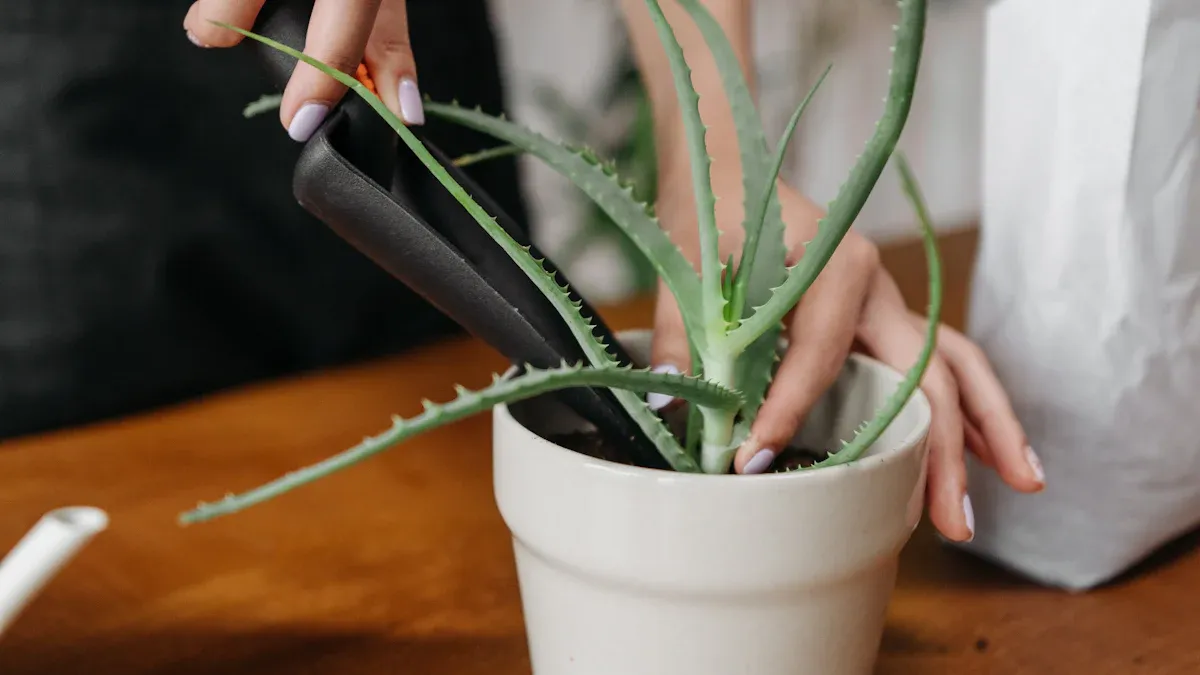
You can safely harvest aloe vera gel for your personal use. This section shows you how.
Mature Leaf Identification
First, you need to identify a mature leaf. Healthy, ready-to-harvest aloe vera leaves have a rich, vibrant green color. They should also be plump. Outer leaves are older. They contain the most gel. Your plant should be at least 2 to 3 years old before you harvest. Younger plants do not have enough beneficial compounds. Research shows the best time to harvest is after three years of growth. This is when the plant has the highest amount of good compounds.
Cutting Techniques
Use the right tools to harvest your aloe leaf. A sharp, clean knife or pruning shears work best. Dull blades can bruise and tear leaves. This can introduce bacteria and cause damage. Always sterilize the blade with rubbing alcohol before you make any cuts. This prevents the spread of bacteria and disease. Make a precise cut as close to the base of the plant as possible. This gives you the most gel. It also creates a cleaner wound for the plant. Cut at a 45-degree angle. This reduces water pooling at the cut site. Water pooling can lead to rot. It also helps the plant heal better.
Storing Aloe Gel
You need to store your harvested aloe gel properly. Storing raw aloe vera gel at room temperature is not recommended. It degrades quickly. Fresh gel lasts only about one day at room temperature.
For longer storage, you have a few options:
Refrigeration: Store fresh aloe vera gel in an airtight container in the refrigerator. This method keeps it fresh for up to one week. Discard it if you see any discoloration or smell an odd odor.
Freezing Gel into Ice Cubes: For a much longer shelf life, up to a year, pour aloe gel into an ice cube tray. Freeze the cubes until solid. Then, transfer them to a sealable bag and store them in the freezer. Thaw a cube at room temperature before you use it.
Freezing Cubed Flesh: If you start with an aloe leaf, wash it first. Drain the sap for 8-24 hours. Trim the edges. Scoop out the flesh. Cut it into 1-inch cubes. Freeze these cubes on parchment paper until they are solid. Then, transfer them to a freezer-safe bag.
This table summarizes storage times:
Storage Method | Shelf Life |
|---|---|
Room Temperature | 1-2 days |
Refrigerated | Up to 1 week |
Frozen | Up to 1 year |
Caring for an aloe vera plant is simple and rewarding. You provide bright light, water infrequently, and use well-draining soil. These key steps ensure your plant thrives. Enjoy the beauty and practical benefits of your healthy aloe vera plant. You are now ready for successful plant parenthood! 🪴
FAQ
Why are my aloe vera leaves turning yellow?
Yellow leaves often mean you are overwatering your plant. Check the soil. If it feels wet, let it dry out completely before watering again. Ensure your pot has good drainage. Poor drainage also causes yellowing.
Can I use regular potting soil for my aloe?
No, you should not use regular potting soil alone. It holds too much moisture. Your aloe needs well-draining soil. Use a special succulent or cactus mix. You can also add perlite or coarse sand to regular soil for better drainage.
How do I know if my aloe needs water?
You can check the soil. Stick your finger about an inch deep into the soil. If it feels dry, your aloe needs water. Also, look for signs like puckered or wilting leaves. These tell you the plant is thirsty.
Is it okay to put my aloe outside in winter?
No, you should not put your aloe outside in winter if temperatures drop. Aloe plants prefer warm conditions. Bring your plant indoors when nighttime temperatures fall below 50°F (10°C). Cold can severely damage your plant.