
Air plants, also known as Tillandsias, offer unique beauty. You can easily care for these exotic plants. Despite their striking appearance, air plant care is straightforward. You just need to understand their specific needs. Proper watering, adequate light, and good air circulation are essential. These elements are the pillars of their health. You will succeed with care for air plants. Your Tillandsias will thrive with a few simple practices.
Key Takeaways
Air plants need regular watering, usually by soaking them once a week.
Give air plants bright, indirect light to help them grow well.
Good air movement is important to keep air plants healthy and prevent rot.
Watch for signs like brown tips (needs more water) or a mushy base (too much water).
You can fertilize air plants once a month for better growth and flowers.
Air Plants
You need to understand air plants’ basic traits. This helps you give them the best care. Air plants are unique. They do not grow in soil. They have special ways to get what they need.
Epiphytic Nature
Air plants are epiphytes. This means they grow on other plants. They use these plants for support. They do not take food from their host plant. An epiphyte gets moisture and nutrients from the air and rain. Many types of plants are epiphytes. These include bromeliads, orchids, and ferns. They grow on tree bark or branches. They do not extract nutrients from the host. You can also call them aerophytes. They depend on the air for their needs. This unique nature makes the care for air plants different from potted plants.
Trichomes and Absorption
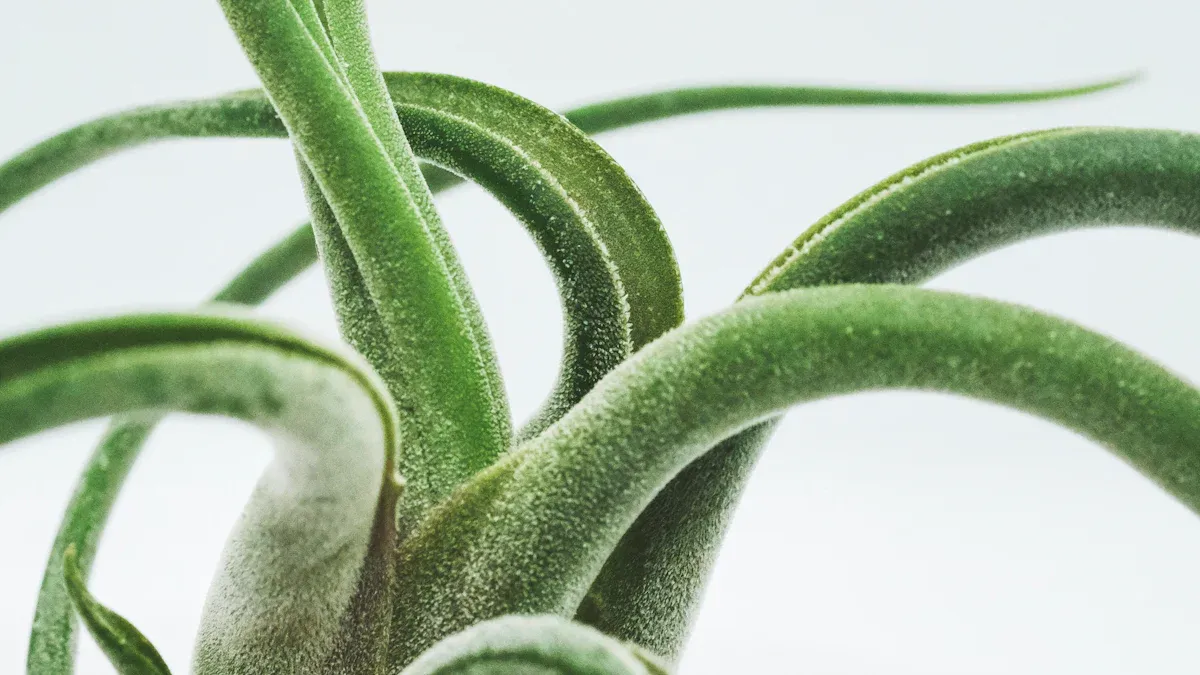
Air plants have tiny, hair-like structures. These are called trichomes. You find them on the leaves. Trichomes help air plants live without soil. They absorb water, nutrients, and even light. Each trichome has a hair-like cell. This cell has a disc-shaped base. It attaches to the leaf. These cells open when wet. They absorb moisture and nutrients. Then, they close to stop water loss in dry times. This helps air plants thrive in many places.
Trichomes collect moisture. They capture small water droplets from rain or dew. When water touches them, they expand. They let moisture into the plant’s cells. This water hydrates the plant. It helps with growth. After absorbing water, trichomes close. This seals in moisture. It prevents evaporation.
Trichomes also trap dust and tiny organic matter. These particles settle on the plant. They dissolve when it rains. The plant then absorbs these nutrients with the water. Trichomes absorb important nutrients. These include nitrogen, potassium, and phosphorus. These are vital for growth. Air plants do not need many nutrients. They store absorbed nutrients. They use them slowly for steady growth.
Essential Care for Air Plants: Watering
Watering is the most important part of air plant care. You must water your plants correctly. This section tells you how to keep your air plants hydrated and healthy.
Soaking Method
Soaking is the best way to water most air plants. It gives them a deep drink. You should soak your air plants once a week. Place them in a bowl of water. Let them stay there for 15 to 30 minutes. This duration helps them absorb enough moisture.
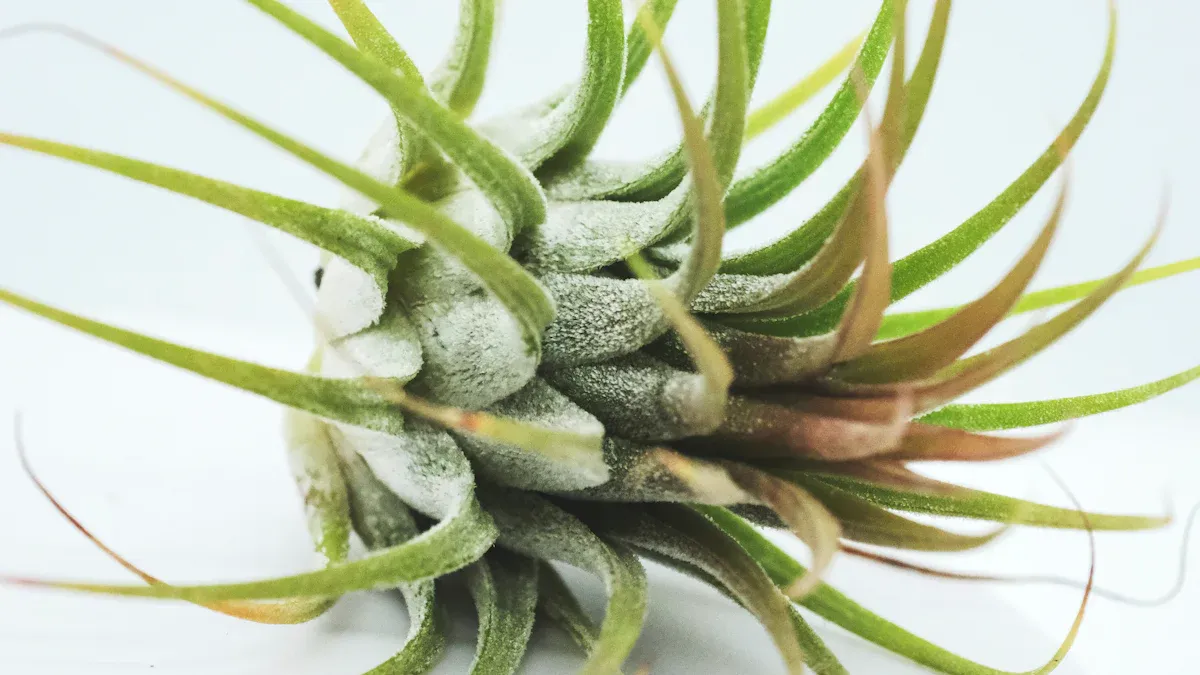
However, some air plants need different care. Air plants with many fuzzy hairs, called trichomes (xeric plants), should not soak for long. You can dunk them quickly or mist them instead. Also, air plants with a round base should not soak for extended periods. This includes plants with smooth, bright green leaves. Soaking their bases for too long can cause rot. Always check your specific plant type.
Misting Method
Misting can help your air plants, but it is not usually enough on its own. Misting is effective only if you do it very often. You might need to mist daily. Make sure you spray the entire plant. Get the undersides of the leaves too.
Misting is not enough if your air plant is very dry. It also won’t help if you have neglected it for days or weeks. This is especially true for mesic air plants, which need more water. Even with frequent and thorough misting, it usually works best as a helper. Use misting between your main watering times, like soaking or dunking. It is not a primary way to hydrate your plants.
Drying After Watering
Drying your air plants properly after watering is very important. This step prevents rot. Your air plants should dry within a few hours. They must be completely dry within a maximum of four hours.
After you water them, gently shake off any extra water. Then, place your plants upside down. You can put them on a rack or a towel. This helps water drain out. Bulbous species, like Xerographica, need extra care. Make sure water drains from their bases. Sitting water, especially in the center of their leaves, can cause rot. A fan can help them dry faster. You can also place them in a well-ventilated area. After one to two hours, your plants should feel dry. Their color should return to normal.
Water Quality
The type of water you use matters for your air plants. Tap water often contains chlorine and chloramine. These chemicals can harm your plants over time. You can use filtered water or rainwater. If you use tap water, let it sit out for 24 hours. This allows the chlorine to evaporate. For chloramine, you need an aquarium water treatment. This neutralizes the chemicals. Using good water is part of good care for air plants.
If you are going on vacation, you can prepare your plants. Give them a long soak, about 30 minutes or more, the day before you leave. This helps them store extra water. This helps you have a vacation worry free experience. When you return, remember to check for post-vacation care. Give them a good soak again if they look dry.
Light and Air Requirements
Air plants need more than just water. They also need the right light and air. These environmental factors are key to their health. You must understand these needs. This helps your air plants grow strong.
Bright, Indirect Light
Air plants love bright, indirect light. This means light that is strong but not directly hitting the plant. Think of a spot near a window. The sun’s rays do not shine right on the plant. A sheer curtain can filter strong light. North or east-facing windows are often good choices. They provide gentle morning light. South or west-facing windows can be too intense. You can place your air plants a few feet away from these windows. This gives them enough light without burning their leaves.
Direct Sunlight Tolerance
Air plants generally do best out of direct sun. However, some can handle a little direct sunlight. If you place your air plants outdoors, limit their direct sun exposure. They should not get more than a couple of hours of direct sun each day. Midday sun is very strong. It can harm your plants. Morning and evening sun is much gentler. Your plants usually tolerate it well. The exact time an air plant can handle direct sun depends on its type. It also depends on the season and where you live. Always watch your plants. Move them if their leaves start to look scorched.
Air Circulation Importance
Good air circulation is vital for air plants. They do not like stagnant air. Fresh, moving air keeps them healthy. Here are some reasons why good airflow helps your air plants:
Photosynthesis: Good air movement gives your plants enough carbon dioxide. This gas is essential for them to make food.
Fungal Diseases: Air circulation lowers humidity around the plant. It stops water from sitting on the leaves. This helps prevent mold and fungal problems.
Stronger Stems: Airflow makes plant stems stronger. This process is called thigmomorphogenesis. It makes your plants more resilient.
Pest Control: Consistent airflow can deter pests. It makes it harder for bugs like aphids and mites to settle on your plants.
Place your air plants where air moves freely. Avoid enclosed spaces with no air movement. A gentle fan can help if your home has still air.
Temperature and Humidity
Air plants thrive in a comfortable temperature range. They grow best when temperatures are between 60°F and 90°F. Most indoor environments fit this range. These temperatures help them grow well. They can also encourage your plants to flower.
Humidity is also important. Different air plants need different humidity levels.
Mesic Tillandsia: These plants like humid areas. They often have smoother, greener leaves. Examples include Tillandsia bulbosa, Tillandsia brachycaulos, and Tillandsia butzii.
Hydric Air Plants: These plants need high humidity. They do best with 50-70% relative humidity. Tillandsia usneoides (Spanish Moss) and Tillandsia fasciculata (Giant Air Plant) are good examples. They absorb moisture from the air and rain.
You can increase humidity for your plants. Group them together. Use a humidifier. Placing them in a terrarium can create a humid microclimate.
Some rooms in your home naturally have higher humidity.
Kitchens: These rooms often have fluctuating high humidity. Tillandsia bulbosa, T. caput-medusae, and T. fuchsii do well here.
Bathrooms: These rooms are typically high in humidity. Tillandsia stricta, T. tricolor, and T. pseudobaileyi can thrive in bathrooms.
Here is a quick guide to humidity levels for some common air plant species:
Air Plant Species | Humidity Level |
|---|---|
Tillandsia xerographica | Moderate |
Tillandsia bulbosa | Moderate |
Tillandsia capitata | Drier conditions |
Tillandsia aeranthos | Moderate |
Tillandsia brachycaulos | Moderate |
Tillandsia usneoides | High |
General Air Plants | Moderate (around 40-60%) |
You can help your air plants by understanding their specific humidity needs. This ensures they get the right amount of moisture from the air.
Nurturing and Displaying Air Plants
You can help your air plants grow and look their best. This section shows you how to feed them and how to display them creatively.
Fertilizing Air Plants
Fertilizing your air plants helps them thrive. You do not need to fertilize often, but it offers many benefits. Fertilizing encourages blooms. It promotes blushing, which means color changes on their leaves. It also aids in reproduction by pups and seeds. You will see stronger, larger plants. Fertilizing results in larger and more vibrant blooms. It supports overall growth and pupping.
Choosing Fertilizers
Always use a liquid fertilizer made for air plants or bromeliads. These fertilizers are gentle. You should dilute the fertilizer more than the package suggests. For example, if the package advises 5ml per gallon, try 5ml per 3 gallons. This ensures it is potent enough but gentle on your plant. A common practice is to dilute all fertilizers by half of the recommended limits. If 1/2 teaspoon per gallon is suggested, dilute it to 1/4 teaspoon. This avoids burning your plants. Some air plant foods come pre-mixed in a sprayer bottle. You do not need to dilute these for misting. You can also add a few sprays of this solution to water when you soak your plants. Fertilize once a month during their growing season.
Creative Display Ideas
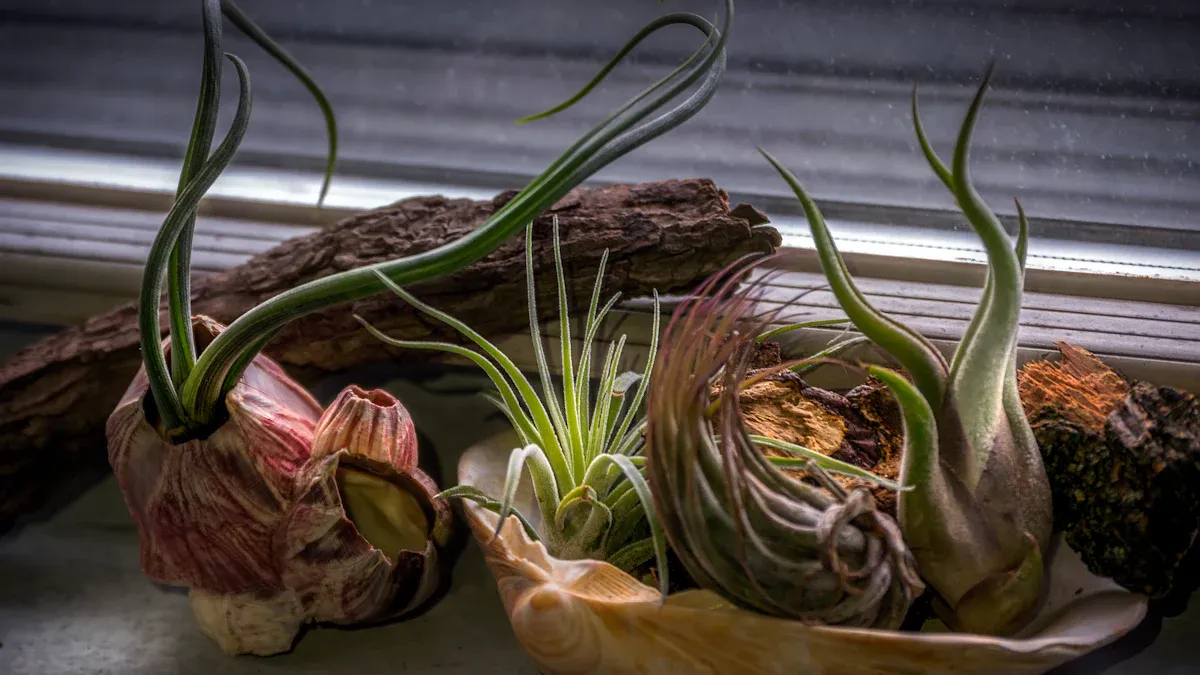
Air plants offer many ways to display them. You can place them in terrariums. Be careful with terrariums. Ensure they have good airflow to prevent rot. You can also use decorative holders. These holders come in many shapes and materials. You can hang them or place them on shelves. Think about your home decor. Choose displays that match your style.
Mounting Options
Mounting your air plants creates beautiful displays. You can attach them to various materials. Common materials include wood, rocks, or cork bark. You can use wire, but avoid copper. Copper is toxic to air plants. Fishing line is a good choice. Plant-safe glue, like E6000, works well. Hot glue is an alternative. You can also use twine or rope. Many people attach them to driftwood, wreaths, or trees. They use the plant’s roots to secure them. Other options include aluminum craft wire, terra cotta cradles, or macrame wall hangers. Moss balls with fishing line and glue also make unique displays. Vanda orchid baskets are another good choice. These methods enhance the beauty of your air plants. They also make the care for air plants easier to manage.
Common Air Plant Problems
You might face some issues when caring for your air plants. Do not worry. Most problems have simple solutions. You can keep your plants healthy with a little attention.
Brown or Crispy Tips
You might see brown or crispy tips on your air plant leaves. This often means your plant is underwatered. Your plant’s leaves may appear dry, curled, or shriveled. They might lose their vibrant green color. Instead, they look pale or grayish. You might also notice slow growth. The leaf tips can curl or twist. The edges turn brown and become brittle. Your plant looks ‘cronchy’ or dried up. It shrinks away. Give your plant a longer soak. Increase your watering frequency.
Mushy Base
A mushy base is a serious sign. It means your air plant is overwatered. This leads to rot. You must ensure your plant dries completely after watering. Place it upside down. Use a fan if needed. Remove any rotting parts. You might save your plant if you act quickly.
Lack of Growth
Your air plant might not grow much. This can happen for two main reasons. It might not get enough light. Move your plant to a brighter spot. Ensure it receives indirect light. Your plant might also lack nutrients. Fertilize your air plant once a month during its growing season. Use a diluted air plant fertilizer.
Pests and Solutions
Air plants rarely get pests. However, you might encounter a few.
Mealybugs: These pests look like tiny bits of cotton. They create a waxy coating on leaves. They draw sap from your plant. This causes damage. You often find them where stems and leaves meet.
Scale Insects: These pests appear as tiny bumps. They attach to the underside of leaves. They have a hard shell. They also cause leaves to yellow.
You can use organic solutions for these pests.
Neem oil: This acts as a repellent. It also smothers pests.
Insecticidal soap: This disrupts pest cuticles. It works on mealybugs and scales.
Horticultural oil: This smothers soft-bodied insects.
Physical removal: You can gently wipe pests off with a damp cloth.
Successful care for air plants depends on consistent attention. Focus on their core needs: proper watering, adequate indirect light, and good air circulation. Observe your plants closely. Adjust their care as needed. Air plants bring unique beauty to any space. You can have thriving Tillandsias with these simple guidelines.
FAQ
How often do I water my air plant?
You should soak your air plant once a week for 15 to 30 minutes. If your home is very dry, you can water more often. Always dry your plant completely within four hours after watering. This prevents rot. 💧
Can I grow air plants in a terrarium?
Yes, you can use terrariums. However, ensure good air circulation. Stagnant air can cause rot. Choose an open terrarium design. This allows fresh air to move around your plant.
What if my air plant’s leaves turn brown?
Brown or crispy leaf tips mean your plant needs more water. Give it a longer soak. Increase your watering frequency. If the base is mushy, you are overwatering. Ensure proper drying after each watering.
Do air plants need fertilizer?
Air plants benefit from fertilizer. You can fertilize them once a month during their growing season. Use a diluted liquid fertilizer made for air plants. This helps them grow stronger and produce more blooms.