
You often see the elegant peace lily in homes. It is a very popular houseplant. Over 66% of American households have at least one houseplant, and the peace lily ranks among the most searched for. This plant also cleans your air. A NASA study showed that peace lilies remove toxins like formaldehyde and benzene. Caring for your peace lily is surprisingly straightforward. Even if you are new to plants, you can make it thrive. Follow a few simple steps, and your peace lily will bloom beautifully.
Key Takeaways
Peace lilies need bright, indirect light. Direct sun can burn their leaves.
Water your peace lily when the top inch of soil feels dry. Avoid overwatering to prevent root rot.
Keep your plant in warm rooms with high humidity. This helps it grow and bloom.
Use well-draining soil and repot when roots fill the pot. Fertilize during spring and summer for best growth.
Watch for signs of pests or diseases. Address problems quickly to keep your plant healthy.
Peace Lily Environment
Light
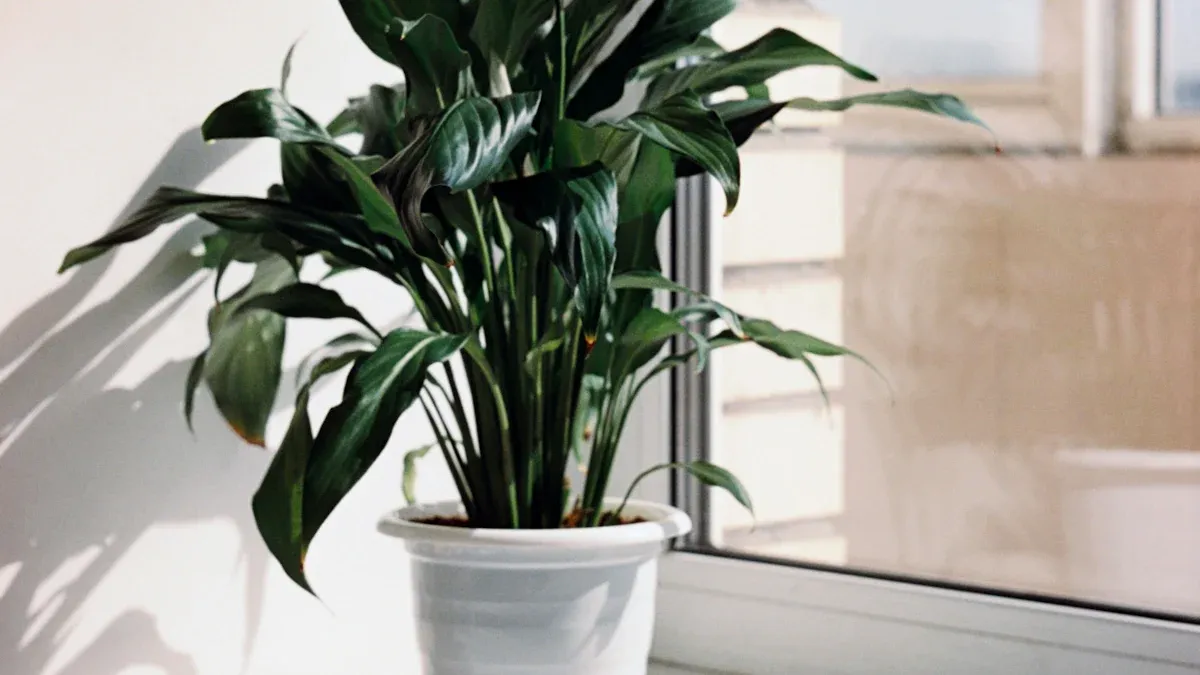
Your peace lily thrives in the right light. It prefers bright, indirect light. This type of light helps your plant grow lush foliage. It also encourages many beautiful blooms. You can place your peace lily near a window. Make sure direct sunlight does not hit its leaves.
Peace lilies can tolerate low light. However, less light often means fewer flowers. Direct sunlight is harmful to your plant. Its thin leaves burn easily. You will see brown tips or edges on the leaves. The vibrant green color of your plant starts to fade. Leaves may also droop or lose their firmness. This shows your plant is struggling. Large brown burn spots can appear on the side of the leaf facing the sun. Always keep your peace lily out of direct sun.
Temperature & Humidity
Peace lilies are tropical plants. They love warm, stable conditions. You should keep your plant in average room temperatures. The ideal range for health and flowering is 65°F to 80°F (18°C to 27°C). Consistent temperatures within this range are very important for blooms. At night, aim for temperatures around 68°F (20°C). Avoid placing your plant near cold drafts or heat vents. Sudden temperature changes stress your plant.
These plants also need humidity. They prefer humidity levels above 50%. Dry air can cause problems for your peace lily. If your home is drier than this, you might see brown or crisp leaves. Low humidity can also stop your plant from blooming. Warm, dry air can even attract pests. Scale insects, for example, thrive in dry conditions. They prick leaves and suck out sap. This makes leaves turn brittle and snap off. You can increase humidity by misting your plant. Grouping plants together also helps. A pebble tray with water under the pot can also add moisture to the air.
Essential Peace Lily Care
Watering
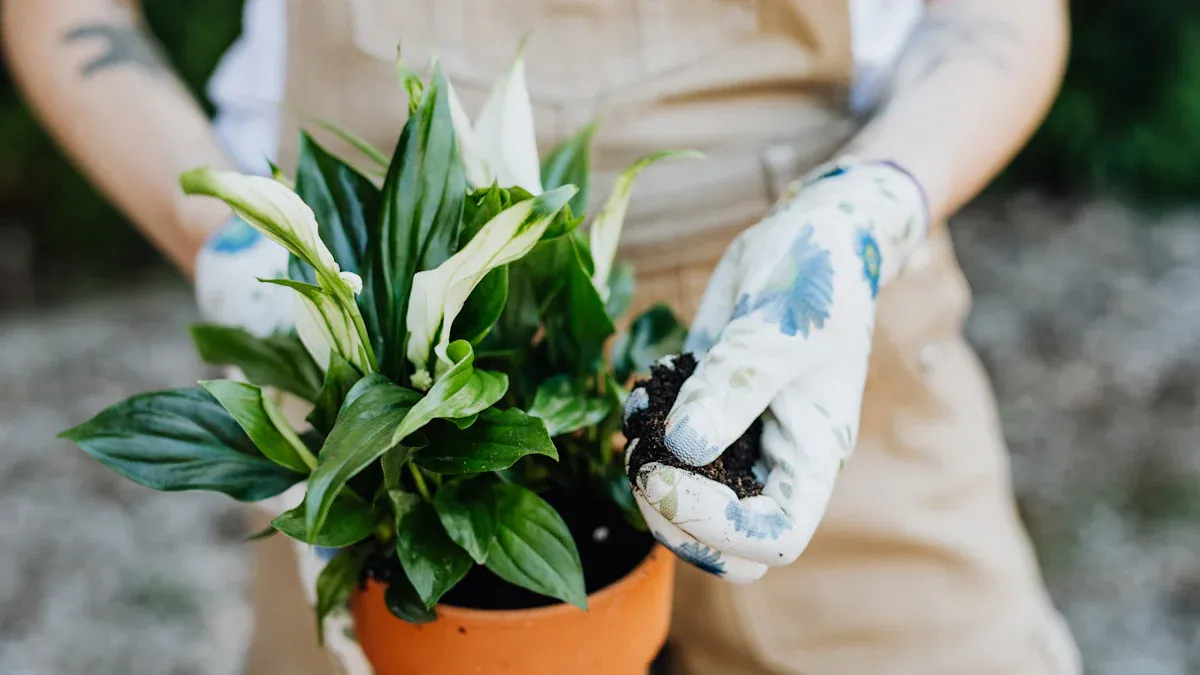
Your peace lily loves moist soil. However, you must avoid over-saturating it. Do not let the soil become soggy. Keep the soil lightly moist when you touch it. You cannot schedule watering in advance. Many things affect how often your plant needs water.
💡 Tip: The best time to water is when the top inch of the soil feels dry.
Environmental conditions greatly change watering needs. Warmer, drier, and brighter places need more frequent watering. Cooler, shady, and more humid places need less water. The pot size and type also matter. Larger pots hold moisture longer because they have more soil. Terracotta pots dry out faster than plastic pots.
You can tell if your plant needs water by looking at its leaves. Wilting leaves are a clear sign. They droop dramatically. But they perk up quickly after you water them. If leaves turn brown at the tips and edges, spreading inward, your plant is underwatered. The soil will feel dry and pull away from the pot sides. The leaves may feel papery or crisp.
On the other hand, overwatering causes different problems. Leaves turn uniformly yellow, often starting at the bottom. Stems near the base may soften or collapse. The soil feels constantly wet and might even smell sour. Brown spots can appear on leaves from fungus. If you see widespread yellowing, especially on younger leaves, or if the plant wilts but feels soft and mushy, you might be overwatering. A foul smell and black, mushy roots mean root rot.
Soil & Repotting
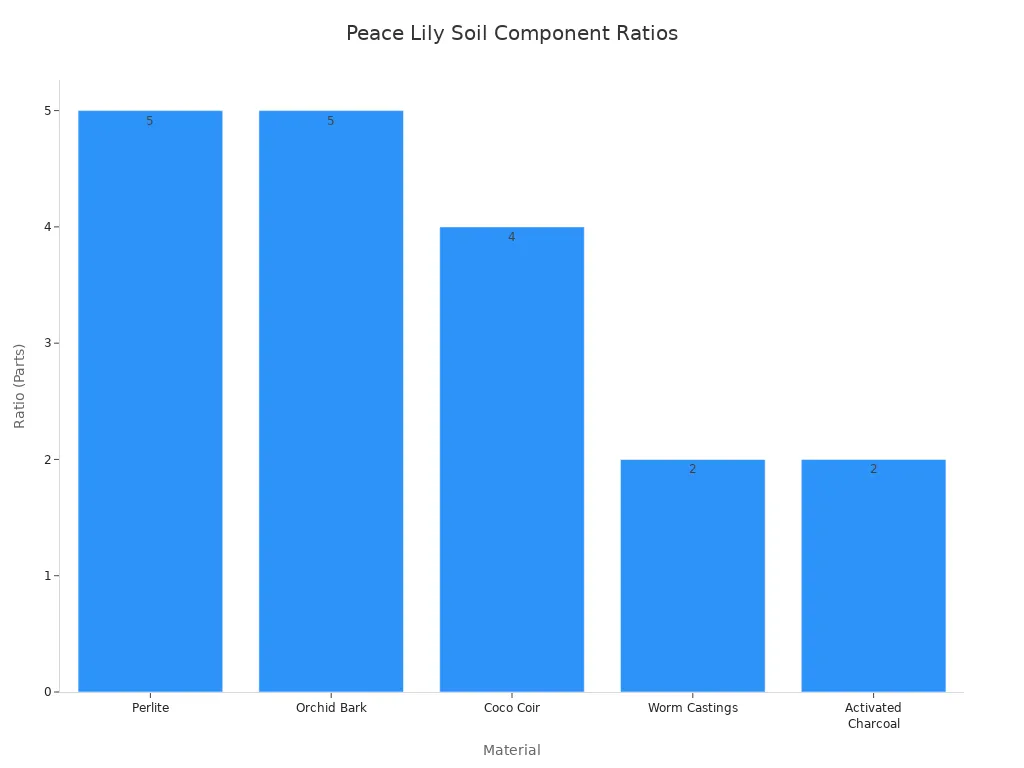
The right soil helps your peace lily thrive. It needs good drainage and air circulation. This prevents the roots from sitting in too much water. Here are the best components for your peace lily soil mix:
Material | Benefits | Ratio (Parts) |
|---|---|---|
Perlite | Enhances aeration | 5 |
Orchid Bark | Prevents compaction | 5 |
Coco Coir | Retains moisture | 4 |
Worm Castings | Adds nutrients | As needed/2 |
Activated Charcoal | Improves drainage and filters | 2 |
Perlite and orchid bark are very important. They improve air circulation around the roots. They also stop the soil from becoming too dense. This helps water drain well. Coco coir holds moisture, but the other components balance it. This mix ensures the soil stays moist but not waterlogged. This combination helps your plant’s roots stay healthy.
You need to repot your peace lily when it outgrows its pot. Look for these signs:
Roots grow out of the drainage holes. This means the roots need more space.
Roots are visible on the soil surface. This shows severe crowding.
Roots circle the bottom of the pot. This makes it hard for the plant to get water and nutrients.
The pot drains too quickly. The roots fill the pot, and the soil cannot hold water well.
When you repot, choose a pot only one or two sizes larger. For example, if your current pot is 6 inches, go to an 8-inch pot. Do not choose a much bigger pot. A larger pot holds too much moisture. This can harm your plant. Peace lilies like to be a little snug in their pots.
Fertilizing
Your peace lily needs nutrients to grow and bloom. A balanced fertilizer works best. Look for an NPK ratio like 10-10-10. A 10-15-10 ratio is also good. Higher phosphorus levels help your plant produce more flowers.
Fertilize your plant once a week during spring and summer. These are its growing seasons. During winter, fertilize every six weeks. This prepares it for new growth in spring. Do not fertilize in fall and winter when the plant rests.
Sometimes, your plant shows signs of nutrient problems. Older leaves turning yellow often mean a nitrogen deficiency. The plant moves nitrogen from older leaves to new ones. So, the oldest leaves show this first.
Too much fertilizer can also harm your plant. Look for these signs of over-fertilization:
Yellow and brown leaves with crisp edges. The high salt from fertilizer burns the roots.
Stunted growth. The plant struggles to absorb nutrients.
A white crust on the soil. This is a buildup of salt and nutrients.
Wilting. This often happens with damaged roots.
Lanky growth. You see many stems but few leaves and no flowers.
Root rot. Roots become mushy and brown.
Blooms & Common Issues
Encouraging Blooms
You want your peace lily to bloom. Bright, indirect light is crucial for this. An east-facing window is ideal. It gives soft morning light for two to six hours. This avoids harsh direct sun. Direct sun can burn leaves. Not enough light means fewer flowers. You must also water properly. Keep the soil moist but not soggy. Use room temperature water. Water until it drains from the pot bottom.
Maintain temperatures between 65 and 80 degrees Fahrenheit. High humidity is also essential. Aim for 50-60%. You can group plants together. Misting or a humidifier also helps. Avoid cold drafts. Fertilize during spring and summer. Use a balanced water-soluble fertilizer. Choose one with higher phosphorus. This helps produce more flowers. Use half the recommended strength. This prevents over-fertilization. Remove yellow or brown leaves. Cut spent flowers close to the stalk. This directs energy to new blooms. Wipe leaves with a damp cloth. This removes dust and improves photosynthesis.
Propagation
You can make new plants from your existing one. The best time to propagate is during spring or early summer. This is when your plant grows actively. You divide the plant during this time. New sections establish roots faster. Warm conditions help new roots grow. This ensures a smoother transition for all plants. Summer is also good for division. Warmer temperatures and more sunlight help roots establish quickly.
Troubleshooting Problems
Your plant might face some issues. Common pests include spider mites. These tiny sap-suckers hide under leaves. They make fine webs. They cause speckles and wilting leaves. Mealybugs are small, fluffy white bugs. They cluster under leaves and at stem junctions. They suck sap. This slows growth and yellows leaves. Aphids are small, sesame seed-shaped insects. They cluster on stems. They also suck sap. Young leaves may not unfurl. Older leaves can yellow or wilt.
For diseases like root rot, act quickly. If you catch Cylindrocladium root rot early, repot your plant. Use fresh potting mix. Apply a soil drench. Monterey Garden Fos Disease Control Fungicide works well. Use it right after repotting. If the infection is severe, start with a new plant. Dispose of all infected soil. Fungicides also treat brown spots on leaves. Always follow the manufacturer’s instructions.
Your peace lily is a low-maintenance plant. It also cleans your air. You can easily keep it healthy. Give it bright, indirect light. Water it when the topsoil feels dry. Maintain good humidity. Enjoy the beauty and calm your peace lily brings to your home.
⚠️ Toxicity Warning: Peace lilies contain calcium oxalate crystals. These tiny crystals can irritate soft tissues. Ingestion causes pain, swelling, and burning of the mouth and throat. Pets and children may experience vomiting and mouth irritation. Always keep your peace lily out of their reach.
FAQ
Why are my peace lily leaves turning yellow?
Yellow leaves often mean overwatering. Check your soil. Let the top inch dry out before you water again. Yellow leaves can also signal a nutrient deficiency. Consider a balanced fertilizer.
How often should I fertilize my peace lily?
Fertilize your peace lily weekly during spring and summer. Use a balanced liquid fertilizer. Reduce feeding to every six weeks in winter. This supports healthy growth and blooms.
Can I put my peace lily outside?
You can place your peace lily outside in warm weather. Ensure it stays in a shady spot. Direct sun will burn its leaves. Bring it indoors before temperatures drop below 60°F (15°C).
What kind of water should I use for my peace lily?
Use filtered or distilled water for your peace lily. Tap water often contains chlorine or fluoride. These chemicals can harm your plant. They cause brown leaf tips. Room temperature water is best.