
Mealybugs are tiny pests that can wreak havoc on your pineapple plants. They suck the sap from the leaves and stems, leading to weakened growth and poor fruit quality. If you want to get rid of mealybugs, act quickly. Addressing mealybug infestations promptly is crucial for keeping your pineapple plants healthy and thriving.
Key Takeaways
Identify mealybugs by their small size and fuzzy white wax covering. Look for signs like yellowing leaves and wilting to catch infestations early.
Use natural methods like isopropyl alcohol or neem oil to remove mealybugs without harming your plants. Consider introducing ladybugs as natural predators.
Maintain regular plant care by cleaning the area, monitoring for pests, and isolating new plants to prevent mealybug infestations.
Identifying Mealybugs
Physical Characteristics
To effectively deal with mealybugs, you first need to recognize what they look like. These pests are small, typically around 1 mm wide. The pineapple mealybug, known scientifically as Dysmicoccus brevipes, has a fuzzy appearance due to a white wax covering its body. Underneath this wax, you’ll find a pink or pink-orange hue. They have an oval, humped shape and feature 17 pairs of wax filaments on their ventral surface, with the longest pair located at the back.
Nymphs, which are the immature stages of mealybugs, resemble smaller adults. They have white, flattened bodies covered in a waxy coating, along with long wax filaments. If you spot these characteristics, it’s a clear sign that your pineapple plant may be infested.
Here are the two most common species of mealybugs found on pineapple plants:
Common Name | Scientific Name |
|---|---|
Pineapple mealybug | Dysmicoccus brevipes |
Grey pineapple mealybug | Dysmicoccus neobrevipes |
Signs of Infestation
Detecting mealybugs early can save your pineapple plants from serious damage. Look for these signs of infestation:
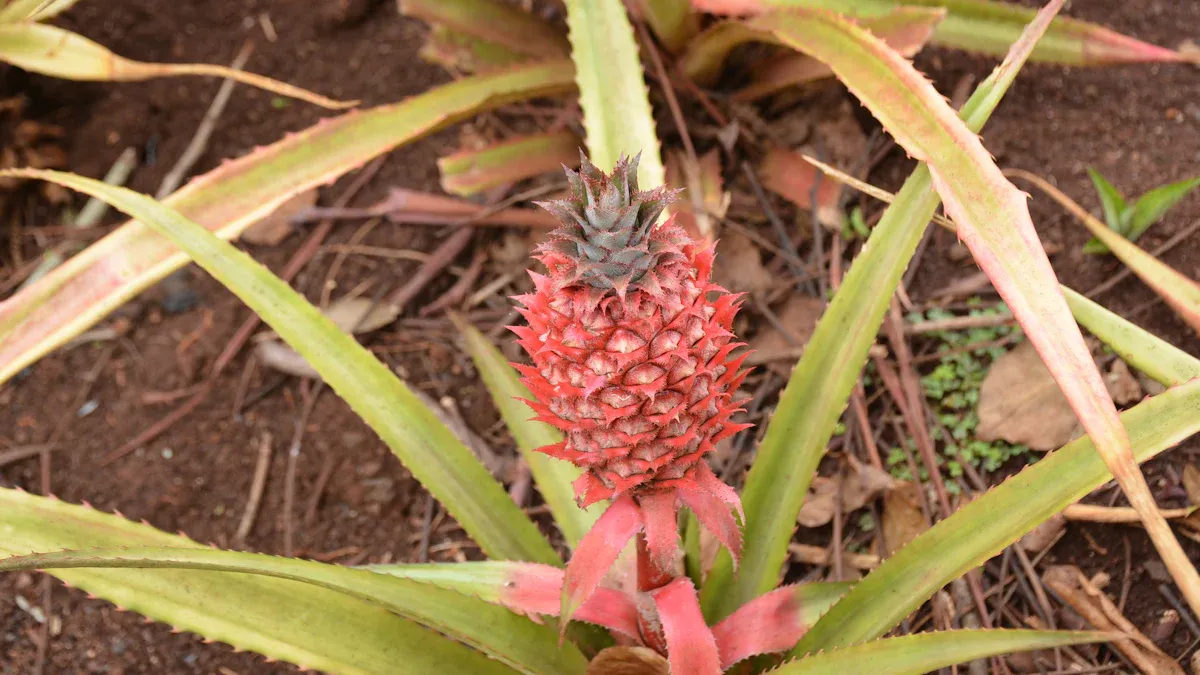
Leaf Color Change: Infected plants often show yellowish-red to bright red color at the leaf tips. This discoloration spreads down the leaf over time.
Wilting of Leaves: As the infestation progresses, you may notice other leaves wilting.
Stunted Growth: Severely infested plants may become stunted, producing small, underdeveloped fruits.
Root Damage: The roots may stop growing, collapse, and rot, leading to symptoms similar to drought.
Mealybug eggs are another indicator of an infestation. Female mealybugs can lay up to 600 small, yellow eggs within a protective mass of white, cottony threads. These egg sacs can resemble spider webbing or mold, making them easy to overlook.
If you see any of these signs, it’s crucial to act quickly. Early detection can prevent your pineapple plants from becoming heavily infested and suffering irreversible damage.
How to Get Rid of Mealybugs
Getting rid of mealybugs can feel overwhelming, but don’t worry! You have several effective options at your disposal. Let’s explore both natural removal techniques and chemical treatment options to help you tackle these pesky pests.
Natural Removal Techniques
If you prefer a more eco-friendly approach, consider these natural methods to remove mealybugs:
Method | Description |
|---|---|
Alcohol | Use 70% isopropyl alcohol to manually remove mealybugs. You can spray it directly on the affected areas. |
Detergent | Sodium lauryl sulfate in biodegradable detergents, like Sal Suds, helps kill juvenile mealybugs. |
Alcohol + Detergent | Combine equal parts alcohol, Sal Suds, and water for a thorough treatment. |
Neem Oil | This natural pesticide suffocates mealybugs and prevents larvae from maturing. |
Biological Control | Release ladybugs, which are natural predators of mealybugs, to help control the infestation. |
Using these methods can effectively control mealybug populations without harming your pineapple plant or the environment. Ladybugs and lacewings are particularly helpful. They consume different life stages of mealybugs, providing comprehensive control. Ladybugs target the eggs and nymphs, while lacewings feed on both the eggs and adult mealybugs.
Chemical Treatment Options
If the infestation is severe, you might need to consider chemical treatments. Here are some options to think about:
Insecticide Type | Effectiveness on Mealybugs | Application Frequency |
|---|---|---|
Systemic Insecticides | Kills actively feeding stages but does not affect eggs. | Additional application may be needed after 3-4 weeks. |
Contact Insecticides | Requires frequent applications to manage adults. | Repeat every 3-4 days for effective control. |
When using chemical treatments, safety is crucial. Here are some important precautions to follow:
Read the label thoroughly!
Be familiar with all precautions.
Put on the proper Personal Protective Equipment (PPE).
Never smoke or eat while mixing or applying pesticides.
Follow the ‘Directions for Use’ on the label carefully.
Always mix or dilute the pesticide outdoors or in a well-ventilated area.
Keep children, pets, and toys away from areas where you mix and apply pesticides.
Dispose of contaminated clothing immediately and wash exposed skin.
Consider using selective insecticides to avoid harming non-target organisms.
Avoid applying pesticides on windy days or very hot days.
Do not over apply pesticides to prevent contamination of water supplies.
Always check for reentry time and time-to-harvest waiting period on the label.
While chemical treatments can be effective, overusing them can lead to serious risks. For instance, large-scale pineapple production often involves toxic pesticides, which can harm workers and local communities. Additionally, over-fertilization can disrupt soil health, affecting both your plants and the surrounding ecosystem.
By combining natural and chemical methods, you can effectively get rid of mealybugs and keep your pineapple plants healthy. Remember, the key is to act quickly and monitor your plants regularly!
Prevent Mealybugs
Regular Plant Care
To keep your pineapple plants healthy and prevent mealybug infestations, regular plant care is essential. Here are some key practices you should follow:
Keep the Area Clean: Remove any plant debris around your pineapple plants. This helps eliminate potential habitats for mealybugs.
Monitor for Pests: Check your plants regularly for signs of mealybugs. Early detection is crucial to control their population.
Observe Your Plants: Look for any changes in leaf color or wilting. If you notice anything unusual, investigate further.
Have a Plan: Develop a strategy for dealing with mealybugs before they become a problem. This includes knowing how to manually remove them if necessary.
By implementing these practices, you can significantly reduce the risk of mealybug infestations.
Isolation and Monitoring
When introducing new pineapple plants, isolation is a smart move. Quarantine your new plants for a few weeks to ensure they’re pest-free. During this time, monitor them closely for any signs of mealybugs.
Ethyl formate (EF) fumigation has proven effective in controlling pineapple mealybugs without harming the plant quality. This method can be a great quarantine procedure to prevent mealybug introduction.
Frequent monitoring is especially important during the early growth stage and fruiting season. Check your plants at least once a week. This way, you can catch any infestations early and take action before they escalate.
By combining regular plant care with effective isolation and monitoring strategies, you can successfully prevent mealybug infestations and keep your pineapple plants thriving.
In summary, keeping your pineapple plants healthy means staying vigilant against mealybugs. Early identification is key. Regular monitoring and proper care can help you prevent infestations. If you need more information, check out resources like the Pineapple Pest Management guide or the Managing Pests and Diseases in Pineapple Cultivation article. With these proactive measures, you can enjoy thriving pineapple plants!
FAQ
What are mealybugs, and why are they a problem for pineapple plants?
Mealybugs are small pests that suck sap from your pineapple plants, weakening them and reducing fruit quality.
How can I tell if my pineapple plant has mealybugs?
Look for white, cottony masses on leaves or stems, yellowing leaves, and wilting. These signs indicate a possible infestation.
Can I prevent mealybugs from infesting my pineapple plants?
Yes! Regularly inspect your plants, maintain cleanliness, and isolate new plants to reduce the risk of mealybug infestations.