
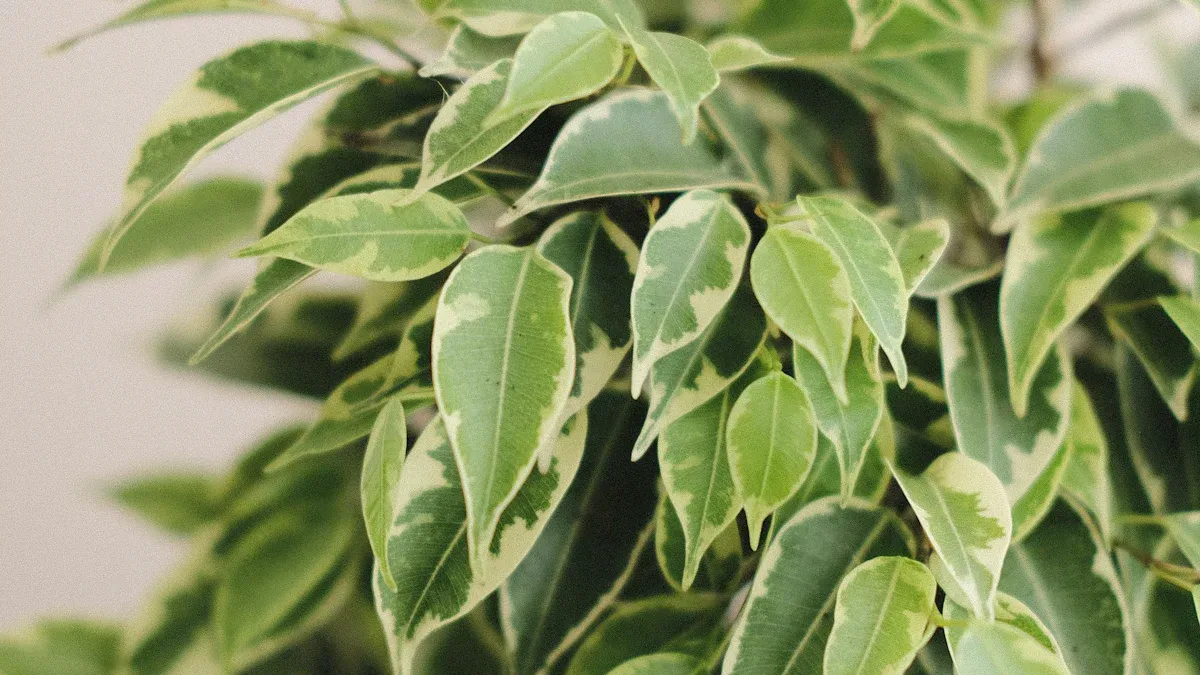
Ficus trees are popular indoor plants. You find these beautiful ficus trees relatively low-maintenance once they adapt. These versatile indoor ficus plants thrive in stable indoor conditions. They need bright, indirect light and consistent watering. A Ficus tree offers many sizes, colors, and growth habits. You can choose a Ficus that complements your home design. These ficus houseplants also purify your air. They absorb carbon dioxide and release oxygen. This houseplant guide helps you identify popular types of Ficus and master their indoor care. You will find these ficus varieties generally easy to cultivate. Understanding different types of ficus trees helps you pick the perfect ficus house plant for your home.
Key Takeaways
Ficus trees are popular indoor plants. They need bright, indirect light and regular watering to grow well.
Many types of Ficus trees exist, like the Fiddle-Leaf Fig and Rubber Plant. Each type has its own look and growth habits.
Good Ficus care includes repotting every 1-2 years, keeping the temperature stable, and providing enough humidity.
Water your Ficus when the top soil feels dry. Do not overwater, as this can cause root rot.
Watch for pests like spider mites and diseases like root rot. Use simple solutions to keep your Ficus healthy.
Popular Types of Ficus for Indoors
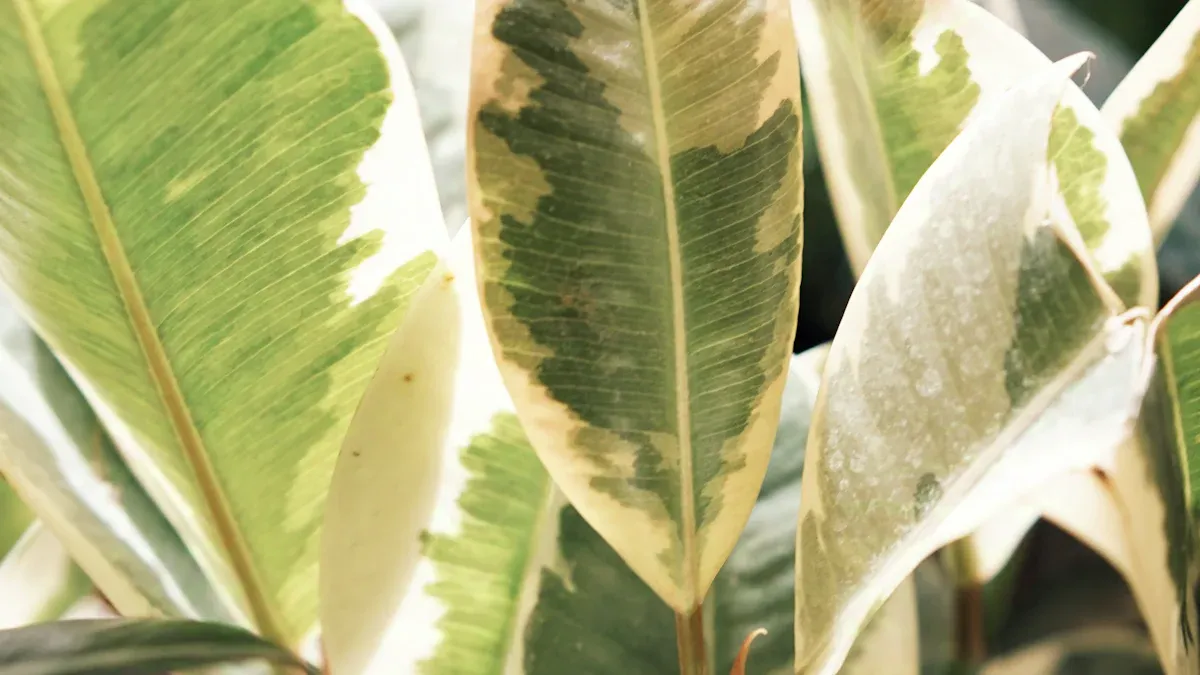
You will find many popular types of ficus that thrive indoors. Each ficus offers unique beauty and characteristics. Understanding these ficus tree varieties helps you choose the perfect ficus tree for your home.
Ficus lyrata: Fiddle-Leaf Fig
The Ficus lyrata, or fiddle-leaf fig, is a very popular houseplant. You recognize it by its large, violin-shaped leaves. These leaves are quite distinctive. They have a broad apex and a narrow middle, truly resembling a fiddle. The leaves can grow up to 18 inches long and 12 inches wide. They feel leathery and have prominent veins. Their margins are wavy, adding to their unique look. This fiddle-leaf fig makes a bold statement in any room.
Ficus elastica: Rubber Plant
The Ficus elastica, also known as the rubber tree plant, is another favorite. You will love its thick, glossy leaves. These leaves often have a deep green color, sometimes with hints of burgundy. This ficus elastica grows upright, making it a great floor plant. Historically, indigenous communities used the latex-rich sap from ficus elastica for waterproofing materials and in traditional medicine. The sap was also a source for natural rubber production.
Ficus benjamina: Weeping Fig
The Ficus benjamina, or weeping fig, is known for its graceful, drooping branches. Its small, oval leaves are bright green and grow densely. This ficus benjamina can grow into a sizable indoor tree. It adds an elegant touch to your space.
Ficus microcarpa: Ginseng Ficus
The Ficus microcarpa, often called Ginseng Ficus, looks like a miniature tree. It features thick, aerial roots that resemble ginseng roots. These roots give it a unique, bonsai-like appearance. You will see small, dark green leaves on its branches. To keep its ‘Ginseng’ shape, you need to prune it regularly. Snip off new shoots as they appear. Use sterilized scissors to cut back leggy branches. For a bushier look, trim healthy stalks with at least six leaves back to two leaves. Pruning is best during spring and summer.
Ficus pumila: Creeping Fig
The Ficus pumila, or creeping fig, is different from other ficus trees. It is a broadleaf, evergreen, woody climber. This ficus grows vigorously, reaching 8 to 15 feet high. It spreads 3 to 6 feet wide. It climbs by attaching itself to surfaces with short roots, much like English ivy. In its juvenile form, the leaves are small, less than 1 inch long, and have a thin, paper-like texture. They can be flat or wrinkled. As it matures, the leaves become larger, 2 to 4 inches long, darker green, shiny, and leathery. Mature stems lose their aerial roots and become thick and shrubby.
Ficus altissima: Council Tree
The Ficus altissima, or Council Tree, is a striking ficus. It has large, oval leaves with prominent veins. The leaves are often a vibrant green with lighter green or yellow variegation. This ficus originates from Asia, first documented in Java in 1826. You can find it across Southeast Asia. It uses other trees for support, wrapping around their trunks until it can grow independently.
Ficus audrey: Banyan Fig
The Ficus audrey, also known as the Banyan Fig, offers a softer look than the fiddle-leaf fig. It has velvety, oval leaves with light green veins. This ficus audrey grows upright and can become a tall ficus tree. It needs bright, indirect light to maintain its characteristic foliage. Place it in an eastern-facing window or a few feet from a southern or western-facing window. It will not tolerate low light conditions. You can use LED grow lights to supplement natural light, especially in darker months.
Ficus alii: Banana Leaf Fig
The Ficus alii, or Banana Leaf Fig, is a graceful ficus. It features long, narrow leaves that resemble banana leaves. These leaves have a slightly weeping or drooping habit. This gives the ficus alii a willow-like appearance. It offers a delicate texture compared to other ficus varieties.
Ficus Tineke: Variegated Rubber Plant
The Ficus Tineke is a beautiful variegated form of the ficus elastica. Its leaves display stunning patterns of green, cream, and pink. This ficus adds a splash of color to your indoor plant collection. Bright, indirect sunlight enhances its vibrant foliage. Partial shade can make its leaf coloration less vibrant. Other popular types of ficus trees include the Ficus triangularis and Ficus benghalensis, each with its own unique charm.
Essential Ficus Care Guide

You can keep your ficus healthy and thriving indoors. This guide gives you clear steps for good ficus care. You will learn how to provide the best growing conditions for your ficus houseplants.
Planting & Repotting
You should repot your ficus tree every one to two years. Do this in the spring. Choose a pot that is only slightly larger than the old one. This helps prevent root rot. However, a very healthy ficus might handle a bigger jump in pot size.
A strong and healthy Ficus might be an exception, potentially tolerating a larger jump (e.g., from 10×8 to 18×16 inches) in pot size during repotting.
When you repot, gently remove the ficus from its old container. Loosen any circling roots. Place fresh potting mix in the new pot. Center your ficus and fill with more soil. Make sure the soil level is the same as before.
Light Needs
Your ficus needs bright, indirect light. Direct sun can burn its leaves. Place your ficus near a window with filtered light. An east-facing window is often perfect. You can also use artificial light.
Medium light intensity plants, which include ficus species, prefer 250 to 1,000 foot-candles.
Best growth for these plants occurs above 750 foot-candles.
When using artificial light, a range of 500 to 1,000 foot-candles is recommended.
While plants can be maintained in the 250 to 500 foot-candle range, growth is optimized with more light.
Ficus species like the Rubber plant are categorized under ‘Medium-bright light’.
Medium-bright light corresponds to a range of 100-500 FC.
Ensure your ficus gets enough light for good growing conditions. This helps your ficus tree stay vibrant.
Temperature & Humidity
Ficus trees prefer stable indoor conditions. Keep temperatures between 65°F and 75°F (18°C-24°C). Avoid sudden temperature changes. Do not place your ficus near drafty windows or heating vents. These can stress the plant.
Ficus also likes high humidity. You can increase humidity by misting the leaves. Use a pebble tray filled with water. Group your indoor plants together. This creates a more humid microclimate. A humidifier also works well for your ficus.
Watering Ficus
Proper water is crucial for your ficus. You should water your ficus when the top inch or two of soil feels dry. Stick your finger into the soil to check. Do not let the plant sit in standing water. This can lead to root problems. Always ensure good drainage.
Overwatering is a common problem for ficus trees. Watch for these signs:
Wilting leaves
Browning leaves
A foul smell from the soil
Root rot (as a consequence of overwatering)
If you see these signs, reduce your water schedule. Let the soil dry out more between waterings. Give your ficus a good soak when you water. Let excess water drain completely. Never let your ficus sit in standing water.
Fertilizing Guide
Feed your ficus during its active growing conditions. This is typically from spring through fall. You can use a balanced liquid fertilizer.
For ficus, a 10-10-10 balanced fertilizer is recommended monthly from spring through fall.
A 10-10-10 NPK ratio is suitable. You can also use organic options. Examples include FoxFarm Grow Big (6-4-4) and Espoma Organic Indoor! (2-2-2). Stop fertilizing in winter. The plant rests during this time. Too much fertilizer can harm your ficus. Always follow the product instructions.
Pruning Ficus
You should prune your ficus to maintain its shape. Pruning also encourages bushier growth. Do this in late winter or early spring. Remove any dead, damaged, or crossing branches. You can also trim branches to control size.
Use sharp, clean tools for pruning. This ensures clean cuts. Clean cuts help the plant heal faster. They also prevent diseases.
Sharp and Clean Tools: Pruners must be sharp and clean to ensure ‘clean’ cuts. Dull pruners cause irregular cuts or tear plant tissues. This prevents proper wound closure. It leaves exposed tissue open to insects and pathogens.
Sanitization: Tools can harbor bacteria and viruses. To prevent spreading microbes, clean debris with a stiff brush. Then wipe or pour 70% isopropyl alcohol over blades. Alternatively, soak in a 10% chlorine bleach solution (1 part bleach to 9 parts water). Rinse with cool water after soaking to prevent corrosion.
Many gardeners recommend the Felco 2 Pruner. It makes smooth, effortless cuts. This is crucial for preventing plant damage. These pruners last a long time. You can adjust and repair them. Replacement parts are easy to find. This makes them a good investment for your ficus tree care.
Soil Requirements
Your ficus needs well-draining soil. A good potting mix is essential. It should hold some moisture but drain excess water quickly. You can use a standard potting mix. Add perlite or coarse sand for better drainage.
The ideal soil pH level for growing ficus is between 6.0 and 6.5. This is a slightly acidic to neutral range. A good potting mix will have the ideal neutral pH for all ficus species. This helps your ficus absorb nutrients properly. Good soil is a key part of ficus tree care.
Common Ficus Problems & Solutions
You might face some challenges with your ficus. Knowing how to identify and fix these issues keeps your plant healthy.
Pest Identification
Pests can harm your ficus. Spider mites are tiny but cause big problems for ficus trees. Look for these signs:
Holes in the leaves.
Faint webbing appearing where stems meet their leaves.
Fine webbing in the leaves and stems.
Tiny specs (spider mites themselves), varying in color from yellowish to reddish brown.
Speckled or mottled appearance of the leaves.
Whitish or yellow discoloration on the leaves due to chlorophyll loss.
Eventually, very damaged brown leaves.
Pest Control
You can control pests effectively. Organic pesticides are a good choice for your ficus. Uncle Bill’s All Natural Pesticide is a useful option. Neem products also work well. You can make a homemade formula for scale and aphids. Mix 1-2 tablespoons of original Dawn dishwashing detergent, 1 tablespoon of vegetable oil, and water to fill a gallon jug. For immediate use, mix a portion of this solution with 2 capfuls of rubbing alcohol in a spray bottle. This solution works on almost any pest, including scale. You do not need to wash it off with water.
Disease Recognition
Diseases can also affect your ficus. Root rot is a common issue for a ficus tree. You will notice these early symptoms:
Yellowing leaves.
Wilting.
Stunted growth.
A foul odor emanating from the soil.
Dark, mushy roots that crumble at a gentle touch.
Disease Management
You can manage fungal leaf spots. Fungicides help protect your ficus trees. For anthracnose, you see greasy spots that turn yellow and die. A yellow halo often surrounds these spots. Apply a fungicide to protect your plants. Avoid overhead water to help manage this disease.
Disease Type | Fungicides Recommended |
|---|---|
Botrytis Blight | Decree® (fenhexamide), Daconil® (chlorothalonil), Chipco® 26019 (iprodione) |
Corynespora Leaf Spot | Same as for Anthracnose |
Myrothecium Leaf Spot | Empress™ (pyraclostrobin), Heritage® (azoxystrobin), Medallion® (fludioxonil), Pageant® (pyraclostrobin + boscalid) |
Anthracnose | Protect™, Dithane® (mancozeb), Chipco® 26019 (iprodione), Empress™ (pyraclostrobin), Heritage® (azoxystrobin) |
Common Ficus Issues
Your ficus might drop leaves. Several reasons cause this.
Sudden changes in environmental conditions (temperature, humidity, location).
Stress from root disturbance during repotting.
Inconsistent watering (both over and under-watering).
Low light levels.
Infestations of sap-sucking pests and diseases.
Choosing Your Ideal Ficus Tree
You can find the perfect ficus for your home. Consider your living space and how much time you have for plant care. This helps you select the best ficus tree.
Light Conditions
All ficus plants need light. You should assess the natural light in your home. Most ficus prefer bright, indirect light. A window facing east often works well. If you have a very sunny window, you can use sheer curtains to filter the light. Some types of ficus tolerate lower light, but they will not grow as vigorously.
Space Considerations
Think about the size of your room. Some ficus trees grow very large. Others stay small. For small apartments, you have excellent choices.
Ficus Variety | Key Feature for Small Apartments |
|---|---|
Little Fiddle (Ficus lyrata ‘Bambino’) | Dwarf selection, grows to about 3 feet tall, ideal for smaller spaces. |
Creeping Ficus (Ficus pumila) | Stays low, creates a carpet of leaves, can climb trellises and walls. |
Dorty Creeping Ficus (Ficus pumila ‘Dorty’) | Textural variety with dark green, wavy leaves and creamy-yellow variegation. |
Bellus Creeping Ficus (Ficus pumila ‘Bellus’) | Variegated with white edges, medium growth rate. |
Curly Creeping Ficus (Ficus pumila ‘Curly’) | Green, wavy leaves with bright, lime-green centers. |
Sunny Creeping Ficus (Ficus pumila ‘Sunny’) | Creeps or trails, green foliage delicately edged in white. |
Ficus vaccinioides | Rare relative of creeping fig, dark green textural leaves, good for hanging baskets. |
The Fiddleleaf fig (Ficus lyrata) is also suitable for small apartments. It is not particularly fussy. This ficus thrives in rooms with average temperatures and medium-to-low light conditions.
Care Commitment
Consider how much time you can dedicate to your indoor plants. Some ficus varieties need more attention than others. Most ficus are quite resilient. They can survive inconsistent watering. They grow best with regular moisture. Creeping Ficus varieties prefer more moisture. You should not let them dry out completely.
Ficus Lyrata (Fiddle-Leaf Fig): Water when the top layer of soil is completely dry.
Ficus Elastica (Rubber Plant): Water when the top inch of soil is dry.
Most ficus varieties: Water when the top 1-2 inches of soil are dry, typically every 1-2 weeks.
You can find low maintenance ficus trees. These are great for busy individuals.
Growth Habits
Different types of ficus have unique growth habits. Some grow upright like a tree. Others creep or trail. You can choose a ficus that fits your desired aesthetic. For example, a weeping ficus adds a graceful touch. A creeping ficus can cover a wall or hang from a basket. Think about how you want your ficus to look in your space.
You now understand the diverse types of ficus and their specific indoor care needs. This guide helps you. With the right knowledge and consistent care, your ficus trees will thrive. They become beautiful additions to any indoor environment. Choose your ideal ficus tree confidently. You can transform your living areas. Enjoy the many benefits these versatile ficus offer as indoor plants.
FAQ
Why do my Ficus leaves turn yellow?
Your Ficus leaves turn yellow from overwatering or underwatering. Check the soil moisture. Yellow leaves also signal nutrient deficiencies or insufficient light. Ensure consistent care and proper light. 💡
How often should I fertilize my Ficus?
Fertilize your Ficus during its active growing season. This runs from spring through fall. Use a balanced liquid fertilizer once a month. Stop fertilizing in winter. Too much fertilizer can harm your plant.
Can I put my Ficus outside?
You can move your Ficus outdoors in warm weather. Place it in a shaded spot to avoid sunburn. Bring it back inside before temperatures drop below 50°F (10°C). Sudden changes stress the plant.
Is Ficus toxic to pets?
Yes, Ficus plants are mildly toxic to pets. The sap causes irritation if ingested. Keep your Ficus out of reach of curious animals. Contact your veterinarian if your pet eats any part of the plant. 🐾