Fastest growing bamboo offers a unique charm for your garden and landscape. You can enjoy quick results when you choose the right varieties of the fastest growing bamboo. These plants not only enhance beauty but also provide benefits like privacy and erosion control. Their rapid growth makes them ideal for creating natural barriers and adding greenery quickly.
Key Takeaways
Moso Bamboo can grow up to 35 inches per day, making it ideal for quick landscaping results.
Giant Timber Bamboo reaches heights of over 60 feet and is excellent for construction and carbon absorption.
Golden Bamboo’s vibrant golden stems and dense growth make it perfect for privacy screens and erosion control.
Moso Bamboo
Growth Rate
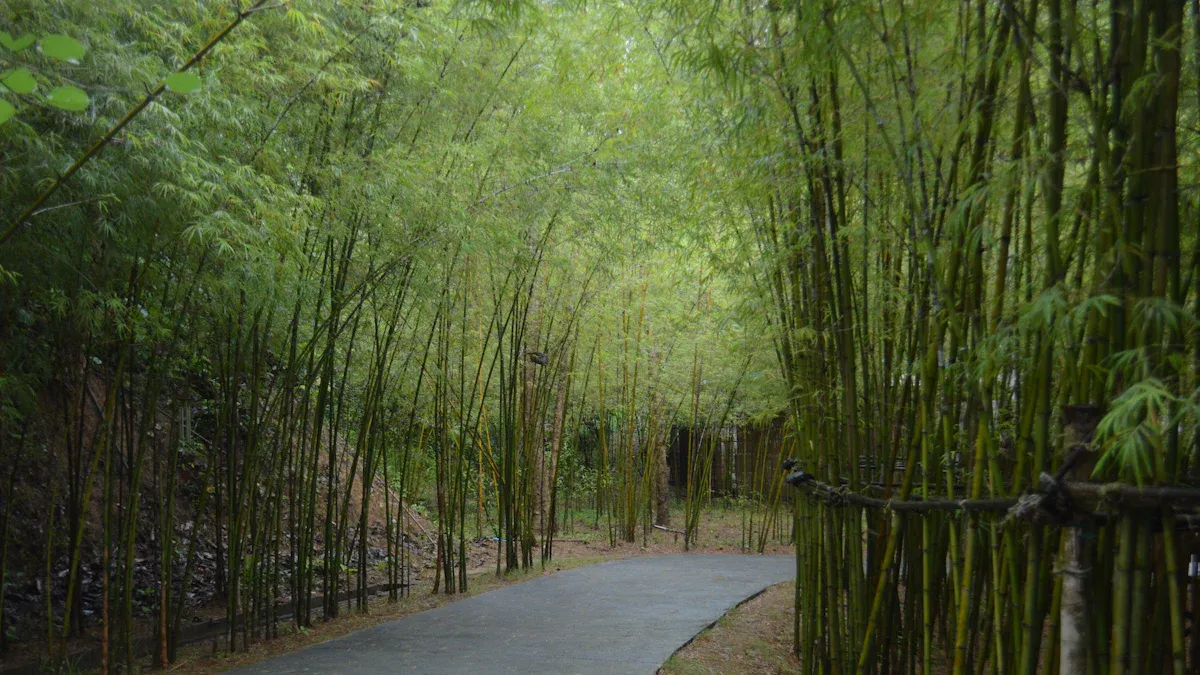
Moso Bamboo is one of the fastest growing bamboo varieties. Under optimal conditions, it can grow up to 35 inches per day. The maximum recorded growth rate reached an astonishing 119 cm (approximately 46.85 inches) in a single day, as noted by Koichiro Ueda in 1956. This rapid growth makes Moso Bamboo a popular choice for gardeners looking for quick results.
Characteristics
Moso Bamboo can reach impressive heights. Here’s a quick overview of its typical measurements:
Height (m) | Diameter (cm) |
|---|---|
Average | 18 |
Maximum | 23 |
Diameter Range | 11 (average) to 18 (maximum) |
Moso Bamboo typically matures in about 10 to 12 years, with the first useful harvest possible around the fifth year. This variety features tall, sturdy culms that can provide excellent structural support.
Uses
You can use Moso Bamboo for various purposes. Its strong and flexible nature makes it ideal for construction, furniture making, and even crafts. Additionally, Moso Bamboo serves as a natural privacy screen, enhancing your garden’s aesthetics while providing shelter from the wind. However, be aware of pests like Pantana phyllostachysae, which can impact growth rates. Understanding how to manage these pests is crucial for maintaining healthy bamboo.
Moso Bamboo stands out as a top choice among the fastest growing bamboo varieties, offering both beauty and utility for your landscape.
Giant Timber Bamboo
Growth Rate
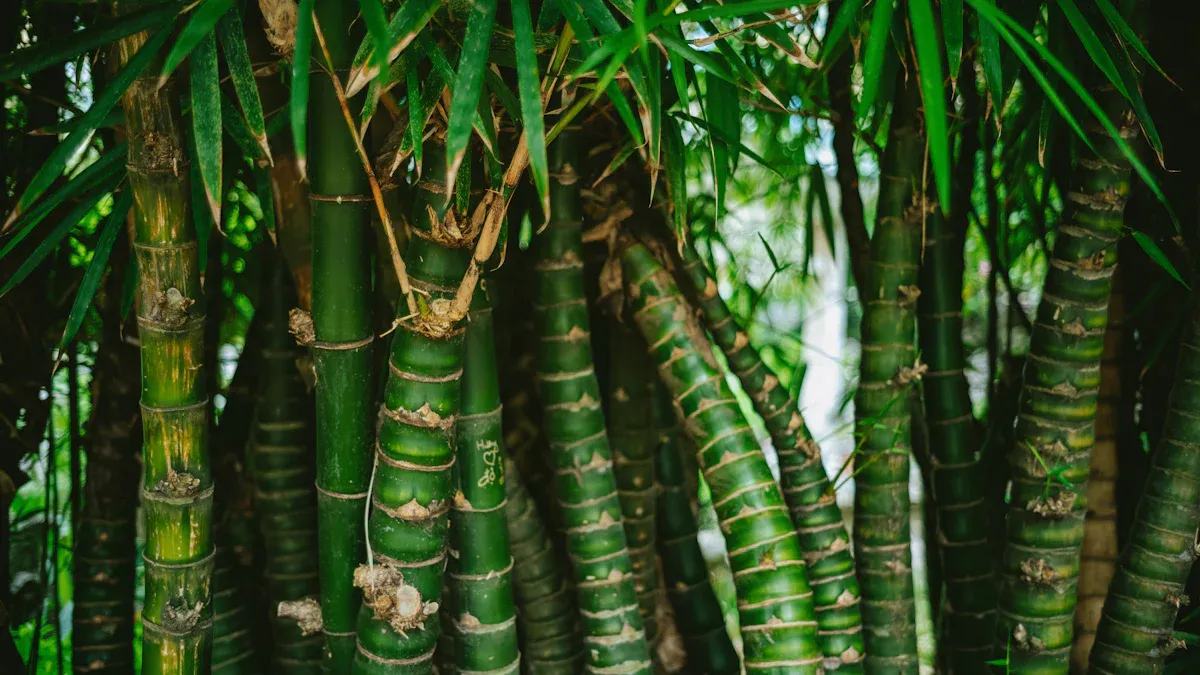
Giant Timber Bamboo, known scientifically as Guadua angustifolia, is one of the fastest growing bamboo varieties. Under ideal conditions, it can grow up to 30 inches per day. This rapid growth allows you to create a lush landscape quickly.
Characteristics
Giant Timber Bamboo has several distinguishing features that set it apart from other timber bamboos:
It has a relatively coarse grain due to its large vascular bundles.
The vascular bundles exhibit a wavy pattern rather than running strictly axial.
The nodal region is larger, resulting in a coarse surface after planning.
You will notice a significant difference between the outside and inside of the culm wall compared to Moso bamboo.
This variety can reach heights of 60 feet or more, making it an impressive addition to any garden.
Uses
You can use Giant Timber Bamboo for various applications. Here are some common uses:
Application | Description |
|---|---|
Construction | It is used in durable products in the building industry due to its lignification and fast growth. |
Carbon Absorption | The plant absorbs a large amount of CO2, contributing to environmental sustainability. |
Additionally, you can find Giant Timber Bamboo in products like plywood, bamboo flooring, and paper pulp.
To ensure optimal growth, provide well-draining soil rich in organic matter. Water deeply 2-3 times per week during the first year. Once established, this bamboo becomes more drought-tolerant.
Giant Timber Bamboo stands out as a remarkable choice among the fastest growing bamboo varieties, offering both beauty and utility for your landscape.
Golden Bamboo
Growth Rate
Golden Bamboo, also known as Phyllostachys aurea, is a remarkable choice among the fastest growing bamboo varieties. Under ideal conditions, it can grow up to 24 inches per day. This rapid growth allows you to establish a vibrant landscape quickly.
Characteristics
Golden Bamboo is popular for its stunning visual appeal. Here’s a quick overview of its unique features:
Feature | Description |
|---|---|
Color of Stems | Bright golden-yellow color that becomes more vibrant with maturity. |
Texture of Stems | Smooth with occasional ring-like nodes, adding visual interest. |
Leaves | Long, narrow, bright green leaves that create a striking contrast with the golden stems. |
Growth Habit | Graceful growth habit that contributes to its versatility in landscaping applications. |
This bamboo variety typically reaches heights of 20 to 30 feet. Its graceful appearance makes it an excellent choice for creating focal points in your garden.
Uses
You can use Golden Bamboo in various ways. Here are some common applications:
Privacy Screens: Its dense growth provides excellent coverage, making it ideal for creating natural barriers.
Ornamental Planting: The vibrant color and elegant form enhance the beauty of any landscape.
Erosion Control: Its extensive root system helps stabilize soil, preventing erosion on slopes.
When propagating Golden Bamboo, consider these effective methods:
Method | Description | Suitability |
|---|---|---|
Root Cuttings | Fastest and easiest way to propagate running bamboo. | Best for running bamboo |
Stem Cuttings | Best method for clumping bamboo. | Best for clumping bamboo |
Aerial Root Propagation | Produces more cuttings while preserving the mother plant’s integrity. | Suitable for both types |
Tissue Culture Propagation | Preferred for large-scale cultivation but complex for average growers. | Large-scale plantations |
Seeds | Difficult to find and slow to germinate, but can be rewarding. | Not commonly used |
Golden Bamboo stands out as a vibrant and versatile option among the fastest growing bamboo varieties, offering both beauty and functionality for your landscape.
Madake Bamboo
Growth Rate
Madake Bamboo, also known as Phyllostachys bambusoides, is a fast-growing variety that can reach heights of 40 feet or more. Under ideal conditions, it can grow up to 24 inches per day. This rapid growth makes it a popular choice for gardeners and landscapers looking to create a lush environment quickly.
Characteristics
Madake Bamboo features a unique appearance that enhances its appeal. Its speckled external color showcases mid-brown and pale beige spots. This gives it a satin to matte surface finish and smooth skin. The bamboo has medium to thick walls and open cell structures, which contribute to its strength. The noticeable nodes with mild lips on larger diameters enhance its structural integrity, making it suitable for construction.
Use | Description |
|---|---|
Construction | Preferred bamboo for construction and furniture manufacture in Japan. |
Traditional Arts | Used in various traditional Japanese arts and crafts due to its properties. |
Daily Necessities | Items like baskets, colanders, brooms, umbrellas, and chopsticks are made. |
Fishing Equipment | Utilized for making fishing rods and other tackle. |
Historical Weapons | Previously used to create weapons such as bows and arrows. |
Uses
You can use Madake Bamboo in various applications. Its lightweight and flexible nature makes it easy to work with. It is durable when bent, making it ideal for construction projects. You can also find it in traditional Japanese arts and crafts.
For optimal growth, consider these climate requirements:
USDA Hardiness Zones: 7a-10b
Sunlight: Full Sun or Part Shade
Soil Conditions: Well-drained but moist soil
Watering Needs: Keep soil moist during the first growing season; established plants tolerate dry periods but benefit from deep soaking if drought-stressed.
Madake Bamboo stands out as one of the fastest growing bamboo varieties, offering both beauty and utility for your landscape.
Dendrocalamus Species
Growth Rate
Dendrocalamus species are among the fastest growing bamboo varieties in Southeast Asia. Some species can grow up to 13 meters (approximately 42 feet) in just 90 days during their peak growth period. For example, Dendrocalamus latiflorus has a shooting period lasting about 200 days, with rapid growth from mid-July to early September. This makes it an excellent choice for those seeking quick results in their gardens.
Characteristics
These bamboo species have unique traits that set them apart. Here’s a quick overview of two notable species:
Species | Key Morphological Traits | Notes |
|---|---|---|
Dendrocalamus brandisii | High-quality bamboo, significant differences in branch characteristics and shoot sheath color | Nutritional components vary by geographical provenance; molecular classification methods are unsuitable for distinguishing them. |
Dendrocalamus latiflorus | Large sympodial bamboo, luxuriant branches, tender shoots with high nutritional value | Thrives in warm environments; rapid height growth up to 13 m during peak growth period. |
Uses
Dendrocalamus species serve various purposes in agriculture and industry. Here are some common uses:
Use Category | Specific Uses |
|---|---|
Construction | Building materials (pillars, walls, roofs, floors), reinforcement for cement/concrete structures. |
Handicrafts | Baskets, furniture, musical instruments, and various decorative items. |
Food | Bamboo shoots as a vegetable, used in various dishes and canned products. |
Other Applications | Containers for water or palm juice, cooking pots, fish traps, and poles for various uses. |
Despite their benefits, growers face challenges. These include economic unappeal due to inadequate procedures and excessive logistic expenses. However, Dendrocalamus species require lesser cultivation and upkeep costs compared to timber species. You can harvest culms commercially after 4–5 years, making them a viable option for sustainable farming.
Choosing fast-growing bamboo varieties offers many benefits for your garden and landscape. You can enjoy quick growth, privacy, and beauty. Additionally, bamboo helps the environment by:
Absorbing large amounts of carbon dioxide (CO2) and releasing oxygen.
Preventing soil erosion and improving water quality.
Supporting biodiversity by providing habitats for various species.
Consider these options to enhance your outdoor space while promoting sustainability!
FAQ
What is the best soil type for growing bamboo?
You should use well-draining, loamy soil rich in organic matter for optimal bamboo growth.
How often should I water my bamboo?
Water your bamboo deeply 2-3 times per week during the first year. Established plants need less frequent watering.
Can bamboo grow in cold climates?
Some bamboo varieties can tolerate cold, but most prefer warmer climates. Check specific varieties for hardiness zones.