

Do your climbing plants need support? A diy garden trellis offers a great solution. It helps plants grow better. You also save money. DIY projects often cost under $20. Pre-made options can be much more expensive, sometimes $150 to $400. You get rewarding diy garden trellis plans. You can choose many garden trellis ideas. Building one is easier than you think. Explore the possibilities for your garden.
Key Takeaways
Building a DIY garden trellis saves money and helps your plants grow better.
Trellises maximize garden space by letting plants grow up, and they improve plant health by increasing air flow and sunlight.
You can choose from different trellis designs like A-frame, cage, or tripod, depending on your plants and garden style.
Use strong, weather-resistant materials and anchor your trellis well to make it last.
Start training your plants early to guide them onto the trellis for the best results.
Why Build a Garden Trellis: Key Benefits

Maximize Garden Space
You often face limited ground space in your garden. Trellises offer a smart solution. They allow you to grow plants upwards. This means you use less horizontal area. You can cultivate more food or flowers within a small garden plot. Consider it adding extra vertical layers to your planting space. This method is especially beneficial for climbing plants. These plants naturally want to reach for the sky. You get a higher yield from the same footprint.
Promote Healthier Growth
Plants supported by a trellis enjoy better air circulation. This significantly helps prevent common plant diseases. Leaves dry more quickly after rain or watering. More sunlight reaches all parts of the plant, from top to bottom. Fruits and vegetables stay elevated off the damp ground. This reduces the risk of rot and keeps many pests at bay. Your plants will grow stronger, healthier, and more productive.
Enhance Garden Beauty
A trellis adds significant structure and visual appeal to your garden. You can train your plants to grow in beautiful, intentional patterns. This creates a neat and organized appearance. A well-placed trellis transforms a simple garden bed into an attractive focal point. Imagine a stunning wall covered in vibrant flowers or lush, green vegetables. It makes your entire garden space more inviting and aesthetically pleasing.
Save Money
Purchasing pre-made trellises from stores often involves a high cost. You can build a garden trellis yourself for a much smaller investment. You use affordable materials such as wood scraps, bamboo, or simple netting. Sometimes, you can even repurpose old household items. This DIY approach saves you a considerable amount of money. You can then allocate those savings to other essential gardening supplies or new plants. It is a practical, economical, and very rewarding project.
Popular DIY Garden Trellis Designs
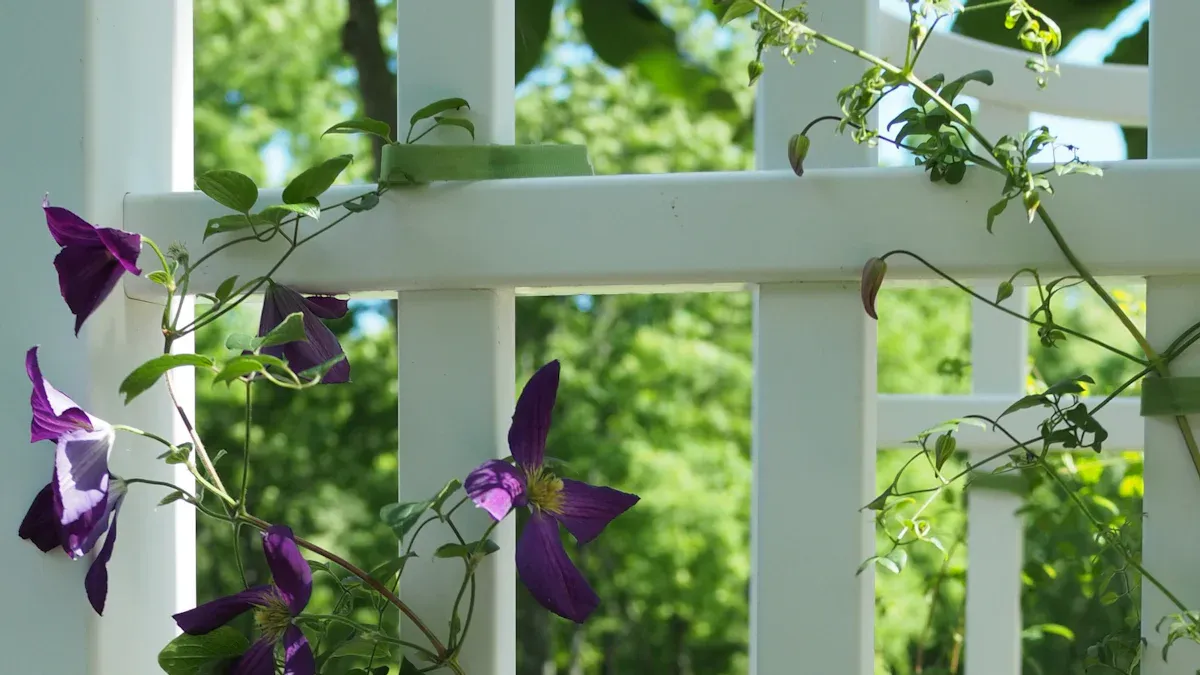
You can choose from many different DIY garden trellis plans. Each design offers unique benefits for various plants and garden styles. You will find a design that fits your needs.
A-Frame Trellis
An A-frame trellis provides a classic and sturdy support for many climbing plants. This design saves ground space. It also improves air circulation, which reduces disease risk. Harvesting becomes easier as fruits hang within reach.
Suitable Plants: Cucumbers are highly suitable for an A-frame trellis. You can also grow peas, green beans, dry beans (like pinto beans), and smaller squash varieties.
Materials Needed:
Two 2″x4″x8′ pressure-treated boards (cut each in half to make four 2″x2″x8′ pieces)
Wood screws
Netting or additional cross supports (optional)
Cost: You can build this trellis for under $50.
Step-by-Step Instructions:
Cut each 2″x4″x8′ board in half lengthwise. You now have four 2″x2″x8′ pieces.
Take two 2″x2″x8′ pieces. Form an “A” shape by joining them at the top with screws. Repeat this step to create a second “A” frame.
Stand the two “A” frames upright. Connect them at the top using a shorter piece of wood or a hinge. This creates the peak of your trellis.
Add horizontal cross supports between the two “A” frames. You can also attach netting to these supports. This gives your plants more places to climb.
DIY Folding Garden Trellis
A DIY folding garden trellis is perfect for smaller gardens. It is also great for seasonal use. You can easily move it or store it away. This design offers portability and space-saving benefits.
Suitable Plants: This trellis works well for peas and lighter climbing flowers.
Materials Needed:
Six 1”x2”x4’ boards (for the main frame)
Eight 1/4”x2”x4’ boards (for cross slats)
1 1/2” narrow hinges
1” exterior screws
Cordless drill
Choice of wood stain (optional)
Step-by-Step Instructions:
Measure and cut your 1”x2” boards to create two rectangular frames. Each frame will be one side of your folding garden trellis.
Screw the 1/4”x2” boards horizontally across each frame. Space them evenly. These will be the climbing rungs for your plants.
Attach hinges to the top and bottom of one side of each frame. This allows your folding garden trellis to open and close.
Apply a stain if you want to protect the wood and enhance its appearance. This completes your
diy folding garden trellis. You now have a versatilefolding garden trellis.
Cage Trellis
A cage trellis provides excellent support for heavy fruiting plants. Their heavy produce can otherwise damage traditional trellises. Caging offers robust support for the weight of the fruit and long vines.
Suitable Plants: This design is ideal for melons, summer squashes, winter squashes, and indeterminate tomatoes.
Materials Needed:
Wire mesh (such as concrete reinforcing mesh or livestock panels)
Stakes (metal or sturdy wood)
Zip ties or heavy-duty wire
Step-by-Step Instructions:
Cut a section of wire mesh to your desired height and circumference. The size depends on the plant you are supporting.
Form the mesh into a cylinder. Overlap the ends slightly.
Secure the overlapping ends with zip ties or heavy-duty wire. This creates your cage.
Place the cage around your plant. Anchor it firmly to the ground using stakes. Drive the stakes deep into the soil.
Tripod or Tepee Trellis
A tripod or tepee trellis offers a simple and rustic design. You can assemble it quickly. It adds a charming, natural look to your garden.
Suitable Plants: This trellis is perfect for pole beans, sweet peas, and other vining plants. You can also grow Rhaphidophora tetrasperma cuttings, Moonvine, and cherry tomatoes. Even Monstera can thrive on a bamboo teepee if you train and tie it. This is an excellent
trellis for pole beans.Materials Needed:
Three to six long stakes, branches, or bamboo poles (at least 4 feet tall)
Lashing twine or natural cordage (about 6 feet)
Garden shears or scissors
Cost: You can often build this for under $10.
Step-by-Step Instructions:
Gather your stakes or poles. Hazel poles are a favored material. Bamboo also works well.
Stand the stakes upright. Bring their tops together.
Tie the tops securely with lashing twine or cordage. This forms the peak of your tepee.
Spread the bases of the stakes evenly on the ground. This creates a stable tripod shape. You now have a sturdy
trellis for pole beans.
Grid Trellis
A grid trellis is versatile and customizable. You can use it against a wall or as a freestanding structure. It provides a structured climbing surface.
Suitable Plants: Vining flowers and light vegetables thrive on a grid trellis.
Materials Needed:
Wood strips (cedar garden stakes are durable)
Nails or screws (1 1/2″ and 3″ galvanized screws work well)
Mitre saw
Marking tool and T-square
Measuring tape
Cordless drill
Exterior grade stain and caulking (for durability)
You can also use repurposed materials like old fishing nets, sticks with plastic netting, or tree limbs.
Step-by-Step Instructions:
Plan your grid pattern. Decide on the spacing for your horizontal and vertical supports.
Cut your wood strips to the required lengths. Use a mitre saw for precise cuts.
Secure vertical support strips to a sturdy frame or directly to a wall.
Attach horizontal strips to the vertical supports. Create your grid pattern. Use galvanized screws for outdoor use.
Apply exterior stain and caulking to protect the wood from weather.
Vertical Wall Trellis
A vertical wall trellis maximizes space against a wall or fence. It adds aesthetic appeal. You can grow many plants in a small footprint.
Suitable Plants: Cherry tomatoes, beans, peas, and espaliered fruit are excellent choices. Flowering plants like Bougainvillea, roses, and wisteria also thrive. You can grow pole beans, cucumbers, sugar snap peas, fava beans, zucchini, butternut squash, pumpkins, and luffa gourds. Clematis, evergreen climbers, honeysuckles, sweet peas, and morning glory also work well.
Materials Needed:
Wood frame or supports
Wire or netting
Eye hooks
High-quality 316-grade stainless steel fittings, cables, and rods offer weather-tough durability.
6000 series aluminum components with AAMA 2604 powder-coated finishes also provide long-lasting beauty.
Treated willow wood or aluminum-clad plastic are good for diverse environmental conditions.
Step-by-Step Instructions:
Mount a sturdy frame or individual supports to your wall or fence. Ensure they are securely fastened.
Install eye hooks along the frame or supports. Space them according to your plant’s growth habit.
String wire or netting between the eye hooks. This creates the climbing surface for your plants.
Choose durable materials like stainless steel or powder-coated aluminum for longevity. These materials resist rust and corrosion.
You now have a variety of diy garden trellis plans to consider. Each option provides step-by-step construction plans for you to follow. Remember, a folding garden trellis offers great flexibility. A diy folding garden trellis is easy to build.
General Tips for Your DIY Trellis Project
Building your own trellis is a rewarding project. You can make it successful with some key considerations. These tips help you create a strong and beautiful plant support.
Material Selection
Choose materials that last outdoors. Some woods resist rot and pests very well. Teak, Iroko, and Ipe are top choices. They stand up to weather and insects. Genuine Mahogany and Padauk also offer great resistance. White Oak is a strong domestic option. Spanish Cedar resists termites. More common choices include Western red cedar and Redwood. These woods naturally decay slowly. Cypress also resists decay. You can also use ACQ-treated wood. It holds up well against rot and insects. Remember, the heartwood of pressure-treated lumber does not resist decay.
Essential Tools
You do not need many tools for basic trellis construction. Gather these items before you start. You will need a steel rule for measuring. A saw helps you cut wood. Pruning loppers can trim branches. A hammer is useful for assembly. Wire cutters and needlenose pliers are helpful for wire trellises. These tools make your project easier.
Secure Installation
Anchor your trellis well. This is very important, especially in windy areas. Make sure wind can pass through or over your trellis. This prevents damage. Use sturdy materials like galvanized steel or treated wood. These materials last against the elements. For very strong winds, you can use temporary solutions. Heavy anchors like cement blocks can secure plastic tarps. These tarps protect your plants.
Plant Training
Start training your plants early. This guides them onto your trellis. Use the Lasso Technique. Tie green twine around a stem. Then tie the other end to the trellis. The plant will follow the twine. The Matrix Technique uses vertical lengths of twine. Vines grab these and climb up. Use green dyed garden twine. It blends in and is easy to tie. Green, plastic-coated twist ties also work well. Use them to loosely attach larger stems. Do not tie them too tightly. This allows the stem to grow. Ensure your supports are in place before planting. Plant climbers about 30-45cm from a wall. This allows roots to grow and rain to reach them. These steps help your plants thrive on your new trellis. Your diy garden trellis plans will lead to a beautiful garden.
You gain healthier plants and use your garden space better. You also feel satisfied and save money. Choose from many diy garden trellis plans. Pick one that fits your garden and skill. Even beginners can build a great trellis. Start your trellis project today. Share your creations with others.
FAQ
How do trellises help my plants?
Trellises help your plants grow upwards. This saves garden space. Your plants get more sunlight and better air circulation. This reduces disease. Fruits and vegetables stay clean off the ground. You will see healthier, more productive plants.
Which trellis design is best for tomatoes?
A cage trellis works very well for tomatoes. It supports their heavy fruit. You can also use a vertical wall trellis for cherry tomatoes. An A-frame trellis can support smaller tomato varieties. Choose a strong design for heavy plants.
Can I build a trellis with recycled materials?
Yes, you can build a trellis with recycled materials. You can use old branches or bamboo poles. Repurposed wire mesh also works. This saves money. It also helps the environment. Look around your home for sturdy items.
How do I make my trellis last longer?
Choose durable materials. Pressure-treated wood or naturally rot-resistant woods are good choices. You can also stain or seal wood. Anchor your trellis firmly in the ground. This prevents wind damage. Regular checks help you find and fix problems early.
What tools do I need for a basic trellis project?
You do not need many tools. A steel rule helps you measure. A saw cuts wood. Pruning loppers trim branches. A hammer is useful for assembly. Wire cutters and pliers help with wire trellises. These tools make your project easier.