

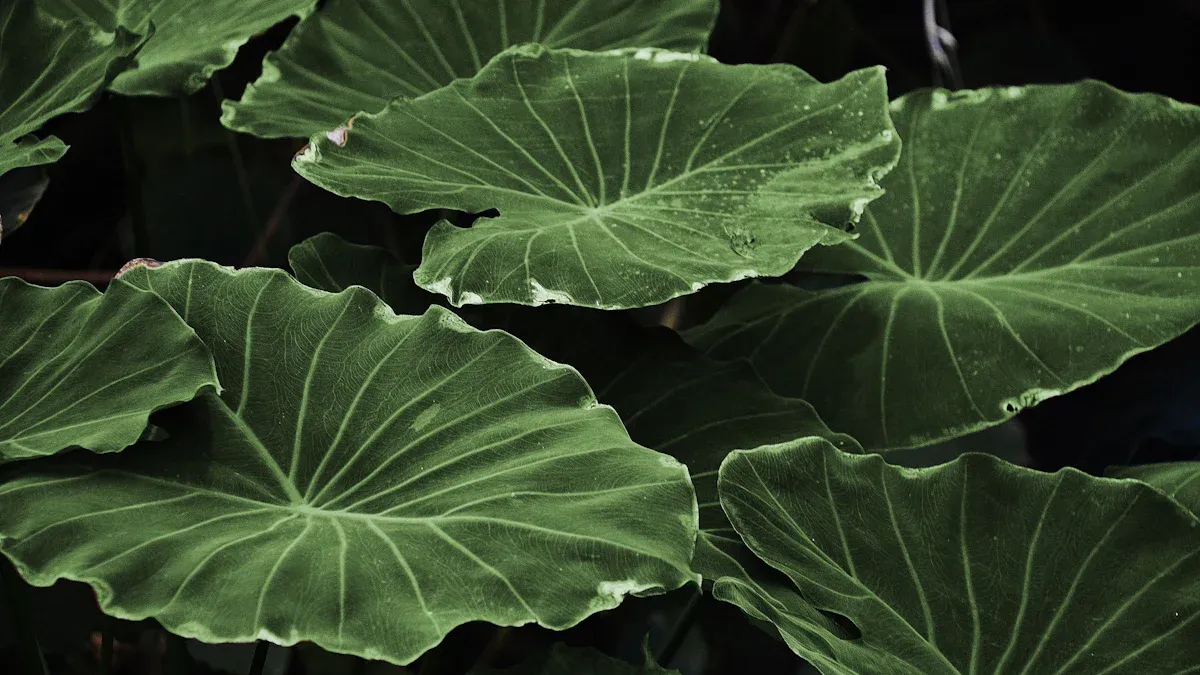
The Colocasia genus captivates plant enthusiasts with its stunning beauty and diverse varieties. With an estimated 14 species worldwide, these plants have gained popularity due to their ornamental value and adaptability. You may recognize Colocasia esculenta, commonly known as Taro, which has been cultivated for over 10,000 years. Understanding the unique characteristics of different colocasia plants helps you provide the best care and make informed selections for your garden or home.
Key Takeaways
Colocasia plants, known for their large, heart-shaped leaves, thrive in wet environments and can reach heights of 2 to 10 feet, making them stunning additions to gardens.
Different varieties like Colocasia esculenta (Taro) and Colocasia ‘Black Magic’ offer unique colors and shapes, allowing you to choose based on your garden’s aesthetic.
Proper care includes providing bright, indirect light, keeping the soil consistently moist, and maintaining high humidity levels to ensure healthy growth.
Colocasia plants serve culinary purposes, especially Taro, which is a vital food source, while also enhancing biodiversity and attracting pollinators in your garden.
Avoid common mistakes like overwatering and low humidity to keep your Colocasia plants thriving and beautiful throughout the seasons.
Overview of Colocasia Plants

What are Colocasia?
Colocasia, commonly known as elephant ears, belongs to the Araceae family. These plants are easily recognizable due to their large, heart-shaped leaves with prominent veins. They grow from underground corms or tubers and can reach impressive heights, often between two to six feet. The flowers are relatively inconspicuous, consisting of a spadix enclosed by a spathe, typically white or yellowish. Colocasia plants thrive in wet environments and can tolerate waterlogged soil.
Here are some notable characteristics that distinguish colocasia plants from other aroids:
Characteristic | Colocasia | Other Aroids (Alocasia, Caladium) |
|---|---|---|
Hardiness | Hardiest of the three | Varies |
Leaf Orientation | Leaves point down | Varies |
Stem Attachment | Attached to the center of the leaf | Varies |
Edibility | Food crop (taro) | Not a food crop |
Leaf Size | Can grow to three feet | Varies |
Plant Height | Two to six feet | Varies |
Foliage Color | Predominantly green with variations | Varies |
Flower Color | Subtle yellow | Varies |
Common Uses of Colocasia
Colocasia plants serve multiple purposes in gardening and agriculture. Here are some common uses:
Culinary Uses: Colocasia has been cultivated for over 28,000 years, primarily in equatorial regions. It serves as a vital food source, especially Colocasia esculenta, known for its edible corms and leaves. You can prepare the corms by boiling, steaming, or frying. The leaves are also edible when cooked and are used in dishes like curries and stews.
Ornamental Value: These plants are valued for their ornamental qualities. Their large, attractive leaves make them popular in garden design. You can create stunning landscapes by incorporating colocasia plants into your garden.
Ecological Benefits: Colocasia plants contribute to biodiversity and ecosystem health. They attract pollinators, provide shelter for wildlife, and improve soil health. Their root systems enhance soil structure, supporting other plants and overall garden vitality.
By understanding the unique characteristics and uses of colocasia plants, you can make informed decisions about incorporating them into your garden or culinary practices.
Different Types of Colocasia Varieties
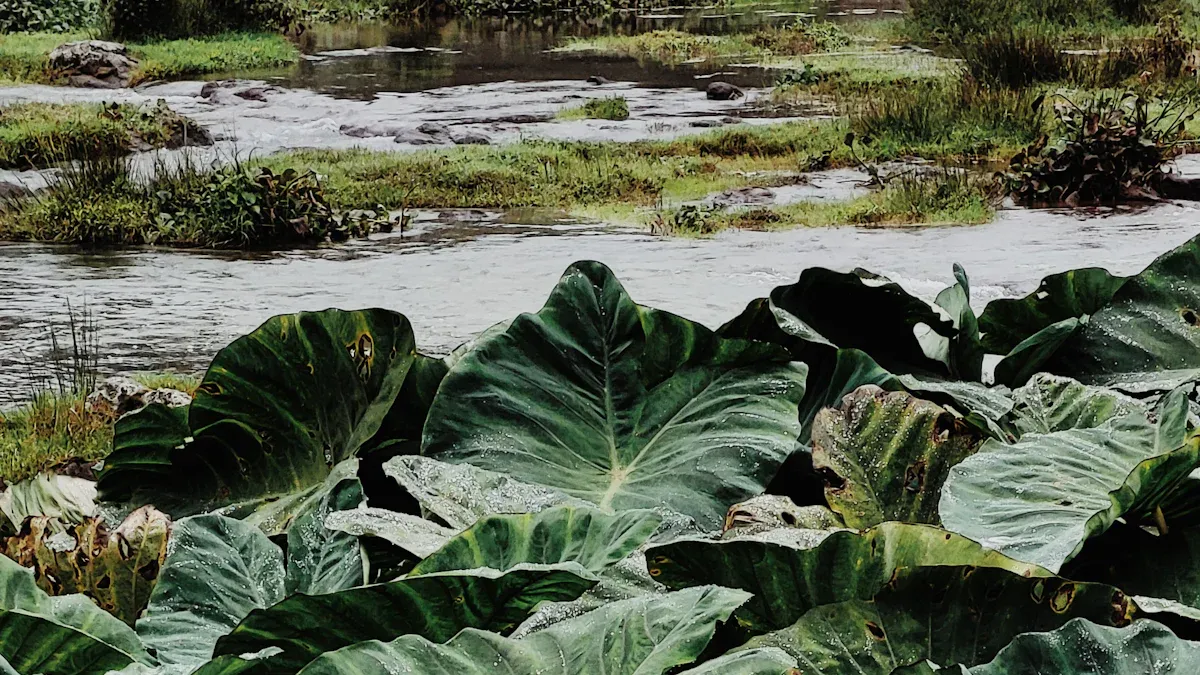
Colocasia plants come in various unique varieties, each with its own distinct features and care requirements. Here are some of the most popular and lesser-known types you might consider for your garden.
Colocasia esculenta
Colocasia esculenta, commonly known as Taro, is the most recognized variety. It features large, heart-shaped leaves that can grow up to three feet wide. This variety thrives in moist soil and can tolerate standing water, making it ideal for bog gardens.
Care Tips:
Light: Prefers full sun to partial shade.
Water: Keep the soil consistently moist.
Soil: Use rich, well-draining soil.
This variety is not only beautiful but also serves as a vital food source in many cultures.
Colocasia ‘Black Magic’
Colocasia ‘Black Magic’ stands out with its striking smoky purplish-black leaves. These leaves can sometimes shift to green with black veins under certain conditions. This variety grows up to 3-6 feet tall and wide, with drooping leaves that create a dramatic effect in any garden.
Feature | Description |
|---|---|
Leaf Color | Smoky purplish-black leaves that can change to green with black veins. |
Growth Habit | Grows up to 3-6 ft tall and wide, with drooping leaves. |
Ideal Conditions | Prefers filtered sun or part shade in moist to wet soils. |
Care Tips:
Water: Requires regular watering; can be planted in standing water.
Fertilizer: Fertilize regularly during the growing season.
Colocasia ‘Mojito’
Colocasia ‘Mojito’ is known for its medium green leaves adorned with dark purple flecks. This variety adds a refreshing touch to your garden.
Care Tips:
Light: Prefers bright, indirect light; avoid direct sunlight to prevent leaf scorch.
Water: Keep moist but not waterlogged; ensure well-draining soil.
Soil: Requires rich, well-draining soil; a mix of potting soil and sand is ideal.
Colocasia ‘Royal Hawaiian White Lava’
This variety is famous for its dramatic white-cream flows that resemble lava down the centers of its green leaves. The purple splotches at the leaf attachment add to its unique appearance.
Care Tips:
Light: Thrives in bright, indirect light.
Water: Keep the soil consistently moist.
Soil: Use a rich, organic potting mix.
Colocasia ‘Thailand Giant’
As the name suggests, Colocasia ‘Thailand Giant’ is one of the largest varieties, reaching heights of 6-10 feet. Its leaves can grow up to 4-6 feet long, making it a stunning focal point in any landscape.
Feature | Colocasia ‘Thailand Giant’ | Other Colocasia Varieties |
|---|---|---|
Height | 6-10 ft (180-300 cm) | Varies, generally smaller |
Leaf Size | Up to 4-6 ft long | Generally smaller leaves |
Environmental Needs | High humidity, moist soil | Varies, often less water |
Care Tips:
Water: Requires consistently moist soil.
Humidity: Thrives in high humidity environments.
Colocasia affinis
Colocasia affinis, also known as warf taro or mini elephant ear, is a compact variety that adapts well to humid conditions. It features striking leaf patterns and is perfect for smaller spaces.
Trait | Description |
|---|---|
Common Name | warf taro or mini elephant ear |
Origin | Tropical Asia |
Features | Compact size, striking leaf patterns, and adaptability to humid conditions |
Care Tips:
Light: Prefers bright, indirect light.
Watering & Humidity: Keep soil consistently moist; high humidity is beneficial.
Soil: Use a rich, well-draining potting mix.
By exploring these different types of colocasia, you can find the perfect variety that suits your gardening style and environment. Each variety offers unique beauty and benefits, making them a fantastic addition to your plant collection.
Unique Characteristics of Colocasia
Leaf Shape and Color
Colocasia plants showcase a stunning variety of leaf shapes and colors. You can find leaves ranging from rich emerald green to deep black, brown, and even chartreuse gold. Here are some notable features:
Leaf Shapes:
Arrow-head shaped or roundish with pointed tips.
Some varieties have lobed bases, adding to their unique appearance.
Color Variations:
Variegated cultivars display splotches or flecks of color, often in unpredictable combinations.
Solid purple and black leaves create bold contrasts in gardens.
The surfaces of the leaves may be smooth, puckered, or cupped. Some cultivars even feature reflexed edges. The petioles, or leaf stems, can be black, purple, or burgundy, sometimes streaked with multiple colors. These characteristics enhance the ornamental value of colocasia plants, making them a favorite among gardeners.
Growth Habit and Size
Colocasia varieties exhibit diverse growth habits and sizes, which can significantly impact your garden design. You can categorize them into three main types:
Dwarf Varieties:
These plants grow under 2 feet tall. They work well for mass planting or as accents in smaller spaces.
Mid-Sized Varieties:
Varieties like Colocasia esculenta typically range from 2.5 to 5 feet tall. They offer a variety of colors and leaf shapes, adding depth to your garden.
Giant Types:
These impressive plants exceed 5 feet tall and feature large leaves. They serve as stunning specimen plants or make bold statements in landscaping.
Understanding these unique characteristics of colocasia helps you choose the right varieties for your garden. Whether you prefer the dramatic foliage of giant types or the compact nature of dwarf varieties, colocasia plants can enhance any landscape.
Care for Colocasia Plants
Light and Temperature Needs
Colocasia plants thrive when you provide them with the right light and temperature conditions. Here are some essential tips to ensure your plants flourish:
Light Requirements:
Colocasia plants prefer bright, indirect light. Filtered sunlight or partial shade works best.
Avoid exposing them to direct sunlight for extended periods, as this can scorch their leaves.
Temperature Preferences:
The optimal temperature range for Colocasia is between 65°F and 85°F (18°C to 29°C).
Keep your plants away from temperatures below 50°F (10°C) to prevent damage.
By meeting these light and temperature needs, you can promote healthy growth in your Colocasia plants.
Watering and Humidity
Watering and humidity play crucial roles in the health of your Colocasia plants. Here’s how to manage these factors effectively:
Watering Guidelines:
Water your Colocasia only when the top inch of soil feels dry. This helps prevent root rot.
During the growing season (spring to early fall), water deeply at the base of the plant. Ensure pots have drainage holes to avoid water pooling.
In winter, reduce watering frequency, allowing the top few inches of soil to dry out.
Humidity Levels:
Colocasia plants thrive in high humidity. Aim for humidity levels around 60% or higher.
Regular misting or using a humidifier can help maintain adequate humidity, especially in dry environments.
By following these watering and humidity guidelines, you can keep your Colocasia plants healthy and vibrant.
Soil and Fertilization
The right soil and fertilization practices are vital for the growth and quality of your Colocasia plants. Here’s what you need to know:
Soil Requirements:
Use well-draining soil rich in organic matter. A peat-based mix with perlite or vermiculite works well.
Aim for a soil pH between 5.5 and 7.0 for optimal growth.
Fertilization Schedule:
Apply a balanced fertilizer with an N-P-K ratio of 10-10-10 every 4-6 weeks during the growing season.
Consider using high-nitrogen fertilizers (20-10-10) to boost leaf growth, especially when the plant is actively growing.
Fertilizer Type | N-P-K Ratio | Benefits | Application |
|---|---|---|---|
Balanced Fertilizer | 10-10-10 or 20-20-20 | Supports overall plant health and growth. | Ideal for maintaining general health and encouraging uniform growth. |
High-Nitrogen Fertilizer | 20-10-10 | Boosts leaf growth, resulting in larger, more vibrant foliage. | Best used during the peak growing season when the plant is actively growing. |
Organic Fertilizer | N/A | Provides slow release of nutrients and improves soil structure. | Ideal for sustainable gardening. |
Water-Soluble Fertilizer | N/A | Quick nutrient uptake, easy to apply. | Perfect for regular feeding throughout the growing season. |
By ensuring proper soil and fertilization, you can maximize the growth and foliage quality of your Colocasia plants.
Common Mistakes to Avoid
To keep your Colocasia plants thriving, avoid these common mistakes:
Never allow your plants to fully dry out. This can lead to irreversible damage to the leaves.
Use planters with drainage to prevent root issues from excess water pooling.
Monitor humidity levels closely. Average household humidity may not suffice, so consider using humidifiers or terrariums.
By being mindful of these care tips, you can enjoy the beauty and benefits of your Colocasia plants for years to come.
In summary, colocasia plants offer a stunning variety of shapes, colors, and sizes. You can find options that suit any garden or indoor space. Here are some key care aspects to remember:
Care Aspect | Details |
|---|---|
Light Requirements | Thrive in bright, indirect light; avoid direct sunlight to prevent leaf scorching. |
Watering | Keep soil consistently moist; avoid overwatering to prevent root rot. |
Temperature | Prefer warm conditions (65°F to 85°F); protect from temperatures below 50°F. |
Humidity | Enjoy high humidity; mist leaves or use a humidifier to maintain moisture levels. |
Soil | Require well-draining, organic-rich soil; a mix of peat moss, perlite, and compost is ideal. |
Maintenance | Prune occasionally to control size; inspect for pests regularly. |
Adding colocasia to your collection enhances visual appeal and provides culinary benefits. Explore the unique varieties available and enjoy the beauty they bring to your home or garden.
FAQ
What is the best way to propagate Colocasia plants?
You can propagate Colocasia plants by dividing the corms. Wait until spring, then carefully separate the corms and replant them in moist soil. Ensure each division has at least one healthy leaf.
How often should I water my Colocasia?
Water your Colocasia plants when the top inch of soil feels dry. During the growing season, keep the soil consistently moist. In winter, reduce watering frequency to prevent root rot.
Can Colocasia plants grow indoors?
Yes, Colocasia plants can thrive indoors. Place them in bright, indirect light and maintain high humidity. Use a well-draining potting mix to ensure healthy growth.
Are Colocasia plants toxic to pets?
Yes, Colocasia plants are toxic to pets. They contain calcium oxalate crystals, which can cause irritation and discomfort if ingested. Keep these plants out of reach of curious pets.
How do I care for Colocasia during winter?
In winter, reduce watering and keep your Colocasia in a warm area. If temperatures drop below 50°F (10°C), consider bringing them indoors. Monitor humidity levels to prevent stress on the plant.