Low water pressure doesn’t have to mean dry spots and a patchy lawn. With the right sprinkler heads, low pressure can still push water to every corner of your yard.
I’ve researched five options that actually work with weaker flow and still give surprisingly even coverage. From wobblers to pressure-regulated pop-ups, these heads keep the water low, slow, and right where your plants need it.
| Low Flow Wobbler Sprinkler 35–40ft 1/2″ MPT |

| Best for Low Flow | Pressure compatibility: Operates at 15–35 psi (low-flow design) | Coverage / spray radius: 35.6–40 ft diameter (depends on flow) | Adjustable pattern / direction: Rotary off-center action (covers area via rotation) | VIEW LATEST PRICE | Read Our Analysis |
| Rocky Mountain Goods Plastic Circle Ring Sprinkler (30ft) |
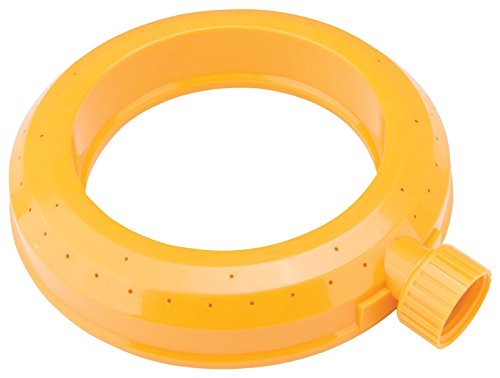
| Budget-Friendly Pick | Pressure compatibility: Works with high and low water pressure systems | Coverage / spray radius: Up to 30 ft diameter | Adjustable pattern / direction: Fixed spray style (consistent, non-adjustable pattern) | VIEW LATEST PRICE | Read Our Analysis |
| Rain Bird 1804HEVNPR Pressure-Regulated Pop-Up Sprinkler |

| Best for Variable Pressure | Pressure compatibility: Pressure-regulated to maintain 30 psi (for fluctuating/low pressures) | Coverage / spray radius: 12–15 ft radius (spray distance) | Adjustable pattern / direction: Adjustable pattern 0°–360° | VIEW LATEST PRICE | Read Our Analysis |
| Orbit 4-inch Pressure-Regulating Pop-Up Spray Sprinkler |

| Best Smart-Compatible | Pressure compatibility: Factory-set pressure regulator at 30 PSI (adjustable up to 40 PSI) | Coverage / spray radius: Suitable spacing up to 15 ft between heads (radius ~15 ft) | Adjustable pattern / direction: Half-spray model with radius adjustment screw and ratcheting stem | VIEW LATEST PRICE | Read Our Analysis |
| Rain Bird 1802AP4PRS Pressure-Regulating Pop-Up Sprinkler |

| Best Water-Saving Pick | Pressure compatibility: Built-in regulator maintains constant 30 psi | Coverage / spray radius: 3–4 ft spray distance | Adjustable pattern / direction: Adjustable pattern 0°–360° | VIEW LATEST PRICE | Read Our Analysis |
More Details on Our Top Picks
Low Flow Wobbler Sprinkler 35–40ft 1/2″ MPT
Should you need a reliable sprinkler that works well on low-pressure systems, the Low Flow Wobbler Sprinkler is a strong choice you’ll appreciate. You’ll like its 1/2″ male pipe thread that fits standard fittings, so installation is easy and fast. You’ll notice smooth rotation from its off-center rotary action and counterbalanced design, which helps even coverage across 35 to 40 feet. Made of engineering grade thermoplastic with no metal parts, it won’t rust and stays durable. It runs at 15 to 35 psi and uses a 1/8″ nozzle, giving steady low-flow performance for careful, water-smart irrigation.
- Pressure compatibility:Operates at 15–35 psi (low-flow design)
- Coverage / spray radius:35.6–40 ft diameter (depends on flow)
- Adjustable pattern / direction:Rotary off-center action (covers area via rotation)
- Pop-up / mounting style:In-line wobbler (1/2″ MPT threaded fitting)
- Anti-clog / debris protection:1/8″ nozzle (larger orifice reduces clog risk; thermoplastic construction resists corrosion)
- Construction material / corrosion resistance:Engineering-grade thermoplastic, no metal parts, corrosion resistant
- Additional Feature:Off-center rotary action
- Additional Feature:Counterbalanced smooth rotation
- Additional Feature:1/8″ fixed nozzle
Rocky Mountain Goods Plastic Circle Ring Sprinkler (30ft)
In case you’ve got a small lawn, garden bed, or a shady corner that gets low water pressure, the Rocky Mountain Goods Plastic Circle Ring Sprinkler is a smart, no-fuss choice that makes watering simple and reliable. You’ll like its high-impact plastic that stands up to sun and rain, so it lasts season after season. It sprays a steady fixed pattern out to 30 feet, so you water evenly without fuss. It works well with low or high pressure, so you won’t need special gear. The bright yellow ring is easy to spot, move, and place where you need it.
- Pressure compatibility:Works with high and low water pressure systems
- Coverage / spray radius:Up to 30 ft diameter
- Adjustable pattern / direction:Fixed spray style (consistent, non-adjustable pattern)
- Pop-up / mounting style:Ground-mounted plastic circle ring sprinkler (non pop-up)
- Anti-clog / debris protection:High-impact plastic construction (durable, tolerates outdoor debris/conditions)
- Construction material / corrosion resistance:High-impact plastic, weather-resistant
- Additional Feature:High-impact plastic body
- Additional Feature:Bright yellow visibility
- Additional Feature:Fixed circular pattern
Rain Bird 1804HEVNPR Pressure-Regulated Pop-Up Sprinkler
In case you want a sprinkler that keeps water use low while still providing steady, reliable coverage, the Rain Bird 1804HEVNPR is a great pick because it regulates pressure at the nozzle to maintain a constant 30 psi. You’ll like how the patented PRS stops misting and fogging, so more water reaches roots and less drifts away. The High Efficiency nozzle makes larger droplets and can save up to 40 percent versus other adjustable heads. You can adjust pattern and distance, handle slopes and wind, and rely on the SAM check valve to prevent puddles and erosion.
- Pressure compatibility:Pressure-regulated to maintain 30 psi (for fluctuating/low pressures)
- Coverage / spray radius:12–15 ft radius (spray distance)
- Adjustable pattern / direction:Adjustable pattern 0°–360°
- Pop-up / mounting style:4″ pop-up spray head (with 4″ pop-up height)
- Anti-clog / debris protection:Tapered pop-up neck helps remove debris during retraction; robust nozzle design reduces misting
- Construction material / corrosion resistance:Professional-grade plastic with pressure-regulated components (designed for durability)
- Additional Feature:Patented PRS regulator
- Additional Feature:Seal-A-Matic check valve
- Additional Feature:4″ tapered pop-up neck
Orbit 4-inch Pressure-Regulating Pop-Up Spray Sprinkler
In case you’ve got low water pressure but still want reliable, even watering, the Orbit 4-inch Pressure-Regulating Pop-Up Spray Sprinkler is a smart pick for your yard. You’ll like that it handles up to 15 ft spacing, giving steady coverage without wasting water. It ships with a brass nozzle and a filter so clogs and uneven spray are less likely. The built-in regulator holds at 30 PSI and you can tweak it up to 40 PSI provided needed. Durable parts like a stainless spring, silt trap, and ratcheting stem mean fewer repairs. It also links to B-hyve controllers for smarter schedules.
- Pressure compatibility:Factory-set pressure regulator at 30 PSI (adjustable up to 40 PSI)
- Coverage / spray radius:Suitable spacing up to 15 ft between heads (radius ~15 ft)
- Adjustable pattern / direction:Half-spray model with radius adjustment screw and ratcheting stem
- Pop-up / mounting style:4″ (4-inch) pop-up spray head
- Anti-clog / debris protection:Includes filter and gravity-activated silt trap to reduce nozzle clogging
- Construction material / corrosion resistance:Plastic body with stainless-steel riser spring and over-molded seals (corrosion-resistant components)
- Additional Feature:Pre-installed brass nozzle
- Additional Feature:Gravity-activated silt trap
- Additional Feature:Ratcheting riser stem
Rain Bird 1802AP4PRS Pressure-Regulating Pop-Up Sprinkler
You’ll appreciate how the Rain Bird 1802AP4PRS puts reliable pressure regulation foremost, making it a great pick whenever low water pressure or windy conditions threaten your lawn’s health. You’ll notice the built-in regulator holds 30 psi, cutting mist and over-spray so you save up to half your water. The adjustable 0° to 360° pattern and 3 to 4 foot distance let you shape coverage for odd corners. A tapered neck and stainless spring keep debris out and guarantee it retracts flush. The co-molded wiper seal stops leaks and enhances lifespan, so you’ll trust it long term.
- Pressure compatibility:Built-in regulator maintains constant 30 psi
- Coverage / spray radius:3–4 ft spray distance
- Adjustable pattern / direction:Adjustable pattern 0°–360°
- Pop-up / mounting style:2″ pop-up spray head
- Anti-clog / debris protection:Tapered pop-up neck and co-molded wiper seal reduce leakage and debris issues
- Construction material / corrosion resistance:Heavy-duty stainless-steel spring and co-molded seals (commercial-grade, corrosion-resistant)
- Additional Feature:Built-in 30 psi regulator
- Additional Feature:2″ pop-up height
- Additional Feature:Patented co-molded wiper seal
Factors to Consider When Choosing Sprinkler for Low Pressure
Whenever I pick a sprinkler for low pressure, I initially check the operating pressure range so the unit will perform reliably with my water supply. I also consider flow rate needs and nozzle size selection because they control coverage and water use, and I look for spray pattern efficiency and pressure regulation features to keep distribution even. These factors work together, so comprehension of one helps you choose the right combination for steady, efficient irrigation.
Operating Pressure Range
Although low pressure systems can still water a yard well, I know it feels frustrating whenever sprinklers mist, stall, or give patchy coverage, so I want to help you pick heads that match your system. I always check a sprinkler’s minimum and recommended operating pressure in psi. Many low flow rotors and wobbler heads work well from about 15 to 35 psi, while some pop ups need around 30 psi to run smoothly. Should your system often sits under 30 psi, choose heads with a low minimum to avoid misting and poor rotation. Watch how spray diameter and uniformity shrink at lower psi. Also consider built in regulators or external pressure regulators whenever supply pressure changes a lot, and verify the acceptable min and max to prevent damage.
Flow Rate Needs
Now that we’ve looked at how pressure affects head performance, let’s talk about flow and how much water you actually have to work with. I initially calculate the total available flow in GPM from my source. Then I size zones so each sprinkler’s GPM at low pressure never exceeds that total. I match nozzle flow to the system through choosing heads that deliver needed GPM at my operating pressure. Many low-flow rotors run about 1.6 to 2.6 GPM at 15 to 35 psi, and I use lower-GPM emitters or fewer nozzles per zone whenever supply is tight. I also balance nozzle orifice size with radius so coverage stays useful. Ultimately I leave a margin for plant growth or added zones to keep performance steady.
Spray Pattern Efficiency
I want you to get the most water to your plants even while pressure is low, so I focus on spray pattern efficiency initially. I pick heads that make larger droplets and coarse sprays so wind and mist don’t steal water. I match patterns to bed shapes, using sector, half, or full circle settings to cut overlap and wasted run time. I like low flow rotary and wobbling emitters because they keep turning and spread water wider at low GPMs. I choose adjustable-pattern heads that go from 0° to 360° so I can fine tune arcs whenever radius shrinks with low pressure. I always test the actual spray diameter at my operating pressure to avoid dry spots and excessive overlap.
Nozzle Size Selection
Pick a nozzle that actually works at the low pressure you have, not one that looks good on paper. I know it’s frustrating whenever sprays fall short, so I suggest choosing larger orifice nozzles that deliver higher GPM at your pressure. At 15 to 35 psi, match nozzle flow to your system curve and pick models rated to hit needed GPM near the low end. Also favor nozzles that form larger droplets to cut wind drift and waste. Whenever available, choose pressure compensating options to keep flow steady during supply dips. Finally balance nozzle sizes across the zone so total flow stays within supply limits, avoiding extra pressure drop and patchy coverage. I’ll help you test and tune them.
Pressure Regulation Features
Because low inlet pressure can change from minute to minute, I look initially at the sprinkler’s pressure regulation features to make sure your system stays steady and efficient. I want a regulator that holds output near 30 psi so you avoid misting and keep droplet size uniform. Regulators with a narrow operating range help maintain spray distance and pattern whenever supply pressure bounces. I also prefer built-in check valves paired with regulation to stop low-head drainage and erosion whenever the system is off. Adjustable or factory-set caps around 30 to 40 psi protect nozzles from wear while aiding low-pressure performance. Finally, I always match the regulator rating to expected inlet psi and GPM to prevent cavitation, flow restriction, or loss of coverage.
Build Material Durability
Durability matters whenever you rely on a low-pressure sprinkler system, and I want to help you pick parts that keep working season after season. I look for engineering-grade thermoplastics or high-impact plastics initially because they resist UV, cracking, and wear. Then I check for corrosion-resistant pieces like stainless steel springs or coated components so moisture and mineral water don’t ruin the unit. I also want sealed or co-molded wiper seals and strong springs that still pop up and seal at low pressure. I avoid thin metal parts that bend or corrode and prefer sturdy molded bodies with reinforced risers. Finally, I value integrated filters, silt traps, or debris-shedding necks made from durable materials to cut clogging and extend life.
Installation and Maintenance
When you’re fitting a low-pressure sprinkler system, I want you to feel confident about each choice because proper installation and steady maintenance make the system reliable for years. I check thread and fitting types first so parts match your pipes, like 1/2″ MPT, which prevents leaks and saves time. Next I add pressure regulators or pick heads with built-in regulators to keep about 30 psi, so sprays stay strong and avoid misting. I select pop-up heights of 2 to 4 inches so risers retract flush with turf and stay tidy. I install filters and a sediment trap if water is gritty to stop nozzle clogs. Each season I inspect seals, riser springs, and nozzles, replacing worn parts to keep patterns even.