Self-watering vertical planters save time and keep plants consistently hydrated with built-in reservoirs and overflow protection.
These five top picks combine sturdy construction, smart refill points, and good aeration for healthier roots.
Options include wall-mounted pots for succulents, modular herb tiers, stackable mobile towers, clear water gauges, and durable racks for larger displays.
Read on to find the style and features that match your space and watering routine.
| ORIMERC 6-Pack Self-Watering Wall Hanging Planter Pots |

| Best for Small Spaces | Self-watering: Double-layer reservoir with cotton rope wick (self-wicking) | Vertical/Stackable or Wall-mounted use: Wall/window hanging (semicircular wall planters) | Indoor/outdoor suitability: Indoor and outdoor (kitchen, patio, balcony, etc.) | VIEW LATEST PRICE | Read Our Analysis |
| DUNCHATY 7-Tier Stackable Self-Watering Planter with Wheels |

| Best for Maximum Yield | Self-watering: Reservoir beneath soil-holding board (self-watering) | Vertical/Stackable or Wall-mounted use: Stackable 7-tier vertical planter (floor-standing with wheels) | Indoor/outdoor suitability: Indoor and outdoor use | VIEW LATEST PRICE | Read Our Analysis |
| DUNCHATY 5-Tier Stackable Self-Watering Planter with Wheels |

| Compact Vertical Solution | Self-watering: Reservoir beneath soil-holding board (self-watering) | Vertical/Stackable or Wall-mounted use: Stackable 5-tier vertical planter (floor-standing with wheels) | Indoor/outdoor suitability: Indoor and outdoor use | VIEW LATEST PRICE | Read Our Analysis |
| Nature’s 5-Tier Self-Watering Stackable Garden Planter |

| Most Reliable Design | Self-watering: Patented self-watering grids that regulate moisture | Vertical/Stackable or Wall-mounted use: 5-tier stackable vertical planter (stacking trays) | Indoor/outdoor suitability: Indoor and outdoor use (weather resistant, UV protection) | VIEW LATEST PRICE | Read Our Analysis |
| Self-Watering Wall Planter with 4 Pots (White) |
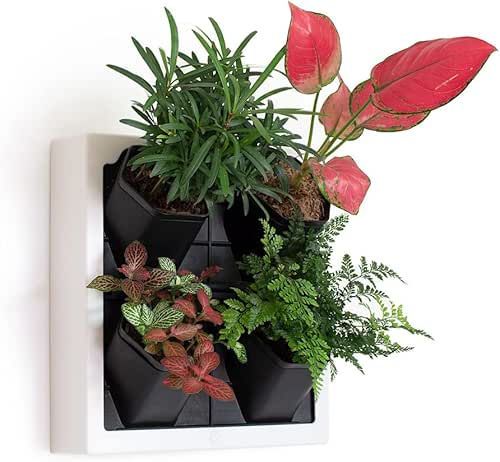
| Best for Living Walls | Self-watering: Built-in 1 L reservoir with water gauge (self-watering) | Vertical/Stackable or Wall-mounted use: Wall-mounted vertical planter (4-pot living wall unit) | Indoor/outdoor suitability: Indoor and outdoor use (weather resistant) | VIEW LATEST PRICE | Read Our Analysis |
More Details on Our Top Picks
ORIMERC 6-Pack Self-Watering Wall Hanging Planter Pots
Should you want a simple, space-saving way to keep herbs, succulents, or small houseplants healthy with less fuss, the ORIMERC 6-Pack self-watering wall hanging planters are a great fit for you. You’ll appreciate the double-layer design that stores extra water in a bottom reservoir, and the cotton wick gently draws moisture to roots so you don’t worry about daily watering. The white, polished semicircular pots mount on walls, windows, rails, or tabletops, and come with hooks and screws for easy setup. They’re lightweight, UV resistant, and hold about a liter each, perfect for kitchen herbs and small greens.
- Self-watering:Double-layer reservoir with cotton rope wick (self-wicking)
- Vertical/Stackable or Wall-mounted use:Wall/window hanging (semicircular wall planters)
- Indoor/outdoor suitability:Indoor and outdoor (kitchen, patio, balcony, etc.)
- Designed for small plants (herbs/succulents/vegetables):Suited to succulents, cacti, orchids, herbs, leafy greens
- Lightweight plastic construction:Durable resin/plastic (UV resistant)
- Multiple-piece or multi-tier configuration:6-piece pack (six individual hanging pots)
- Additional Feature:Removable inner planting baskets
- Additional Feature:Included mounting hardware
- Additional Feature:Cotton rope wick included
DUNCHATY 7-Tier Stackable Self-Watering Planter with Wheels
Should you want an easy, space-saving garden that you can roll around to catch the sun, the DUNCHATY 7-Tier Stackable Self-Watering Planter with Wheels is a smart pick you’ll come to rely on. You’ll move it easily on four strong wheels, so plants follow sunlight without heavy lifting. Each tier holds soil on a board that lets water drain down while air reaches roots, and small reservoirs keep moisture steady below the soil. Drainage holes prevent overwatering. You can stack extra tiers to grow more herbs, strawberries, succulents, or veggies, indoors or outside, in pine green style.
- Self-watering:Reservoir beneath soil-holding board (self-watering)
- Vertical/Stackable or Wall-mounted use:Stackable 7-tier vertical planter (floor-standing with wheels)
- Indoor/outdoor suitability:Indoor and outdoor use
- Designed for small plants (herbs/succulents/vegetables):Suited to strawberries, herbs, vegetables, succulents
- Lightweight plastic construction:Plastic (pine-green finish; polyethylene implied)
- Multiple-piece or multi-tier configuration:7-tier stack (single unit with optional extra tiers)
- Additional Feature:Four heavy-duty wheels
- Additional Feature:Stackable extra tiers
- Additional Feature:Pine green finish
DUNCHATY 5-Tier Stackable Self-Watering Planter with Wheels
In case you want a compact, hands-off garden that moves with you, the DUNCHATY 5-Tier Stackable Self-Watering Planter is a great fit. You’ll love how the five stackable tiers let you customize height and plant mix. Each tier has a soil-holding board and drainage holes so water moves down and roots breathe. A small reservoir keeps soil moist without daily fuss, and the included tools and tray make setup easy. The four heavy-duty wheels mean you can move herbs or succulents for light or shelter. It’s lightweight, modern, and built for small spaces both inside and outside.
- Self-watering:Reservoir beneath soil-holding board (self-watering)
- Vertical/Stackable or Wall-mounted use:Stackable 5-tier vertical planter (floor-standing with wheels)
- Indoor/outdoor suitability:Indoor and outdoor use
- Designed for small plants (herbs/succulents/vegetables):Suited to herbs, vegetables, succulents, small plants
- Lightweight plastic construction:Polyethylene (PE)
- Multiple-piece or multi-tier configuration:5-tier single set (additional tiers available)
- Additional Feature:Tools and tray included
- Additional Feature:Compact 29″ height footprint
- Additional Feature:Agreeable gray color
Nature’s 5-Tier Self-Watering Stackable Garden Planter
Should you live in a small space but want a lush, low-fuss garden, Nature’s 5-Tier Self-Watering Stackable Garden Planter is a great pick for you. You’ll love the clover-shaped tiers that look good from every angle and stack neatly to save floor space. The food-grade, BPA-free polypropylene feels sturdy yet light, so you can move it as necessary. Each tier uses a patented self-watering grid to spread moisture evenly and cut down on overwatering, though you still add water manually. It hangs or sits indoors or outdoors, holds about 15 pounds, and comes with a plant hanger and clear instructions.
- Self-watering:Patented self-watering grids that regulate moisture
- Vertical/Stackable or Wall-mounted use:5-tier stackable vertical planter (stacking trays)
- Indoor/outdoor suitability:Indoor and outdoor use (weather resistant, UV protection)
- Designed for small plants (herbs/succulents/vegetables):Suited to herbs, strawberries, tomatoes, vegetables
- Lightweight plastic construction:Food-grade polypropylene (BPA-free)
- Multiple-piece or multi-tier configuration:5-tier set (five planters & grids)
- Additional Feature:Patented self-watering grids
- Additional Feature:Food-grade BPA-free material
- Additional Feature:Clover-shaped tiers (360° view)
Self-Watering Wall Planter with 4 Pots (White)
In case you want a fuss free way to bring plants onto your walls, the Self Watering Wall Planter with 4 Pots (White) is a great fit for busy plant lovers and small space dwellers. You’ll love how it turns a blank wall into vibrant decor without extra work. The ABS unit holds four small pots and a one liter reservoir so your succulents, herbs, or ferns stay hydrated for over a week. It’s lightweight, weather resistant, and comes ready to hang with nails, sealant, and an optional water gauge. Setup takes under a minute with the video guide.
- Self-watering:Built-in 1 L reservoir with water gauge (self-watering)
- Vertical/Stackable or Wall-mounted use:Wall-mounted vertical planter (4-pot living wall unit)
- Indoor/outdoor suitability:Indoor and outdoor use (weather resistant)
- Designed for small plants (herbs/succulents/vegetables):Suited to succulents, herbs, ferns, small greens
- Lightweight plastic construction:ABS plastic
- Multiple-piece or multi-tier configuration:4-pot single wall unit (four integrated pots)
- Additional Feature:Built-in water gauge
- Additional Feature:Ready-to-use (no assembly)
- Additional Feature:Includes nails and sealant fix
Factors to Consider When Choosing Self-Watering Vertical Planters
When you select a self-watering vertical planter, consider about size and capacity so it fits your space and how many plants you want. Check the water reservoir design and material durability because they affect how long the planter will work and how often you’ll refill or repair it. Also consider mounting and mobility alongside plant compatibility since those factors decide where you can place the planter and what plants will thrive.
Size And Capacity
Because your space, plants, and schedule all matter, picking the right size and capacity for a self-watering vertical planter keeps your garden healthy and your chores light. To start, match reservoir size to how often you want to refill. Small pots hold about 0.5 to 1.1 liters, while larger stacked systems store several liters, so bigger reservoirs give longer gaps between top-ups. Next, check inner pot diameter and depth. Small herbs and succulents like 9.5 to 12.7 cm across, while vegetables need much wider and deeper cavities. Also consider total planted area and how many tiers you want, because 4 to 7 tiers change space and weight. Keep in mind weight when full and choose sturdy materials, wheels, or secure anchors. Assuming you plan to expand, pick modular units that stack predictably.
Water Reservoir Design
For a reliable self-watering vertical planter, start considering about the reservoir as the system’s heartbeat; it controls how often you water and how happy your plants stay. Match reservoir capacity to pot size and plant thirst so succulents in small pots don’t drown and veggies in larger pockets get enough between refills. Choose a separate bottom reservoir with a wick or capillary system since it feeds roots slowly and keeps the soil surface drier, cutting root rot risk. Look for visible water-level indicators and wide-fill openings so you can check and refill without digging. Make sure overflow pathways and extra drainage holes let excess escape. Finally pick reservoirs with tight seals that resist sun and cold to prevent leaks and slimy algae.
Material Durability
Although sunlight and weather can slowly wear down a planter, choosing durable materials makes your self-watering vertical garden feel like a long-term friend rather than a short-lived fling. You’ll want UV-resistant, food-grade plastics like polypropylene or ABS, or powder-coated metals, so sunlight and moisture don’t cause fading or leaching. Also look for non-toxic, BPA-free resin or polyethylene whenever you plan to grow edibles. Check wall thickness and aggregate weight capacity because thicker walls and powder-coated steel hold heavy wet soil without cracking or warping. Prefer materials with freeze–thaw resistance and corrosion protection such as galvanized or powder-coated finishes for outdoor use. Finally inspect sealed seams, reinforced hanging points, and UV-stable finishes since weak joints and untreated fasteners often fail.
Mounting And Mobility
Pick a mounting style that fits your space and strength, and you’ll save frustration later. Decide between wall-mounted, freestanding, railing or tabletop options based on where you want the planter and how much weight the spot can hold. Wall mounts need anchors or studs to bear wet soil, so check your wall before buying. Also consider mobility: built-in wheels, detachable tiers, or lightweight materials let you move plants for sun, cleaning, or storage. Verify hardware types like screws, adhesive hooks, S-hooks or brackets and whether they’ll damage surfaces. Modular or stackable designs let you carry smaller sections instead of one heavy unit, which ties into easy access for refilling reservoirs and pruning without unsafe reaching or dismounting.
Plant Compatibility
Whenever you pick a self-watering vertical planter, consider about the plants initially and the system second so you don’t end up rescuing soggy herbs or thirsty succulents. Reflect on water needs initially. Match reservoir size and wicking action to each species. Succulents want small reservoirs and slow wicking. Herbs and leafy greens need larger reservoirs or steady capillary feed. Then check root space and soil depth. Shallow-rooted herbs need only a few inches, while vegetables need deeper tiers. Look for removable baskets or modular tiers to make swapping and repotting easy. Also match light and microclimate to the planter location so moisture levels suit the plants. These choices work together to keep roots healthy and reduce stress for both you and your plants.
Drainage And Aeration
Good drainage and steady air flow around roots keep your vertical planter from turning into a soggy trap, so look for features that actively move extra water away and let oxygen in. You’ll want multiple drainage holes or an overflow outlet on each tier so excess water can escape the reservoir and roots can breathe. Check for a soil-holding board or mesh that separates the root zone from the water reservoir because that layer helps air exchange and prevents constant wetness. Pick breathable materials or ventilation gaps around planting pockets to avoid anaerobic soil. For stacked systems, make sure drainage paths route excess water away from lower tiers so lower plants do not waterlog. Also consider pot depth and width since shallow, wide pots dry and aerate more quickly than deep, narrow ones.
Maintenance Requirements
Because self-watering planters hold water for days, you’ll need a simple routine to keep them healthy and leak-free. Check and refill the reservoir every 5 to 14 days, since most hold 0.5 to 2 liters and plant needs change with temperature. Every month or three inspect the wick or delivery tube and clean away algae or salt so water keeps moving. Seasonally, every three to six months, flush the reservoir and substrate by saturating and draining to remove mineral buildup and refresh nutrients. Watch roots for crowding and repot or divide plants once roots reach the reservoir, often after 12 to 24 months for fast herbs. Finally, keep overflow, drainage, seals and mounting hardware clear and level to avoid leaks.
Aesthetic And Style
Whenever you pick a self-watering vertical planter, consider it as choosing a piece of lively decor that needs to fit with the rest of your space. Reflect about finish and color initially, since matte, polished, powder-coated, or natural plastic choices set the tone and affect outdoor UV fading. Next, match shapes and silhouettes to walls, railings, or freestanding spots, because semicircular, rectangular, clover-shaped, or tiered stacks guide the eye. Also observe visible hardware and mounting style, like exposed hooks, integrated hangers, or concealed mounts, to keep a clean or industrial look. Pay attention to texture and material, such as smooth resin, polypropylene, ABS, or PE, because tactile finishes signal quality. Finally choose modular units that tile or stack for balanced patterns and consistent spacing.