
Choosing the right plant germination tray often feels stressful, especially at the time tiny seeds and big hopes are involved. A gardener might ponder whether they need deep cells, strong plastic, or humidity lids, and how all those features actually protect fragile roots. Through exploring eight proven tray options together, from compact countertop kits to heavy duty 1020 trays, a grower can match each tray to a specific goal and begin to see which one quietly fits their own growing style best.
Bootstrap Farmer Countertop Seed Starter Kit Bundle
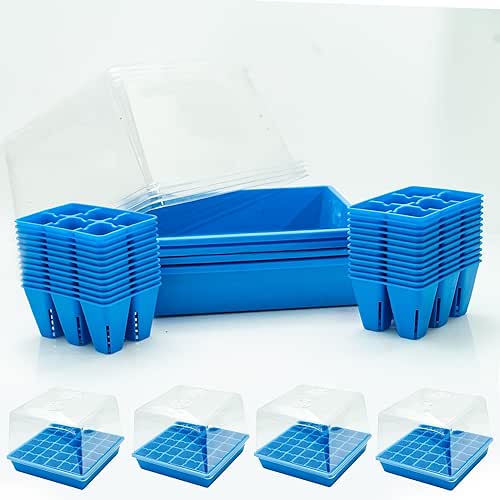

Should you be starting seeds in a small space, the Bootstrap Farmer Countertop Seed Starter Kit Bundle is one of the best choices you can make. You get a reusable 1010 tray, 6-cell inserts, and a clear humidity dome, all made in the USA from food safe plastic. The heavy duty tray feels solid, so it doesn’t bend while it’s full of wet soil.
You’ll notice deep channels that keep roots from sitting in water, plus air pruning slits that guide strong root growth. Large drainage holes make transplanting easy. Afterward, you can scrub the trays clean or place them in the dishwasher.
Best For: Home gardeners with limited countertop space who want a durable, reusable, and efficient seed-starting system for succession planting and small-batch crops.
Pros:
- Heavy-duty, USA-made, food-safe plastic tray and inserts that don’t bend under the weight of wet soil and are designed for long-term reuse.
- Deep channels, air pruning slits, and large drainage holes promote healthy root development and make transplanting easier with less root damage.
- Easy to clean and stackable; trays are dishwasher-safe on an unheated dry cycle for quick turnaround between plantings.
Cons:
- Humidity dome is not dishwasher-safe and must be kept out of direct sunlight, adding a bit of care and handling.
- 1010 tray footprint is optimized for countertops, which may feel too small for gardeners wanting to start large numbers of plants at once.
- Heavier, thick plastic construction may be more expensive upfront compared with flimsy disposable or thin plastic seed trays.
ZeeDix Seed Starter Kit with Trays & Pellets
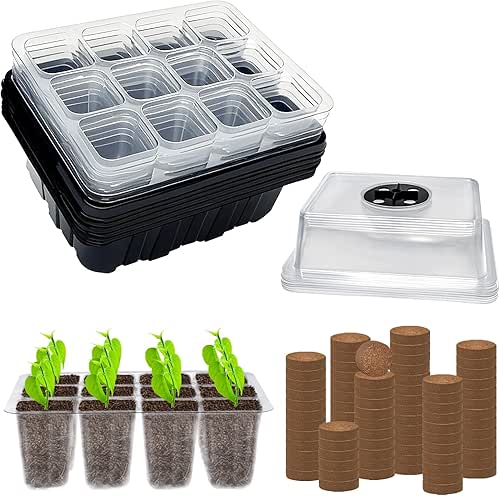
Should you want an easy way to start a lot of strong seedlings in a small space, the ZeeDix Seed Starter Kit with Trays & Pellets gives you a simple, all-in-one setup that feels almost like a tiny greenhouse on your table. You get six trays, each with organized cells, plus 90 coco pellets that hold moisture and air so roots stay happy.
You can start herbs, veggies, and flowers all at once, without roots tangling. The clear dome keeps warmth and humidity steady while drainage grooves stop soggy soil. The BPA-free plastic feels sturdy yet light, cleans easily, stacks well, and stays safe for kids and organic growing.
Best For: Home gardeners and beginners who want an easy, compact, greenhouse-style setup to start many healthy seedlings at once indoors.
Pros:
- All-in-one kit with 6 trays and 90 coco pellets simplifies starting herbs, vegetables, and flowers simultaneously.
- Clear domes and drainage grooves balance humidity and prevent waterlogging for stronger, healthier roots.
- BPA-free, food-grade PP plastic is durable, reusable, easy to clean, and safe for kids and organic gardening.
Cons:
- Fixed cell size may be limiting for larger seedlings that need more root space early on.
- Requires additional grow lights or a bright window for best results, which are not included.
- Plastic trays, while sturdy, can still warp or crack over several seasons if handled roughly.
Legigo 5-Pack Seed Sprouter Trays with Lids
Should you want to grow fresh microgreens or sprouts at home without managing messy soil, the Legigo 5-Pack Seed Sprouter Trays with Lids gives you a simple, low-stress way to start. You get five roomy trays, each about 12.7 by 10.23 inches, so you can experiment with mung beans, wheatgrass, cat grass, lentils, or sunflower seeds at the same time.
Because the trays use food-grade plastic, you don’t worry about rust or strange odors. The clear lid keeps moisture in, while the grid bottom drains excess water and supports roots. Use the germinating paper for tiny seeds, spread them thinly, and keep air flowing to avoid mold.
Best For: People who want an easy, soil-free way to grow fresh microgreens and sprouts at home using multiple trays at once.
Pros:
- Five generously sized, food-grade plastic trays let you grow different seeds simultaneously without worrying about rust or odors
- Clear lids help maintain humidity while allowing light in, and the grid bottoms drain excess water to reduce mold risk
- Includes germinating paper for smaller seeds, making setup simple and minimizing seed loss through the holes
Cons:
- Soil-free method may not suit larger plants or those who prefer traditional potting soil
- Requires attention to seed spacing and ventilation to avoid mold, which may be a learning curve for beginners
- Germinating paper will eventually need to be replaced, adding a small recurring cost
Gardzen 10-Pack 72-Cell Seed Starter Trays
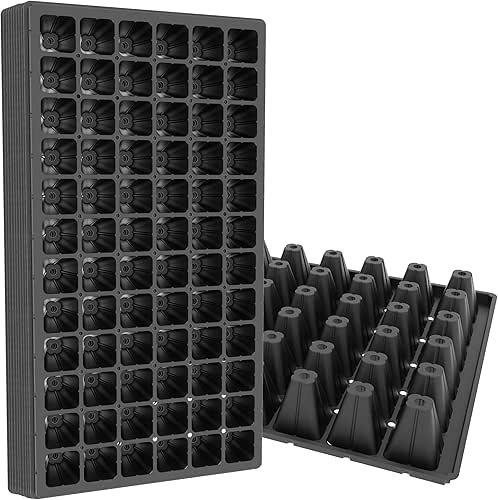
Should you want to start a lot of seedlings at once without ending up with weak, tangled roots, the Gardzen 10-pack 72-cell seed starter trays can feel like a lifesaver. Each tray gives you 72 separate cells, so you can grow broccoli, cabbage, kale, lettuce, or herbs without crowding. This balance helps every seedling get its own space.
Because each cell is 1.75 inches deep, roots can reach down and form a solid root ball. The rigid plastic doesn’t warp, stacks neatly, and the drainage holes work perfectly with standard 1020 drip trays for simple, gentle bottom watering.
Best For: Home gardeners and small-scale growers who want to start many healthy seedlings at once while keeping roots separate and easy to transplant.
Pros:
- 72 individual cells per tray provide ample growing space without crowding or root tangling.
- 1.75″ deep cells support strong taproot and root ball development for healthier transplants.
- Rigid, warp-resistant plastic with drainage holes fits standard 1020 drip trays for easy bottom watering.
Cons:
- Small individual cells may require potting up for larger seedlings before final transplanting.
- Rigid plastic trays may take up more storage space than flexible or collapsible options.
- Does not include matching 1020 drip trays, which must be purchased separately for bottom watering.
Gardzen 5-Set Seed Starter Tray Kits
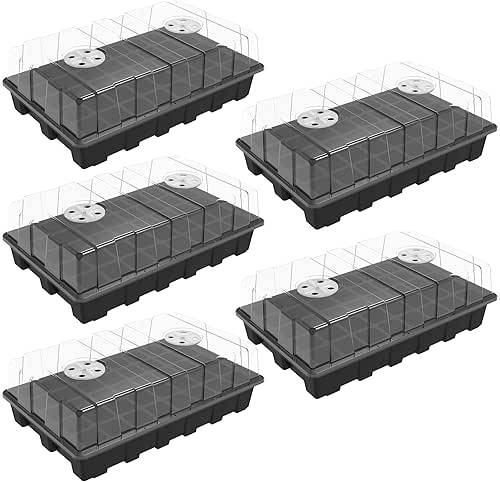
Should you want a starter kit that keeps things simple but still feels solid and “pro,” the Gardzen 5-Set Seed Starter Tray Kit fits that sweet spot. You get 5 trays with 40 cells each, so you can start up to 200 seedlings at once without crowding your space. It feels like a real system, not a flimsy throwaway.
You’ll notice the sturdy plastic initially. It doesn’t bend easily, so you can move trays without fear. The tight dome-and-base fit, plus two adjustable vents, lets you control airflow and moisture while the drain holes prevent soggy soil and root rot.
Best For: Home gardeners who want a sturdy, easy-to-use seed starting system that can handle a large number of seedlings without taking up too much space.
Pros:
- Durable, premium plastic construction that resists bending and feels more “pro” than flimsy disposable trays
- 5 trays with 40 cells each (200 cells total) let you start many seeds at once in an organized, compact setup
- Clear domes with two adjustable vents and drain holes give good control over humidity, airflow, and watering
Cons:
- Plastic material, while sturdy, may still warp or crack over many seasons of heavy use
- Fixed cell size may be too small for larger seedlings that need more root space early on
- Dome-and-tray system adds height, which may be awkward in very low grow lights or cramped shelves
Burpee SuperSeed XL Seed Starting Tray
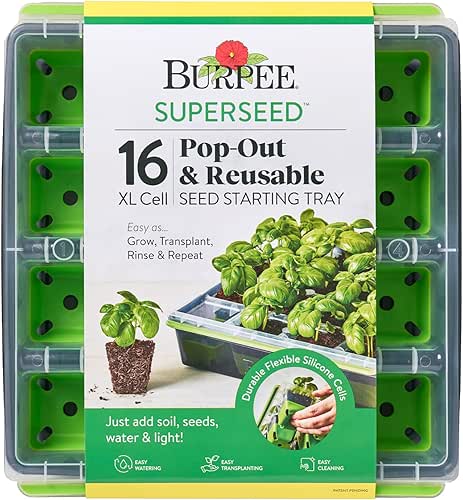
Burpee’s SuperSeed XL Seed Starting Tray is a smart pick should you want bigger, stronger seedlings and you’re tired of flimsy plastic cells that crack or crush roots. You get 16 extra large cells made from soft, food grade silicone, so each seedling has room to build a solid root system. The cells pop out gently, so you don’t tear roots at the moment of transplant.
You simply add seed starting mix, sow peppers or tomatoes at the appropriate weeks before frost, then water. Deep channels catch extra water, corner slots drain it, and side handles help you pour off the rest without spills.
Best For: Gardeners who want to start larger, healthier seedlings indoors and are frustrated with flimsy plastic seed trays that damage roots during transplanting.
Pros:
- 16 extra-large, flexible food-grade silicone cells give seedlings ample room to develop strong root systems
- Easy, gentle “pop-out” transplanting minimizes root damage and shock
- Durable, reusable, and dishwasher safe with smart drainage channels, corner slots, and side handles for clean watering
Cons:
- Only 16 cells per tray, which may be limiting for starting many plants at once
- Higher upfront cost than basic plastic seed-starting trays
- Extra-large cells may be unnecessary for very small or fast-growing seedlings that will be transplanted quickly
VIVOSUN 6-Pack Seed Starter Trays with Dome
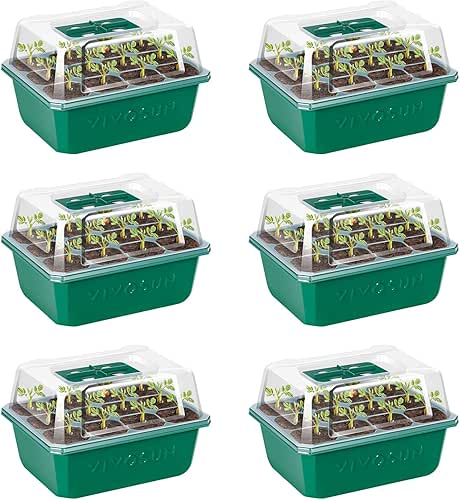
Should you be starting a lot of seeds at once and want more control over their little world, the VIVOSUN 6-Pack Seed Starter Trays with Domes can feel like a big sigh of relief. You get six green base trays, six 12-cell inserts, and six clear domes, so you can start many varieties without feeling cramped.
The clear domes let you see every sprout while adjustable vents help you manage warmth and moisture. Drain holes protect tender roots from soggy soil. You can use seedling blocks or fill the cells directly. They’re sturdy, reusable, work with heating mats, and make transplanting simple instead of stressful.
Best For: Home gardeners or hobby growers who want to start many different seeds at once while closely controlling humidity, temperature, and moisture for healthier seedlings.
Pros:
- Adjustable clear domes with vents offer easy control over humidity and temperature while keeping seedlings visible
- Reusable, sturdy trays with drain holes prevent overwatering and protect roots
- Compatible with heating mats and includes garden tools and labels for a complete starter setup
Cons:
- 12-cell inserts per tray may feel limiting for those wanting more cells per dome
- Plastic construction, while durable, may still crack if handled roughly over time
- Requires separate purchase of soil, seeds, and heating mat for optimal use
10 Pack Heavy Duty 1020 Seed Starting Trays
Serious seed starters who are tired of flimsy, bendy trays will feel a huge sense of relief with this 10 Pack Heavy Duty 1020 Seed Starting Trays. You get a solid tray that actually feels sturdy in your hands. The thick 1.8 mm PS plastic resists twisting, so you can move wet soil and heavy seedlings without fear.
These 10 x 20 trays fit standard 1020 setups, shelves, and heating mats, and the no-hole design keeps water contained. The deeper striped bottom holds moisture longer, supports microgreens, nursery pots, and plug trays, and handles both cold greenhouses and warm grow rooms with ease.
Best For: Serious home gardeners, microgreen growers, and greenhouse users who need durable, rigid 1020 trays that won’t twist or crack under heavy, wet loads.
Pros:
- Heavy-duty 1.8 mm PS plastic resists bending and twisting, even with wet soil and mature seedlings.
- Standard 1020 sizing (no-hole design) fits shelves and heating mats while neatly containing water and mess.
- Deeper concave-convex bottom stripes improve water retention and strengthen the base for microgreens, pots, and plug trays.
Cons:
- No drainage holes may require pairing with insert trays or manual drainage for some setups.
- Heavier and more rigid than flimsy trays, which can be slightly bulkier to store in large quantities.
- Made of PS plastic, which may not appeal to those specifically seeking biodegradable or compostable options.
Factors to Consider When Choosing Plant Germination Trays
Whenever someone chooses a plant germination tray, a few key details quietly decide how strong and healthy the seedlings will become. Tray size and capacity, along with the material, durability, drainage, and aeration, all work together to support tiny roots and tender stems. Simultaneously, good humidity and temperature control, plus easy reusability and cleaning, help turn a simple tray into a reliable tool for starting seeds year after year.
Tray Size and Capacity
Tray size and capacity quietly decide how many healthy seedlings a gardener can raise at one time, so this choice often feels more significant than it initially appears. Whenever someone chooses a larger tray, such as a 72 cell model, they can start many seeds at once. Smaller options, like 36 or 12 cell trays, suit gardeners who want fewer but often larger seedlings.
Each cell usually holds one seedling, so total cell count directly shapes garden plans. At the same time, tray depth matters just as much as width. Deeper cells let roots stretch, build a strong taproot, and handle transplanting with less stress. Standard 1020 trays, measuring 10 x 20 inches, also fit most heat mats and growing setups, making planning easier.
Material and Durability
Material choice quietly shapes how long a germination tray will last and how safe it is for young plants. Whenever someone picks food-grade materials, like polypropylene or other high-quality plastics, they protect tender roots from harsh chemicals that could leach into moist soil. This gives seedlings a cleaner, safer start.
Durability supports that safety over time. A strong tray resists bending, cracking, and warping, even while packed with wet soil. Thick, heavy-duty walls and reinforced bottoms hold more weight without buckling, so handling feels calmer and less stressful. Provided the tray also resists UV rays and corrosion, it can sit in sun and moisture without falling apart. With these features, gardeners can wash and reuse the same trays for many planting seasons.
Drainage and Aeration
Even with the best soil and seeds, poor drainage and weak airflow in a germination tray can quietly undo all that effort. Whenever water cannot escape, it collects around tender roots. Then roots sit in sour, soggy soil and can quickly rot. So, a good tray lets extra water leave, yet still holds enough moisture for steady growth.
Drainage holes or grooves guide water downward so the mix stays damp, not dripping. This balanced moisture helps seeds wake up evenly and reduces stress on new sprouts. At the same time, aeration lets oxygen reach the roots. Trays with side slits or perforations encourage air pruning, where roots stop circling and branch instead. This creates dense, sturdy root systems that transplant with far less shock.
Humidity and Temperature Control
Although light and soil often get most of the attention, humidity and temperature quietly decide whether seeds actually wake up and grow. Whenever someone chooses germination trays, they are really choosing how safe and steady those initial days of life will feel for each seed.
Trays with clear domes create a gentle mini greenhouse effect. Warm air stays inside, moisture hangs in the air, and seeds sprout faster because conditions stay stable. Adjustable vents on these domes matter too. They let a grower slowly release extra heat and moisture, so humidity stays around 50 to 70 percent, which suits most seeds.
At the same time, trays still need proper drainage. Good airflow below prevents waterlogging, protects young roots, and keeps mold from taking over.
Reusability and Cleaning
Once humidity and temperature are under control, the next thing that quietly shapes seed success is how long the trays can be used and how clean they stay between plantings. Here, material really matters. Trays made from heavy-duty plastic or food-grade silicone usually hold their shape, even after many seasons, so cells do not crack just at the moment roots are ready.
Cleaning fits closely with reusability. When a tray is hard to scrub, it often gets “good enough” cleaning, and that is at the point when mold sneaks in. Smooth surfaces, mold resistant designs, and dishwasher-safe trays make deep cleaning less stressful. Drain holes help roots and also let dirty water escape. After washing, stackable trays store neatly, so the growing area feels calmer and more organized.
Final Thoughts
Whenever someone chooses a plant germination tray, they are not just buying plastic. They are choosing how their garden begins. With the right tray, more seeds sprout and fewer seedlings fail. Studies show that using proper seed starting setups can raise germination rates through up to 30 percent. That means more strong, healthy plants and less frustration. In the end, a simple tray can quietly decide how successful the whole growing season will be.