Picking the right lawn mower engine comes down to three things: easy starts, strong cutting power, and long-term durability. Homeowners often trust proven workhorses that fire up fast and handle thick grass without bogging down.
Briggs & Stratton tops the list with standouts like the 49T877 27HP V-twin for big yards and the Intek series for reliable riders. Below, you’ll find eight solid engine picks that make mowing feel smoother, faster, and a lot less frustrating.
| Briggs & Stratton 49T877 27HP Commercial V-Twin Engine |

| Professional-Grade Power | Engine Displacement: 810cc | Horsepower: 27 HP | Cylinder Configuration: V‑Twin (2‑cylinder) | VIEW LATEST PRICE | Read Our Analysis |
| 7.5HP 212cc 4-Stroke Electric Start Go Kart Engine |

| Budget Go-Kart Engine | Engine Displacement: 212cc | Horsepower: 7.5 HP | Cylinder Configuration: Single cylinder | VIEW LATEST PRICE | Read Our Analysis |
| Briggs & Stratton Intek Series 19 HP 540 cc Single Cylinder Engine |

| Reliable Replacement Pick | Engine Displacement: 540cc | Horsepower: 19 HP | Cylinder Configuration: Single cylinder | VIEW LATEST PRICE | Read Our Analysis |
| Briggs and Stratton Vertical Engine 19 HP 540cc 1″ x 3-5/32″ #33S877-0043 |

| Best Riding Mower Upgrade | Engine Displacement: 540cc | Horsepower: 19 HP | Cylinder Configuration: Single cylinder | VIEW LATEST PRICE | Read Our Analysis |
| Briggs & Stratton 725EXi Single-Cylinder Gas Engine |
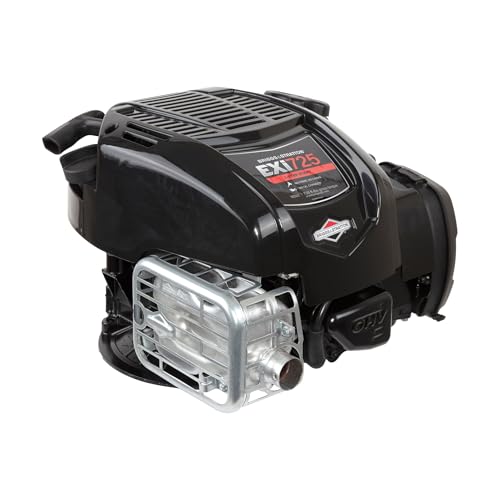
| Low-Maintenance Choice | Engine Displacement: Not specified (single‑cylinder walk‑behind class) | Horsepower: Not specified (725EXi walk‑behind class) | Cylinder Configuration: Single cylinder | VIEW LATEST PRICE | Read Our Analysis |
| Briggs & Stratton 163cc Vertical Shaft Mower Engine |

| Best Push Mower Engine | Engine Displacement: 163cc | Horsepower: 7.25 HP (torque-rated) | Cylinder Configuration: Single cylinder | VIEW LATEST PRICE | Read Our Analysis |
| Briggs & Stratton 17.5 HP 500cc INTEK Engine |
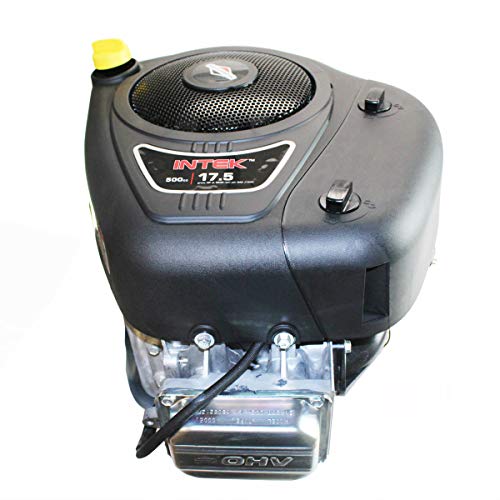
| Dependable Midrange Option | Engine Displacement: 500cc | Horsepower: 17.5 HP | Cylinder Configuration: Single cylinder | VIEW LATEST PRICE | Read Our Analysis |
| 15HP 4-Stroke 420CC Horizontal Shaft Gas Engine |

| Heavy-Duty Workhorse | Engine Displacement: 420cc | Horsepower: 15 HP | Cylinder Configuration: Single cylinder | VIEW LATEST PRICE | Read Our Analysis |
More Details on Our Top Picks
Briggs & Stratton 49T877 27HP Commercial V-Twin Engine
In case you’re the kind of person who pushes your mower hard for long hours, the Briggs & Stratton 49T877 27HP Commercial V-Twin engine is built to feel like a steady, trusted work partner, not just another noisy motor under the seat. You get 27 horsepower and an 810cc V-twin, so thick grass doesn’t scare you. The overhead valve design runs cooler, while the sleeved bore adds long-term durability.
You’ll like the simple electric start, automatic choke, and remote throttle. Just confirm the 1-1/8 inch crankshaft size before buying, and rely on the 3-year warranty for peace of mind.
- Engine Displacement:810cc
- Horsepower:27 HP
- Cylinder Configuration:V‑Twin (2‑cylinder)
- Shaft Orientation:Vertical shaft
- Starting Method:Electric start
- Typical Application:Riding mowers / zero‑turn mowers / utility vehicles
- Additional Feature:Commercial Turf series
- Additional Feature:Includes oil cooler
- Additional Feature:Automatic choke system
7.5HP 212cc 4-Stroke Electric Start Go Kart Engine
Power seekers who want a tough, easy-start engine for a mower or multi-use machine will like the 7.5HP 212cc 4-stroke electric start go kart engine from OCASAMI. You get a horizontal shaft OHV engine that sips fuel, runs cooler, and still gives strong power for mowing, pumping, or cleaning. It feels like a real upgrade once you hit the electric start and it comes to life without a fight.
You’ll also appreciate the metal cam, forged crankshaft, and cast iron liner. These parts help it last longer, run smoother, and handle jobs from lawnmowers to generators with steady reliability.
- Engine Displacement:212cc
- Horsepower:7.5 HP
- Cylinder Configuration:Single cylinder
- Shaft Orientation:Horizontal shaft
- Starting Method:Electric start
- Typical Application:Go karts, lawnmowers, generators, pumps, etc.
- Additional Feature:Large capacity air filter
- Additional Feature:Metal cam construction
- Additional Feature:Forged crankshaft durability
Briggs & Stratton Intek Series 19 HP 540 cc Single Cylinder Engine
Reliable strength is the big promise behind the Briggs & Stratton Intek Series 19 HP, 540 cc single cylinder engine, and it’s built for homeowners who want their riding mower to feel solid, start easily, and last for years. You get 19 horsepower with a 540 cc OHV design, so the engine runs cooler, breathes better, and doesn’t feel strained whenever the grass gets thick.
A Dura-Bore cast iron sleeve protects the cylinder, so you’re not worrying about premature wear. Full pressure lubrication with an oil filter helps the engine stay clean. With electric start, a 9 amp charging system, pulse fuel pump, and included exhaust, it’s a direct, confident upgrade that replaces model 33R877-0003-G1.
- Engine Displacement:540cc
- Horsepower:19 HP
- Cylinder Configuration:Single cylinder
- Shaft Orientation:Vertical shaft
- Starting Method:Electric start
- Typical Application:Riding lawn mowers
- Additional Feature:Dura-Bore cylinder sleeve
- Additional Feature:Full pressure lubrication
- Additional Feature:Includes exhaust assembly
Briggs and Stratton Vertical Engine 19 HP 540cc 1″ x 3-5/32″ #33S877-0043
Serious yard work calls for an engine that feels strong, steady, and easy to live with, and that’s exactly where the Briggs and Stratton 19 HP 540cc vertical engine #33S877-0043 stands out. You get 19 HP of gas power in a compact, 540cc single cylinder that feels confident on hills and thick grass.
You’ll like how the cast iron Dura-Bore sleeve protects the cylinder, so the engine holds up season after season. The Dual Clean air filter helps it breathe easier, while the Magnetron ignition and electric start make it fire up swiftly once you’re ready to mow.
- Engine Displacement:540cc
- Horsepower:19 HP
- Cylinder Configuration:Single cylinder
- Shaft Orientation:Vertical shaft
- Starting Method:Electric start (9‑amp system)
- Typical Application:Riding lawn mowers
- Additional Feature:Dual Clean air filtration
- Additional Feature:Patented linear balancing
- Additional Feature:Installed muffler included
Briggs & Stratton 725EXi Single-Cylinder Gas Engine
Should you be tired of struggling with a stubborn mower that never wants to start, the Briggs & Stratton 725EXi Single-Cylinder Gas Engine feels like a gust of new air. You just pull the cord and go, thanks to the ReadyStart system that removes the need for a primer or choke. The Magnetron electronic ignition keeps starts steady and hassle free.
You’ll also like how easy it is to live with. You check and add oil instead of doing full oil changes. The DuraLube splash lubrication helps the engine run cooler and last longer, while the aluminized Super Lo Tone muffler keeps noise soft and neighbor friendly.
- Engine Displacement:Not specified (single‑cylinder walk‑behind class)
- Horsepower:Not specified (725EXi walk‑behind class)
- Cylinder Configuration:Single cylinder
- Shaft Orientation:Vertical shaft (walk‑behind mower style)
- Starting Method:Recoil pull start (ReadyStart, no primer/choke)
- Typical Application:Walk‑behind/ push lawn mowers
- Additional Feature:ReadyStart no-choke system
- Additional Feature:No oil changes needed
- Additional Feature:Super Lo-Tone muffler
Briggs & Stratton 163cc Vertical Shaft Mower Engine
For homeowners who want a strong, no-fuss engine on a walk-behind mower, the Briggs & Stratton 163cc Vertical Shaft Mower Engine feels like a dependable work partner you can trust every weekend. You get 7.25 torque-powered horsepower in a compact, 163cc package, built specifically for push mowers, so it stays focused on one job and does it well.
You’ll install it easily with pre-drilled mounting holes and the nuts and bolts from your old mower. The vertical shaft and 7/8 x 3-5/32 inch keyed crankshaft match most walk-behind setups. A flywheel brake and fixed 3100 RPM speed keep operation simple, steady, and safe.
- Engine Displacement:163cc
- Horsepower:7.25 HP (torque-rated)
- Cylinder Configuration:Single cylinder
- Shaft Orientation:Vertical shaft
- Starting Method:Recoil pull start (flywheel brake release)
- Typical Application:Push lawn mowers only
- Additional Feature:Push mower–only design
- Additional Feature:Flywheel brake safety
- Additional Feature:Fixed 3100 RPM speed
Briggs & Stratton 17.5 HP 500cc INTEK Engine
Power seekers who want a tough, low-drama riding mower engine will feel right at home with the Briggs & Stratton 17.5 HP 500cc INTEK. You get a strong 17.5 HP single cylinder, vertical shaft design that fits many riding mowers, so upgrades and replacements feel less stressful.
You’ll like how the cast iron Dura-Bore sleeve protects the cylinder, helping the engine last through season after season. The Dual Clean air filtration keeps dirt out, while the patented linear balancing system cuts harsh vibration. With electric start, Magnetron ignition, fuel pump, and oil filter, you spend more time mowing and less time wrenching.
- Engine Displacement:500cc
- Horsepower:17.5 HP
- Cylinder Configuration:Single cylinder
- Shaft Orientation:Vertical shaft
- Starting Method:Electric start (9‑amp system)
- Typical Application:Riding mowers and similar equipment
- Additional Feature:Dual Clean air filter
- Additional Feature:Integrated fuel pump
- Additional Feature:Includes oil filter
15HP 4-Stroke 420CC Horizontal Shaft Gas Engine
Serious homeowners and small property pros who want strong, steady mowing performance will appreciate the HP 4-stroke 420CC horizontal shaft gas engine. You get 15HP from a single cylinder OHV design, so your mower feels powerful without being hard to manage. The recoil start with a pull handle keeps things simple and reliable.
You’ll also like how long it runs. The 1.72 gallon tank and high-precision carburetor work together to cut fuel use and stretch each fill. Forced air cooling, heat dissipation holes, low oil alarm, silencer, and easy-clean surfaces all help you work longer with less stress.
- Engine Displacement:420cc
- Horsepower:15 HP
- Cylinder Configuration:Single cylinder
- Shaft Orientation:Horizontal shaft
- Starting Method:Recoil start with pull handle
- Typical Application:Go karts, compressors, lawnmowers, other equipment
- Additional Feature:Large 1.72-gallon tank
- Additional Feature:Low oil alarm
- Additional Feature:Integrated noise silencer
Factors to Consider When Choosing a Lawn Mower Engine
At the moment someone chooses a lawn mower engine, a few key details quietly decide how easy their yard work will feel. Engine power and torque, the choice between a vertical or horizontal shaft, and the size and layout of the cylinders all work together to shape how the mower handles grass, hills, and heavy use. Simultaneously, fuel efficiency, running range, and a reliable starting and ignition system help them save time, cut stress, and feel more confident every time they pull that starter cord.
Engine Power and Torque
How can a person feel confident about a mower provided the engine’s power and torque are a mystery? Power, measured in horsepower, shows how strongly the engine can drive the blade. It affects how easily the mower handles thick, mixed, or uneven grass without struggle.
Torque is the twisting force. Higher torque helps the blade keep spinning in tall, wet, or dense patches instead of slowing down or stalling. At times power and torque match the mower’s size and cutting width, the machine feels steady, not sluggish or wasteful.
Overhead valve engines often give better power and torque, while staying cooler and more fuel efficient. With electric start and solid torque, the engine holds steady RPMs, so each pass stays smooth and consistent.
Vertical Vs Horizontal Shaft
Curiously enough, one small detail inside a lawn mower engine can change almost everything about how the whole machine feels to use: the direction of the crankshaft. A vertical shaft points straight down, so it connects directly to the blade. This setup shows up in most push mowers and many riding mowers, because it keeps the design simple and compact.
A horizontal shaft points out the side, so it usually needs belts or pulleys to drive the blade or wheels. That layout fits equipment that swaps attachments, like go-karts or pressure washers. At the time someone chooses an engine, they must match the shaft style to the mower frame and blade mount, including common keyed shaft sizes such as 1″ x 3-5/32″ or 1-1/8″ x 4-5/16″.
Displacement and Cylinder Layout
A good place to start with lawn mower engines is the size of the engine on the inside, called displacement, and how the cylinders are arranged. Displacement, measured in cubic centimeters, shows how much air and fuel the pistons move. As displacement increases, power and torque usually rise too. So, larger engines handle thick, tall grass and long work sessions with less strain.
Cylinder layout then shapes how that power feels in real use. A single-cylinder engine tends to be lighter, simpler, and fine for regular yard mowing. A V-twin, with two cylinders in a V shape, usually runs smoother, with less vibration and more horsepower. This layout often suits bigger properties, frequent mowing, or semi commercial and commercial work.
Fuel Efficiency and Range
Even before looking at horsepower or cutting width, fuel efficiency and range quietly decide how easy a mower will be to live with week after week. A fuel efficient engine lets a homeowner finish the yard without constant trips back to the gas can, which lowers stress and saves money.
A larger fuel tank naturally increases range, but design details inside the engine matter just as much. Overhead valve engines usually burn less fuel and run cooler, so they waste less energy. A reliable fuel pump keeps gasoline flowing smoothly, helping the engine hold steady power instead of surging. Precise carburetors, with low grams per kilowatt hour ratings, avoid extra fuel use. Helpful touches like automatic choke and smart throttle control fine tune fuel flow during real mowing conditions.
Starting and Ignition System
Two parts of a mower decide how each cut begins and how dependable it feels over time: the starting system and the ignition system. Whenever someone wants an easy start, electric start engines feel comforting. You turn a key or push a button, and a charging system, often 9 or 16 amp, powers the starter and keeps the battery ready.
Pull start systems give simple, cable based reliability. Many shoppers still like understanding a good, strong pull will wake the engine.
ReadyStart and automatic choke designs remove guesswork. There is no separate priming, so cold mornings feel less frustrating.
Under the shroud, Magnetron electronic ignition delivers a steady spark, while a flywheel brake adds safety through preventing surprise starts.
Durability and Build Quality
At the moment someone cares about how long a mower will last, attention quickly turns to the engine’s durability and build quality. This is where the concealed details really matter.
A strong engine usually starts with tough materials. Cast iron cylinder sleeves and Dura-Bore style designs protect the cylinder from wear, so the engine keeps its power year after year. Overhead valve layouts help the engine run cooler, and cooler parts usually wear out more slowly. That gives you a calmer mind during long mowing seasons.
Full pressure lubrication with an oil filter keeps the moving parts coated in clean oil. At the point that oil reaches forged crankshafts, metal cams, and durable liners, the engine handles heavy use. Maintenance-free electronic ignition and corrosion-resistant parts quietly stretch engine life even further.
Compatibility and Mounting Size
How can someone feel confident about a new lawn mower engine in case it could not actually fit the mower? That fear is very real, and it often starts with the shaft. So, a careful person checks shaft diameter and length initially, like 1 inch across 3-5/32 inches or 1-1/8 inch across 4-5/16 inches, so the engine can slide into the mounting and drive system without struggle.
Next, they confirm whether the shaft is keyed and what keyway it uses, such as 7/16 tapped with a 1/4 inch keyway. Then the mounting holes matter. Threaded holes match existing bolts, while plain holes need self-threading bolts. Finally, they compare vertical or horizontal shaft orientation, plus total engine size and weight, to protect deck space and mower balance.
Maintenance and Serviceability
After someone knows an engine will physically fit the mower, the next worry usually appears right away: will this thing be easy to live with year after year. This is where maintenance and serviceability really matter, especially for busy homeowners who do not want constant repairs.
Engines with full pressure lubrication and an oil filter tend to last longer because clean oil reaches every moving part. Overhead valve designs run cooler, so valves wear more slowly and need less frequent attention. A magnetic electronic ignition system removes the hassle of spark adjustments and gives steady starting. Clear oil level windows or simple check and add systems make routine checks quick and help prevent damage. Automatic choke and throttle controls also cut down on seasonal tuning and fussy restarts.