Good garden soil helps vegetables grow strong, retain water, drain excess, and feed roots with beneficial microbes. Wakefield CarbonBoost adds moisture-retaining biochar, while Espoma Vegetable & Flower brings worm castings and mycorrhizae to beds.
Back to the Roots Seed Starting Block offers peat-free seed care, Espoma Potting Mix supports repots with slow feeding, and Miracle-Gro gives easy feeding for containers. Use these mixes to match soil structure and nutrient needs for healthy, productive vegetable plants.
| Wakefield CarbonBoost Biochar Potting Soil Blend (4qt) |

| Carbon-Negative Pick | Intended use: Vegetables, herbs, houseplants, containers, raised beds, garden soil | Organic / biological amendments: Mycorrhizae and plant probiotics (bio-active blend) | Water management: Advanced moisture-locking formula (reduces watering up to 50%) | VIEW LATEST PRICE | Read Our Analysis |
| Espoma Organic Vegetable & Flower Garden Soil (1 cu ft) |

| Organic Garden Favorite | Intended use: Planting and transplanting in garden beds (vegetables & flowers) | Organic / biological amendments: MYCO-TONE endo- and ecto-mycorrhizae; earthworm castings | Water management: Rich organic mix (improves moisture retention as garden soil amendment) | VIEW LATEST PRICE | Read Our Analysis |
| Back to The Roots Organic Seed Starting Block |

| Best for Seed Starting | Intended use: Seed starting for vegetables, herbs, flowers; also potting/amendment | Organic / biological amendments: 100% organic, OMRI listed (coir-based seed mix) | Water management: Coir brick enhances water retention and aeration when expanded | VIEW LATEST PRICE | Read Our Analysis |
| Espoma Organic Potting Soil Mix (8 qt) |
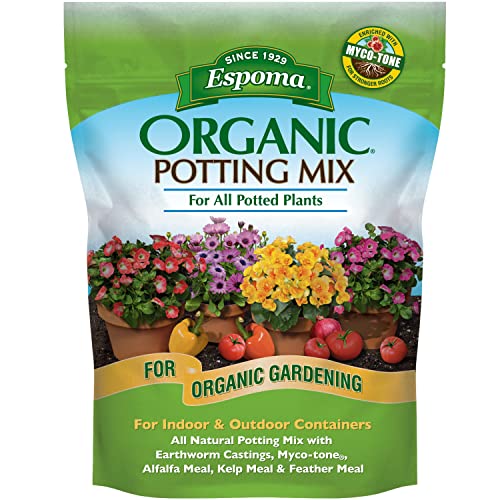
| Best for Containers | Intended use: Indoor/outdoor containers for vegetables, herbs, flowers; transplanting/re-potting | Organic / biological amendments: MYCO-TONE mycorrhizae; earthworm castings, kelp/alfalfa/feather meals | Water management: Sphagnum peat moss and perlite for moisture retention and drainage | VIEW LATEST PRICE | Read Our Analysis |
| Miracle-Gro Potting Soil Mix 2 Pack (2 cu ft) |
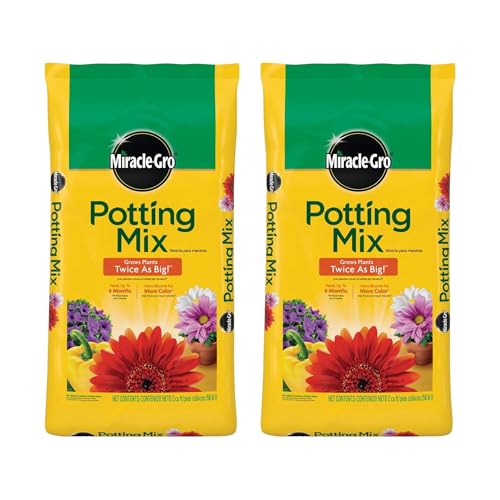
| Best for Big Results | Intended use: Container-grown vegetables, flowers, herbs, shrubs, annuals, perennials | Organic / biological amendments: Feeds up to 6 months (plant food included) — biological feeding agents (proprietary feed) | Water management: Formulated for container moisture/feeding management (instructions for watering after planting) | VIEW LATEST PRICE | Read Our Analysis |
More Details on Our Top Picks
Wakefield CarbonBoost Biochar Potting Soil Blend (4qt)
At the time you desire soil that helps your vegetables grow stronger roots and use water and fertilizer more efficiently, Wakefield CarbonBoost Biochar Potting Soil Blend (4qt) fits that need. You’ll notice looser texture that keeps roots breathing and stops compacted clumps from choking seedlings. Because it retains moisture, you’ll water less and still see greener leaves. Mycorrhizae and plant probiotics work with biochar to feed roots and release nutrients, so your tomatoes and herbs take up fertilizer better. It’s made from renewable plant material and traps carbon, so you’re helping the planet while tending your garden with confidence.
- Intended use:Vegetables, herbs, houseplants, containers, raised beds, garden soil
- Organic / biological amendments:Mycorrhizae and plant probiotics (bio-active blend)
- Water management:Advanced moisture-locking formula (reduces watering up to 50%)
- Soil structure / aeration:CarbonBoost™ biochar to optimize aeration and reduce compaction
- Packaging / format:Available in 2-qt, 4-qt, and 1-cubic-foot bags (here: 4 qt)
- Suitability for vegetables:Specifically promoted for vegetables, herbs, tomatoes, soil enrichment
- Additional Feature:Carbon-negative formula
- Additional Feature:Contains plant probiotics
- Additional Feature:Reduces watering up to 50%
Espoma Organic Vegetable & Flower Garden Soil (1 cu ft)
Should you want an easy, organic way to improve your vegetable beds, reach for Espoma Organic Vegetable and Flower Garden Soil in the 1 cubic foot bag; it’s made for gardeners who care about natural growing and want visible results without fuss. You’ll mix it with your native soil whenever planting or transplanting, and that simple step improves texture and nutrient availability. It contains earthworm castings and MYCO-TONE mycorrhizae to strengthen root health and nutrient uptake. You won’t get synthetic chemicals here, so it fits organic practices. Use it any time in the garden for steady, natural support.
- Intended use:Planting and transplanting in garden beds (vegetables & flowers)
- Organic / biological amendments:MYCO-TONE endo- and ecto-mycorrhizae; earthworm castings
- Water management:Rich organic mix (improves moisture retention as garden soil amendment)
- Soil structure / aeration:Loose organic planting mix (designed to mix with native soil for structure)
- Packaging / format:1 cubic foot bag
- Suitability for vegetables:Labeled for vegetable & flower garden planting (organic)
- Additional Feature:Enriched with worm castings
- Additional Feature:MYCO-TONE mycorrhizae blend
- Additional Feature:No synthetic chemicals
Back to The Roots Organic Seed Starting Block
In case you want an easy, low-mess way to start vegetable seeds, Back to the Roots Organic Seed Starting Block is built for gardeners who need simplicity and solid results. You’ll like that a single compressed block expands to 12 quarts whenever you add water, giving light, airy coir that holds moisture without turning soggy. It’s peat-free and OMRI listed, so you can feel good about organic starts. Use it alone in seed trays or mix it into pots to enhance aeration and root growth. The company offers a guarantee and a giveback program that connects you to classroom gardens.
- Intended use:Seed starting for vegetables, herbs, flowers; also potting/amendment
- Organic / biological amendments:100% organic, OMRI listed (coir-based seed mix)
- Water management:Coir brick enhances water retention and aeration when expanded
- Soil structure / aeration:Coir-based mix provides aeration and promotes healthy root growth
- Packaging / format:Compressed coir brick expands to 12 quarts (compact block)
- Suitability for vegetables:Seed starting and potting for vegetables and herbs (starter mix)
- Additional Feature:Peat-free coir brick
- Additional Feature:Expands to 12 quarts
- Additional Feature:OMRI Listed organic
Espoma Organic Potting Soil Mix (8 qt)
Provided you want a potting mix that reliably helps vegetables and herbs thrive in containers, Espoma Organic Potting Soil Mix is a solid choice for both beginner and experienced gardeners. You’ll notice a light, airy texture from sphagnum peat moss and perlite that drains well and holds enough moisture. It also includes humus plus earthworm castings, alfalfa, kelp, and feather meals to feed roots gently over time. The MYCO-TONE mycorrhizae blend helps roots probe soil and take up nutrients. Use it for indoor or outdoor pots, starting seedlings, transplanting, or routine repotting whenever you desire organic, fuss free results.
- Intended use:Indoor/outdoor containers for vegetables, herbs, flowers; transplanting/re-potting
- Organic / biological amendments:MYCO-TONE mycorrhizae; earthworm castings, kelp/alfalfa/feather meals
- Water management:Sphagnum peat moss and perlite for moisture retention and drainage
- Soil structure / aeration:Perlite and humus for improved aeration and structure
- Packaging / format:8 quart bag
- Suitability for vegetables:Suitable for container vegetables and herbs (organic potting mix)
- Additional Feature:Includes kelp & feather meal
- Additional Feature:Sphagnum peat moss base
- Additional Feature:Enriched with alfalfa meal
Miracle-Gro Potting Soil Mix 2 Pack (2 cu ft)
Should you want an easy, reliable potting mix that helps container vegetables grow bigger and bloom more, Miracle-Gro Potting Soil Mix 2 Pack is a solid pick for busy gardeners. You’ll appreciate that each 2 cu ft bag feeds up to 6 months, so you won’t fuss with constant feeding. It promises larger plants and more blooms compared with unfed soil, which feels reassuring whenever you’re short on time. Use it for indoor or outdoor containers, herbs, vegetables, and flowers. Choose a pot with drainage, fill one third, add your plant, top off, and water. Each bag fills about two 14-inch pots.
- Intended use:Container-grown vegetables, flowers, herbs, shrubs, annuals, perennials
- Organic / biological amendments:Feeds up to 6 months (plant food included) — biological feeding agents (proprietary feed)
- Water management:Formulated for container moisture/feeding management (instructions for watering after planting)
- Soil structure / aeration:Potting mix formulated for container root growth (promotes larger plants)
- Packaging / format:2 cu ft per bag (2-pack)
- Suitability for vegetables:For vegetable container planting (feeds and promotes larger plants)
- Additional Feature:Feeds up to 6 months
- Additional Feature:Promotes larger plants
- Additional Feature:Two-bag value pack
Factors to Consider When Choosing Garden Soil for Vegetables
Whenever you pick soil for your vegetables, consider about how texture and structure affect roots and water movement. Also weigh nutrient levels, water retention, and the life in the soil like beneficial microbes because they feed plants and help fight disease. Don’t forget pH and mineral balance since they control nutrient availability and tie all the other factors together.
Soil Texture And Structure
In case you want vegetables that grow strong and produce well, start by considering about soil texture and structure, because they control how water, air, and roots move through your garden. You want loam whenever possible. It mixes about 40% sand, 40% silt, and 20% clay to balance drainage, aeration, and moisture holding. Good structure means stable, crumbly aggregates so roots can push through and water and air can move. Should your soil lean sandy, expect fast drainage and earlier warmth, and plan to add organic matter to hold moisture and nutrients. In the event it leans clay, add organic matter and coarse materials to cut compaction and open pores. Check bulk density; aim near 0.9 to 1.2 g/cm3 to avoid root restriction.
Nutrient Content Levels
In case you want vegetables that grow strong and taste great, start by checking the soil’s nutrient levels and organic matter so you might feed plants steadily all season. You’ll want N, P, and K in the right ranges: seedlings need nitrogen about 20–40 ppm and later more for growth, phosphorus 10–20 ppm for roots and fruit, and potassium 80–200 ppm for stress resilience and yield. Also look for organic matter near 4–8 percent because it slowly releases nutrients and enhances cation exchange capacity. Check pH around 6.0–7.0 since pH controls nutrient availability. Test CEC; values of 10–25 meq per 100 g hold useful cations. Blend quick release NPK with stable compost or manure to feed crops reliably.
Water Retention Capacity
Should you want vegetables that stay healthy from seedling to harvest, you need soil that holds just the right amount of water without staying soggy. You want root zones that stay evenly moist, roughly 10 to 20 percent plant available water for many vegetables. Sandy soil dries fast and perhaps only hold five to ten percent PAW, so you’ll water more often. Loam with organic matter holds closer to twenty to thirty percent and steadies moisture between rains. Add five to ten percent compost or coir to raise available water and help plants ride out short dry spells. Watch for too much fine clay or too many wet amendments since poor drainage can suffocate roots. Test moisture with a probe or squeeze test and adjust your mix or schedule.
Biological Activity And Microbes
Because healthy soil teems with tiny life, your garden can feed plants more steadily and resist problems on its own. You want soil that hosts bacteria, fungi, protozoa, and helpful nematodes, since they decompose residues and free nutrients your vegetables need. Mycorrhizal fungi connect with roots, expanding uptake of phosphorus and micronutrients and helping plants handle dry spells. Soils with 3 to 5 percent organic matter usually support stronger microbial communities than depleted soils under 1 to 2 percent. You’ll notice active biology in crumbly texture, an earthy smell, quick residue decomposition, and higher CO2 release during tested. Protect microbes by avoiding fumigants, not overusing synthetic fertilizers, and preventing long waterlogging, because those practices keep nutrient cycles working for your plants.
pH And Mineral Balance
You’ve built lively, microbe-rich soil, and now you’ll want to make sure the chemical side of the mix matches what your vegetables need. Most vegetables like pH 6.0 to 7.0, and tomatoes and peppers prefer about 6.0 to 6.8. pH changes what nutrients plants can take up, so iron and manganese slip away above pH 7 while phosphorus can lock up in very acidic or very alkaline soil. Test your soil with a lab or home kit before planting. In case pH is low add lime to raise it. In the event it’s high use elemental sulfur to lower it and wait weeks for change. Use a soil test to guide fertilizer choices and avoid heavy single nutrient feeds. Add organic matter to buffer pH swings and feed slow release minerals.