These five fertilizers cover a range of garden needs and feeding habits. Scotts Rose & Bloom feeds for two months, Miracle-Gro Shake ’N Feed delivers long-lasting nutrients, and Scotts Super Bloom provides quick, phosphorus-rich boosts every one to two weeks.
A balanced 10-10-10 slow-release supports steady growth, while Farmer’s Secret liquid gives concentrated, frequent bloom and fruit support. Read on to match feeds to soil and flowering cycles for healthier, more productive plants.
| Scotts Rose & Bloom Continuous Release Plant Food 3 lb |

| Best for Roses | Form: Granules | Primary Use: Flowering plants / roses | Feeding Duration / Frequency: Feeds up to 2 months (continuous release) | VIEW LATEST PRICE | Read Our Analysis |
| Miracle-Gro Shake ‘N Feed All-Purpose Plant Food |
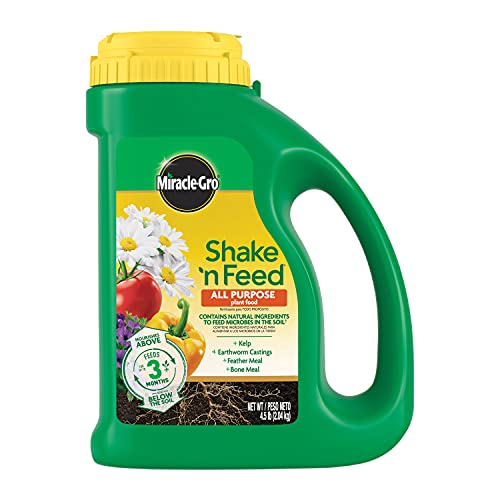
| Long-Lasting Feed | Form: Granules | Primary Use: All-purpose (flowers, vegetables, herbs) | Feeding Duration / Frequency: Feeds up to 3 months; reapply every 3 months | VIEW LATEST PRICE | Read Our Analysis |
| Scotts Super Bloom Water-Soluble Plant Food (2 lb) |
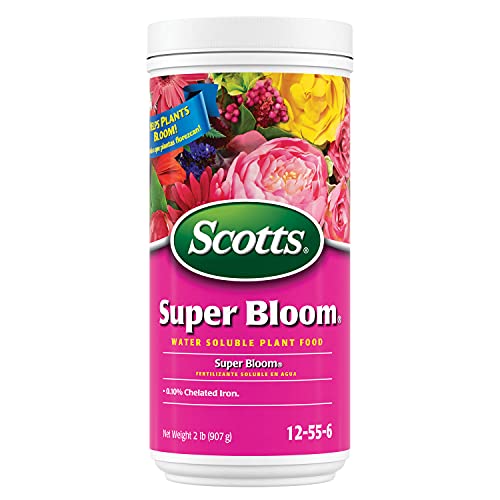
| Fast-Acting Bloom | Form: Water-soluble powder | Primary Use: Bloom/flower promotion (flowers, fruiting plants) | Feeding Duration / Frequency: Apply every 1–2 weeks (water-soluble, frequent) | VIEW LATEST PRICE | Read Our Analysis |
| 10-10-10 Slow-Release All-Purpose Granular Fertilizer |

| Balanced All-Purpose | Form: Granular | Primary Use: All-purpose for vegetables, ornamentals, trees/shrubs | Feeding Duration / Frequency: Sustained nutrition up to 8 weeks; repeat per season | VIEW LATEST PRICE | Read Our Analysis |
| Farmer’s Secret Fruit & Bloom Booster Fertilizer (32oz) |

| Concentrated Booster | Form: Liquid concentrate | Primary Use: Fruit and bloom booster (flowers, fruits, vegetables) | Feeding Duration / Frequency: Repeat every 2–4 weeks (liquid feed) | VIEW LATEST PRICE | Read Our Analysis |
More Details on Our Top Picks
Scotts Rose & Bloom Continuous Release Plant Food 3 lb
In case you love bright, long-lasting blooms and want something that’s simple to use, Scotts Rose & Bloom Continuous Release Plant Food, 3 lb is a great choice for gardeners who want steady results without fuss. You’ll find it enhances roses and helps annuals and perennials put out more flowers. It feeds steadily for up to 2 months with a continuous-release formula, so you don’t have to baby your beds. Apply it directly to the soil following the label, and it won’t burn plants whenever used as directed. You’ll feel confident using this safe, easy option for full, cheerful blooms.
- Form:Granules
- Primary Use:Flowering plants / roses
- Feeding Duration / Frequency:Feeds up to 2 months (continuous release)
- Application Method:Apply directly to soil surface
- Plants Suitable For:Roses, annuals, perennials, all flowering plants
- Safety / Plant-Friendly Note:Won’t burn plants when used as directed; safe when used as directed
- Additional Feature:Continuous-release granules
- Additional Feature:Boosts rose blooms
- Additional Feature:Feeds up to 2 months
Miracle-Gro Shake ‘N Feed All-Purpose Plant Food
You’ll love Miracle-Gro Shake ‘N Feed All Purpose Plant Food should you want an easy, low-effort way to keep flowers and other plants fed for months at a time. You’ll find it works for in-ground beds and container pots, indoors and out, and the 4.5 lb bag treats many plants. Apply it evenly, work it lightly into the top inch or three of soil, then water to start feeding. It feeds up to three months, so you reapply quarterly and water regularly between feedings. With natural ingredients and micronutrients, it helps plants grow stronger, bloom brighter, and produce more than unfed plants.
- Form:Granules
- Primary Use:All-purpose (flowers, vegetables, herbs)
- Feeding Duration / Frequency:Feeds up to 3 months; reapply every 3 months
- Application Method:Sprinkle on soil surface; work into top 1–3″ (in-ground) or lightly in containers; water after
- Plants Suitable For:Flowers, vegetables, herbs, indoor/outdoor containers, in-ground
- Safety / Plant-Friendly Note:Formulated for regular use; compatible with most plants (implied safe when used as directed)
- Additional Feature:Feeds up to 3 months
- Additional Feature:Contains natural ingredients
- Additional Feature:Works for indoor/outdoor
Scotts Super Bloom Water-Soluble Plant Food (2 lb)
Provided that you want big, frequent blooms without fuss, Scotts Super Bloom is made for gardeners who crave fast, visible results. You’ll mix the water-soluble powder into water and feed outdoor flowers, fruiting plants, containers, and bed areas. Its 12-55-6 NPK puts weight on phosphorus to enhance flowering, so you see buds and color sooner. Apply every one to two weeks and you won’t worry about burning plants whenever you follow directions. The concentrate feeds instantly, so thirsty plants respond quickly. You’ll enjoy simple handling, predictable timing, and more lively blooms with steady, confidence-building care.
- Form:Water-soluble powder
- Primary Use:Bloom/flower promotion (flowers, fruiting plants)
- Feeding Duration / Frequency:Apply every 1–2 weeks (water-soluble, frequent)
- Application Method:Mix with water then apply (dissolve before use)
- Plants Suitable For:Outdoor flowers, fruiting plants, containers, beds
- Safety / Plant-Friendly Note:Won’t burn plants when used as directed
- Additional Feature:High-phosphorus formula
- Additional Feature:Instant feed when dissolved
- Additional Feature:12-55-6 NPK ratio
10-10-10 Slow-Release All-Purpose Granular Fertilizer
In case you want a single, easy fertilizer that jump-starts growth and keeps feeding for weeks, this 10-10 slow-release granular formula is a great fit. You’ll get balanced 10-10-10 nutrients so foliage, roots, and resilience all improve. Apply the fine granules evenly, then water to activate immediate nitrogen and the slow-release portion that feeds up to eight weeks. Use it twice a season in flower beds and vegetables, or three times for trees and shrubs. It’s safe on roses, tomatoes, evergreens, and potted plants. You’ll notice stronger roots, fuller blooms, and steadier harvests with less hassle.
- Form:Granular
- Primary Use:All-purpose for vegetables, ornamentals, trees/shrubs
- Feeding Duration / Frequency:Sustained nutrition up to 8 weeks; repeat per season
- Application Method:Spread granules on soil and water to activate
- Plants Suitable For:Vegetables, fruit trees, ornamentals, shrubs, evergreens, potted plants
- Safety / Plant-Friendly Note:Combination of quick- and slow-release to reduce overapplication risk (use as recommended)
- Additional Feature:Balanced 10-10-10 NPK
- Additional Feature:Quick + slow release
- Additional Feature:Up to 8 weeks nutrition
Farmer’s Secret Fruit & Bloom Booster Fertilizer (32oz)
In case you want big, colorful blooms and heavier fruit from plants that often struggle, Farmer’s Secret Fruit & Bloom Improver is made for you. You’ll use a 32 oz super concentrated liquid that comes from Kentucky and reflects award winning farmer know how. It strengthens roots so your plants take up more nutrients and it improves flowering and yield on fruits, vegetables, and flowers. Use it on citrus, avocados, raspberries, cantaloupe, roses, petunias and more. Dilute 1 teaspoon per 2 gallons of water, pour or spray during watering, and repeat every 2 to 4 weeks.
- Form:Liquid concentrate
- Primary Use:Fruit and bloom booster (flowers, fruits, vegetables)
- Feeding Duration / Frequency:Repeat every 2–4 weeks (liquid feed)
- Application Method:Dilute in water (1 tsp per 2 gal) and pour or spray during watering
- Plants Suitable For:Flowers, fruiting and vegetable-producing plants (citrus, roses, petunias, raspberries, etc.)
- Safety / Plant-Friendly Note:Dilution specified (concentrated) — use recommended rates for safe application
- Additional Feature:Super concentrated liquid
- Additional Feature:1 tsp per 2 gal
- Additional Feature:Made in Kentucky
Factors to Consider When Choosing Garden Fertilizers for Flowers
Whenever you choose a fertilizer for your flowers, consider about what nutrients each plant needs and how the soil pH affects nutrient availability. Also decide whether you want a slow release product for steady feeding or a quick release one for faster results, and check the NPK ratio so it matches bloom and growth goals. Finally, plan how often you’ll apply it based on the product type and your garden routine so you don’t overfeed or leave plants hungry.
Flower Nutrient Needs
Grasping what your flowers need makes choosing fertilizer a lot less frustrating, and you’ll feel more confident every time you feed the bed. You want a steady mix of macronutrients: nitrogen for leafy growth, phosphorus for roots and bloom set, and potassium for overall vigor. Blooming plants often do best with feeds higher in phosphorus as buds form, while moderate nitrogen earlier helps build healthy foliage without smothering flowers. You also need micronutrients like iron, magnesium, calcium, zinc, and manganese because they help enzymes, green color, and strong blooms. Many annuals and perennials like regular, moderate feeding every one to eight weeks depending on the product. Pay attention to leaf color and bloom size as clues to missing nutrients and adjust feeds accordingly.
Soil pH Levels
You’ve already learned what nutrients flowers need, and soil pH controls how well those nutrients actually reach the roots. You want most flowering plants in a pH around 6.0 to 7.0 because phosphorus, potassium, iron, and manganese are easiest for roots to take up there. Should your soil drops below 6.0, calcium and magnesium get tied up and metals like aluminum can rise to harmful levels. Should soil climbs above 7.5, iron, manganese, and phosphorus can become unavailable and blooms might suffer. Use a simple pH test kit or meter, test several spots and depths, and average results. Adjust pH slowly with sulfur or acidic organic matter to lower it, or lime and wood ash to raise it, then retest after months. Always change pH gradually to avoid stressing plants.
Slow Vs. Quick Release
Because your flowers need steady food and quick fixes at different times, choosing between slow and quick release fertilizers comes down to timing, watering habits, and how much care you want to give them. Slow-release options, often polymer-coated or organic granules, feed plants over weeks to months. They suit gardeners who water irregularly or want low-maintenance blooms. They also cut the risk of fertilizer burn, so you can relax a bit. Quick-release fertilizers dissolve fast and give a visible lift in growth or blooms. Use them whenever you need an immediate increase before an event or to correct clear deficiencies. They work best whenever you water right away and reapply every one to four weeks. Consider plant stage, your schedule, and how quickly you want results.
NPK Ratio Importance
Now that you know how slow and quick release fertilizers affect timing and watering, you’ll want to match that with the right NPK ratio to get the blooms you envision. You’ll read the three numbers as percentages of nitrogen phosphorus and potassium. For new plants choose a balanced or slightly higher nitrogen mix to encourage roots and leaves. As buds form switch to a higher phosphorus number like 10-55-6 to promote flower development. Don’t ignore potassium since it enhances plant health stress tolerance and flower quality. In case you see lots of green but few blooms raise phosphorus and keep potassium steady. Check labels and pick ratios that match the plant stage. That way you’ll feed flowers not just foliage and enjoy more reliable blooms.
Application Frequency Tips
Often, gardeners adjust feeding schedules as their flowers move from growth to full bloom, and you should do the same to keep plants healthy and productive. Consider how each fertilizer behaves. Slow-release granules usually need reapplication every 6 to 8 weeks to keep nutrients steady. Liquid or water-soluble feeds work faster, so you’ll apply them every 1 to 2 weeks whenever you want more blooms. Organic continuous-release products can last 2 to 3 months, so you’ll space applications farther apart. Increase frequency during active flowering and fruiting, then cut back to maintenance rates after peak bloom. Always follow label directions and tweak timing for your climate, rainfall, and soil test results to avoid overfeeding and burning roots.
Liquid Vs. Granular
You’ve just adjusted feeding schedules for peak bloom, so the next choice is which form of fertilizer will match your timing and energy. You can pick liquid for quick fixes. Liquids deliver nutrients fast to roots or leaves, and you’ll see changes in days whenever you dilute and water or spray. They let you control strength and timing, so you can feed every one to two weeks for blooms or correct micronutrient shortages with foliar sprays. Granulars feed slowly over weeks to months, so they cut down on chores and suit long stretches between applications. They’re easy to sprinkle in beds and containers but usually need watering to start working. Use liquids whenever speed matters and granulars whenever you want low-effort, steady feeding.
Plant Type Compatibility
Because different flowers have different needs, choosing the right fertilizer starts with grasping the plant you’re feeding and what it’s trying to do. Initially, match N-P-K to purpose: higher middle number for bloom enhancement, balanced or higher nitrogen for leafy growth. Next, consider life stage and location. Perennials and established shrubs do well with slow-release granules that feed steadily, while annuals and containers need water-soluble or liquid feeds for quick uptake. For pots, pick formulas made for containers and feed often in low doses to avoid salt build up and root burn. Also choose mixes with micronutrients like iron and magnesium for sensitive ornamentals to prevent yellowing and keep colors vivid. Finally, time feedings to bloom cycles, not a calendar.
Safety And Handling
As you’re choosing and using fertilizer, safety should come foremost so your flowers thrive and your family stays safe. Read and follow label directions for rates and timing, since too much can burn plants and let nutrients run off. Wear gloves and eye protection whenever you handle concentrates, whether granules, powders, or liquids, to prevent irritation and accidents. Store products in a cool, dry, ventilated spot out of reach of children and pets, and keep lids tight so the fertilizer stays stable. Avoid feeding before heavy rain or on saturated soil to cut leaching into waterways. If you mix concentrates, measure carefully, add product to water not water to product, and clean tools after use to prevent contamination and buildup.