
Creating a thriving barrel garden starts with understanding the importance of soil layering. Proper layering enhances drainage and nutrient retention, vital elements for plant health. Research shows that effective soil stratification can significantly improve water movement and moisture availability. For instance, a study by Ruter found that a drainage layer allows water to move more easily, benefiting plant growth. By layering your soil correctly, you set the stage for optimal growth, ensuring your plants thrive throughout the growing season.
Key Takeaways
Layer your soil to improve drainage. A drainage layer prevents waterlogging and promotes healthy root growth.
Use a balanced soil mix for the middle layer. Combine topsoil, compost, and organic matter to retain nutrients and moisture.
Incorporate compost in the top layer. Compost enhances soil fertility and supports beneficial microorganisms for plant health.
Avoid overcompacting soil layers. Compacted soil restricts root growth and limits nutrient access, harming plant health.
Consider plant needs when layering. Tailor your soil composition to meet the specific drainage and nutrient requirements of your plants.
Importance of Soil Layering
Layering soil in your barrel garden offers numerous benefits that directly impact plant health. Understanding these advantages can help you create the perfect soil recipe for your plants.
Enhancing Drainage
One of the primary benefits of soil layering is improved drainage. When you layer your soil, you create a drainage layer made of coarse materials. This layer allows water to move more freely, preventing waterlogging. In contrast, compacted soil in single-layer systems restricts drainage by reducing air pockets. This leads to pooling water, which can harm your plants.
Here are some key points about how layering enhances drainage:
A drainage layer helps funnel water to exit points, promoting better aeration for plant roots.
Layering prevents the soil from becoming too dense, allowing roots to access oxygen more easily.
Proper drainage reduces the risk of root rot, a common issue in overly saturated soils.
Nutrient Retention
Another significant advantage of soil layering is its ability to retain nutrients effectively. When you use a combination of organic materials, such as compost and topsoil, you create a nutrient-rich environment for your plants.
Research shows that layered soil systems outperform non-layered systems in nutrient retention. The table below illustrates this difference:
Treatment Type | Soil Organic Carbon (Mg/ha) | Soil Nitrogen (kg N/ha) | Wheat Yield (Mg/ha) |
|---|---|---|---|
Retained Residues with High Fertilizer | 20.5 | 125 | 2.9 |
Burned Residues with No Fertilizer | 19.5 | N/A | 2.3 |
The data indicates that using retained residues with high fertilizer significantly boosts soil organic carbon and nitrogen levels. This results in higher yields, demonstrating the effectiveness of layered soil in supporting plant growth.
In addition to improving nutrient levels, layering also enhances soil structure. Compost acts like a sponge, retaining water and nutrients while creating a healthy environment for soil microbes. Over time, this practice can reverse the negative effects of soil degradation, leading to a more fertile and resilient garden.
By understanding the importance of soil layering, you can create an optimal environment for your plants. This knowledge empowers you to make informed decisions about your barrel garden’s soil composition, ensuring your plants thrive.
Soil Layers for Barrel Gardens
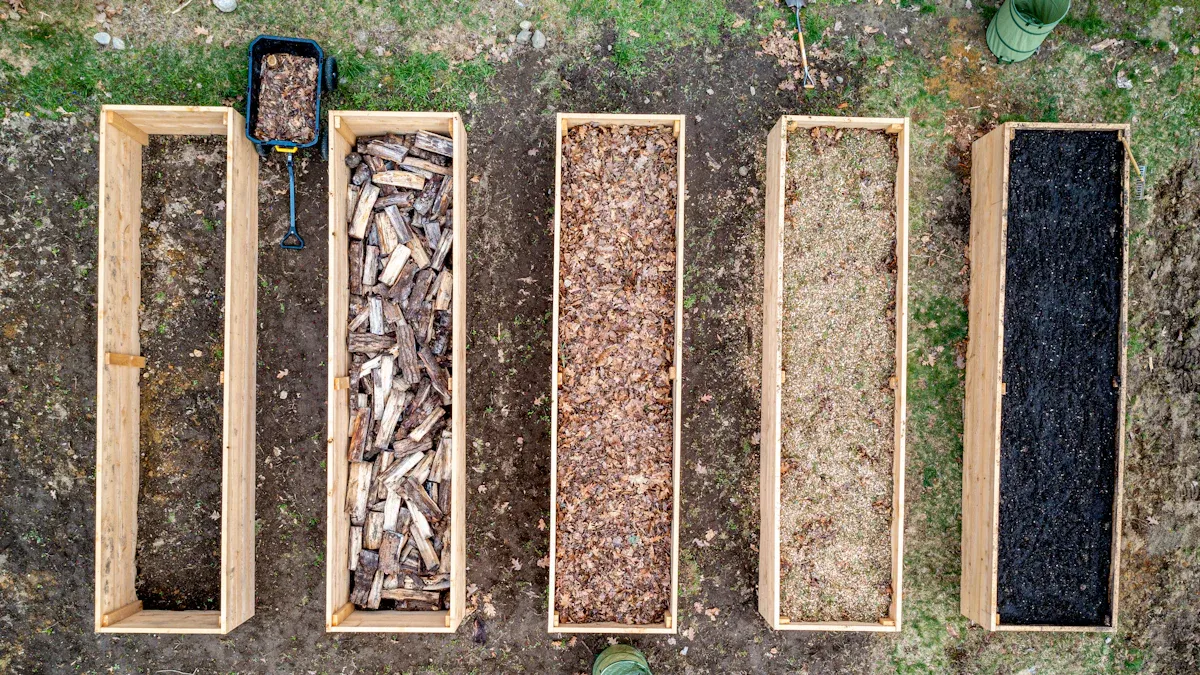
Creating a healthy barrel garden involves understanding the specific layers of soil you need. Each layer plays a crucial role in supporting plant growth and maintaining soil health. Here’s a breakdown of the essential layers for your barrel garden.
Base Layer: Twigs and Branches
Start with a base layer of twigs and branches. This layer serves as a drainage system, allowing excess water to flow away from the roots. It also creates air pockets that promote oxygen circulation. When you use twigs and branches, you help regulate soil temperature, keeping it cooler in the summer and warmer in the winter.
Tip: Use a mix of different sizes of twigs and branches. This variation enhances drainage and aeration even further.
Middle Layer: Raised Bed Soil Mix
The middle layer is where you will use a raised bed soil mix. This layer should consist of a balanced combination of topsoil, compost, and organic matter. Here’s a recommended composition based on expert advice:
Author | Composition Ratio |
|---|---|
Joe Lamp’l | 50% topsoil, 30% compost, 20% organic matter |
Nicole Burke | 33% topsoil, 33% compost, 33% coarse sand, 4% bonus material |
Gary Pilarchik | 50% peat moss or coco coir, 50% garden soil |
CaliKim | 3 parts topsoil, 3 parts bagged compost, 2 parts coco coir, 1 part vermiculite |
Mel Bartholomew | 1/3 peat moss, 1/3 vermiculite, 1/3 compost |
This mix provides essential nutrients and improves soil structure. The organic matter in the raised bed soil mix enhances moisture retention and supports beneficial microorganisms. These microorganisms play a vital role in nutrient delivery to your plants.
Top Layer: Compost and Topsoil
The top layer consists of a blend of compost and topsoil. This layer is crucial for plant growth and soil fertility. Here are some benefits of using compost in your top layer:
Organic matter improves aeration and water drainage in the soil.
It promotes root growth and increases biological activity in the soil.
Compost creates a reservoir of nutrients that release slowly over time, benefiting plant growth.
Additionally, the relationship between plants and soil organisms is mutually supportive. Plants contribute sugars to the soil, attracting beneficial microorganisms that aid in nutrient delivery. This interaction directly benefits plant health.
When applying compost, consider mixing it into the top 6 to 8 inches of topsoil. You can also use it as a mulch at a thickness of 1 to 2 inches to suppress weeds and conserve moisture.
Note: While landscape fabric can help control weeds, be cautious. Over time, it may allow weed seeds to germinate in the mulch above it. Ensure that your fabric allows for water and gas permeability to maintain healthy soil conditions.
By layering your soil correctly, you create a thriving environment for your plants. Each layer contributes to the overall health of your barrel garden, ensuring that your plants receive the nutrients and support they need to flourish.
Tips for Optimal Growth
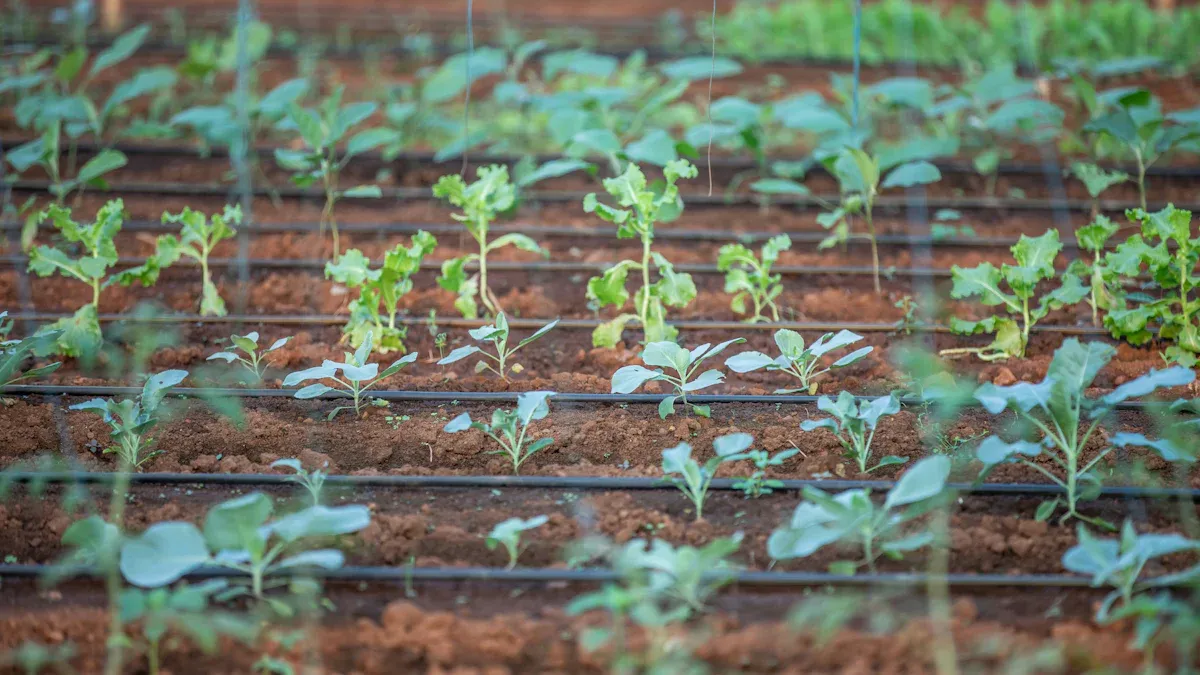
Achieving optimal growth in your barrel garden requires careful attention to layer thickness and material selection. These factors significantly influence how well your plants thrive.
Layer Thickness
The thickness of your soil layers plays a crucial role in water retention and root development. Research shows that thicker soil layers support more root biomass. This increased root growth enhances moisture retention capabilities. For example, a study found that thicker layers can improve soil moisture retention by creating macro-pores that allow better water storage and air movement.
Here’s a table illustrating how different mulch types and their thicknesses affect water content:
Mulch Type | Thickness (cm) | Average Water Content (%) |
|---|---|---|
RWS | 5 | 0.58 |
RWB | 3 | 0.01 |
CF | 7 | 0.82 |
MC | 5 | 0.93 |
As you layer your soil, aim for a thickness that allows for adequate root growth while retaining moisture. A good rule of thumb is to keep each layer between 6 to 12 inches, depending on the materials used.
Material Selection
Choosing the right materials is essential for creating a healthy barrel garden. Incorporating organic materials, such as those used in the hugelkultur method, can greatly enhance your soil’s quality. Hugelkultur involves layering decomposing wood and other organic matter, which helps retain moisture and provides nutrients over time.
Here are some advantages of using organic materials like hugelkultur:
Advantage | Description |
|---|---|
Water Conservation | Functions as a self-irrigated garden, absorbing and wicking water to plant roots. |
Low Maintenance | Requires minimal upkeep due to drought resistance, though weeding is still necessary. |
Sustainable Stormwater Management | Acts as a raised rain garden, slowing runoff and allowing water to infiltrate back into the ground. |
Food Production | Supports self-sufficient farming practices, potentially increasing crop yields. |
Soil Improvement | Engages in self-composting, aiding in carbon sequestration and utilizing landscape debris. |
Permaculture | A productive practice suitable for various gardeners and homeowners. |
Easy and Affordable | Generally inexpensive and adaptable to different environments and materials. |
By selecting high-quality organic materials, you create a thriving environment for beneficial microbes and worms. These organisms improve soil structure and nutrient availability, leading to healthier plants and higher yields.
Common Mistakes in Soil Layering
Overcompacting Layers
One common mistake you might make when layering soil is overcompacting it. Compacted soil can lead to several issues that harm your plants. For instance, it reduces the habitat for soil organisms, decreases water infiltration, impairs root growth, and limits nutrient uptake. The table below summarizes these consequences:
Consequence | Description |
|---|---|
Reduced habitat for soil organisms | Soil compaction decreases pore size, affecting the habitat of soil organisms, particularly nematodes. |
Decreased water infiltration | Compacted soils have lower water infiltration rates, leading to poor water movement to plant roots. |
Impaired root growth | Compaction restricts root expansion, resulting in smaller root systems that are more drought-sensitive. |
Reduced nutrient uptake | The overall health and productivity of plants are negatively impacted due to limited nutrient access. |
To avoid overcompacting your soil layers, follow these tips:
Avoid standing or walking in garden beds to prevent soil compaction.
Create garden paths or use stepping stones to distribute weight and minimize compaction.
Limit the width of garden beds to no more than twice your arm length for easy access without stepping into the beds.
Consider raised beds or fencing to protect soil from compaction due to foot traffic.
Feed the soil with compost and mulches instead of tilling, which can harm soil structure.
Ignoring Plant Needs
Another mistake you may encounter is ignoring the specific needs of your plants when layering soil. Each plant has unique requirements for drainage, soil type, and nutrients. Failing to consider these factors can lead to poor growth or even plant failure.
Here’s a table outlining some essential plant-specific requirements:
Requirement | Details |
|---|---|
Drainage | Ensure adequate drainage by drilling holes and adding gravel or stones at the bottom of the barrel. |
Soil Type | Use a well-draining potting mix, such as a blend of perlite, compost, and potting soil. |
Fertilizer Needs | Apply a balanced fertilizer monthly during the growing season; reduce in fall and winter. |
Plant Selection | Choose plants that tolerate moisture fluctuations, like herbs and succulents; avoid moisture-loving plants like ferns. |
By understanding your plants’ needs, you can adjust your soil layers accordingly. This ensures that your barrel garden thrives and produces healthy plants.
In summary, layering soil in your barrel garden is essential for promoting healthy plant growth. Each layer serves a specific purpose, from enhancing drainage to retaining nutrients. Here are some key takeaways to remember:
Key Takeaway | Description |
|---|---|
Drainage | Ensure plenty of drainage holes to prevent soil from becoming too soggy, which can drown plants. |
Landscape Fabric | Use durable, water-permeable fabric at the bottom to prevent soil clogging and invasive roots. |
Soil Type | Fill with potting soil that is fluffy, well-draining, and rich in organic matter, ideally mixed with compost. |
Mulch | Top with mulch to insulate soil, protect roots, and retain moisture. |
Fertilizer Needs | Be aware that barrel gardens may require slightly higher fertilizer due to less soil volume and runoff. |
By following these guidelines, you can create a thriving barrel garden that supports your plants throughout the growing season. Happy gardening! 🌱
FAQ
What is the best soil mix for growing tomatoes in a barrel garden?
For growing tomatoes, use a mix of 50% raised bed gardening soil, 30% compost, and 20% organic matter. This combination ensures proper drainage and nutrient retention, essential for healthy tomato plants.
How deep should the layers be in my barrel garden?
Aim for each layer to be between 6 to 12 inches thick. This thickness allows for adequate root growth and moisture retention, promoting a thriving organic garden soil environment.
Can I use regular garden soil in my barrel garden?
Regular garden soil may compact too much in a barrel. Instead, opt for a well-draining raised bed gardening mix that includes compost and organic materials to support healthy plant growth.
How often should I water my barrel garden?
Water your barrel garden when the top inch of soil feels dry. The frequency depends on weather conditions and plant needs. Ensure proper drainage to prevent waterlogging.
What plants grow well in a barrel garden?
Many plants thrive in barrel gardens, including tomatoes, herbs, and leafy greens. Choose varieties that suit your climate and ensure they have similar water and sunlight requirements for optimal growth.