
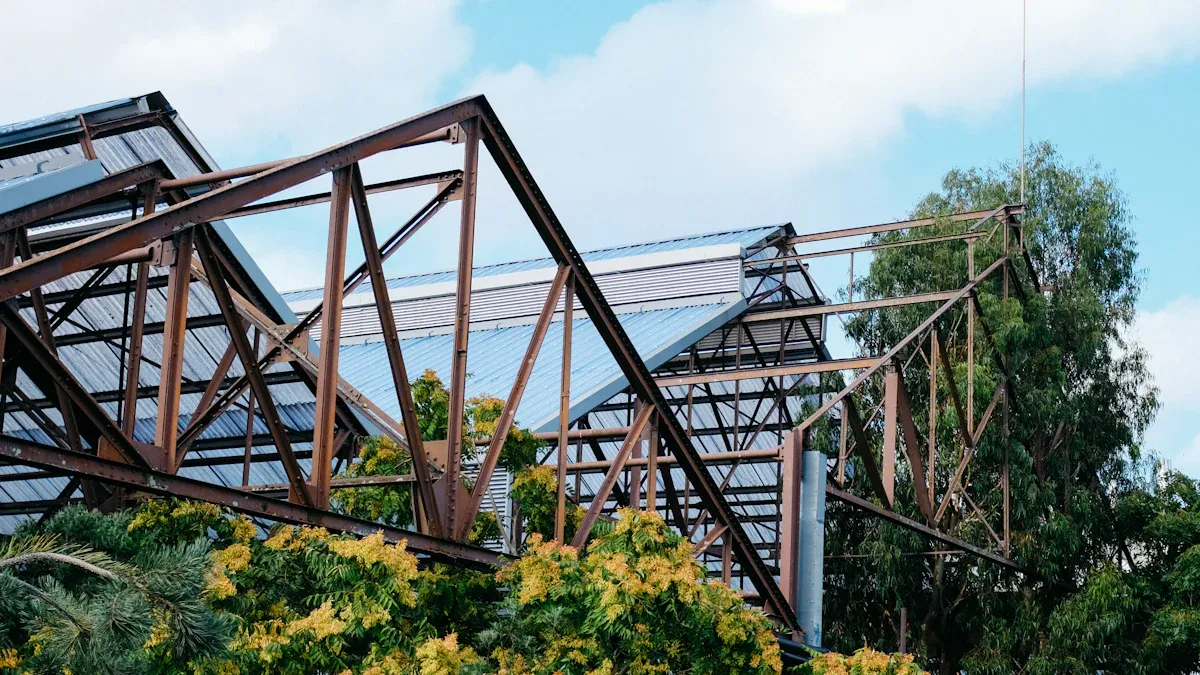
Roofs shield buildings, but their hidden frameworks are the true heroes. A roof truss is an engineered network of beams. It provides essential structural integrity and distributes loads effectively. The roof truss market is significant, valued at $32.5 billion in 2024. This market is projected to grow to $45.9 billion by 2033. Furthermore, roof trusses are prevalent, used in 63.8% of all new residential constructions. Various types of roof trusses exist. Selecting the correct one is crucial for building performance. This article will explore common and specialized truss designs.
Key Takeaways
Roof trusses are strong frameworks. They support a building’s roof. They help distribute weight safely.
Many types of roof trusses exist. Each type works best for different building needs. Examples include gable, king post, and scissor trusses.
Trusses save money and time. They are strong. They also reduce waste during building.
Choosing the right truss is important. Consider the roof’s shape, your budget, and how the inside of the building will look.
Building codes guide truss design. They ensure safety. They also ensure the roof is strong.
Roof Truss Fundamentals
What are Roof Trusses
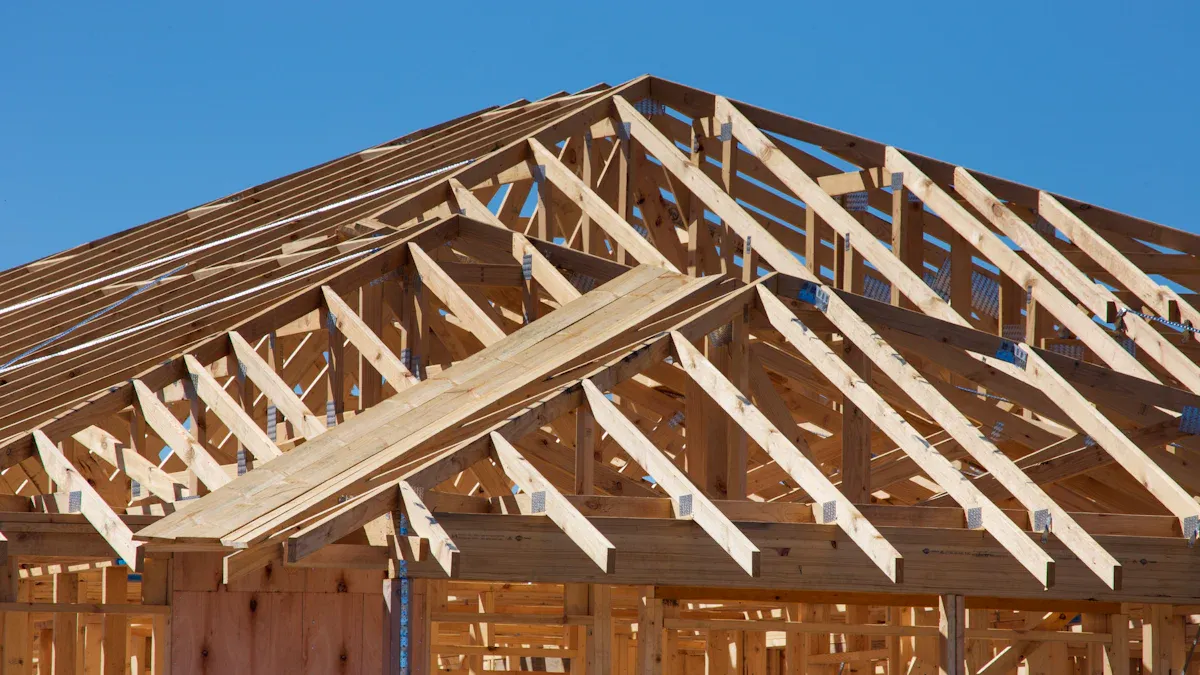
A roof truss is a structural framework. It supports a building’s roof. These frameworks are often triangular. Engineers design them for specific loads. They are usually prefabricated. This means workers build them in a factory. Materials include wood or steel. Sometimes they use both. The triangulated frame has interconnected parts. These parts are under tension or compression. Special fasteners join them. A timber roof truss bridges the space above a room. It provides support for the roof. Builders place roof trusses at regular intervals. Longitudinal timbers like purlins link them. This design creates a stable, rigid unit. It balances forces and pushes weight downwards.
Truss Components
Roof trusses have several key parts. Each part has a specific job.
Bottom Chord: This is the horizontal part. It runs along the bottom of the truss. It carries the roof’s weight. It sends this weight to the supports. It acts as a tension member. This provides stability.
Top Chord: This is the uppermost part. It carries compression loads from the roof. It directs these loads downwards.
Webs: These are diagonal and vertical parts. They connect the top and bottom chords. They distribute roof loads. They form a strong triangular framework.
Truss Plates: These are metal connectors. They are usually steel. They hold the truss joints together. They ensure forces transfer effectively.
Truss Benefits
Using roof trusses offers many advantages. They are often better than traditional stick framing.
Cost-Effectiveness: Roof trusses use fewer materials. Their quick installation saves money. This reduces overall project costs. It also lowers labor expenses.
Time Savings: Trusses reduce construction time significantly. Workers can complete a roof structure in hours or days. This keeps projects on schedule. It also lowers labor costs.
Superior Strength: Their triangular design makes them very strong. They are stable. They carry both vertical and horizontal loads. This prevents sagging. They can also span longer distances. They do not need extra support.
Reduced Material Waste: Factories build trusses with precise cuts. This minimizes wasted materials. It makes them more cost-effective.
Design Flexibility: Trusses allow for many designs. These include vaulted ceilings or open-concept layouts. They span large distances without interior load-bearing walls.
Precision Engineering: Factories build trusses in controlled settings. This ensures uniform quality. They are durable and reliable.
Common Types of Roof Trusses
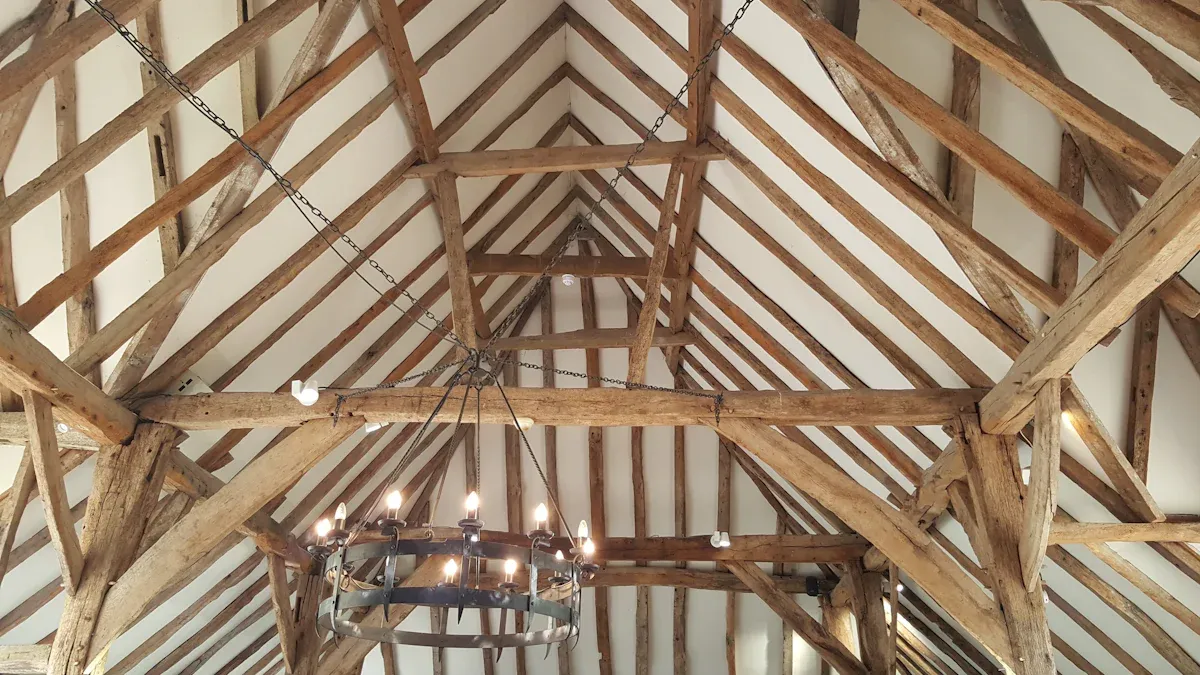
Builders use many different types of roof trusses. Each type has unique characteristics and applications. Understanding these common types of roof trusses helps in selecting the best option for a construction project. This section explores some of the most frequently used designs.
Gable Trusses
A gable truss forms the end wall of a building. It creates the triangular shape of a gable roof. This type of roof truss features vertical webs. These webs are spaced at regular intervals. Top and bottom chords connect these webs. A gable truss transfers vertical loads from the roof to the wall below. It also helps resist wind loads. Typical spans for a gable truss range from 24 to 60 feet (7.3-18.3 m). Overall heights can be 4 to 30 feet (1.22-9.14 m). Wood truss thickness is often 1.5, 3, or 4.5 inches (3.8, 7.6, 11.4 cm). Trusses typically have a pitch ratio between 1:1 and 1:6. Gable-end trusses are essentially frames. They have vertical pieces at 16-inch or 24-inch intervals. These pieces allow for attaching sheathing and siding. They do not have significant tensile strength. They must rest on the end wall. Their main use is to save time. They eliminate the need to frame a gable-end wall.
King Post Roof Truss
The king post roof truss is one of the simplest and most common types of roof trusses. It features a single central vertical post. This post connects the apex of the truss to the center of the bottom chord. Two inclined principal rafters form the top chords. Two struts support these rafters. This design creates a strong triangular structure. The king post truss is known for its cost-effectiveness. It is simple to design and build. It uses fewer materials. This reduces manufacturing and installation costs. It also requires fewer skilled laborers. This further lowers expenses. The king post truss is an economical design for small and medium spans. It has limited span capabilities. It suits small to moderate distances without internal support. It is not ideal for large-span structures. It also does not suit structures needing heavy load-bearing capacity. The king post truss is characterized by its simple design. It has two principal rafters and one central vertical post. This design gives it higher strength and economic efficiency. Builders use the king post in timber or steel bridges, pavilions, and industrial buildings. These applications require higher load-bearing capacity.
Queen Post Trusses
Queen post trusses are another common type of roof truss. They differ from the king post truss. A queen post roof truss uses two vertical posts. These posts are positioned on two sides. They connect the tie beam to the rafters. This design allows for longer spans than a king post truss. Queen post trusses can span 8 to 12 meters. Key components include two queen posts, two principal rafters, struts, a tie beam, straining beams, straining sills, and purlins. Straining beams and sills provide stability. The queen post connects with the principal rafter, strut, straining beam, straining sill, and tie beam. The top ends of the two main rafters join with the queen posts’ heads.
Fink Trusses
The fink roof truss is a very popular choice for residential roofs. It is the most common residential roof and truss configuration. Its web members form a repeating W-shape. These paired diagonal members effectively distribute loads at multiple points. This reduces chord bending. Fink trusses support spans up to 40 feet. Builders favor Fink trusses for their balance of strength, material efficiency, and design simplicity. This truss offers several advantages. It is a very lightweight structure. Its members primarily act in compression and tension. It is durable. Workers can prefabricate it or assemble it on-site.
Howe Trusses
A Howe truss resembles a Pratt design. Its diagonal members slope upward towards the center. The main diagonal members are primarily in compression. This makes it beneficial for materials strong in compression, such as timber. It performs well under heavy deck loads. Howe trusses are ideal for bridges. They span short to moderate distances. They suit carrying light to moderate loads. Builders commonly use them for pedestrian and railway bridges. They also work for roof structures. This truss is a cost-effective and lightweight solution for longer spans. Most members act mainly in compression or tension. This makes it an efficient structure.
Pratt Trusses
A Pratt truss features diagonal members that slope down towards the center. Vertical members carry the load vertically. This design efficiently distributes loads. It is particularly effective in tension. Diagonal members are typically under tension. Vertical members handle compression. This optimizes material usage and stability. The Pratt truss is widely used in bridge construction. This includes railroad and highway bridges. It effectively manages heavy loads over significant distances. Vertical members handle compressive forces. They connect the top and bottom chords. Diagonal members connect the top and bottom chords at an angle. They handle tensile forces. They slope downwards towards the center of the bridge. This arrangement ensures diagonal members experience tension. Vertical members experience compression. This force distribution allows for efficient material use. Tension members can be thinner without buckling risk. The Pratt truss is a structural system. It has horizontal, vertical, and diagonal members. It carries loads over relatively long spans compared to beams. It primarily functions as a bridge structure. It carries traffic and dead loads. It distributes them to its supports. Its diagonal members are inclined at the same angles. This ensures even load distribution across the truss. Common applications include railway and pedestrian crossings.
Specialized Truss Designs
Beyond the common types, specialized roof trusses address unique architectural needs and structural challenges. These designs offer specific advantages for various building projects. They allow builders to achieve particular aesthetics or functional requirements.
Scissor Trusses
Scissor trusses create stunning vaulted or cathedral-style ceilings. Their bottom chords angle upwards, mirroring the roof’s pitch. This design transforms ordinary spaces. It makes rooms feel open and airy. This unique aesthetic provides a dramatic, elegant touch. It makes homes feel bright, spacious, and distinct. Scissor trusses add significant visual interest. They allow for creative lighting solutions like chandeliers or recessed lights. They are perfect for spaces where openness is a priority. These spaces include living rooms, kitchens, or bedrooms. This design maximizes space. It creates a spacious atmosphere. It provides an illusion of more room. This is especially beneficial for smaller homes.
When selecting a pitch for scissor trusses, builders must match the span and pitch to the project’s needs. For smaller projects like garages or sheds, a short span and moderate pitch work well. Larger spaces, such as great rooms or barns, benefit from a steeper pitch and longer span. This creates a more striking effect. Builders consider the room’s purpose. A very steep pitch, like 12:12, might impress in a living room. It could feel overwhelming in a smaller area. Scissor trusses offer a visually appealing architectural design. They add character to a space, particularly in homes with high ceilings. Retail spaces, warehouses, and homes often choose them. They aim to introduce a unique touch to their interior design.
Attic Trusses
Attic trusses, also known as room-in-attic trusses, are factory-built roof systems. They create usable living space within a home’s attic. They do not require adding a full second story. These roof trusses simplify roof construction. Engineers design them to meet local structural codes and conditions. Builders commonly use them for bonus rooms above garages. They also integrate them into slab-on-grade homes. This adds living space without increasing the building’s overall height. This is a clever way to expand living areas.
Converting an attic into living space with an attic roof truss requires careful planning. Builders must assess the existing structure. This involves inspecting the roof structure. It ensures it can support new loads. They evaluate the attic floor’s strength for additional weight. This may require reinforcement with extra joists or beams. They check if the ceiling height meets minimum building code requirements. This is typically 7 to 7.5 feet. Reinforcing existing load-bearing walls is crucial. This handles new loads. Additional support beams or columns may be necessary. They distribute weight and maintain structural integrity. Roof modifications, like adding dormers or skylights, increase natural light and headroom. Sometimes, raising the roof or altering its pitch is required for sufficient height. Proper insulation and ventilation are vital for comfort. They also prevent moisture issues. The attic floor must be strengthened with extra joists or beams. This supports the new ‘live loads’ of a living space. It prevents damage to the ceiling below and ensures safety. Homes built after the 1960s often feature 2×4 roof trusses. These make attic conversion significantly more challenging. Their structural design makes them difficult and expensive to remodel for living space. In such cases, removing existing trusses and replacing them with conventional rafter framing may be necessary. This frees up the attic space. Typical attic floors are not designed to support the ‘live loads’ of a living space. They require reinforcement with additional floor joists, cross bracing, or blocking. Consulting a structural engineer is essential for any structural modifications. This ensures safety and compliance.
Hip Trusses
Hip trusses form the framework for a hip roof. A hip roof slopes downwards on all four sides. This creates a distinctive, low-profile appearance. Hip roofs are popular for their stability and aesthetic appeal. A hip truss system involves several components. It includes hip girder trusses, which are main support trusses. It also includes hip jack trusses. These are shorter trusses that run from the hip girder to the wall plate. The hip roof design offers excellent wind resistance. This makes it suitable for areas prone to high winds. Builders often choose hip roofs for their clean lines and balanced look. This type of roof is common in many residential designs. The complex geometry of a hip roof requires precise engineering for its hip truss system. Each hip truss must fit perfectly to ensure structural integrity. The hip roof’s continuous slope provides good drainage. This helps prevent water accumulation. The hip design also allows for consistent overhangs around the entire building. This offers protection from the elements.
Mono Trusses
A mono truss, or single-slope truss, has only one sloping top chord. It resembles half of a traditional gable truss. This design creates a shed-style roof. Mono roof trusses are useful for additions, carports, or when connecting to an existing structure. They provide an economical solution when rooftop space is limited. Mono trusses are popular in many agricultural and commercial buildings. They can also be used as two halves of a truss system. They have a center bearing. This offers an alternative to a single, long common truss. Mono roof trusses have a single sloping plane. They can achieve spans up to 35 meters or 115 feet. These spans are general estimates. They can vary based on truss design, materials, and local building codes. Roof trusses are critical for structural support. They distribute loads and bear the roof’s weight. They transfer these loads to the building’s walls. Truss design is a complex process. It requires an understanding of structural engineering principles. This ensures the flat truss withstands various loads. These include dead loads (truss weight, permanent fixtures), live loads (snow, furniture), and environmental loads (wind, seismic forces). A flat truss is often used in commercial buildings for its simplicity and efficiency. Another application for a flat truss is in creating a sloped ceiling within a larger structure.
Gambrel Trusses
A gambrel roof features a double-sloped design on each side. The lower slope is steeper than the upper slope. This creates a distinctive barn-like or Dutch colonial silhouette. Gambrel trusses are specifically designed to form this unique roof shape. This design maximizes usable interior space. It creates functional areas like lofts, attics, or extra bedrooms. The steep lower slope is excellent for storage, living areas, or workspaces. It enhances airflow and ventilation throughout the home. This reduces humidity and extends roof lifespan. The gambrel design provides excellent drainage. This is especially beneficial for outbuildings. It prevents water pooling and reduces leak risks. Gambrel trusses provide structural support and stability. They distribute weight evenly and prevent sagging. The design allows for increased interior space and headroom in attics or upper levels. The steep lower slope facilitates efficient water runoff and snow shedding. This enhances durability. The gambrel roof is a classic choice for barns and farmhouses. It is also gaining popularity in residential design for its unique aesthetic and practical benefits.
Raised Heel Trusses
Raised heel trusses, also known as energy-heel trusses, feature an extended vertical portion at the heel. This raises the top chord above the wall plate. This design creates additional space for insulation. Raised heel trusses improve insulation and energy efficiency. They provide additional space for insulation. This design allows for the full depth of insulation to extend to the outside edge of the top plate. This prevents ice dam formation. It potentially allows for lower R-values in some climate zones. This extra room accommodates cheaper insulation options. These include fiberglass batts, blown cellulose, or blown fiberglass. It ensures that the insulation is not compressed. It maintains its optimal thermal resistance.
Raised heel trusses can eliminate the need for baffles. This contributes to improved ventilation. This design allows for a more consistent and effective airflow within the attic space. Raised heel trusses prevent wind-washing. Wind-washing is a common issue where wind blows insulation away from the exterior walls. The sheathing on raised-heel trusses makes it nearly impossible for insulation on the edge to be blown inward. This ensures that insulation remains in place and effective. Raised heel trusses ensure that insulation, such as fiberglass batts, is not compressed. Raising the heel height by a foot or more helps the insulation retain its optimum thermal resistance (R-value). This is crucial for effective insulation. Consistent ventilation is a critical element of a raised-heel roof system. It helps regulate temperature and pressure differences between the attic and conditioned spaces. This design can also eliminate ice dams. It prevents snow from freezing into ice. It allows it to melt harmlessly into the drainage system. These benefits make raised heel trusses a smart choice for energy-efficient applications in residential design.
Choosing Roof Trusses
Selecting the correct roof truss for a building project requires careful consideration. Many factors influence this decision. Builders must evaluate each aspect to ensure structural integrity and meet design goals.
Roof Type and Pitch
A roof’s slope, or pitch, is crucial for a building’s functionality and aesthetic appeal. It influences how the roof handles rainwater and snow. It also affects its resistance to wind and the overall design. Pitched roofs effectively shed rainwater and snow. Steeper slopes provide quicker runoff during heavy rains. The roof’s design, including its structural elements like trusses, supports overall stability and shape. It ensures the roof bears weight and resists external pressures. The type of roof chosen directly impacts the overall look and functionality of a home. Different truss designs to match roof type are suitable for various roof styles. These include gable, hip, or gambrel. The roof’s style determines the most appropriate truss design for a construction project.
Budget and Cost
Cost is a significant factor in any construction project. Different truss types have varying material and labor costs. Simple designs, like king post trusses, are often more economical. Complex designs, such as attic trusses, require more materials and specialized fabrication. This increases their cost. Builders must balance the desired structural performance with the available budget. A cost ranking for trusses often places simpler designs lower.
Aesthetics and Design
Architectural trends significantly influence truss aesthetics. They show a balance between artistic form and functional requirements. Trusses must seamlessly integrate with a building’s visual narrative. They must also ensure stability. The aesthetic role in truss design involves intelligently integrating form within functional spaces. Visual appeal must align with practicality. Architects and engineers collaborate to harmonize stylistic choices with a truss’s performance. They incorporate innovative design elements. This allows customization according to unique design visions.
Truss Type | Aesthetic/Design Goal |
|---|---|
King Post | Traditional appearance, ideal for small spans |
Queen Post | Suitable for medium spans with added support |
Fink | Cost-effective, common for residential buildings |
Scissor | Creates vaulted ceilings, open and decorative interiors |
Howe | Strong support for large spans, industrial buildings |
Timber trusses are recognized for their aesthetic value. They enhance a space’s overall look and feel. Natural wood’s timeless allure makes timber trusses captivating. They offer both structural and aesthetic enhancement. Unique grain patterns and textures add depth and richness. They create dramatic vaulted ceilings and a welcoming atmosphere. Timber trusses are adaptable to various design styles, from rustic to modern. Different structural frameworks offer distinct visual impacts. Parallel chord truss designs are suitable for clean and modern looks.
Span and Load
Engineers perform mathematical calculations for span and load. These involve dead load and live load. Dead load is the permanent weight from materials. Live load is temporary weight from snow, water, or people. The roof’s pitch affects how efficiently it sheds snow and water. This influences live load. Span is the distance between supports. Longer spans require stronger materials or additional supports. Roofing materials have varying weights and strengths. Asphalt shingles are lightweight. Concrete tiles are very heavy. Building blueprints provide crucial information on structural details. They show support structures and load-bearing walls. Local building codes are essential for ensuring safety and structural integrity. They include snowfall guidelines and inspection requirements.
Dead Load: Permanent weight, typically 10-15 pounds per square foot for residential roofs.
Live Load: Temporary weights like snow, people, and equipment, usually designed for at least 20 pounds per square foot for residential roofs.
Combined Loads: Add the dead load and live load to determine the total load the roof can handle. For example, 12 psf dead load + 20 psf live load = 32 psf total load.
Interior Layout
The desired interior layout significantly influences truss selection. Some trusses create open, vaulted ceilings. Scissor trusses are an example. Others, like attic trusses, provide usable living space within the roof structure. Builders must consider how the truss system will impact room dimensions and ceiling heights.
Building Codes
Building codes govern roof truss design, manufacturing, and installation. The International Residential Code (IRC) governs one- and two-family dwellings. It is a prescriptive code. For elements outside its prescriptive criteria, engineering design is required. The IRC allows prefabricated wood trusses. The International Building Code (IBC) becomes the governing code for truss design if the structure falls outside the IRC’s limits. The IBC’s requirements for wood trusses are similar to the IRC. They include specific considerations for environmental design criteria. These include wind, rain, snow, and seismic forces. ANSI/TPI 1-2014 is the national design standards for roof trusses. It establishes minimum requirements for the design and construction of metal-plate-connected wood trusses. It defines the roles and responsibilities of various parties involved. The SBCA Building Component Safety Information (BCSI) Guide provides guidance on bracing requirements. It helps prevent rotation and ensures lateral stability.
Materials and Installation
Truss Materials
Roof trusses use different materials. Wood and steel are the main choices. Each material has unique properties.
Wood Trusses:
They are generally more affordable.
They adapt to various roof shapes and designs.
They can come from sustainable sources.
They look good in exposed designs.
They are vulnerable to fire, mold, and termites if left untreated.
Steel is becoming more popular. Cold-formed steel trusses are common in homes and businesses. Steel roof trusses do not burn. This increases safety. It can also save money on insurance. Steel trusses are very durable. They work well for large roofs or heavy snow. Cold-Formed Steel (CFS) trusses resist extreme weather. This includes heavy snow, strong winds, and severe storms.
Material | Properties |
|---|---|
Timber (Wood) | – Cheaper upfront (historically popular) – Prone to bowing, warping, and pest infestations – Easily damaged by extreme weather – Less suitable for extensive construction projects – Economical for minor projects |
Steel | – More costly upfront but offers long-term investment benefits – More durable than timber – Lighter than wood but stronger due to high strength-to-weight ratio – Can handle heavy loads, strong winds, and rains – Pre-fabricated to specifications, preventing warping or changes in form – Low-maintenance (resistant to termites, no chemical treatments needed) – Fire-resistant (with fire-retardant coatings) – Ideal for big structures and large spans |
Prefab vs. Site-Built
Builders can choose between prefabricated and site-built trusses. Prefabricated trusses come from a factory. Workers build them in a controlled environment. This ensures consistent quality. They arrive ready for installation. Site-built trusses are assembled on the construction site. This offers more flexibility for unique designs. However, site-built trusses can take more time. They also depend on weather conditions. Most projects today use prefabricated trusses for efficiency.
Professional Installation
Proper roof truss installation is very important. It ensures the roof’s safety and stability. Thorough planning is essential. This includes checking building plans and local codes. Workers must take accurate measurements. Safe handling of trusses is vital. Secure them during transport. Use proper lifting equipment on-site. This prevents damage and injury. Workers must wear safety gear. This includes helmets, gloves, and safety shoes. They must also use fall protection. This includes harnesses and nets. Place trusses accurately. Brace them immediately. This prevents movement or collapse. Use correct hardware. Follow manufacturer instructions for nails and screws. Install permanent bracing. This distributes loads evenly. It adds rigidity.
Truss Maintenance
Regular maintenance keeps roof trusses strong. Check for signs of wear. Look for warping, discoloration, or small cracks. Listen for unusual squeaking sounds. A sagging roof indicates serious problems. Moisture or too much weight can cause this. It needs urgent professional help. Apply protective treatments. These resist moisture and pests. Ensure good attic ventilation. Remove debris from vents. Avoid too much insulation. This prevents moisture buildup. Call experts for severe cracks or sagging. They can assess damage after storms.
Conduct Regular Visual Inspections: Check for cracks, misalignment, sagging, and moisture damage.
Tackle Moisture Issues Immediately: Address any signs of moisture. This prevents mold and structural damage. Ensure proper ventilation.
Check and Trim Overhanging Trees: Prevent branches from damaging the roof and trusses.
Check and Reinforce Joints: Inspect and reinforce loose joints. This prevents costly repairs.
Always Consider Load Distribution: Clear snow or rain accumulation. This avoids too much load on the trusses.
This article explored many types of roof trusses, from simple king posts to specialized scissor designs. Each offers unique benefits for different building needs. Careful selection ensures structural integrity and meets design goals. Readers should consult professionals for optimal design and installation. Roof trusses remain essential for construction, with ongoing innovation shaping their future.
FAQ
What is the primary function of a roof truss?
A roof truss is a structural framework. It supports a building’s roof. Engineers design them for specific loads. Trusses provide structural integrity and distribute loads effectively. They transfer the roof’s weight to the building’s walls.
What is a King Post roof truss?
A King Post roof truss is a simple design. It features a single central vertical post. This post connects the truss apex to the bottom chord. Two inclined principal rafters form the top chords. Builders use it for small to medium spans.
What is a Fink truss?
A Fink truss is a very popular residential roof truss. Its web members form a repeating W-shape. These paired diagonal members distribute loads effectively. Fink trusses support spans up to 40 feet. They offer strength and material efficiency.
What is a Scissor truss used for?
Scissor trusses create vaulted or cathedral-style ceilings. Their bottom chords angle upwards. This design makes rooms feel open and airy. It adds significant visual interest. Builders use them for living rooms, kitchens, or bedrooms.
What are the main benefits of using roof trusses?
Roof trusses offer cost-effectiveness and time savings. They provide superior strength and reduce material waste. Trusses allow for design flexibility. Precision engineering ensures uniform quality. They are durable and reliable.