

The Heliconia plant captivates gardeners and landscapers with its vibrant colors and unique shapes. You will find that there are 194 known species of Heliconia, primarily thriving in tropical regions. These plants not only enhance garden aesthetics but also attract pollinators like hummingbirds. Understanding the different types of Heliconia can help you choose the right species for your landscape. For instance, some species serve as excellent ornamentals, while others thrive in specific environments.
Heliconia Species | Use in Landscaping |
|---|---|
H. rostrata | Yes |
H. chartacea | Yes |
By learning about their characteristics, you can provide the proper care each type needs to flourish in your garden.
Key Takeaways
Heliconia plants come in many shapes, sizes, and colors. Choose from tall varieties like Heliconia caribaea or smaller ones like Heliconia angusta.
These plants attract pollinators such as hummingbirds and butterflies, enhancing the ecosystem in your garden.
Each Heliconia type has specific care needs. For example, Heliconia rostrata likes moist conditions, while Heliconia angusta prefers partial shade.
When selecting Heliconia, consider your local climate and growing conditions to ensure the best growth.
Pair Heliconia with companion plants like bromeliads and ferns to improve overall garden health.
Different Types of Heliconia
Heliconia Rostrata
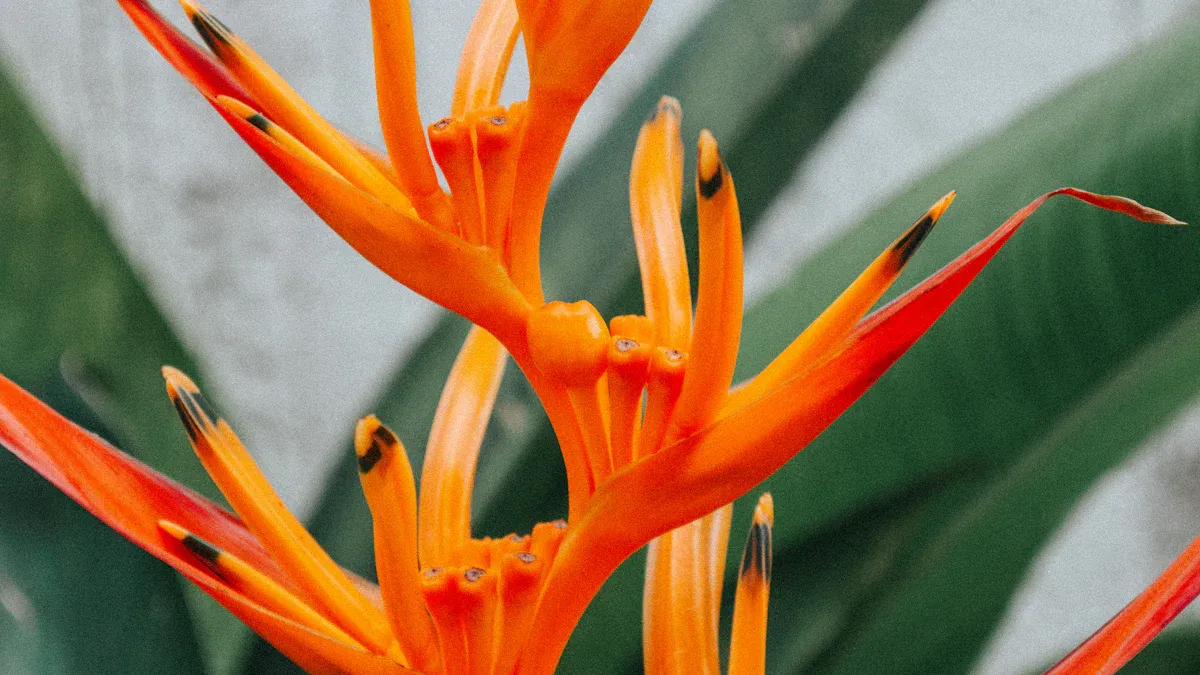
Heliconia rostrata, often called the “Lobster Claw,” stands out with its unique inflorescence structure. You will notice its pendulous bracts that face downward, creating a striking visual effect. The vibrant red bracts feature a lemon-yellow edge, hiding small flowers within. This species can grow up to ten feet tall, making it a dramatic addition to any tropical garden. Its dark green lanceolate leaves add to its appeal, held upright atop slender pseudostems.
Key Features:
Height: Up to 10 feet
Bracts: Red with yellow edges
Growth Habit: Terminal inflorescence that inverts after emerging
Heliconia Caribaea
Heliconia caribaea is another impressive species, regularly reaching heights of 10 to 15 feet. This plant features small true flowers nestled within vibrant bracts on long flower stalks. The bracts have a waxy texture, making them visually striking and suitable for cut flowers.
Growth Requirements:
Height: 12 to 20 feet
Light: Thrives in high light to full sun
Moisture: Requires plentiful moisture and fertilizer
Heliconia Psittacorum
Heliconia psittacorum is known for its striking golden bracts that resemble a flickering torch. This species adapts well to warm and humid conditions, making it ideal for tropical gardens. Its lush foliage features broad, paddle-shaped leaves that enhance its visual appeal.
Ecological Benefits:
Attracts butterflies and hummingbirds
Enhances ecological harmony in gardens
You will find that Heliconia psittacorum is extensively used in ornamental horticulture. Its vibrant inflorescence, characterized by red bracts and pale-yellow tubular flowers, makes it a popular choice for floral arrangements.
Heliconia Angusta
Heliconia angusta is a smaller species, typically growing between 2 to 4 feet tall. It showcases beautiful flowers in shades of red and yellow.
Feature | Description |
|---|---|
Flower Color | Reds, yellows |
Size | Height: 2 ft. to 4 ft. |
This species thrives in well-drained soil and prefers partial shade.
Soil Condition | Details |
|---|---|
Optimal pH Range | 5.5 to 7.0 for nutrient availability |
Moisture Levels | Excess moisture can lead to root rot |
Soil Composition | A balanced mix of compost, perlite, and peat |
Heliconia Latispatha
Heliconia latispatha is distinct for its broad, boat-shaped bracts that display vibrant colors like red, orange, and yellow. The inflorescences are arranged upright, creating a striking contrast with the plant’s large, glossy leaves.
Uses in Landscaping:
Ideal for partly shaded areas
Produces exotic, long-lasting flowers
Excellent for cutting and floral arrangements
Heliconia Bihai ‘Yellow Dancer’
Heliconia Bihai ‘Yellow Dancer’ is a large, fast-growing variety. It features big, upright inflorescences adorned with 5 to 12 bright yellow bracts.
Feature | Description |
|---|---|
Growth Characteristics | Large, fast-growing Heliconia |
Inflorescence Features | Big, upright inflorescences with bright yellow bracts |
Ease of Cultivation | Easy to grow and flowers in suitable conditions |
This variety thrives in full sun and can reach heights of 15 feet, flowering year-round.
Heliconia Champneana
Heliconia champneana thrives best in bright, filtered sunlight. It requires regular watering, ensuring the soil dries out between waterings.
Growth Conditions:
Prefers moist soil
Thrives in warm climates, particularly in Zone 10
Heliconia Schiedeana
Heliconia schiedeana features broadleaf evergreen foliage with glossy green leaves. Its red and yellow flowers emerge in fall and summer, adding vibrant color to gardens.
Feature | Description |
|---|---|
Foliage | Broadleaf evergreen with glossy green leaves. |
Flower Colors | Red and yellow flowers that emerge in fall and summer. |
Growing Conditions | Thrives in mostly sun to mostly shade with regular watering. |
This species is resilient in cooler climates, surviving in USDA zone 9.
Heliconia Stricta
Heliconia stricta is recognized for its vibrant colors and unique shapes. It features pendent inflorescences that are attractive for floral arrangements.
Key Attributes:
Vibrant colors and unique shapes
Increasingly used as a cut flower
Contributes to local biodiversity by creating phytotelmata, which provide habitat for various invertebrates
Heliconia Angusta ‘Holiday’
Heliconia angusta ‘Holiday’ is a popular variety among gardeners. It offers a compact growth habit and vibrant flowers, making it an excellent choice for smaller spaces.
Popular Varieties
Many gardeners appreciate specific Heliconia varieties for their unique features. Here are some popular choices:
Variety | Key Features | Highlights |
|---|---|---|
Hot Rio Nights | Mature Height: 3m–4m | Low Maintenance: Thrives with minimal care but loves regular fertilizing. |
Kawauchi | Mature Height: 3m–4m | Compact and Clumping: Ideal for smaller areas. |
Rauliniana | Mature Height: 3.5m–4.5m | Elegant Hanging Bracts: Unique visual impact. |
Understanding the different types of Heliconia helps you select the right species for your garden. Each variety has unique characteristics that cater to various landscaping needs.
Conclusion
In conclusion, understanding the different types of Heliconia plants enriches your gardening experience. Each species offers unique features that can enhance your landscape. Here are some key takeaways:
Diversity: Heliconia plants come in various shapes, sizes, and colors. You can choose from tall varieties like Heliconia caribaea to smaller ones like Heliconia angusta.
Ecological Benefits: These plants attract pollinators such as hummingbirds and butterflies. They contribute to a vibrant ecosystem in your garden.
Care Requirements: Each type has specific needs. For example, Heliconia rostrata thrives in moist conditions, while Heliconia angusta prefers partial shade.
Tip: When selecting Heliconia for your garden, consider your local climate and the specific growing conditions. This will help you choose the right species that will thrive in your environment.
By recognizing the characteristics of each Heliconia type, you can provide the proper care they need. This knowledge allows you to create a stunning tropical garden that flourishes year-round.
Explore the beauty of Heliconia plants in your gardening endeavors. With the right selection and care, you can enjoy their vibrant colors and unique forms for years to come. Happy gardening! 🌺
In summary, recognizing the diverse types of Heliconia plants enhances your gardening experience. Each species has unique characteristics and care requirements. Here are some key takeaways:
Diversity: Heliconia plants vary in height, color, and growth habits.
Care Needs: Understanding their specific needs helps prevent common issues like root rot and under-watering.
Tip: Pair Heliconia with companion plants like bromeliads and ferns to improve overall garden health.
Explore the beauty of Heliconia in your garden. With the right knowledge and care, you can create a vibrant tropical oasis. 🌺
FAQ
What is the best way to care for Heliconia plants?
To care for Heliconia, provide well-drained soil, regular watering, and bright light. Fertilize every few months to promote healthy growth.
How often should I water my Heliconia?
Water your Heliconia when the top inch of soil feels dry. Ensure the soil remains moist but not soggy to prevent root rot.
Can Heliconia plants survive in colder climates?
Heliconia plants prefer tropical climates. Some species can tolerate cooler temperatures, but most thrive in USDA zones 10 and above.
How do I propagate Heliconia plants?
You can propagate Heliconia through division. Carefully separate the rhizomes and replant them in well-draining soil.
Are Heliconia plants safe for pets?
Yes, Heliconia plants are non-toxic to pets. However, always monitor your pets around any plants to ensure their safety.