
Tree bark showcases nature’s artistry, presenting a stunning array of colors and textures. Each type of bark plays a vital role in the ecosystem. Understanding different types of tree bark helps you appreciate their beauty and their function. For instance, diverse bark supports various species of epiphytic bryophytes. These small plants enhance forest biodiversity, improve soil quality, and aid in nutrient cycling. Take a moment to observe the bark around you. You’ll discover a world of differences that contribute to the health of our environment.
Key Takeaways
Different types of tree bark, such as smooth, ridged, and plated, serve unique ecological functions that support tree health and resilience.
Smooth bark helps trees by preventing the growth of epiphytes, allowing for better sunlight access and photosynthesis.
Ridged bark provides excellent protection against environmental stressors, helping trees withstand wind and temperature changes.
Plated bark acts as a barrier against pests and physical damage, enhancing the tree’s ability to survive harsh conditions.
Observing and appreciating the variety of bark types can deepen your connection to nature and highlight the importance of biodiversity.
Different Types of Tree Bark: Smooth
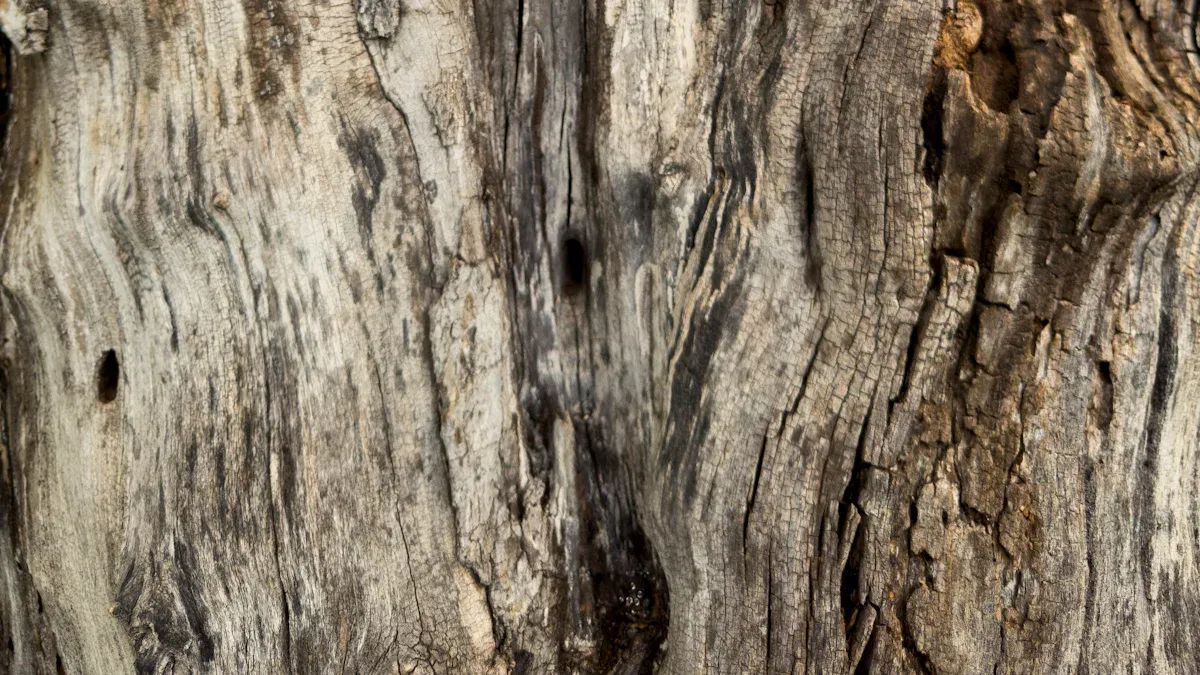
Characteristics of Smooth Bark
Smooth bark stands out for its sleek and polished appearance. You can often find it in various colors, ranging from white to gray, and even reddish-brown. The texture of smooth bark is typically uniform and can feel soft to the touch. This type of bark often peels away in thin layers, which helps the tree stay healthy. Here are some common colors and textures you might observe:
Tree Species | Common Color(s) | Texture Description |
|---|---|---|
Silver Birch | White | Smooth, peels in papery layers |
American Beech | Silvery-gray | Smooth, visually pleasing |
European Hornbeam | Gray | Smooth, with vertical striations |
Paperbark Maple | Cinnamon, reddish-brown | Exfoliates in thin, papery sheets |
Manzanita | Reddish-brown | Smooth, polished appearance |
Mexican Sycamore | Mottled (gray, brown, white) | Smooth, interesting visual effect |
Smooth Bark Eucalyptus | Varies (brown, gray, cream, white) | Smooth, varies by species |
Desert Ironwood | Dark gray | Smooth, fissured with intricate markings |
Red Maple | Light gray (initially) | Smooth, develops furrows with age |
Examples of Smooth Bark Trees
Many trees exhibit smooth bark, making them easy to identify. Some of the most frequently cited examples include:
Tree Species |
|---|
Aspen |
Pin Cherry |
Beech |
Striped Maple |
Musclewood |
Red Maple |
Norway Maple |
Bitternut Hickory |
Red Oak |
Sweet Birch |
Basswood |
Serviceberry |
Smooth bark offers several benefits to trees. It prevents the growth of epiphytes, which can block sunlight and hinder photosynthesis. This feature supports tree health and growth. Additionally, smooth bark can perform photosynthesis, contributing to energy production. This process aids trees in recovering from defoliation and other stressors.
Different Types of Tree Bark: Ridged
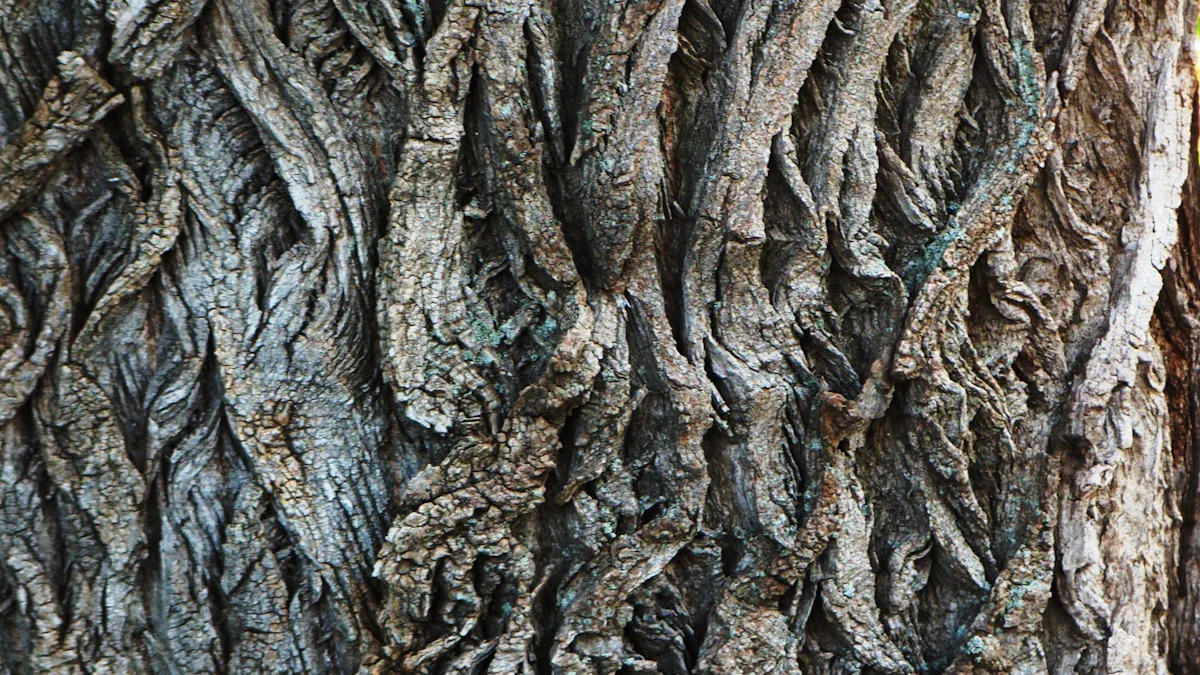
Characteristics of Ridged Bark
Ridged bark features a distinct texture that sets it apart from smooth bark. You can recognize it by its interlacing ridges and furrows, which resemble a freshly plowed field. This unique structure serves several important ecological functions.
Here’s a closer look at the defining features of ridged bark:
Feature | Description |
|---|---|
Ridge and Furrow | Interlacing ridges and furrows, resembling a freshly furrowed farm field. |
Variability | Differences based on stiffness, thickness, width, shape, color in furrows, and texture. |
The thick, textured surface of ridged bark provides excellent protection against environmental stressors. It helps deflect wind and prevents water from penetrating the inner layers of the tree. This reduces the risk of rot and decay. Additionally, the rugged texture acts as insulation against temperature fluctuations, maintaining a stable internal temperature during extreme weather.
Examples of Ridged Bark Trees
Many trees exhibit ridged bark, making them easy to identify in forests and parks. Here are some common examples:
Pitch pine
Northern red oak
Ash
Walnut
Basswood
Hickory
Black locust
Red oak
These trees not only showcase the beauty of ridged bark but also highlight its functional benefits. The rough texture protects them from physical damage caused by animals and falling branches. By understanding the different types of tree bark, you can appreciate how these features contribute to the overall health and resilience of trees in your environment.
Different Types of Tree Bark: Plated
Characteristics of Plated Bark
Plated bark features a unique appearance that sets it apart from other types. You can recognize it by its layered structure, which often resembles large, flat plates or scales. This bark type serves several important functions for the trees that possess it.
Here’s a closer look at the defining characteristics of plated bark:
Bark Type | Characteristics |
|---|---|
Stretched | Smooth appearance, allowing for conspicuous expansion without superficial disruptions. |
Exfoliating | Recognized by scars of fallen scales, enabling regular shedding of outer bark layers. |
Furrowed | Typically features deep grooves or furrows, enhancing the bark’s protective qualities. |
Peeling | Involves layers that peel away, which helps the tree adapt to environmental changes. |
Plated bark provides excellent protection against physical damage. It acts as a barrier against pests and environmental stressors. This bark type is commonly found in older pines and hickories. Some species even exhibit limited resistance to fire, adding another layer of protection.
Examples of Plated Bark Trees
Several trees showcase plated bark, making them easy to identify. Here are some notable examples:
Eastern White Pine
Ponderosa Pine
Shagbark Hickory
Black Walnut
Red Pine
These trees not only highlight the beauty of plated bark but also demonstrate its functional benefits. The layered structure helps the tree withstand harsh weather conditions and resist damage from animals. By understanding the different types of tree bark, you can appreciate how these features contribute to the overall health and resilience of trees in your environment.
Ecological Role of Bark
Bark and Tree Health
Bark plays a crucial role in maintaining tree health. It acts as a protective barrier against various threats. The outer bark shields the inner layers from weather elements, pests, and diseases. When you observe a tree, notice how the bark’s thickness and texture contribute to its overall resilience.
Here are some key functions of bark that support tree health:
Function | Description |
|---|---|
Protection from Damage | The rhytidome protects the sprout from mechanical damage and external impacts. |
Moisture Regulation | Bark prevents water loss and reduces frost effects, crucial for maintaining tree health. |
Fire Resistance | Bark thickness influences tree survival during fires, as established by multiple studies. |
Bark also insulates trees from extreme temperatures. This insulation helps maintain a stable internal environment. During drought, bark can adjust its permeability to minimize water loss, conserving moisture. The inner bark, known as phloem, transports essential nutrients and water, supporting growth and resilience.
You might be surprised to learn that damage to the outer bark can expose the inner bark to injury. This exposure endangers nutrient transport, which is vital for the tree’s health. If the phloem gets injured, it can affect the vascular cambium and xylem, which are crucial for water and nutrient transport.
Bark’s Environmental Interactions
Bark interacts with various environmental factors, influencing both the tree and its surrounding ecosystem. It serves as an insulator against heat, with its effectiveness increasing with thickness. The moisture content within bark plays a dual role; while it can help prevent combustion, it may also enhance heat conduction during fires, potentially reducing fire resistance.
Bark supports biodiversity by providing habitats for insects, birds, and other wildlife. For example:
Shagbark hickory: Features long loose plates of bark that provide shelter for insects.
Black cherry: Has small scales resembling burnt potato chips, creating microhabitats for various species.
White birch: Wrapped in tight, light-reflecting bark that protects against thawing and re-freezing, offering a safe environment for hibernating insects.
Bark also contributes to nutrient cycling in forest ecosystems. It serves as a habitat for various organisms and acts as a reservoir for essential nutrients like nitrogen and phosphorus. This nutrient storage influences the overall health of the ecosystem.
Understanding the different types of tree bark enriches your appreciation of nature. Each bark type plays a vital role in the ecosystem, influencing everything from lichen communities to tree health. Here are some key takeaways:
Bark type diversity significantly affects lichen community structure, especially in tropical rainforests.
Different bark types impact moisture retention and pH levels, influencing lichen species richness.
As you explore your local environment, take time to observe the variety of bark textures, colors, and patterns. Feel the bark to appreciate its unique qualities. Reflect on how the changes in a tree’s bark mirror personal growth and resilience. By doing so, you connect more deeply with the natural world around you. 🌳
FAQ
What is the purpose of tree bark?
Tree bark protects the inner layers of the tree from pests, diseases, and environmental stressors. It also helps regulate moisture and insulates the tree against temperature changes.
How can I identify different types of bark?
You can identify bark by observing its color, texture, and patterns. Smooth, ridged, and plated are common types. Use a field guide or smartphone app for assistance.
Does bark change as a tree ages?
Yes, bark often changes as a tree matures. Young trees may have smooth bark, while older trees develop ridges, plates, or fissures. These changes help the tree adapt to its environment.
Can bark affect the ecosystem?
Absolutely! Bark provides habitats for insects and birds. It also influences moisture retention and nutrient cycling, supporting overall forest health and biodiversity.
How does bark contribute to tree health?
Bark acts as a protective barrier, preventing damage from external threats. It also regulates moisture loss and aids in nutrient transport, which is vital for the tree’s growth and resilience.