Compost tea serves as a powerful tool for gardeners, providing essential nutrients and beneficial microbes to plants. This liquid gold enhances soil quality and promotes healthy growth. To achieve the best results, you must focus on the critical ingredients in your compost tea. Using the right components ensures that your plants receive optimal benefits. Research shows that while compost tea can enhance nutrient availability, it may not significantly change microbial diversity or soil quality metrics. Thus, selecting quality ingredients becomes crucial for maximizing its effectiveness.
Key Takeaways
Compost is the foundation of compost tea. Use well-composted organic material for the best results.
Water quality matters. Always use dechlorinated water to protect beneficial microorganisms.
Aeration boosts microbial activity. Aerated compost tea has higher beneficial bacteria, promoting plant health.
Add microbe foods like molasses and kelp to enhance microbial growth and nutrient availability.
Apply compost tea every 2-4 weeks for optimal plant health and improved soil quality.
Critical Ingredients for Compost Tea

Compost
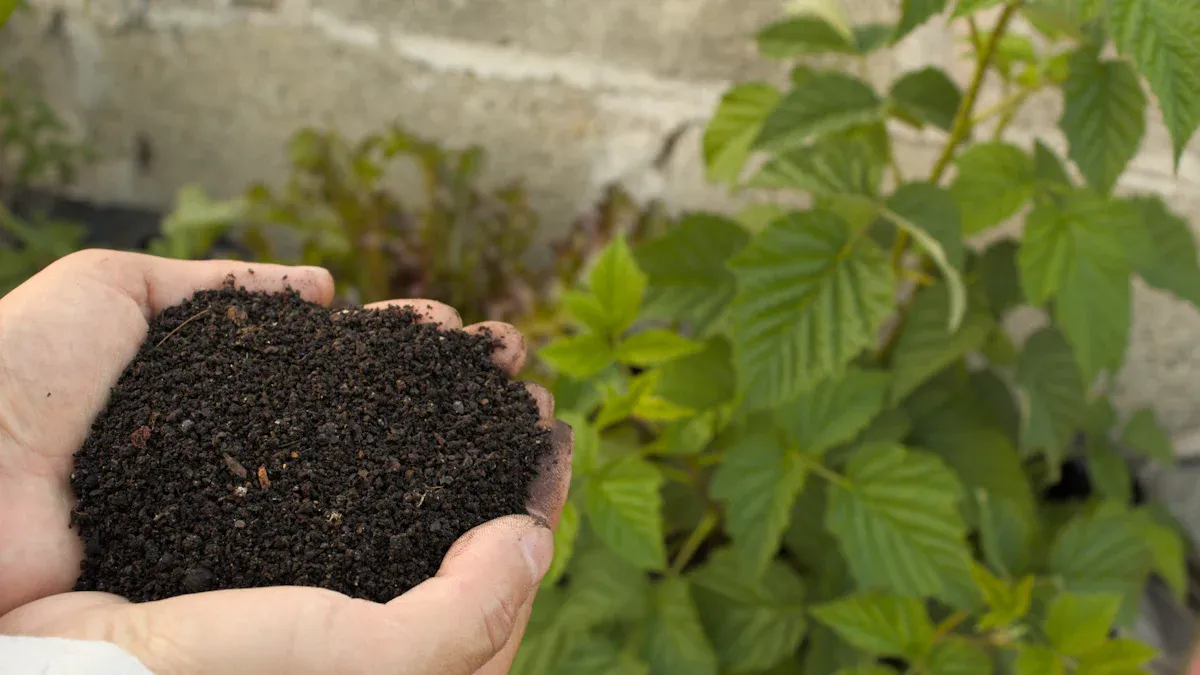
Compost serves as the foundation of your compost tea. It contains a rich blend of organic matter, nutrients, and beneficial microorganisms. Using well-composted organic material from a thriving compost pile yields the best results. Research shows that compost tea can significantly improve tree water status, especially during water stress. It enhances photosynthetic performance, yield, and fruit quality, leading to sweeter cherries. The bio-stimulant qualities of compost tea indicate its potential effectiveness in agricultural practices.
To maximize the benefits, consider adding worm castings, which are the richest natural source of fertilizer. Trace minerals, green sand, humic acid, and molasses also enhance the nutrient profile of your compost tea. These ingredients work together to create a potent brew that supports plant health.
Water
Water plays a crucial role in brewing compost tea. The quality of water you use can significantly impact microbial populations. Chlorine in tap water can harm beneficial microorganisms, reducing their numbers. Research indicates that chlorine can oxidize natural organic matter, damaging bacteria and preventing their reproduction. Therefore, using dechlorinated water is essential for cultivating beneficial bacteria.
Here are some recommended water sources for making compost tea:
Water Source | Recommendation |
|---|---|
Chlorine-free water | Fill a clean 5-gallon bucket with 4 gallons. |
Rainwater | Ideal for compost tea preparation. |
Well water | Good alternative for beneficial microbial growth. |
City water | Should be aerated in an open container for a few hours to eliminate chlorine. |
Allowing tap water to sit for 24 hours helps dissipate chlorine, ensuring a healthier brew for your plants. The temperature of the water can also influence microbial activity. Warmer water helps extract nutrients effectively, while the pH level affects nutrient solubility.
Aeration
Aeration is vital for optimal microbial activity in compost tea. Aerated compost tea shows high microbial loads, with beneficial bacteria thriving. The brewing process often includes adding oxygen, nutrients, and microbial starter cultures, enhancing biological activity. Studies reveal that culturable bacterial population densities increase significantly in aerated compost teas. This indicates that aeration promotes beneficial microbial populations, which are crucial for plant health.
Microbe Foods
Microbe foods, such as molasses, kelp, fish, and humic acids, enhance microbial growth in compost tea. These ingredients provide essential nutrients that support the thriving microbial community. For instance, adding 1 tablespoon of unsulfured blackstrap molasses and 1 tablespoon of organic liquid kelp fertilizer to your compost tea recipe can significantly boost microbial activity.
The combination of these microbe foods creates a nutrient-rich environment that encourages beneficial microorganisms to flourish. This, in turn, leads to healthier plants and improved soil quality.
Nutrient Benefits of Ingredients
Nutrient Contribution
The ingredients in your compost tea provide essential nutrients that promote healthy plant growth. Compost, as the primary ingredient, is rich in nitrogen, phosphorus, and potassium. These nutrients are vital for various plant functions. For instance, nitrogen supports leaf growth, phosphorus aids in root development, and potassium enhances overall plant resilience.
Here are some key benefits of compost tea nutrients:
Promotes rapid growth: Plants treated with compost tea often grow faster and stronger.
Increases hardiness: Compost tea helps plants become more resilient to environmental stressors.
Enhances leaf size: You may notice larger leaves and healthier harvests when using compost tea.
Boosts flower vibrancy: Flowers become more vibrant, and fruit yields increase significantly.
Microbial Activity
Microbial activity in compost tea plays a crucial role in enhancing plant health. Beneficial bacteria and fungi present in the tea help protect plants from diseases. They create a competitive environment that prevents harmful pathogens from taking hold.
Consider these points about microbial activity:
Disease suppression: Beneficial microbes can mitigate damage from blight, fungi, and mold.
Nutrient availability: These microorganisms increase the availability of nutrients to your plants.
Microbial diversity: Compost tea enhances soil biology by increasing microbial diversity, which is essential for a balanced ecosystem.
Research shows that aerated compost tea (ACT) significantly boosts the diversity and biomass of beneficial microorganisms. This process involves adding oxygen, compost, and a food source, which promotes microbial growth.
Soil Health Improvement
Using compost tea not only benefits your plants but also improves soil health over time. The nutrients and microorganisms in compost tea act as a natural soil amendment. They enhance nutrient uptake and support the development of healthy soil structure.
Here’s how compost tea contributes to long-term soil health:
Supports microbial diversity: The beneficial microorganisms in compost tea help maintain the activity and diversity of functional microbial groups.
Enhances soil structure: Microorganisms bind soil particles into aggregates, improving aeration and water permeability.
Promotes resilience: The application of compost tea encourages plant resilience without relying on synthetic inputs.
Incorporating trace elements and supplemental nutrients, such as worm castings and rock phosphate, further enriches your compost tea. These additions provide a balanced nutrient profile that supports robust plant growth.
Recipe for Compost Tea

Gathering Materials
To make effective compost tea, you need to gather the right materials. Here’s a list of essential items:
6.5-gallon bucket with a lid
Aquarium air pump
3 to 6 feet of aquarium hose/tubing
One T-valve or cross-valve
Aquarium airstones or bubblers (optional)
5 gallons of water
2-4 cups of mature compost, sieved through ½” mesh or smaller
One nylon stocking, sock, or another porous bag-like material to hold the compost
Using high-quality compost is crucial. Different organic materials, such as tea waste or chicken manure, can significantly influence the effectiveness of your compost tea.
Brewing Process
Brewing compost tea is straightforward. Follow these steps to maximize nutrient extraction:
Prep the Water: Allow your water to reach room temperature. Add microbial foods before adding compost.
Increase Surface Area of Compost: Combine different types of compost to enhance microbial diversity. Massage the brew bag to expose more surface area.
Set Your Brew Length: Brew time varies with temperature. Aim for 12-24 hours in warm conditions and 48-72 hours in cooler ones.
Empty the Brewer: Filter the brewed tea to remove sediment. Clean the brewer immediately after use.
Clean the Brewer: Use environmentally-friendly products to clean the brewer and brew bag thoroughly.
Use Your Tea: Apply the compost tea within 24-48 hours for maximum benefit. Microbial activity decreases over time.
Adding straw during the last hours of brewing can infuse your tea with beneficial protozoa. Regular applications every 2-4 weeks during the growing season will yield the best results.
Application Methods
Applying compost tea effectively ensures your plants receive the nutrients they need. Here are some recommended methods:
For orchards with 10-foot tall trees, apply 10 gallons of compost tea per acre.
For root injections in saplings, aim for three to five gallons of compost tea in the root zones.
Dilute compost tea in water to achieve application rates of five to 20 gallons per acre.
You can also apply compost tea to the root zone of plants for optimal nutrient cycling. For lawns, surface application allows the tea to soak into the roots. Aim for at least 75% foliar coverage to maximize disease resistance.
Using compost tea in your gardening routine offers numerous benefits. It enhances soil health by boosting microbial diversity and abundance. You can expect improved plant growth and higher crop yields, leading to better quality produce. Many gardeners report increased plant vigor, including faster growth rates and richer nutrient content in fruits and vegetables.
Tip: Experiment with different compost tea recipes tailored to your plants. For example, use highly bacterial tea for brassicas and moderately fungal tea for broadleaf trees.
By making your own compost tea, you can observe its positive effects on your plants and soil. Start brewing today and enjoy the rewards of healthier, thriving gardens!
FAQ
What is compost tea?
Compost tea is a nutrient-rich liquid made by steeping compost in water. It contains beneficial microbes and nutrients that promote plant health and improve soil quality.
How often should I apply compost tea?
You should apply compost tea every 2-4 weeks during the growing season. Regular applications help maintain healthy plants and improve soil conditions.
Can I use compost tea on all plants?
Yes, you can use compost tea on most plants. However, tailor the brew to specific plant needs for optimal results. For example, use bacterial tea for leafy greens and fungal tea for root crops.
How do I store leftover compost tea?
Store leftover compost tea in a cool, dark place. Use it within 24-48 hours for maximum effectiveness. If it smells bad or shows signs of spoilage, discard it.
Is compost tea safe for my garden?
Yes, compost tea is safe for your garden. It enhances plant growth and soil health without harmful chemicals. Always use high-quality compost to ensure the best results.