
When you think about how often to mow your lawn, it depends on a few things. These include the season, the type of grass, and your local weather. Usually, many homeowners mow their lawns every week during the growing season. In fact, about half of people do this! But remember, mowing less often can help your lawn stay healthy. Studies show that mowing less can lead to more plant variety and stronger grass. So, think about your lawn’s needs to find the best mowing schedule for you.
Seasonal Mowing
Spring and Autumn
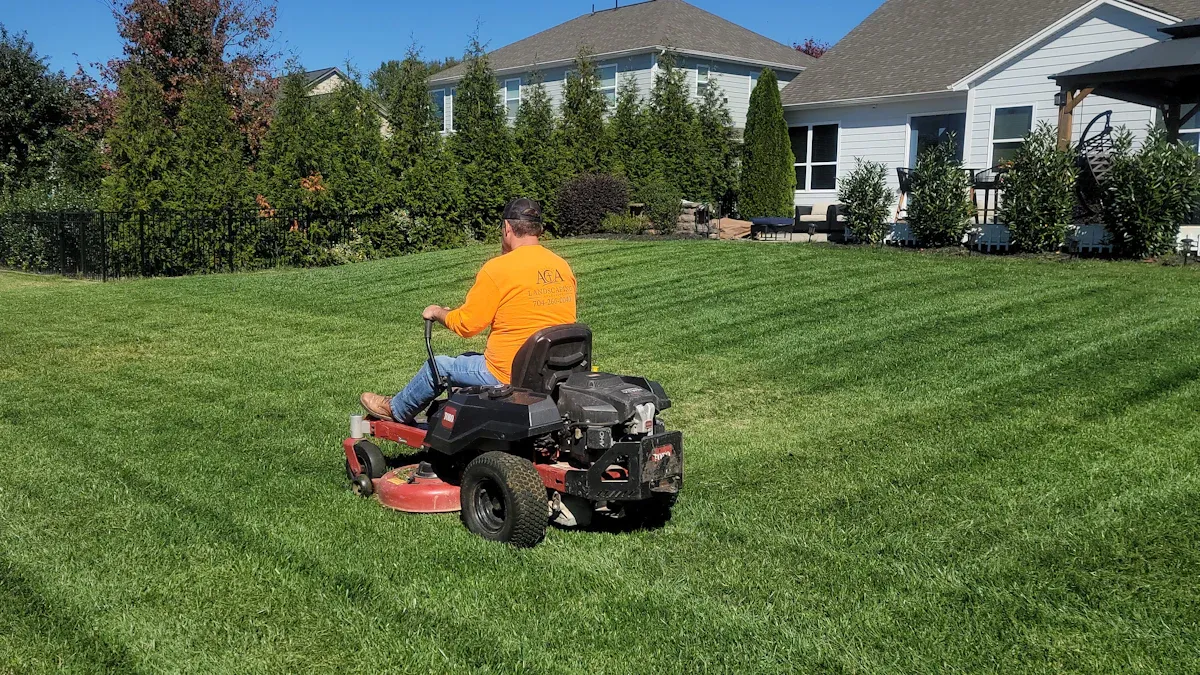
In spring, your lawn starts its active growing season. This means you should mow your lawn more often. Try to mow every 1 to 2 weeks. This depends on how fast your grass grows. If the grass grows quickly because of warm weather and enough rain, you may need to mow more often.
In autumn, how often you mow can change. For cool-season grasses, cut them to about 2.5 inches before the first frost. If you have warm-season grasses, aim for a height of 1.5 to 2 inches. This helps your lawn get ready for winter. Remember, rain can really affect your mowing schedule. Enough rain makes grass grow fast, but too much rain can cause overgrowth and wet ground, making it hard to mow. Change your mowing schedule to keep your lawn healthy.
Summer Mowing
Summer brings hot weather, which can stress your lawn. During this time, experts say to mow every 5 to 7 days to keep your lawn healthy. This helps you avoid cutting more than one-third of the grass blade at once. Cutting too short can hurt the grass and make it more likely to get damaged by heat.
If it gets really hot, think about mowing every 10 to 14 days. Keeping your grass taller helps it hold moisture and reduces stress during dry times. Here’s a quick table to show the best mowing practices during drought:
| Mowing Practice | Effect on Lawn During Drought |
|---|---|
| Mowing too short | Increases stress on turf, leading to thinning and greater suffering during drought |
| Mowing at recommended height (3 inches) | Helps conserve moisture, promotes root development, and reduces drought effects |
| Following the one-third rule | Minimizes damage to grass, allowing for quicker recovery during drought conditions |
Winter Care
When winter comes, grass growth usually stops when temperatures drop below 50 degrees Fahrenheit. This means you won’t need to mow your lawn as much. If the grass isn’t growing, you can mow much less often.
However, there are some important winter care tips to remember:
- Don’t mow frozen grass to avoid hurting the turf.
- Watch for pests and diseases to fix problems quickly.
- Take care of your mowing equipment during winter to make sure it’s ready for spring.
By following these seasonal mowing tips, you can keep your lawn healthy and thriving all year long.
Grass Type Considerations
Cool-Season Grasses
Cool-season grasses grow best in the north. They like temperatures between 60º and 75º. These grasses grow the most in spring and fall. If you have cool-season grasses like Kentucky bluegrass, tall fescue, or perennial ryegrass, mow every 5 to 7 days when they grow fast. This helps keep your lawn healthy and makes roots stronger.
Here’s a quick list of common cool-season grasses:
- Kentucky Bluegrass
- Tall Fescue
- Creeping Red Fescue
- Perennial Ryegrass
These grasses grow slower in summer heat. So, you can mow every 10 to 14 days during hot months. Remember, keeping your grass at the right height is very important for its health.
Warm-Season Grasses
Warm-season grasses like warmer temperatures above 75º. They are more common in southern areas. Grasses like Bermudagrass, Zoysia, and St. Augustine grass grow well in summer. You may need to mow every 4 to 7 days to keep them looking nice.
Here’s a list of popular warm-season grasses:
- Bermudagrass
- Zoysia Grass
- Buffalo Grass
In cooler months, these grasses slow down and need less mowing. For example, you can mow every 10 to 14 days when they grow less. Matching your mowing schedule to the grass type helps keep your lawn healthy and green.
| Grass Type | Growth Rate | Mowing Frequency Requirement |
|---|---|---|
| Cool-season grasses | High in spring/fall | More frequent mowing |
| Warm-season grasses | High in summer | Less frequent mowing |
Knowing the differences between cool-season and warm-season grasses helps you make a mowing schedule that keeps your lawn thriving all year long.
Optimal Mowing Frequency
General Guidelines
When you mow your lawn, some basic rules can help keep it looking good. Turfgrass experts suggest how often to mow based on the season and grass type. Here’s a quick look:
| Season | Mowing Frequency |
|---|---|
| Spring | Every two weeks until grass turns green |
| Summer | Weekly when grass is green |
| Fall | Weekly until grass stops growing |
| Winter | Every three to six weeks, or not at all |
Also, different grass types have best mowing heights you should aim for:
| Grass Type | Ideal Mowing Height |
|---|---|
| Fescue | 2-3 inches |
| Bluegrass | 2-2 1/2 inches |
| Ryegrass | 1-2 inches |
| Bermuda grass | 1-1 1/2 inches |
| Zoysia | 3/4 – 1 inch |
| St. Augustine | 2-3 inches |
| Buffalo grass | 1-2 inches |
By following these rules, your lawn can stay healthy and bright all year.
Adjusting for Conditions
While these rules are helpful, you should change your mowing plan based on certain conditions. Weather affects grass growth and how often you mow. Here are some things to think about:
- Rainfall: Wet grass can cause uneven cuts and block the mower. If it rains a lot, wait for the grass to dry before mowing.
- Temperature: Warmer weather makes grass grow faster, so you may need to mow more often. Cooler weather slows growth, so you can wait longer between mowings.
- Humidity: High humidity can cause lawn diseases. If you see any problems, change your mowing schedule to keep the grass healthy.
- Drought: During dry times, let your grass grow taller. This helps keep soil moisture and reduces stress on the turf. You might find mowing every two weeks is enough during these times.
Remember the one-third rule: never cut more than one-third of the grass height in one mowing. Cutting too much can cause brown patches and weaken your lawn. Keeping your mowing frequency right will help keep your turf thick and looking good.
In busy growth times, you may need to mow more than once a week. When growth slows, mowing every two weeks might be fine. Changing your mowing frequency based on grass growth helps keep your lawn lush and healthy.
By knowing these factors and following the rules, you can find the best mowing frequency for your lawn’s needs.
Tips for Lawn Health
Mowing Techniques
To keep your lawn healthy, you should use some good mowing methods. Here are some helpful tips:
- Use sharp mower blades: Sharp blades cut grass cleanly. This helps grass heal faster. Dull blades tear grass, causing it to lose water and turn brown.
- Follow the one-third rule: Don’t cut more than one-third of the grass blade at once. This stops the grass from getting shocked and keeps it green.
- Maintain a mowing height of 3 inches or higher: Taller grass lowers stress on the lawn and holds moisture better. It also helps roots grow deeper.
- Alternate your mowing patterns: Change the direction you mow each time. This stops soil from getting packed down and helps grass grow straight. Try mowing in different ways like up and down, side to side, or diagonally.
Using these mowing tips can lower the chance of weeds, pests, and diseases. It also helps your lawn grow strong and healthy.
Equipment Maintenance
Taking care of your mower is just as important as mowing well. Here are some ways to keep your mower working well for a long time:
- Check and change the oil regularly: This stops parts from wearing out and keeps the mower running smoothly.
- Inspect and sharpen mower blades: Sharpen blades after about every 25 hours of use. Sharp blades cut better and help your lawn stay healthy.
- Clean mower blades: Remove grass buildup to make cutting easier and save fuel.
- Store your mower properly: Keep it in a dry place to stop rust and damage.
- Conduct seasonal maintenance checks: Before mowing season, check that all parts work well.
By caring for your mower, you make mowing easier and help your lawn stay healthy.
In conclusion, knowing what your lawn needs is very important for keeping it healthy. The seasons, types of grass, and local weather all affect how often you should mow. Keep these main points in mind:
- Mowing regularly helps grass grow strong by allowing photosynthesis.
- Change your mowing schedule based on the season and grass type for the best health.
- Stay away from mistakes like cutting too short or having a strict schedule.
By using these tips, you can have a green and lively lawn all year long!
FAQ
How often should I mow my lawn in spring?
In spring, you should mow your lawn every 1 to 2 weeks. This frequency helps manage rapid growth due to warmer temperatures and increased rainfall.
What is the one-third rule in mowing?
The one-third rule means you should never cut more than one-third of the grass height in one mowing. This practice helps prevent stress and keeps your lawn healthy.
Can I mow wet grass?
It’s best to avoid mowing wet grass. Wet conditions can lead to uneven cuts and may damage your lawn. Wait until the grass dries before mowing.
How do I know if my mower blades are dull?
If your mower leaves ragged edges on the grass or if the grass appears brown after mowing, your blades may be dull. Sharpen them for a cleaner cut.
What height should I set my mower for different grass types?
For cool-season grasses, aim for 2 to 3 inches. For warm-season grasses, keep it between 1 to 2 inches. Adjusting the height helps maintain lawn health.