A few well-chosen annual seed packs can keep a garden blooming from spring through the first hard frost. Cosmos provide airy, pollinator-friendly height; dwarf and grandiflora petunias deliver nonstop container color.
Swiss Giants pansies offer cool-season faces for early and late-season interest, while mixed snapdragons supply tall stems perfect for cutting. Start seeds in stages, match plants to sun and soil conditions, and avoid heavy feeding to maintain steady blooms all season.
| HOME GROWN Cosmos Flower Seeds Bulk Pack (8,000+) |

| Best for Mass Plantings | Seed Count / Quantity: ~8,000+ seeds (1.8 oz) | Seed Type / Status: Heirloom, non‑GMO, untreated | Bloom Period / Season: Blooms spring through fall (8–12 weeks to first bloom) | VIEW LATEST PRICE | Read Our Analysis |
| KVITER Dwarf Petunia Seeds (2,000) |

| Perfect for Containers | Seed Count / Quantity: 2,000 seeds (bulk packets) | Seed Type / Status: Heirloom, open‑pollinated, non‑GMO, untreated | Bloom Period / Season: Early through late summer (season‑long with deadheading) | VIEW LATEST PRICE | Read Our Analysis |
| Swiss Giants Mix Pansy Seeds — 1,000+ Heirloom |
| Best for Color Variety | Seed Count / Quantity: 1,000+ seeds | Seed Type / Status: Heirloom, non‑GMO | Bloom Period / Season: Spring into summer (long blooming months) | VIEW LATEST PRICE | Read Our Analysis |
| Petunia Seeds Grandiflora Mix – Non‑GMO Heirloom |

| Showstopper Blooms | Seed Count / Quantity: 10,000+ seeds | Seed Type / Status: Non‑GMO, open‑pollinated | Bloom Period / Season: Season‑long display (summer; used for multi‑season color) | VIEW LATEST PRICE | Read Our Analysis |
| Sow Right Mixed Snapdragon Flower Seeds (Heirloom) |

| Best for Cut Flowers | Seed Count / Quantity: ~1,600 seeds (minimum 200 mg) | Seed Type / Status: Heirloom, non‑GMO | Bloom Period / Season: Blooms spring through fall (80–100 days to maturity) | VIEW LATEST PRICE | Read Our Analysis |
More Details on Our Top Picks
HOME GROWN Cosmos Flower Seeds Bulk Pack (8,000+)
Should you want a fast, fuss-free way to fill a big space with cheerful color, this HOME GROWN Cosmos Flower Seeds bulk pack is made for you. You’ll get 1.8 ounces, about 8,000 heirloom, non-GMO seeds in a small USA-packed pouch. Sow directly in spring into loam and give full sun and regular water. Germination shows in 7–14 days and blooms start in 8–12 weeks, lasting spring to fall. Plants reach 2 to 6 feet, attract pollinators, and need little care. Don’t add fertilizer; lean soil favors blossoms. You’ll enjoy a meadow feel quickly.
- Seed Count / Quantity:~8,000+ seeds (1.8 oz)
- Seed Type / Status:Heirloom, non‑GMO, untreated
- Bloom Period / Season:Blooms spring through fall (8–12 weeks to first bloom)
- Light Preference:Full sun
- Uses / Placement:Meadows, borders, walkways, mass coverage, backdrops
- Pollinator / Wildlife Benefits:Attracts butterflies and pollinators
- Additional Feature:Heirloom, non‑GMO seeds
- Additional Feature:Made and packaged USA
- Additional Feature:Covers large area
KVITER Dwarf Petunia Seeds (2,000)
Should you want bright, easy color for small spaces, KVITER Dwarf Petunia Seeds are a smart pick for gardeners who love quick results without fuss. You’ll get 2,000 open pollinated, untreated seeds in packets so you can share or space plant freely. The dwarf mix gives red, pink, purple, and white 4 inch blooms on compact 10 inch mounds, ideal for pots, window boxes, and borders. Surface sow at 70 to 80°F, keep the mix moist, and expect sprouts in 7 to 14 days. Butterflies and hummingbirds like them, and deadheading keeps blooms coming all summer long.
- Seed Count / Quantity:2,000 seeds (bulk packets)
- Seed Type / Status:Heirloom, open‑pollinated, non‑GMO, untreated
- Bloom Period / Season:Early through late summer (season‑long with deadheading)
- Light Preference:Surface‑sow; prefers sunny/bright conditions (attracts hummingbirds/butterflies)
- Uses / Placement:Small pots, mini/hanging baskets, containers, window boxes, borders
- Pollinator / Wildlife Benefits:Attracts hummingbirds and butterflies (pollinator‑friendly)
- Additional Feature:Dwarf compact habit
- Additional Feature:Surface‑sow tiny seeds
- Additional Feature:Ideal containers/baskets
Swiss Giants Mix Pansy Seeds — 1,000+ Heirloom
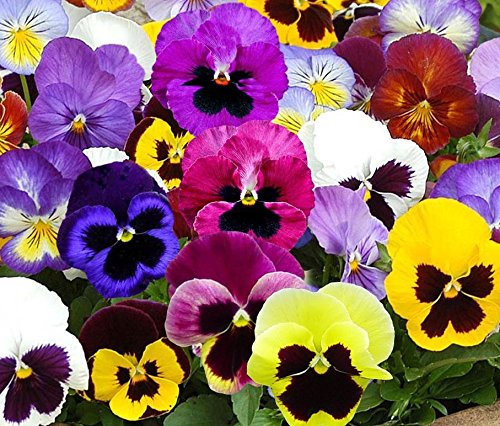
Should you want a cheerful, low-fuss splash of color for beds, containers, and hanging baskets, Swiss Giants Mix pansy seeds are an ideal choice for gardeners who want big results without a lot of guesswork. You get 1,000 plus non-GMO heirloom seeds, so you can fill many spaces without worrying about shortages. These hardy annuals bloom from spring into summer in blue, purple, yellow, orange, red, and white. Plant in full sun to partial shade in well-drained soil, water regularly but don’t overdo it, and you’ll enjoy months of blooms that suit beginners and seasoned gardeners alike.
- Seed Count / Quantity:1,000+ seeds
- Seed Type / Status:Heirloom, non‑GMO
- Bloom Period / Season:Spring into summer (long blooming months)
- Light Preference:Full sun to partial shade
- Uses / Placement:Flower beds, containers, hanging baskets
- Pollinator / Wildlife Benefits:Suitable for pollinators (general beneficial flowers)
- Additional Feature:Vibrant multicolor mix
- Additional Feature:Hardy cool‑season annuals
- Additional Feature:Great for containers
Petunia Seeds Grandiflora Mix – Non‑GMO Heirloom
Should you love filling large spaces or creating cheerful container displays, these Grandiflora petunia seeds are a perfect fit for your 2026 planting plans. You’ll get over 10,000 clean-packed seeds, which gives you huge value for beds, borders, and baskets. These grandiflora blooms are large and double, so they make bold, showy statements across vistas. A rainbow mix brings multi-color waves that lift curb appeal and photos. The plants trail and mound, so you can use them in hanging baskets, window boxes, and patio planters. Seeds are non-GMO, open-pollinated, and ready for straightforward starting and planting.
- Seed Count / Quantity:10,000+ seeds
- Seed Type / Status:Non‑GMO, open‑pollinated
- Bloom Period / Season:Season‑long display (summer; used for multi‑season color)
- Light Preference:Prefers full sun (typical for petunias/show display)
- Uses / Placement:Hanging baskets, window boxes, pots, beds, borders, patio planters
- Pollinator / Wildlife Benefits:Pollinator‑friendly (petunias attract pollinators)
- Additional Feature:10,000+ seed pack
- Additional Feature:Large double blooms
- Additional Feature:Trailing/mounding habit
Sow Right Mixed Snapdragon Flower Seeds (Heirloom)
Who loves bright, long-lasting blooms and easy care? You will with Sow Right Mixed Snapdragon Flower Seeds. You plant tiny seeds 1/16 inch deep, chill overnight, then expect germination in seven to fourteen days once soil warms to 60 to 70°F. Space plants ten to twelve inches apart and watch spikes of ruffled pink, purple, red, yellow, and white flowers from spring through fall. They reach thirty to forty eight inches, suit zones seven to eleven, and make lovely cut flowers. These non GMO heirloom seeds attract bees and butterflies, come with instructions, and a support guarantee for germination concerns.
- Seed Count / Quantity:~1,600 seeds (minimum 200 mg)
- Seed Type / Status:Heirloom, non‑GMO
- Bloom Period / Season:Blooms spring through fall (80–100 days to maturity)
- Light Preference:Full sun preferred
- Uses / Placement:Garden beds, arranged beds, cut‑flower use
- Pollinator / Wildlife Benefits:Attracts butterflies and bees (supports pollinators)
- Additional Feature:Tall cut‑flower spikes
- Additional Feature:Requires seed chilling
- Additional Feature:Solar‑powered operations
Factors to Consider When Choosing Annual Flower Seeds
When you pick annual flower seeds, you’ll want to match them to your climate and how much sun and shade your garden gets so they stand the season. Consider soil type and drainage together with bloom time and how much care you’ll give, because those things decide whether flowers thrive or struggle. As you read on, we’ll link these factors so you can choose seeds that fit your space, schedule, and gardening energy.
Climate And Hardiness
Even though you love bright blooms, you’ll want to match seeds to the climate where you garden, because the right temperature and hardiness determine whether plants thrive or just struggle. Check USDA hardiness zones for each variety so you know whether it will finish its life cycle or reseed where you live. Pay attention to frost tolerance and days to maturity, since some annuals handle light frost and others need warm, frost-free weather and many weeks to bloom. Use your local initial and final frost dates to time direct sowing or indoor starts, giving seedlings a chance to establish. Also consider heat tolerance and seasonal performance, plus microclimates like sheltered corners or heat from pavement that change temperature extremes.
Sunlight And Exposure
How much sun does your spot actually get, and how will that shape your seed choices? Watch your garden at different times across several days. Note morning versus afternoon sun and whether nearby trees or buildings cast shade as the season progresses. Most annuals need full sun, at least 6 to 8 hours, to bloom well and stay compact. In case your plot gets 3 to 6 hours or gentle morning light, choose partial sun varieties that handle heat and keep flowering longer. For spots with under 3 hours of direct sun, pick shade lovers that prefer bright indirect light to avoid scorched leaves and patchy blooms. Match seeds to observed light, and pick varieties labeled for full sun, part sun, or shade for the best results.
Soil And Drainage
Good soil is the quiet backbone of any blooming patch, and it’ll decide whether your annuals thrive or just survive. You want loamy soil that balances moisture and drainage, roughly 40% sand, 40% silt, and 20% clay. Should your bed feels sandy, plan on watering more and working in organic matter to hold moisture. In case it’s heavy clay, add coarse sand or compost so roots don’t sit in water and rot. For compacted spots, mix in 10 to 20% perlite or coarse sand to enhance aeration. Test drainage by digging a 12-inch hole, filling it with water, and watching for 1 to 2 hour drainage. Keep pH near 6.0 to 7.0 and avoid overwatering rich, soggy mixes.
Bloom Time Span
Plan your color by reflecting about at which point each seed will start and how long it will keep blooming, because that timing decides whether your garden looks full or has gaps. Check days to first bloom for each annual since fast bloomers often flower in 8 to 12 weeks while slower types take 12 to 16 weeks, and that tells you when petals will appear. Prefer mixes or varieties labeled season-long or continuous bloom provided you want steady color from early summer through fall. Note individual bloom duration because some plants last months with deadheading while others give a short flush then fade. Stagger planting dates or pick mixed maturity times to spread color. Also factor in temperature, day length, and frost dates since weather shifts can shorten or extend blooms.
Maintenance And Care
After you’ve matched bloom times to keep color steady, it helps to look at how much work each seed will ask of you. Check watering needs and drought tolerance so you won’t be surprised by daily chores. Note germination time and whether seeds require misting, warmth, or surface sowing, because those demands shape your early routine. Look at maintenance tasks like deadheading, pinching, and staking; many annuals reward a few minutes weekly, while tall types might need supports. Read soil and fertility guidance, since some thrive in lean soil and others want light feeding, and too much fertilizer can make leaves take over. Finally, favor varieties that bloom long with low upkeep should you want a steady, easy display.