Mowing in sandy soil chews up regular blades fast. Grit acts like sandpaper, dulling the edge and leaving your lawn ragged.
To keep a sharp cut, you need tougher blades built to stand up to those conditions. This guide walks through five standout options—from thick, coated steel mulching blades to rugged Gator-style sets—so your mower runs cleaner, lasts longer, and needs fewer blade swaps.
| MTD Mulching Blade for 20-Inch Lawn Mowers |

| Compact Mulching Pick | Deck size fit: 20″ walk-behind mower decks | Blade length (each blade): 20″ | Center hole type: 1-star center hole | VIEW LATEST PRICE | Read Our Analysis |
| 50″ Deck Mower Blades for MTD & Cub Cadet |

| Best for Large Yards | Deck size fit: 50″ decks (three 17.25″ blades per deck) | Blade length (each blade): 17.25″ | Center hole type: 6-point star center hole | VIEW LATEST PRICE | Read Our Analysis |
| Mulching Blades for 30″ Toro/Exmark Lawn Mowers |
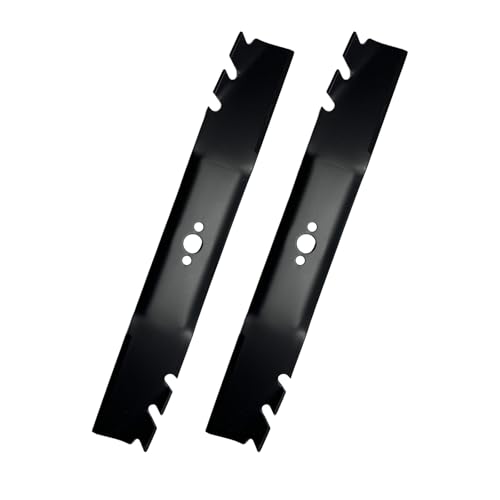
| Sand-Optimized Mulcher | Deck size fit: 30″ deck mowers | Blade length (each blade): 15-3/8″ | Center hole type: 2/3″ round center hole | VIEW LATEST PRICE | Read Our Analysis |
| Arnold 21/22-Inch Walk-Behind Mower Blade |

| Versatile All-Rounder | Deck size fit: 21″, 22″, and 23″ walk-behind mower decks | Blade length (each blade): 21–23″ (fits 21–23″ decks; specific length not fixed) | Center hole type: Universal center hole with 3/8″, 7/16″, 5/8″ sizers | VIEW LATEST PRICE | Read Our Analysis |
| Oregon Gator G3 Mulching Lawn Mower Blades (3-Pack) |

| Heavy-Duty Performer | Deck size fit: 54″ decks (three 18-7/16″ blades per deck) | Blade length (each blade): 18-7/16″ | Center hole type: 5-point star center hole | VIEW LATEST PRICE | Read Our Analysis |
More Details on Our Top Picks
MTD Mulching Blade for 20-Inch Lawn Mowers
Should you mow in sandy soil and feel like you’re changing blades all the time, the MTD Genuine Parts Mulching Blade for 20 inch lawn mowers can feel like a small relief in a messy situation. You’re not just swapping metal. You’re trying to protect your time, your wallet, and your yard.
This 3 in 1 mulching blade fits 20 inch MTD walk behind mowers from 1997 and after, including MTD Gold, Yard Man, Yard Machines, Troy Bilt, Bolens, White Outdoor, and Huskee. Its star center hole matches O.E. blades 742 0740 and 942 0740, so you get reliable fit and cleaner, finer clippings.
- Deck size fit:20″ walk-behind mower decks
- Blade length (each blade):20″
- Center hole type:1-star center hole
- Primary function:3-in-1 mulching blade for walk-behind mowers
- Compatibility scope:MTD 20″ walk-behind (1997+); MTD Gold, Yard Man, Yard Machines, Troy-Bilt, Bolens, White Outdoor, Huskee
- Pack size:Single blade
- Additional Feature:3-in-1 mulching design
- Additional Feature:Genuine OEM replacement
- Additional Feature:1-star center mount
50″ Deck Mower Blades for MTD & Cub Cadet
Finding mower blades that can survive sandy soil without wearing out in a few weeks is tough, and that’s exactly where these 50″ deck mower blades intended for MTD, Cub Cadet, and Troy-Bilt step in. You get a 6-pack set, so you’re stocked for the season and not rushing to buy new blades after every dusty mow.
Each blade measures 17.25 inches long, 2.5 inches wide, and 0.156 inches thick, with a 6 point star center hole that matches many 2015 and newer 50 inch zero-turns and lawn tractors. They replace OEM numbers such as 742-05052 and CMXGZAM110155, and you’re backed by a one-year warranty and real customer support.
- Deck size fit:50″ decks (three 17.25″ blades per deck)
- Blade length (each blade):17.25″
- Center hole type:6-point star center hole
- Primary function:Standard replacement blades for 50″ zero-turn/tractors
- Compatibility scope:MTD, Cub Cadet, Troy-Bilt, plus MTD Craftsman, Columbia, various zero-turns and tractors
- Pack size:6-pack set (6 blades)
- Additional Feature:Six-blade value pack
- Additional Feature:One-year product warranty
- Additional Feature:Fits many zero-turns
Mulching Blades for 30″ Toro/Exmark Lawn Mowers
Should you mow in sandy soil and run a 30 inch Toro or Exmark, these toothed low lift mulching blades (Toro parts 120-9500-03 / 116-6358-03 and their replacements) are built to take a lot of grit without choking your mower or blasting dust in your face. They fit popular 30 inch Toro models like 20199, 20200, 20975 through 20978, 21199, 21199HD, 21200, 21810, 21811, 22200 series, and Exmark ECKA30 and ECX 30 inch walk behinds.
You get a 2 pack, each blade 15 3/8 inches long, 2 1/4 inches wide, 1/8 inch thick, with a 2/3 inch round center hole and 13/16 inch lift. The factory coating fights rust, so you don’t need to scrape or sharpen.
- Deck size fit:30″ deck mowers
- Blade length (each blade):15-3/8″
- Center hole type:2/3″ round center hole
- Primary function:Toothed low-lift mulching blades (optimized mulching/side discharge)
- Compatibility scope:Toro 30″ TimeMaster-type models and Exmark commercial 30″ models listed
- Pack size:2-pack (2 blades)
- Additional Feature:Toothed low-lift profile
- Additional Feature:Reduced noise and dust
- Additional Feature:Factory anti-corrosion coating
Arnold 21/22-Inch Walk-Behind Mower Blade
In case you’re tired of switching tools every time your sandy lawn needs a different kind of care, the Arnold 21/22-Inch Walk-Behind Mower Blade can feel like a small miracle. You get one sharp replacement blade that fits most 21, 22, and even 23 inch walk-behind mowers from brands like Troy-Bilt, Craftsman, Honda, Husqvarna, Toro, and more, as long as your specific model matches.
You also get sizers for different center hole patterns and a dethatching nylon line. With a few simple adjustments, you can cut, mulch, rake, dethatch, scalp, and bag without changing tools.
- Deck size fit:21″, 22″, and 23″ walk-behind mower decks
- Blade length (each blade):21–23″ (fits 21–23″ decks; specific length not fixed)
- Center hole type:Universal center hole with 3/8″, 7/16″, 5/8″ sizers
- Primary function:Multi-function blade (dethatch, rake, mulch, scalp, bag, cut)
- Compatibility scope:Most 21–23″ walk-behind mowers from Troy-Bilt, Bolens, AYP, Craftsman, Honda, Huskee, Husqvarna, Lawn-Boy, Murray, Poulan, Snapper, Toro, Yard Machines, Yard-Man
- Pack size:Single replacement blade
- Additional Feature:Includes dethatching line
- Additional Feature:Universal fit sizers included
- Additional Feature:Supports multiple lawn tasks
Oregon Gator G3 Mulching Lawn Mower Blades (3-Pack)
Oregon Gator G3 mulching blades are a smart choice in case you mow sandy soil often and want cleaner cuts without burning through blades every season. You get a 3 pack, each blade 18-7/16 inches long, built for 54 inch decks with a 5 point star center hole. So in the event that you run Ariens, Craftsman, Husqvarna, Dixon, Poulan, or similar, you’re likely covered.
These blades use a high lift angle, so they pull grass up, cut it clean, and then move clippings into your bag or out the side with less clumping. They’re engineered under a strict 26 point quality check, so they stay reliable in tough, gritty conditions.
- Deck size fit:54″ decks (three 18-7/16″ blades per deck)
- Blade length (each blade):18-7/16″
- Center hole type:5-point star center hole
- Primary function:Gator G3 high-lift mulching blades (bagging & discharge focus)
- Compatibility scope:Various 54″ deck models from Ariens, AYP, Craftsman, Dixon, Husqvarna, Murray, Poulan, plus Rotary/Stens equivalents
- Pack size:3-pack (3 blades)
- Additional Feature:High-lift bagging performance
- Additional Feature:26-point quality certification
- Additional Feature:Suited for commercial use
Factors to Consider When Choosing Lawn Mower Blades for Sandy Soil
Whenever you mow in sandy soil, you can’t just grab any blade and hope for the best, because sand wears metal fast and really tests your mower. You’ll want to consider how tough the blade material is, how the edge design and lift handle grass and grit, and how well the blade resists abrasion over time. It also helps to look at whether you prefer mulching or bagging and to make sure the blade matches your mower deck so everything works smoothly together.
Blade Material Durability
Although sandy soil can be tough on any mower, the right blade material helps your machine stay strong instead of wearing out prematurely. Whenever you mow in gritty conditions, you want high-strength steel. This type of metal stands up to constant abrasion from sand and small stones, so the blade keeps its edge longer and bends less.
Next, look closely at coatings. A durable powder-coated or factory-applied safety coating protects the steel from corrosion and grinding wear. This matters at the time sand and dust hit the blade every time you mow.
Blade thickness also plays a big role. Thicker blades usually resist chipping and warping better. Blades marketed to reduce dust and noise often include upgraded materials that handle harsh sandy soil more reliably.
Edge Design And Lift
Strong blade material is only half the battle in sandy soil, because the shape of the cutting edge and the amount of lift decide how your mower actually behaves in all that grit.
In sandy yards, you want the blade to cut grass, not launch dust. So you’ll usually choose a low to medium lift blade. It still pulls grass upright, but it doesn’t create a huge vacuum that blasts sand into the air. That means less dust in your face and less grit in the mower.
Next, look at the edge itself. A sharp, well-shaped edge slices cleanly, so you avoid tearing turf and kicking up soil. Toothed or serrated edges help grab tougher grass and scattered debris, giving you a cleaner, more controlled cut.
Resistance To Abrasion
Even though your lawn looks soft and harmless, sand quietly acts like sandpaper on your mower blades every single time you cut. That constant grit scrapes the metal and eats away the edge, so you need blades that can handle abuse without quitting prematurely.
To fight that wear, look for harder steel alloys. Tougher metal resists grinding from sand and holds a sharp edge longer. Then, pay attention to coatings. Specialized and corrosion resistant finishes cut down friction, slow abrasion, and protect against tiny scratches that mix with moisture and cause rust.
You should also notice blade shape. Thicker cutting edges and reinforced tips stand up better during they strike gritty soil, so you sharpen less and mow more with confidence.
Mulching Versus Bagging
Why does choosing between mulching and bagging suddenly feel like a big decision once you have sandy soil? Because every pass of the mower either feeds your lawn or fights the grit.
With mulching blades, you chop clippings into tiny pieces and drop them back into the turf. This soft layer returns nutrients to sandy soil, which normally can’t hold much food or moisture. It also covers bare spots, so you kick up less sand and breathe in less dust. The mower often runs quieter too, which simply feels calmer.
Bagging blades work differently. Their strong lift pulls clippings up into the bag and also lifts sand and debris. This keeps the surface looking neat, but can stir more dust into the air.
Deck And Blade Compatibility
Once you start looking at blades for sandy soil, it quickly becomes clear that the blade and the deck have to work together like a matched pair, not random parts you bolt on and hope for the best. You initially check deck size. A 20 inch deck needs a 20 inch blade so lift, airflow, and cutting width all stay balanced.
Next, you match the center hole. The shape and diameter must fit your spindle hub so the blade stays tight, without wobble or risk of flying off. Then, you look at blade style and thickness. Low lift mulching blades designed for your exact deck can keep clippings low and reduce sandy blowout.
If you consider universal blades, always confirm they’re approved for your mower model and deck.
Maintenance And Sharpening Frequency
During the time you mow in sandy soil, the harsh truth is that blade care stops being optional and becomes part of the job. Sand acts like sandpaper on your edges, so your blades lose sharpness much faster than in regular yards.
You’ll want to inspect your blades every few cuts. Look for rounded edges, nicks, or a gray, worn line along the cutting edge. Whenever you see that, plan to sharpen about every 5 mowing sessions in sandy conditions.
Between sharpenings, clean the blades after use. Brush off packed sand and stuck grass so moisture and grit don’t sit there and cause corrosion or uneven wear. A corrosion resistant coating helps slow rust, but you’ll still need that frequent sharpening routine.
Noise And Vibration Levels
Even though power and cut quality usually get most of your attention, noise and vibration matter just as much while you’re mowing in sandy soil. Long, loud sessions can wear you down fast, and rough shaking can make the whole job feel stressful.
Blades built for sandy soil often use thicker steel and protective coatings that cut smoother, with less friction and stress. That softer contact means quieter mowing and less buzzing in your hands. Toothed low lift mulching blades are a smart choice here, because they move less air and usually run quieter than standard high lift blades.
To keep vibration low, you need sharp, well balanced blades. At the point that a blade gets dull or uneven, it chatters, gets noisy, and strains the mower.
Cost Versus Longevity
In case you’re attempting to select the right blade for sandy soil, it’s easy to grab the cheapest option and hope for the best, but that choice can quietly cost you more over time. Sandy soil acts like sandpaper. It dulls thin, uncoated blades fast, so you replace them more often, spend more on sharpening, and lose mowing quality.
When you choose thicker blades with protective coatings, they resist abrasion better and stay sharp longer. Mulching or low lift blades usually hold their edge in sand, even though they cost more initially. Corrosion resistant steel also cuts down on surprise failures.