

Knowing when to prune roses is crucial, and it’s generally best done in late winter or early spring, right as new growth buds start to swell. However, this timing isn’t a one-size-fits-all rule; it varies considerably depending on your specific rose type and local climate. Proper pruning is essential for maintaining healthy and vigorous roses, and it also stimulates abundant bloom production.
Aim to prune once a year to encourage fresh blooms, new growth, and improved air circulation, which in turn reduces fungal diseases. By pruning correctly, you can anticipate more flowers and stronger plants. To ensure you prune effectively, take the time to identify your rose types and understand your local growing conditions. So, let’s get started.
Key Takeaways
Prune roses in late winter or early spring. This is when new growth starts.
Watch your rose plants closely. Prune when you see new buds swelling.
The best time to prune depends on your rose type and local weather. Always check your climate.
Remove old flowers to get more blooms. Cut off any sick or broken branches right away.
General Timing: When to Prune Roses
Late Winter to Early Spring Pruning
You should generally prune your roses in late winter or early spring. This timing is crucial because it prepares your plants for vigorous new growth and abundant blooms. Many gardeners find that February or March are good general months for this task. However, the exact timing depends on your specific location and climate.
For example, you might consider pruning in late February if you live in a milder climate. A common and practical indicator for when to prune roses is when forsythia bushes begin to bloom in your area. This visual cue often signals that the danger of hard frost has passed.
You must ensure that major pruning occurs after the last hard frost. You can often prune as early as three weeks before your area’s average last frost date. This allows the plant to heal before new growth is vulnerable to freezing temperatures.
The best time to prune is just before bud break. This can vary significantly. For instance, in North Texas and other warm climates, you might need to prune as early as mid-to-late January. Waiting until the traditional Valentine’s Day recommendation can be too late there due to early bud development.
Here is a general guide for recommended pruning months in various temperate climates:
Location/Zone | Recommended Pruning Months |
|---|---|
Minnesota Z5a/4b | Late April to Mid-May |
SE Wisconsin, Zone 5B | End of March to April 15th |
Chicago, IL (Zone 5b) | Early March (or mid-late April based on forsythia) |
Deep South, Zone 8a | Mid-February to Mid-March |
Iowa | Late March to Mid-April |
The Iowa State University Extension and Outreach recommends early spring pruning. They suggest you prune between late March and mid-April. They also advise against pruning in the fall. Fall pruning stimulates new growth. This new growth is vulnerable to winter damage.
Observing New Growth and Bud Swell
You need to observe your rose plants closely to determine the perfect pruning moment. Look for signs of new growth and bud swell.
New growth on rose canes generally shows as a bud. When you prune, you should cut above an outward-facing bud. This is where the new growth will emerge. This practice encourages the plant to grow outwards, creating a more open and healthy structure.
Bud swell on rose canes is a clear visual indicator. You will see a small reddish bump or swelling. Gardeners call this a ‘bud eye.’ This bud eye is located above each set of leaflets. It signifies the beginning of new growth. This new growth could be a new cane, a stem, or a flower. Waiting until you see these signs ensures the plant is actively preparing for its growing season. This helps you make the most effective cuts. This careful timing is key when to prune roses for optimal health and bloom production.
The Best Time to Prune Roses by Type
Understanding pruning different types of roses helps you get the best results. Each rose type has its own ideal pruning schedule. This ensures healthy growth and abundant flowers.
Hybrid Teas, Floribundas, and Grandifloras
You should prune Hybrid Tea, Floribunda, and Grandiflora roses in late winter or early spring. This is when new growth begins. For example, many gardeners in the UK prune Hybrid Tea roses in mid-February. Pruning too early can cause frost damage to new shoots. Pruning too late might delay flowering. Always avoid pruning when temperatures are freezing. This protects your freshly cut stems.
The main annual pruning for these roses happens in winter or spring. The exact timing depends on your climate zone. You must wait until the danger of frost has passed. Gardeners in Santa Barbara prune in January.
Those in Tucson prune in February. February is often the best month for pruning Hybrid Tea roses. You can also feed them then for strong spring growth. If you have tall Hybrid Teas, you can lightly prune them in autumn. Reduce their height by about 50%. This prevents wind damage to stems and roots.
These rose types are repeat blooming roses. This means they flower multiple times during the growing season. You should remove spent flowers regularly. This encourages more blooms. This deadheading approach is similar for Hybrid Tea, Floribunda, and Grandiflora roses.
Shrub and Landscape Roses
Shrub and landscape roses include many varieties. Their pruning time depends on their flowering habit.
For once-flowering shrub roses, like ‘Albertine’ or ‘Nevada’, prune them in late summer. Do this after they finish flowering. You should remove dead, diseased, or damaged wood. Cut back shoots that have flowered by one-third to one-half. Cut to a strong bud that faces outward. Remove any weak or thin growth. Thin out old, unproductive stems from the base. This encourages new, strong growth.
For repeat-flowering shrub roses, such as ‘Gertrude Jekyll’ or ‘Graham Thomas’, prune them in late winter or early spring. Do this before new growth starts. Remove dead, diseased, or damaged wood. Cut back flowered shoots by one-third to one-half.
Cut to a strong outward-facing bud. Remove weak or spindly growth. Thin out old, unproductive stems from the base. This encourages new growth. You can also reduce the plant’s overall size. Cut back some main stems by one-third to one-half.
English Roses are a type of repeat-flowering shrub rose. Prune them in late winter or early spring. Remove dead, diseased, or damaged wood. Cut back flowered shoots by one-third to one-half. Cut to an outward-facing bud. Remove weak growth. Thin out old stems from the base. For a compact plant, cut main stems by one-half. For a larger, more open shrub, cut by one-third.
Groundcover roses, like ‘The Fairy’, also need pruning in late winter or early spring. Remove dead, diseased, or damaged wood. Cut back all stems by one-third to one-half. This keeps their dense, spreading shape. Thin out any crowded or crossing stems.
Species roses, or wild roses, need minimal pruning. Do this after flowering if needed. Remove dead, diseased, or damaged wood. Thin out old stems every few years. This encourages new growth. Allow hips to form for winter interest.
Climbing and Rambling Roses
Climbing and rambling roses need specific pruning to maximize their blooms.
For climbing roses, you should train their stems horizontally. Spread them along walls or fences. This encourages a fuller plant. You will see blooms along the entire cane, not just at the tips. Fan out stems for good light and air. Secure them gently.
To get blooms from the bottom to the top, prune stems at different heights. Trim some stems to about 50 cm for fresh growth at the bottom. Leave others around 1 meter for mid-level blooms. Keep some stems at about 1.5 meters for flowers at the top. This method spreads the plant’s energy evenly. It creates a cascade of flowers.
You should remove most older canes. This encourages new growth from the root. This refreshes the plant for maximum blooms. For a big renovation, be aggressive. For more blooms, leave more canes from the base. If you leave more canes, trim them back in steps. For example, cut one to 3 feet and another to 6 feet. Leave small lateral canes coming off the main cane. These will provide blooms lower on the plant. Cut these laterals back to about 6 inches.
For rambling roses, the best time to prune for routine care is in late summer. Do this after they finish flowering and produce hips. If you need to renovate them, prune between late autumn and late winter. Pruning during these dormant times helps you see the plant’s structure better. It also promotes strong regrowth in spring. The optimal time for pruning climbing roses, which applies to rambling roses for structural care, is late winter. This is usually between December and February. The plant is dormant then. This makes it easier to prune and reduces stress. It encourages strong growth in spring. If your winters are severe, prune in early spring. This protects the plant from frost damage.
Old Garden and Once-Blooming Roses
Many Old Garden roses are once-blooming roses. They flower only once a year. For these roses, prune them right after their flowering period ends. This is the general rule.
For shrub roses like Albas, Gallicas, Damasks, and Centifolias, prune after their spring bloom. This shapes them and encourages strong new growth for the next year’s flowers. Remove old, gnarled stems. Also remove weak or crossing branches. For climbing and rambling roses, remove some of the oldest stems from the base after their summer display. This makes space for vigorous new growth.
Pruning once-blooming roses in early summer, after their annual bloom, is best. Pruning them at other times, like late August or early September, can mean fewer blooms next year. This shows that pruning time directly affects how many flowers you get.
Miniature Roses
You should prune Miniature roses after the threat of frost has passed. This encourages vigorous new growth. This new growth helps them flower continuously.
Regional Factors for the Right Time to Prune Roses
Your geographical location and climate significantly influence your rose pruning schedule. You must adapt your timing to local conditions for the best results.
Pruning in Cold Winter Climates
If you live in a cold winter climate, you face unique challenges. Pruning roses too early in regions like Wisconsin (Zone 5) risks damaging your plants. Subsequent hard freezes can harm new growth. If you must prune early and cold weather returns, cover your plants. Pruning prematurely also disrupts the rose’s natural chemical process of becoming semi-dormant.
This semi-dormant state is crucial for the plant’s survival through winter. Early pruning can hinder this process. It potentially harms the plant’s ability to withstand cold temperatures. Therefore, you should wait until the danger of severe frost has passed.
Pruning in Mild Winter Climates
Gardeners in mild winter climates often prune earlier. Warmer temperatures mean roses break dormancy sooner. You might find yourself pruning in late December or January. This is especially true in areas with consistently mild winters. Observe your plants closely. Look for swelling buds. This indicates the plant is ready for pruning. You can prune earlier than gardeners in colder zones. This allows your roses to start their new growth cycle without delay.
Adapting to Local Weather Patterns
You must prioritize actual weather conditions over specific calendar dates when deciding the right time to prune roses. Late cold snaps or unseasonal warm spells can make pruning risky.
Avoid pruning too early. Late frosts can damage new growth.
Do not prune too late. You might miss the optimal growing window for the season.
Be cautious with heavy pruning in cold climates right before frost. It exposes tender canes that have not hardened off. This increases susceptibility to cold damage.
Refrain from summer pruning during hot weather. Fresh cuts add stress when plants already deal with heat and drought.
You need to watch your local forecast. Adjust your pruning schedule based on what the weather does. This flexibility ensures your roses stay healthy and produce abundant blooms.
Seasonal and Special Pruning Needs

You will perform some pruning activities outside the main late winter or early spring window. These tasks help maintain your roses throughout the growing season.
Deadheading for Continuous Blooms
You should deadhead your roses for continuous blooms. This means removing spent flowers. Deadheading prevents the plant from putting energy into making seeds. Instead, the plant uses this energy to produce more flowers. This is especially true for continuous-blooming roses. You can encourage more vigorous blooming and a neater look.
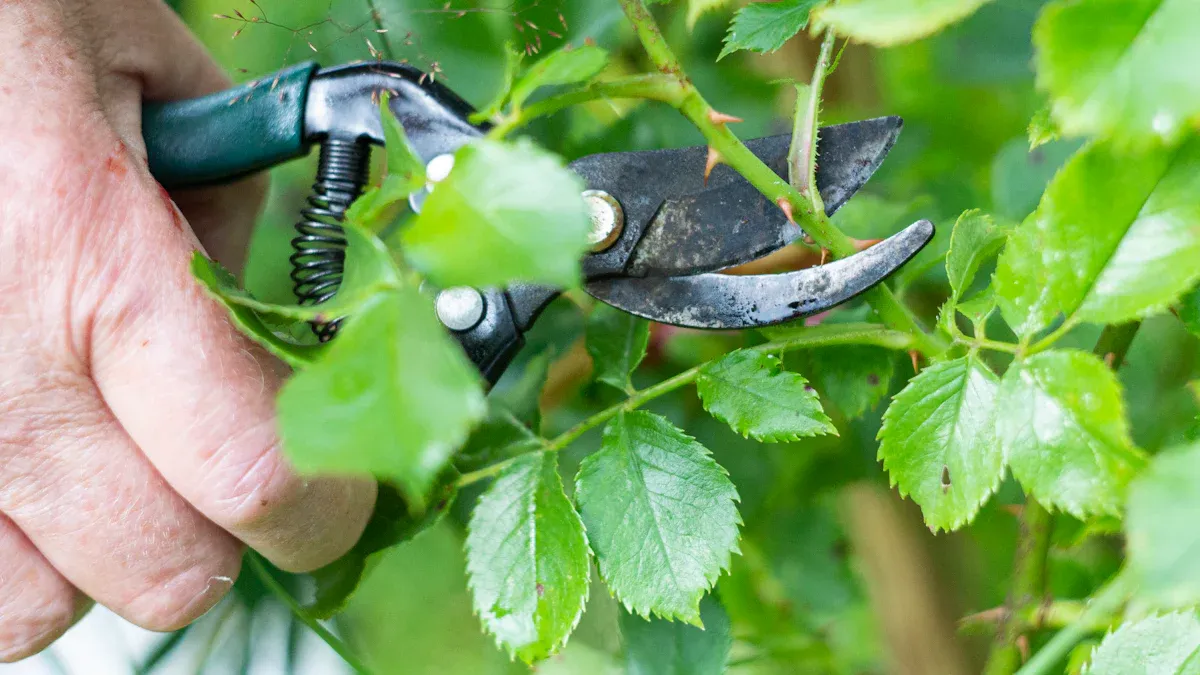
To deadhead effectively, gather your tools. Use hand pruners for clean cuts. Wear gardening gloves to avoid thorns.
Cut above the first set of five leaflets. Make sure the cane is strong enough for new growth.
Look for an outward-facing bud eye. Cut at an angle just above it. This makes new stems grow outward. It improves the plant’s shape.
Avoid removing healthy buds and blooms. For roses with flower clusters, snip individual faded flowers at their base. Leave the healthy ones.
Cut the stem at a 45-degree angle. This helps water run off. It prevents bacterial or fungal growth. It also helps cut flowers take up water.
Do not remove too much foliage. Healthy leaves are important for photosynthesis. They help produce more blooms.
Removing Damaged or Diseased Canes
You must remove damaged or diseased canes immediately. This promotes overall plant health. Look for specific signs of trouble.
Brand Canker: You will see a reddish color on canes. This quickly turns into a brown center.
Stem Canker: This often looks yellowish. It can also appear reddish on the bark.
Crown Gall: This is an ugly, weird growth of tissue. It looks like a mix of a brain and cauliflower. It usually grows near the soil level.
Downy Mildew: You will first see purple or dark brown spots on stems. Later, spores may form a mildew-like covering.
When you find diseased canes, act quickly.
Prune well below the diseased areas. Cut about one-fourth inch above an outward-facing bud node. Make a 45-degree angle cut.
Remove and destroy all infected parts of the canes right away.
Disinfect your cutting tools after each use on a diseased plant. Use a solution of 1 part household bleach to nine parts water. This prevents disease spread.
Fall Pruning for Winter Preparation
You should perform some fall pruning for winter preparation. This is different from pruning for winter protection. Fall pruning helps your plant withstand winter winds and snow.
Remove diseased, dead, and declining canes. This keeps your plant healthy.
Cut out crossing branches. This prevents injury to the plant. It also improves airflow.
Remove long, whippy stems. This stops them from breaking or cracking in winter winds.
Reduce the height of tall, top-heavy stems. This prevents the plant from falling over. It protects its roots during winter.
For Knock Out roses, cut them back to about 30 inches in the fall. This prevents snow damage.
Remember, fall pruning does not protect rose canes from cold winter temperatures. Pruning stimulates new growth. This new growth will freeze. It also uses up the rose’s stored energy. This makes the plant less able to survive winter.
Rejuvenation Pruning for Older Plants
You might need rejuvenation pruning for older rose plants. This helps bring them back to life. Look for these signs:
The plant is losing leaves or has discolored leaves.
Branches are rubbing against each other.
Many smaller branches are intertwined.
The plant is thick and congested at ground level.
You see dead or damaged canes.
Old, thick canes consume energy but produce few flowers.
Here are the pruning techniques for rejuvenation:
Find the largest, oldest stems at the base of the bush.
Use loppers to cut these oldest canes back towards the base. Leave about 6 to 8 inches. New growth might come from below the cut.
Remove any curved, weak, or oddly shaped branches. Especially remove those growing towards the center.
Remove dead stems. You can use hedge trimmers for dead tips. Use hand trimmers for other dead stems.
After removing all dead stems, look for any remaining canes. Remove those that grow into the center or look odd.
Clip about 6 to 12 inches off the top of the remaining canes. Cut just above an outward-facing bud if possible. This encourages new growth and flowers.
You now know the best time to prune roses is usually late winter to early spring. Always consider your specific rose type and local climate. Observe your plants for new growth. Adapt your schedule to local weather patterns. Be confident in your pruning decisions. Even imperfect pruning helps your roses. You can also do light pruning throughout the season. Well-pruned roses reward you with abundant blooms and healthy plants.